

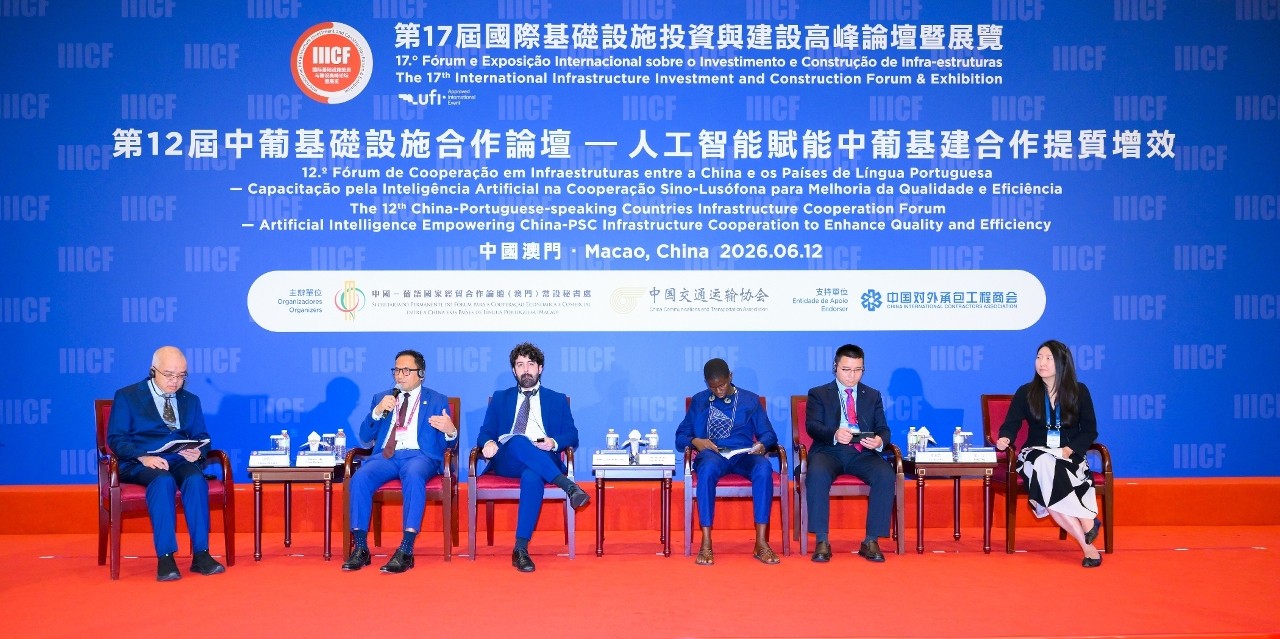
A three‑day international infrastructure forum that drew more than 3,500 participants from over 70 countries and regions has reinforced the Macao Administrative Region’s role as a strategic platform between China and Portuguese‑speaking nations through high‑level dialogue, project matchmaking, and a shared push for green and digital infrastructure cooperation.
The 17th International Infrastructure Investment and Construction Forum and Exhibition, held from Wednesday to Friday, was themed “Boosting Green Digital Infrastructure Connectivity”.
One of the two flagship reports released during the forum, the Report on Portuguese-speaking Countries’ Infrastructure Development Index and Macao's Achievements in Belt and Road Initiative (2026), showed that Portuguese-speaking countries’ infrastructure development remained stable, with the overall index standing at an unchanged 126 from last year, ending a five-year consecutive growth trend.
RELATED ARTICLES
- Infrastructure forum in Macao closes with 21 deals worth $9.9 billion
- Macao's ‘connector’ role in focus at China-LAC infrastructure forum
“This reflects a slower pace of infrastructure development across Portuguese-speaking countries. However, notable progress was achieved in green, low-carbon, and digital cooperation, providing strong support for the sector's continued development,” the report stated.
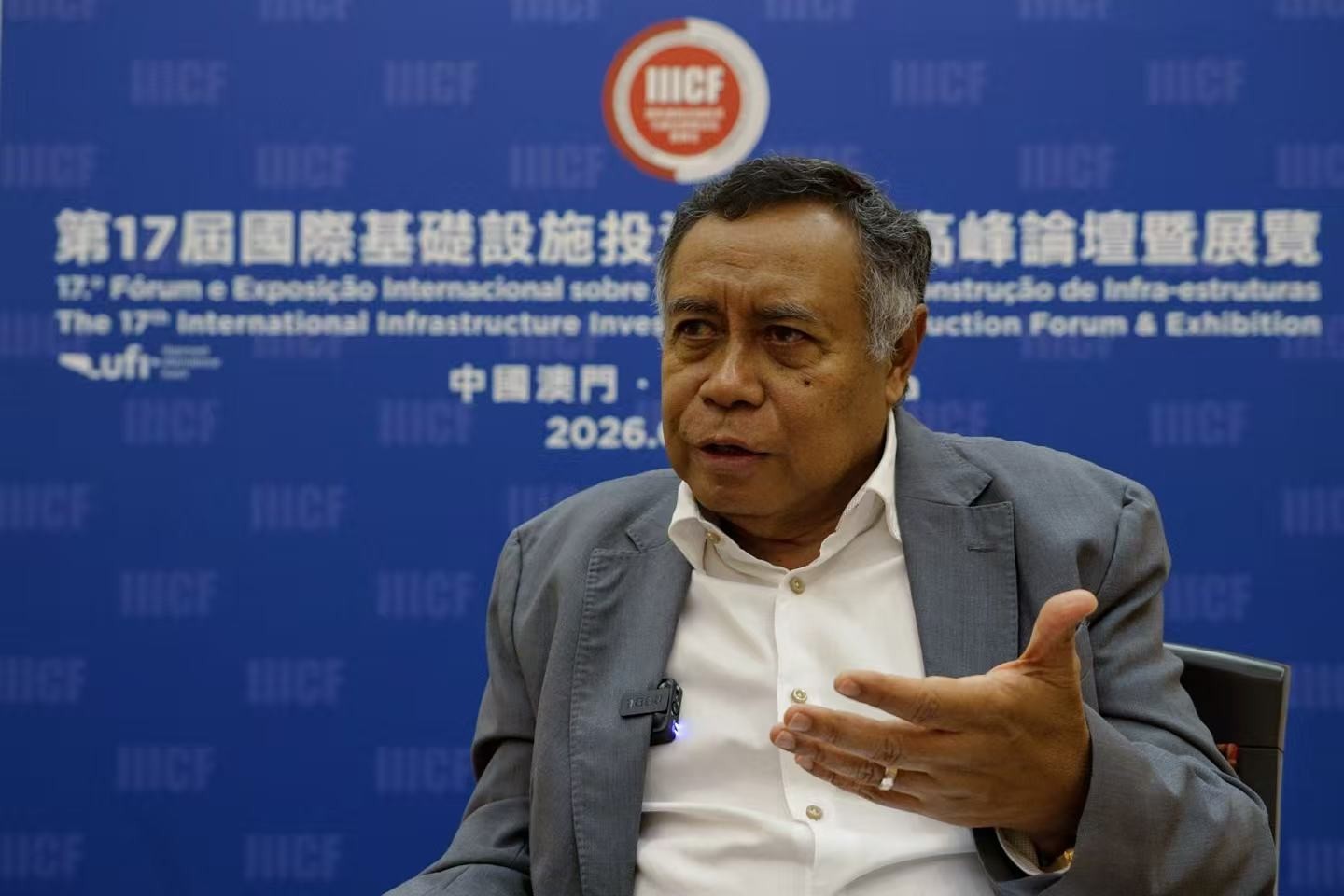
Speaking exclusively with China Daily, Timor‑Leste’s Minister of Planning and Strategic Investment, Gastao Francisco de Sousa, said he sees the forum and the newly released reports as critical tools.
Timor‑Leste ranked sixth among the nine Portuguese‑speaking countries in this year’s overall index, unchanged from last year. Sousa said the report offers three key benefits: visibility, honest diagnosis, and trajectory.
“Through this, we can know where we are and how to move forward. The report can help Timor-Leste to be more focused on the development of infrastructure,” he said.
Having visited the Guangdong‑Hong Kong‑Macao Greater Bay Area last year to see its development firsthand and explore how the region’s capital and technology could support the young nation’s infrastructure push — a top priority since it gained independence in 2002 — Sousa returned to this year’s forum in Macao with a clear message: they aim to present their priorities and show they are not seeking assistance, “but to build a partnership with China and other Portuguese‑speaking countries.”
Timor-Leste’s current infrastructure priorities include the maintenance of existing facilities, as well as improving water systems, sanitation, and internet connectivity.
“Macao SAR is already opened up for bridging Portuguese-speaking countries with China. We have to be more proactive through this forum, to connect with China, to develop partnerships, and to attract investment in areas that I mentioned.”
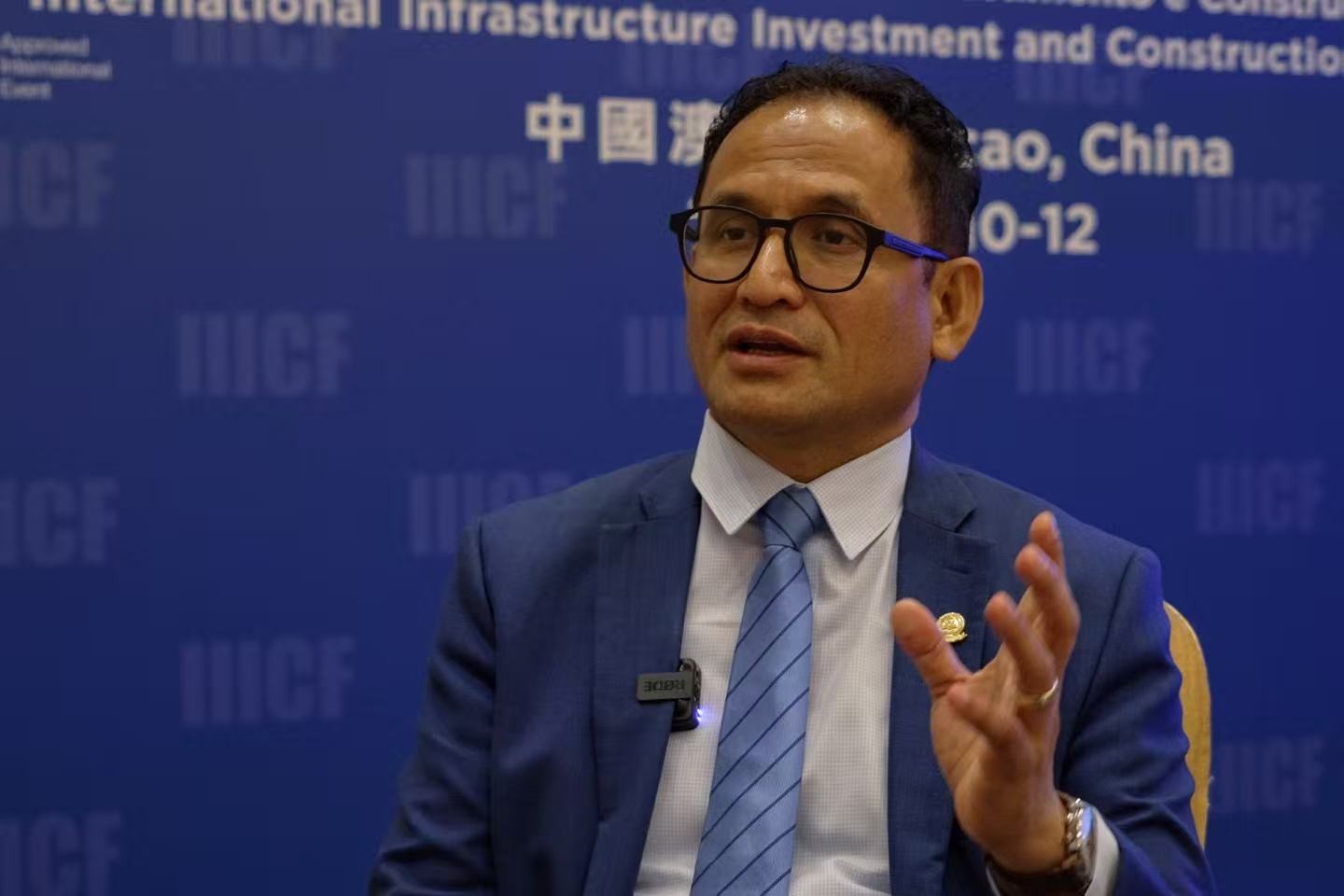
His view was echoed by Timor‑Leste’s Minister of Petroleum and Mineral Resources, Francisco da Costa Monteiro, who provided concrete examples of Chinese‑led infrastructure delivery, including their government buildings and highways.
“Macao serves as an important bridge between China and the Portuguese-speaking world, bringing together governments, investors, financial institutions, and businesses. For a developing country such as Timor-Leste, this platform creates valuable opportunities to attract investment, identify partners, exchange knowledge and promote strategic projects,” he said.
Parallel to the international infrastructure forum, the 12th China-Portuguese-speaking Countries Infrastructure Cooperation Forum also took place on Friday.
Ministerial guests, as well as representatives from the business and academic sectors, held discussions on AI‑driven infrastructure cooperation between China and Portuguese‑speaking countries.
Ji Xianzheng, secretary-general of the Permanent Secretariat of Forum for Economic and Trade Co-operation between China and Portuguese-speaking Countries (Macao), told the parallel forum that infrastructure cooperation has become a key highlight between China and Portuguese‑speaking countries, with the trade reached $225.8 billion last year.
During the discussion, Amadu Bamba Sambu Dabo, director of Research and New Projects at the Ministry of Public Works, Housing and Urban Planning of Guinea-Bissau, said they have enormous economic potential and wide cooperation scope with China based on win‑win outcomes, knowledge transfer, and talent cultivation.
In facing global challenges such as climate change and energy transition, he said the forum is a significant boost for China‑Portuguese-speaking-countries cooperation, believing they will deliver concrete results, enhance connectivity and trade, and benefit all peoples.
Rocky Cao Zhenwu, CEO of Sino Soar Hybrid (Beijing) Technology Co Ltd, who shared his company’s renewable energy microgrid projects, said he sees the forum as a platform that brings together both Chinese and Portuguese‑speaking countries — governments, industry players, and all relevant stakeholders — to discuss developments in AI, smart technologies, and green energy, allowing them to explore how China's technology and products can be applied in these countries, and how mutual cooperation can support their national development plans.
The secretariat also held the Colloquium on Infrastructure Investment and Construction between China and Portuguese-speaking Countries this year. Participant Pedro Duarte, an advisor at the Special Secretariat of the Investment Partnerships Program under the Presidency of Brazil, said the forum is vital for China and other participants to understand Brazil’s needs, as the country requires investment in sanitation, rail, education, and more. No concrete partnerships have been established yet, but he said he has networked and will continue his half-month colloquium in Macao and Zhuhai until June 21.
Contact the writer at stacyshi@chinadailyhk.com
