

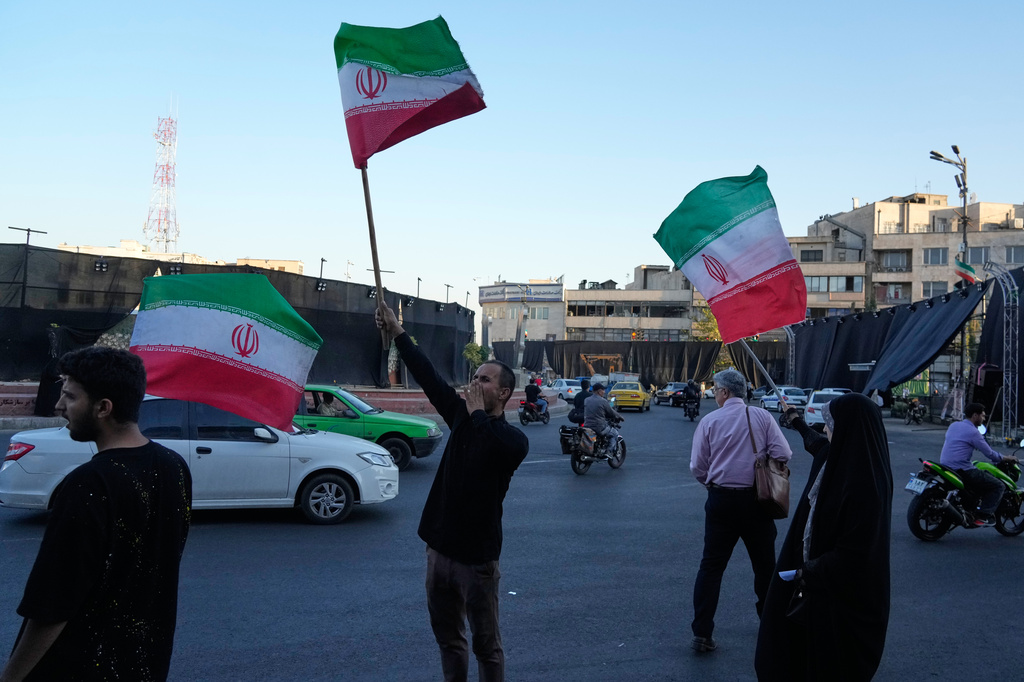
WASHINGTON/TEHRAN/ISLAMABAD/GENEVA/LONDON – Technical-level talks between Iran and the United States will resume next Tuesday after a temporary pause, Pakistan's Foreign Office said on Wednesday.
Speaking at a weekly press briefing, spokesperson for the office Tahir Andrabi said Pakistan and Qatar will continue to engage with technical teams from the United States and Iran in the coming weeks to ensure the effective implementation of the peace memorandum of understanding.
The peace MoU and the first session of US-Iran talks in Switzerland have reinforced faith in dialogue and diplomacy as the most effective means for the peaceful settlement of disputes and conflicts, according to the spokesperson.
He welcomed the positive recognition and encouraging remarks from various countries and international partners regarding Pakistan's constructive role in promoting regional peace, dialogue and de-escalation efforts.
The spokesperson also expressed Pakistan's appreciation to all countries and partners that have supported its mediation efforts.
Resolution to curb Trump's war powers on Iran
On Tuesday, the US Senate passed a war powers resolution on Iran, restricting President Donald Trump from launching further military operations in Iran without congressional approval.
The passage of the resolution marked the first time such a measure has cleared both chambers of Congress since the conflict began in February and signaled growing opposition to Trump's handling of the conflict.
The Iran War Powers Resolution passed in the Senate by a vote of 50 to 48, with four Republicans joining most Senate Democrats in support of the measure. One Democrat voted against it.
The resolution "directs the President to remove US Armed Forces from hostilities within or against Iran unless a declaration of war or authorization to use military force for such purpose has been enacted", according to a summary of the legislation published on the Congress website.
It also reaffirms Congress' constitutional authority to declare war and initiate military hostilities, with supporters arguing that the war against Iran amounted to an unauthorized "war of choice".
Some US media outlets described the resolution's passage as largely symbolic.
"But Tuesday's resolution will likely be largely symbolic, since the administration argues that US forces are not currently engaged in hostilities with Iran," CBS News reported.
NBC News noted that "the largely symbolic measure's passage comes as the US and Iran are in the early stages of talks aimed at ending the war".
ALSO READ: Iran's chief negotiator: Hormuz will be administered by Iran
Democrats, however, argued that a war powers resolution remains necessary even after the United States reached a deal to end the conflict.
"I think it's a good time to have the vote to say, 'Hey, if we're really in a period of maybe some stability here, let's not just allow it to start up again without Congress being involved in that decision,'" Senator Tim Kaine told reporters last week, according to CNN.
'Full commitment to agreed obligations'
In a post on social media platform X, Iranian President Masoud Pezeshkian said the effectiveness of talks with the United States on a final agreement depends on "full commitment" to agreed obligations and their "precise" implementation.
Pezeshkian stressed the need to implement provisions of a recently-signed peace memorandum of understanding rather than making statements beyond its scope.
"Statements outside the agreed text do not help advance the negotiations," he said.
His remarks came after Iranian and US delegations held high-level consultations on the implementation of the MoU in Switzerland on Sunday, mediated by Pakistan and Qatar. Technical talks followed on Monday.
'Iran ballistic missile program not part of MoU'
Also on Tuesday, Pakistani Prime Minister Shehbaz Sharif said the Islamabad MoU did not mention Iran's ballistic missile program, stressing that the issue "was never on the table" and "never on the agenda" during the negotiations.
New ME security architecture
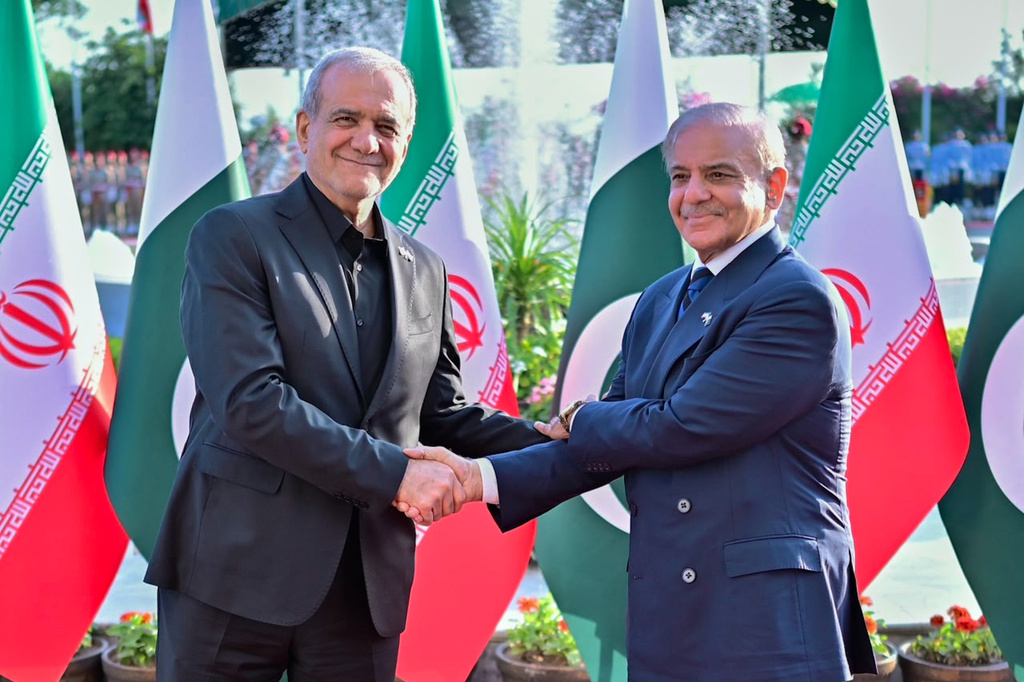
At a joint press conference with Sharif, Pezeshkian on Tuesday called for the establishment of a new regional security architecture in Western Asia and the Persian Gulf based on dialogue, mutual respect and cooperative engagement among regional states.
The Iranian president praised Pakistan's role in supporting de-escalation efforts and regional consultations, describing it as a "responsible and visionary" contribution to stability.
He arrived in Pakistan on Tuesday for an official visit to discuss the ongoing diplomatic efforts following the signing of the US-Iran MoU.
Hormuz 'fully open without charges'
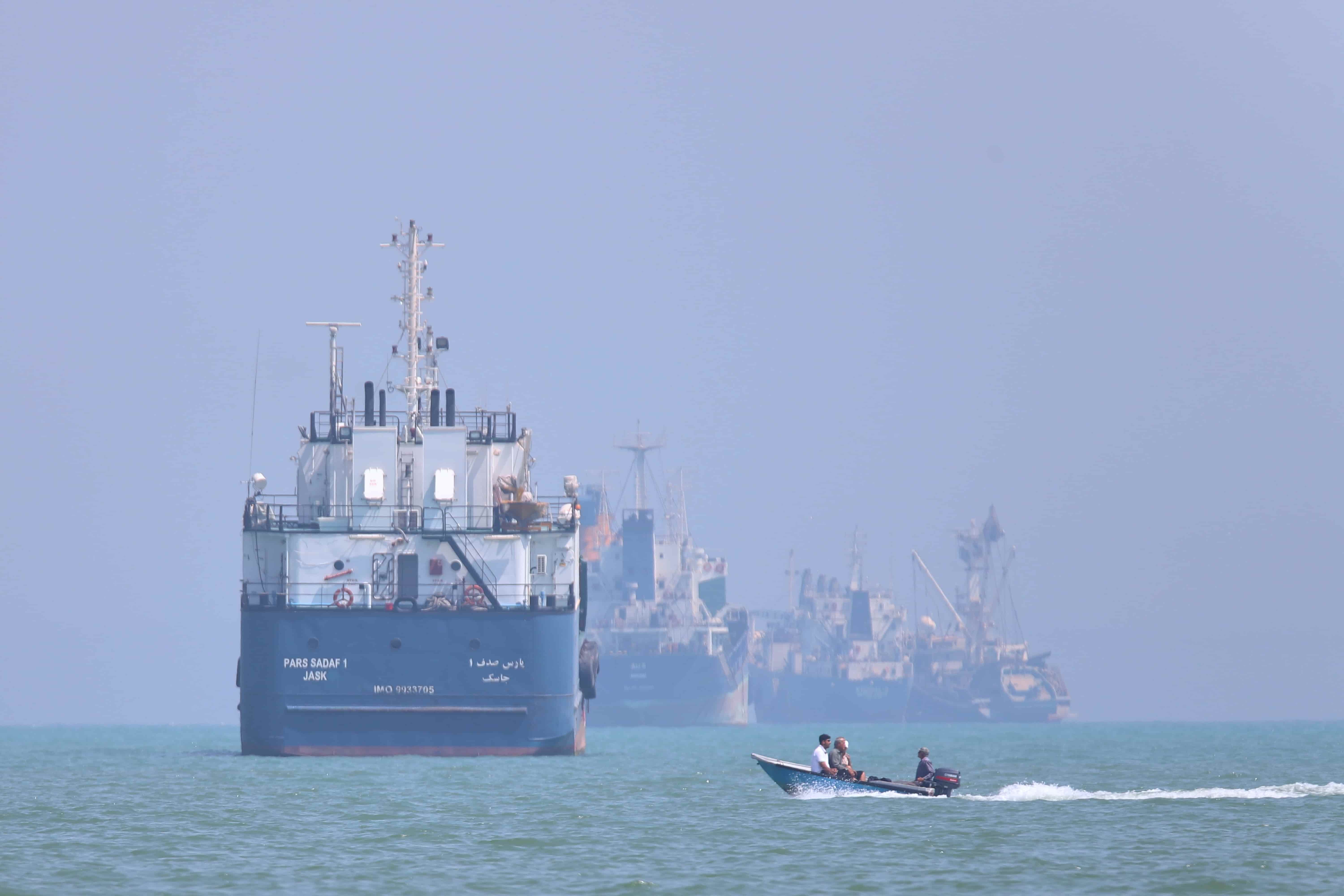
Also on Tuesday, Ali Bahreini, Iranian ambassador and permanent representative to the United Nations Office at Geneva, announced the Strait of Hormuz is fully open to commercial vessels without tolls.
Bahreini said that the situation will be reviewed after 60 days, depending on negotiations between Iran and the US.
Under the MoU, Iranian assets will be unfrozen by the US, said Bahreini.
ALSO READ: Report: Strait of Hormuz sees record traffic since start of conflict
"Iran is the only country who decides what to do with those assets, and there would be no role for any other country or entity to have a say on how those assets should be used by Iran," he said.
Sovereignty over strait arrangements
Meanwhile, Iran and Oman issued a joint statement affirming their commitment to ensuring safe passage through the Strait of Hormuz, stressing that all arrangements relating to the waterway "must fully respect their sovereignty and sovereign rights".
The two countries agreed to continue discussions through a joint working team between their foreign ministries to reach an understanding on the future management of navigation in the strait and the related charging service "costs", read the statement.
The statement followed talks in Oman's Muscat between Iranian Parliament Speaker Mohammad Bagher Ghalibaf, Iranian Foreign Minister Seyed Abbas Araghchi, and senior Omani officials.
Evacuation plan for Hormuz seafarers
In another development, the International Maritime Organization announced an evacuation plan for more than 11,000 seafarers still stranded in the Strait of Hormuz.
The IMO has secured the necessary safety guarantees and verified safe navigation conditions to support the evacuation operation, IMO Secretary-General Arsenio Dominguez said in a statement.
Dominguez welcomed the peace agreement between Iran and the US, saying it marks a decisive step toward restoring maritime security and ending attacks against civilian shipping, after months of conflict that have caused hardship for thousands of seafarers and disrupted global trade.
He also paid tribute to the 14 seafarers who lost their lives during the conflict, saying their service to global trade will not be forgotten.
