

Man escapes captivity to become a legendary commercial magnate, Xu Fan reports.
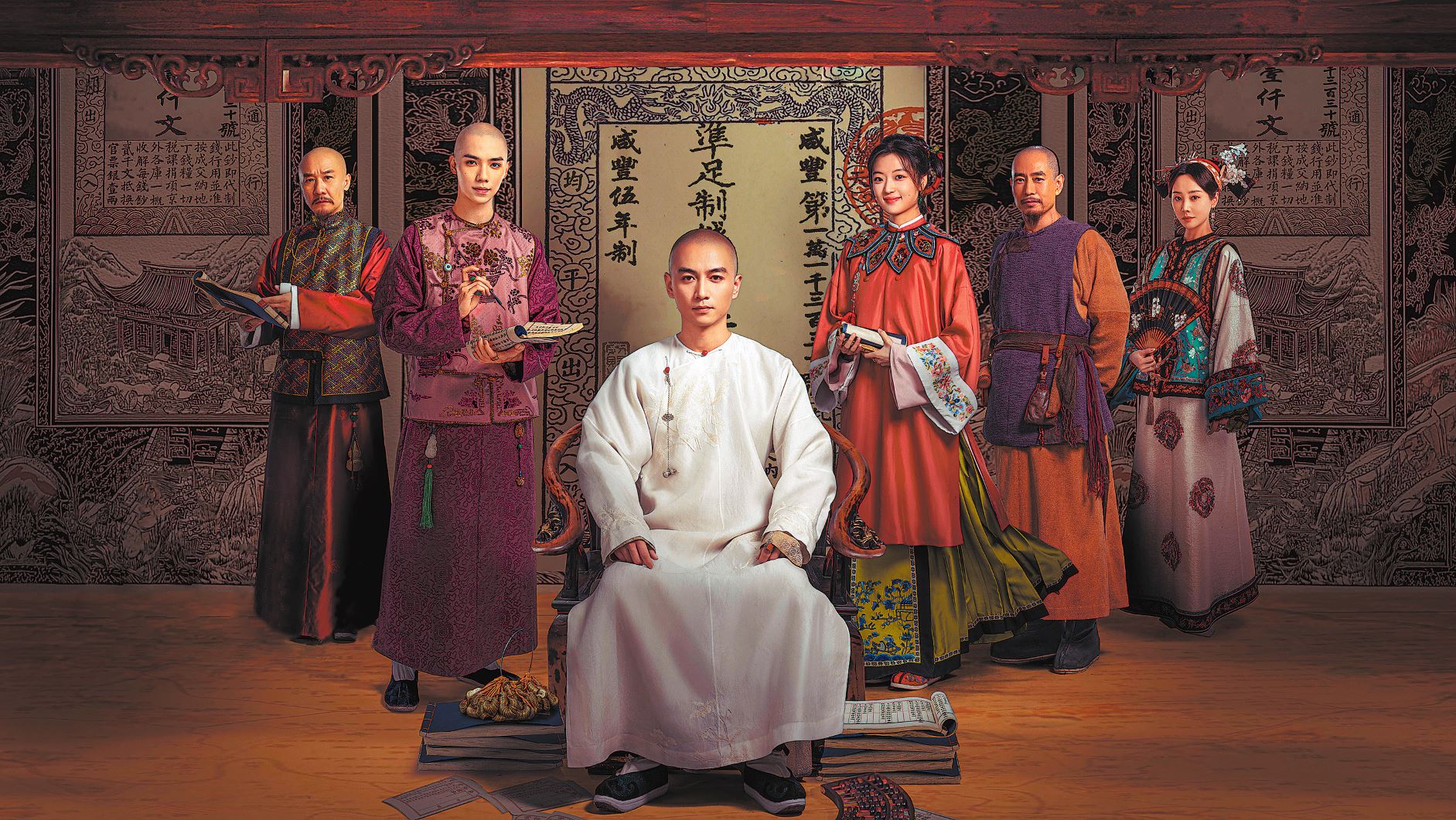
When director Zhang Ting was shooting the opening scene of Legend of the Magnate, a popular costume drama set in the turbulent 19th century, he thought of Andy Dufresne, the wrongly convicted protagonist of the Oscar-nominated classic The Shawshank Redemption.
The scene takes place in Ningguta, located in Mudanjiang, in Northeast China's Heilongjiang province, a notorious destination for the banishment of over 1.5 million people, the majority of whom were officials and intellectuals, during the Qing Dynasty (1644-1911).
Situated over 1,400 kilometers from Beijing, many of those exiled did not survive the long, arduous journey, shackled in cangues. Those who did make it faced forced labor and enslavement by locally stationed troops in what was then a remote, impoverished military town.
Much like Dufresne in The Shawshank Redemption, the protagonist, Gu Pingyuan, in Legend of the Magnate, also written by Zhang, is wrongly convicted and exiled to Ningguta for 15 years. After nearly losing his eyesight to a severe illness during years of forced labor, Gu not only survives but also gradually wins the trust of a military officer, eventually being tasked with handling various situations. Through his intellect and reputation, he also earns the respect of his fellow prisoners.
READ MORE: The power of the flower
Because of the region's extremely harsh natural environment, where winter temperatures can plummet below — 40 C, the prisoners are not held in a walled prison. Instead, they reside together and are assigned mandatory labor.
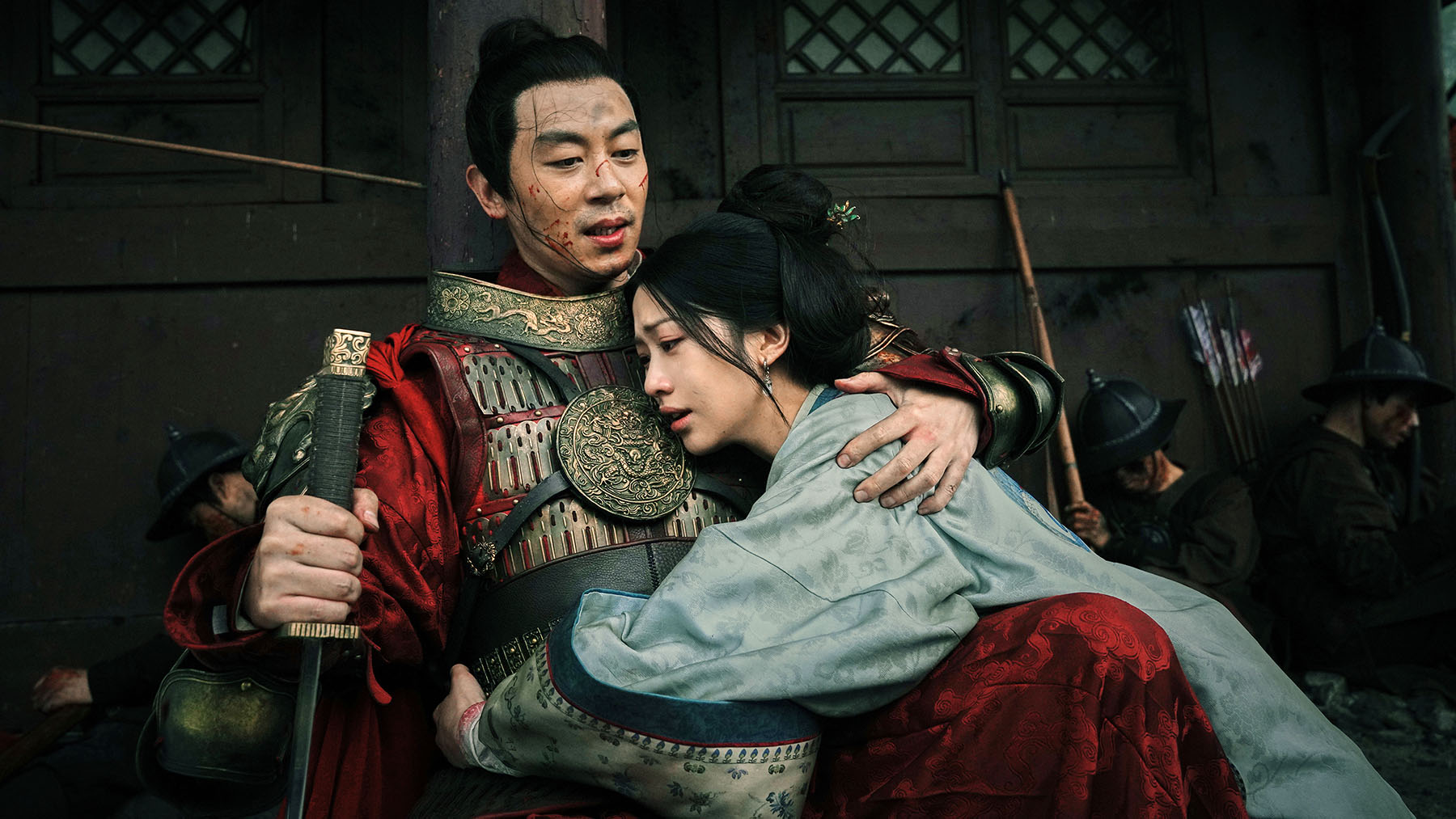
True to the famous line from the American film, "some birds aren't meant to be caged; their feathers are just too bright", Gu painstakingly plans his escape and succeeds.
Starring A-list actor Chen Xiao as Gu, the 40-episode Chinese drama has been airing on China Central Television's CCTV-8 and streamed on iQiyi since Nov 25, generating over 620 million views as of Dec 12, according to industry tracker Maoyan Pro.
The series is adapted from writer Zhao Zhiyu's 2013 novel Da Sheng Yi Ren (The Tycoon). Inspired by renowned merchants in ancient China's commercial history, the novel depicts a vast landscape of major business groups across the country, highlighting their distinct regional characteristics in provinces such as Anhui, Jiangsu, and Shanxi.
Refined into a faster-paced, twist-filled narrative, the drama uses only a few episodes to recount Gu's escape. He hides in a wooden barrel filled with water and live fish — cargo belonging to Mabang, an ancient logistics company that used horses to transport goods, from Shanxi.
Later, to repay the mabang's leader, who risks his life to save him, Gu volunteers to lead a group of transporters through a treacherous swamp, delivering plague medicine to a noble on the Inner Mongolian grasslands who urgently needs it to treat his soldiers. This journey marks the beginning of Gu's legendary commercial career.

The sharp-witted protagonist then masters finance knowledge through Shanxi piaohao (family-owned banking firms), enters the tea trade in Anhui, and later ventures into the salt industry in Jiangsu. Step by step, his commercial empire expands until he can negotiate on an equal footing with foreign merchants from Britain's East India Company.
Although Gu's story reflects the complexity and grandeur of China's commercial landscape in the late Qing Dynasty, director Zhang says that Gu's resilient life, in which he witnesses the tragic fate of those he cherishes, demonstrates how "the flower of commercial civilization" wouldn't have bloomed under the constraints of the Qing-era feudal rule.
"When the producer recommended the novel to me — all seven volumes — I was immediately drawn in by the gripping storyline," recalls Zhang.
An award-winning film veteran known for historical hits, such as the 2019 series Ming Dynasty and the 2022 show The Long River, also set in the Qing Dynasty, Zhang says that the novel's portrayal of Gu reminded him of Wei Xiaobao, the nobody-turned-legend protagonist in late wuxia (stories on kung fu masters) novelist Louis Cha's Lu Ding Ji (The Deer and the Cauldron).
"Wei is fictional, but the backdrop and some of the other characters, like Qing Emperor Kangxi, are real. Gu is fictional, too, but the backdrop of late Qing commercial development is real. That mix of 'made-up' and 'authentic' is fascinating," Zhang says.
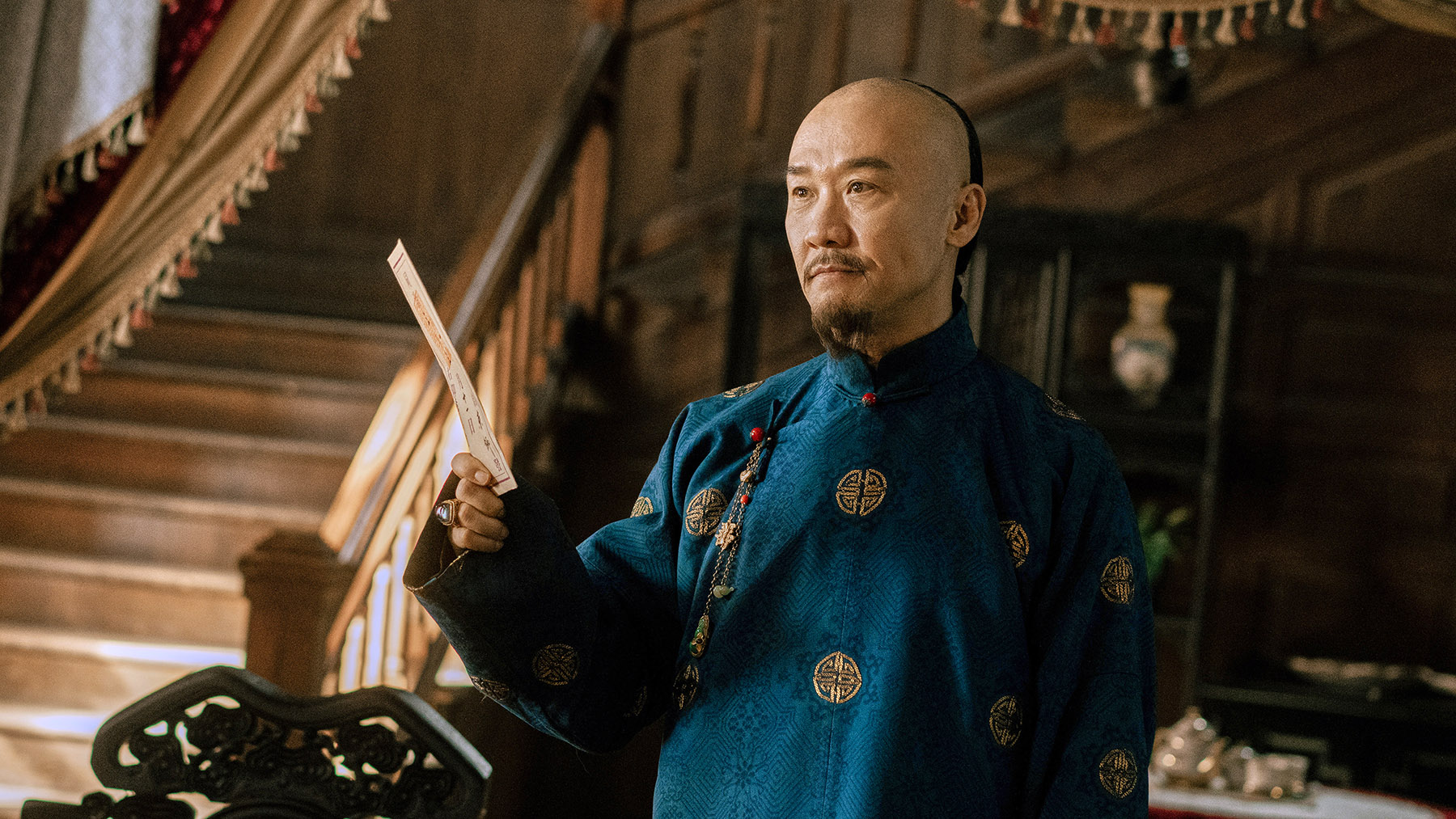
In an effort to stay faithful to historical facts, the crew tailored 3,000 costumes and spent 150 days filming Gu's business adventures across four provinces and the Inner Mongolia autonomous region — from the snow-covered forests of Heilongjiang and a century-old village in Anhui to Hengdian World Studios in Zhejiang province, the country's largest shooting base for films and TV shows.
But what has made Gu more charming is not how he makes his fortune. Instead, it is the Confucian values and Chinese intellectuals' mark on him that made the role larger than life.
In the series, Gu is portrayed as academically gifted from a young age. A native of Anhui province, he leaves his rural hometown to take the keju, feudal China's most demanding civil service examination, in Beijing, hoping to earn a government post. However, he is tricked into believing that his mother has fallen ill, leading him to attempt an unauthorized early departure from the exam site. As a result, he is wrongfully punished.
"Although Gu later becomes a businessman, he adheres to the principles of a traditional Chinese intellectual. He values benevolence, righteousness, propriety, wisdom, and integrity. His strong moral compass makes him a new kind of figure emerging from the old system. That's what I find truly fascinating," Zhang explains.
\
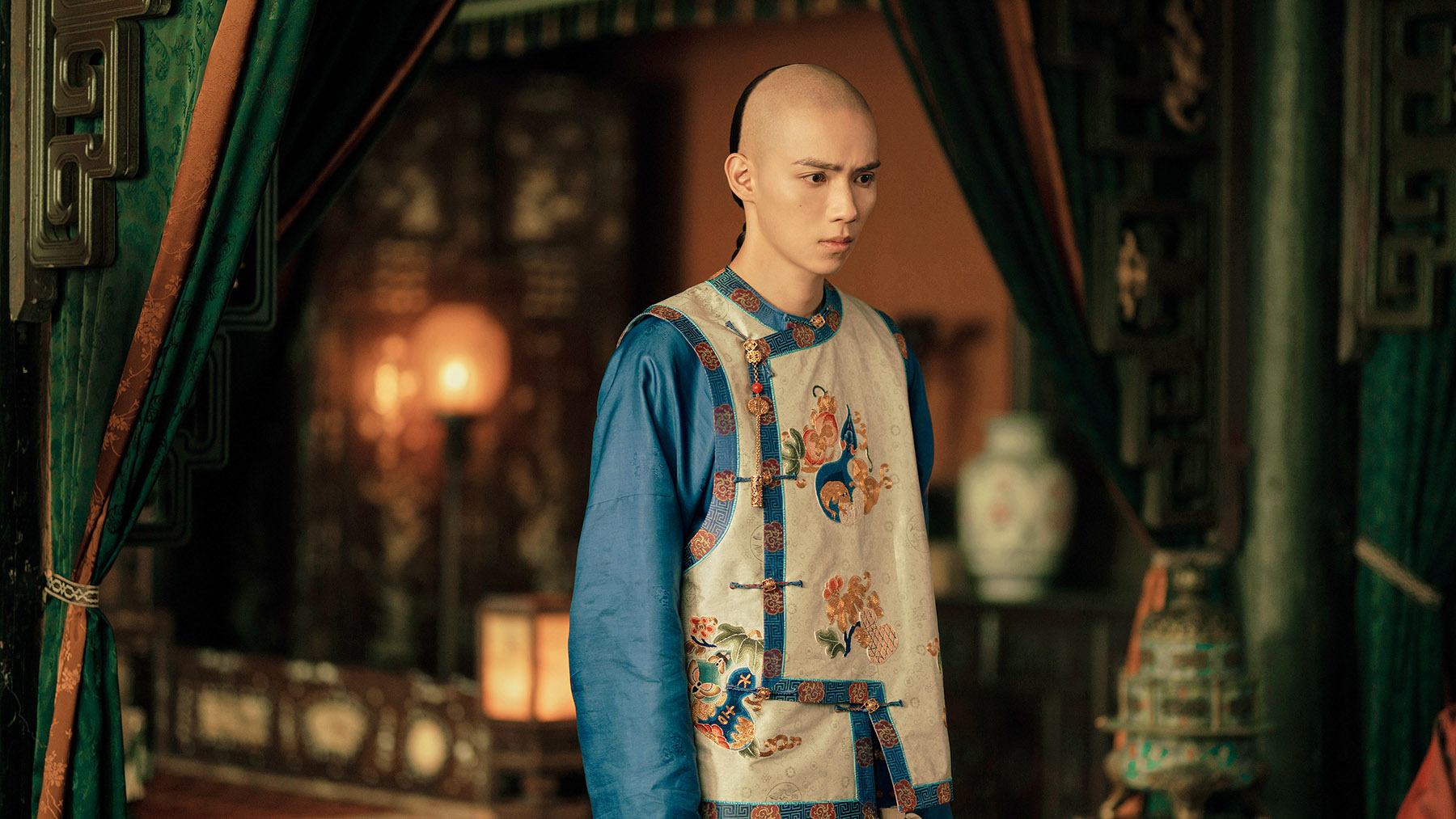
The drama also features several charismatic female roles, including Sun Qian as Chang Yu'er, the kindhearted daughter of the mabang leader who ultimately becomes Gu's wife; Xiang Hanzhi as Bai Yimei, Gu's fiancee who later falls in love with a rebel army general; and Li Chun as Su Zixuan, an ambitious and shrewd businesswoman who financially supports the rebel forces.
Although the status of women was largely defined by feudal norms during the Qing Dynasty, those who showed exceptional talent could pursue their dreams, Zhang comments, adding that he hopes the female roles will resonate with modern audiences.
Actor Chen recalls that he absorbed the role's spiritual power. "Although Gu doesn't appear physically strong, he possesses a resilient spirit. He can endure hardships that others cannot. No matter what difficulties or dangers he faces, he always maintains a pure heart," says Chen.
For Chen, a native of Anhui province, which is also the hometown of his character, the distinctive spirit of the local merchants is something he absorbed quickly, echoing the childhood stories told by his uncle.
ALSO READ: Popular TV drama transforms into a bold yet challenging stage production
Chen explains that he drew upon this traditional ethos to portray the character of Gu as resilient and hardworking.
"Whether in favorable or adverse circumstances, Gu maintains a sense of inner peace. Through him, I learned to never give up hope. Even in an extremely harsh environment like Ningguta, one must hold onto an enthusiasm for life," Chen says.
He also shares that two of the most memorable scenes involved riding a horse across an icy lake and hunting wolves in the wild of northeastern China.
"The best part about being an actor is embracing the unfamiliarity a role brings. To play different characters is to experience different lives. Each time I step into a new role, it feels like the new beginning of a life resumed," Chen adds.
Contact the writer at xufan@chinadaily.com.cn
