

Lijiang offers diamonds in the clear sky for visitors seeking the self-healing powers of astronomy, Li Yingxue reports.
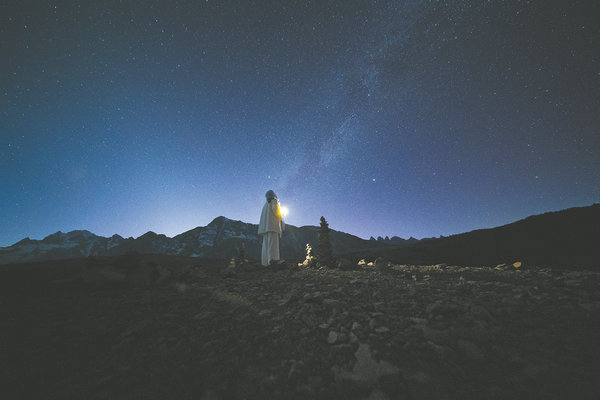
"When the meteors streaked like diamonds across the snowcapped peaks, it felt as if I held the romance of the entire universe," Gao Qiuhong says, recalling watching the Geminid meteor shower from Yak Meadow, a site nearly 4,000 meters above sea level in the Yulong Snow Mountain scenic area of Lijiang, Yunnan province. "The sleepless night, the cold, and the thin air were all worth it."
Gao, 34, who works in destination planning, traveled from Kunming specifically for the celestial event. She chose Yak Meadow for its open terrain, the backdrop of Yulong Snow Mountain, and the absence of pollution — conditions that make it a rare, high-quality observation site.
"It's truly breathtaking and dazzling when meteors appear to slide down from the snowcapped peaks. Yak Meadow is absolutely a place worth experiencing in person," she says. "It's not just the meteors; the night sky is stunning. You can see the Milky Way clearly."
READ MORE: China through unrushed eyes
"At midnight, the snow mountains take on a gentle blue-gray hue, even more striking than during the day," Gao adds."The starry sky is genuinely healing. Under the Milky Way, all my worries are insignificant."
On winter nights in Lijiang, the Milky Way stretches across the heavens, with stars cascading over the glaciers and peaks of Yulong Snow Mountain. Here, night is not merely an extension of day, but a landscape worth traveling for in its own right.
A seasonal stargazing program themed "Unforgettable Lijiang, Seeking the Starry River" was launched in December and will run through May. As part of the initiative, Lijiang officially introduced the cultural tourism IP "A Place Where the Stars Feel Close" as a fresh calling card to the world.
With its high altitude, excellent atmospheric conditions and minimal light pollution, Lijiang has become a preferred destination for astronomy enthusiasts. Stargazing is no longer a niche pursuit reserved for professionals, but an increasingly accessible lifestyle experience.
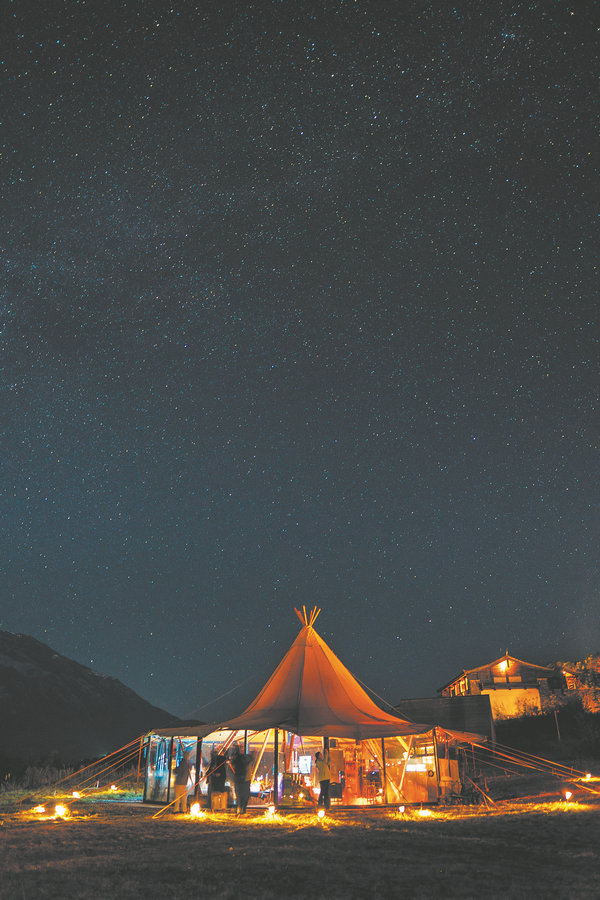
Urban demand for nature
According to Yang Shuhong, director of the Lijiang Municipal Administration of Culture and Tourism, the stargazing season serves a dual purpose: transforming Lijiang's "irreplaceable night sky" into experiential tourism products, while using the stars as a thread to connect snowy mountains, lakes, and ethnic culture, and promote the integration of "stargazing + ecology+ culture + study tours".
"In the past, most people associated Lijiang with its old town or Yunnan-style scenery. Now, we hope people will form a new impression of Lijiang," Yang says. "We want to upgrade cultural tourism from traditional sightseeing to in-depth experiences."
Responding to growing urban demand for pristine nature and spiritual healing, Yang says star tourism offers visitors a way of "escaping the noise and conversing with the universe".
READ MORE: First supermoon of 2026 makes appearance in sky
In 2025, the city released the Lijiang Stargazing Map, identifying seven premium stargazing camps. Two themed routes have also been designed, covering scientific research, popular science education, and family-oriented activities, delivering an allday experience of "mountain landscapes by day, starry skies by night," Yang says.
Lijiang has also organized starry-sky concerts, astronomy lectures and public science events around significant celestial phenomena, including the Geminid meteor shower.
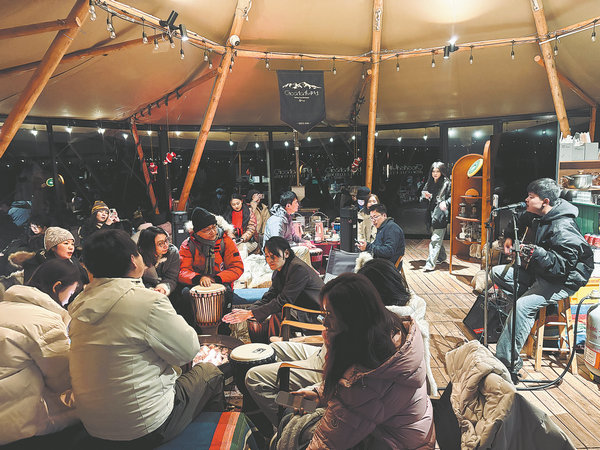
"We integrate the starry sky with local culture," Yang adds. "As a region with a strong presence of ethnic minorities, many local cultures in Lijiang have long engaged in a dialogue with the stars."
By leveraging the stargazing season, the city aims to stimulate the development of related industries such as homestays, camping, and cultural and creative products. "We will continue to build Lijiang into a premier stargazing destination, serving visitors from across China and around the world," Yang says.
Zhao Yixiong, an official with the Lijiang Association for Science and Technology, says surveys conducted in recent years by domestic astronomers and researchers have confirmed Lijiang as highly suitable for stargazing.
He notes that audiences for night sky gazing have expanded steadily from professional astronomers and astrophotography enthusiasts to ordinary visitors who simply enjoy looking up.
ALSO READ: Walking the Silk Road
As a result, more people are viewing Lijiang's starry skies than ever before. The association continues to invite astronomers and well-known night-sky photographers to Lijiang for science outreach, and has coordinated with the Guangdong Astronomical Society to bring astronomy enthusiasts from Guangdong province to the region.
"Some astronomers have suggested designating a stargazing development zone between Lijiang's snowy mountains and the old town, with unified light control across the area," Zhao says. "All lighting for homestays and guesthouses would follow corresponding design and construction standards."
He adds that the Geminid meteor shower is particularly suitable for visitors, as it can be observed with the naked eye and requires no professional equipment.
Developing resources
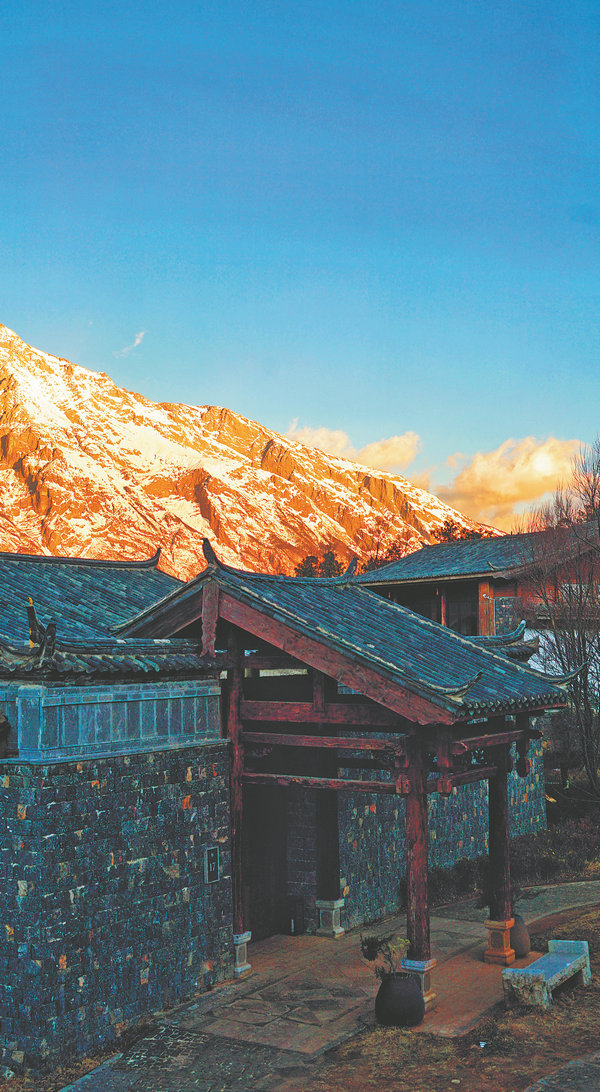
At the Jinmao Pureal Mountain Lijiang hotel, one of the recommended places on Lijiang's stargazing map, the nighttime activity has become an integral part of the guest experience.
General manager Zhang Qiyu has been developing snowy mountain and starry-sky resources for many years and has witnessed firsthand how stargazing has drawn an increasing number of visitors.
He says the hotel, located at an altitude of 3,100 meters on the eastern foot of Yulong Snow Mountain, offers clear views of both peaks and stars, as all 89 suites and villas face the mountains.
When Zhang began working at the hotel in 2018, he noticed that while guests enjoyed the daytime scenery, nighttime activities were relatively limited. Having lived in Beijing for many years before moving to Lijiang, he realized that the brilliant night sky could become a distinctive experience, especially for visitors from large cities.
ALSO READ: Tracing China’s origins
During the 2018 Geminid meteor shower, Zhang organized stargazing events and livestreamed them — a tradition that continues today. The hotel now has its own observatory equipped with dozens of telescopes.
During 2025's Geminid meteor shower, the hotel scheduled a 15-minute lights-off period each night, allowing guests' eyes to adjust to the darkness and better appreciate the stars.
"Many of our guests return every year during the Geminid meteor shower, and say it brings them emotional healing," Zhang says.
"Through these stargazing activities, we've successfully increased the average length of guests' stays," he adds. "We're delighted to see stargazing become a major event in Lijiang's cultural tourism, and we hope it will grow into a major highlight nationwide."
To enrich the mountain resort experience, the hotel also offers forest walks and hands-on activities related to the Dongba culture (its ancient script was included on the UNESCO Memory of the World list in 2003), including papermaking, clay tile cat sculpture, and tie-dyeing. Dongba culture is a core element of the Naxi ethnic group's ancient heritage, preserved through the Dongba religion.
Each morning, sunlight spills over the mountainsides, creating the golden glow known as rizhao jinshan, a daily ritual many visitors make a point of witnessing.
A collective gasp
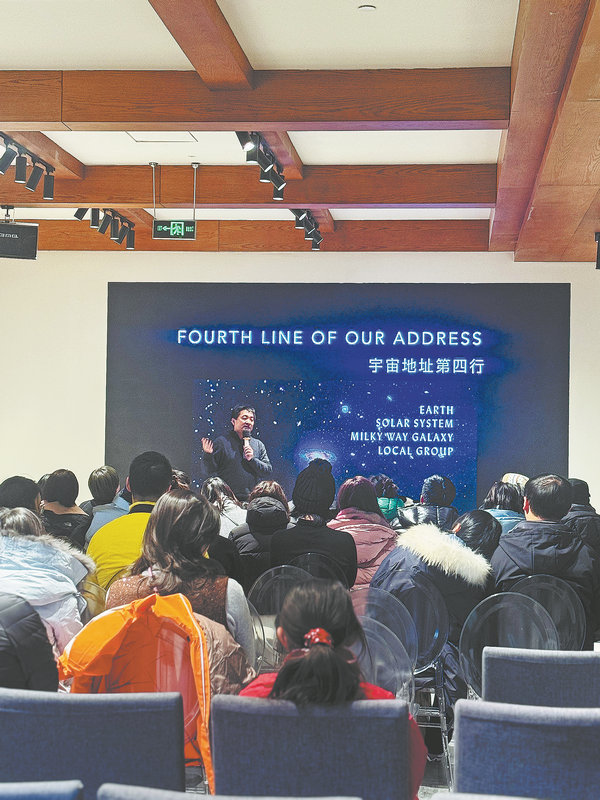
Media blogger Luo Xi chose to visit Lijiang during the Geminid meteor shower and stayed at the Pureal hotel in 2025. Now 38, his last visit to the city was two decades ago. But this time brought a very different experience.
Luo filled his days and nights watching meteors, eating yak hotpot, painting thangka artworks, and photographing the golden sunrise on the peaks.
"This was my first time seeing a meteor shower in person. When the first meteor appeared, everyone let out a collective gasp," he says."When a meteor with a long tail streaks across the sky, it's incredibly thrilling and joyful."
READ MORE: An eerie other world
Although he attended the hotel's astronomy briefing, Luo says he hopes to deepen his knowledge, believing it will make the experience even more immersive.
"I'd consider bringing my family or friends back to Lijiang to watch meteors again," he says. "I hope next time to be better prepared knowledge-wise, and to see even more meteors."
