

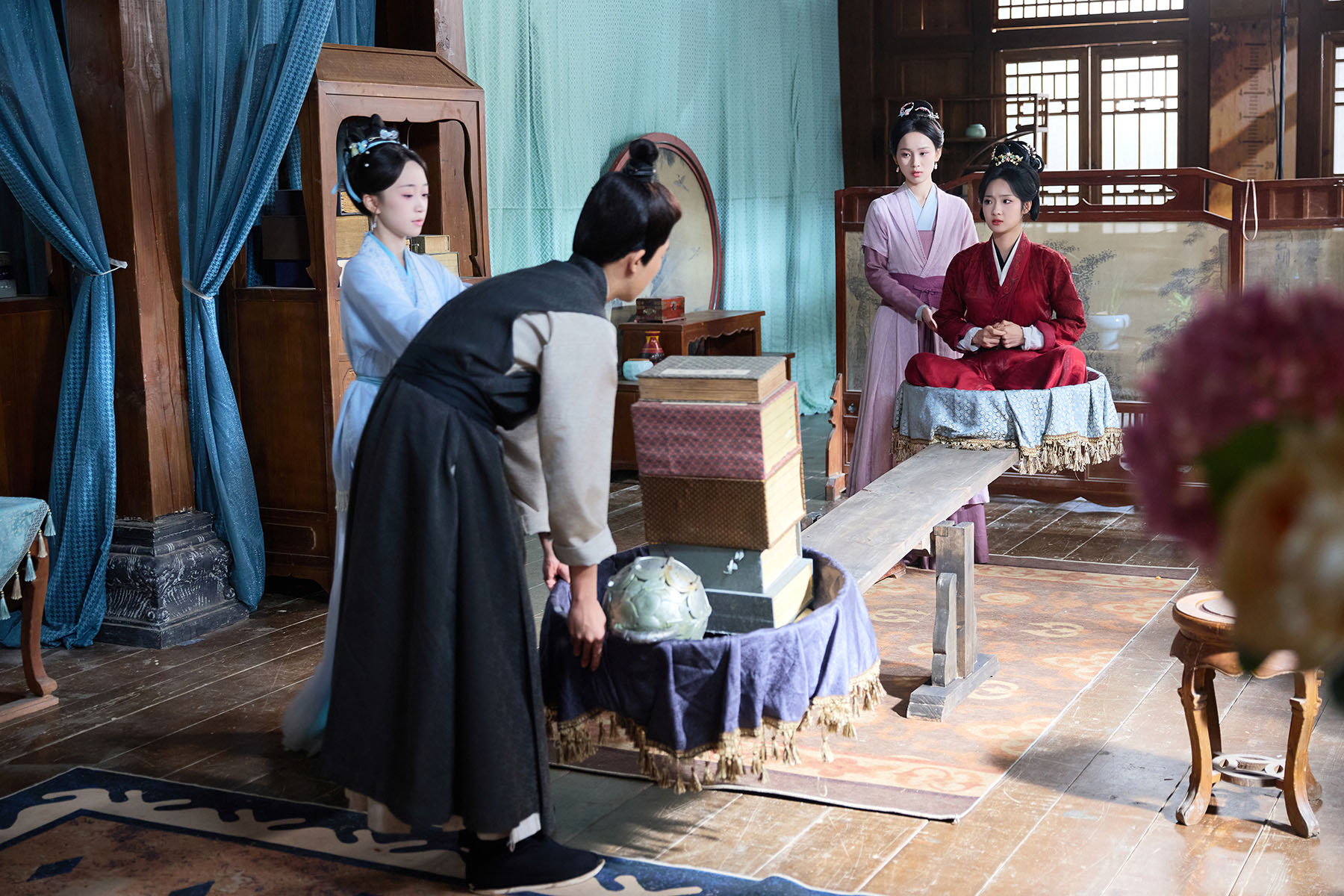
What would a modern-day fitness coach do if he suddenly found himself in ancient China, living as an overweight young man? Without any gym equipment, how would he get back in shape using only what he had on hand?
This is the premise of the upcoming mini-drama series, Fat to Fit: An Ancient Weight Revolution, China's first science-based fitness show in its genre. Across 60 fast-paced, humorous episodes, the show embeds systematic, evidence-based knowledge on exercise and nutrition, distinguishing it from the usual roster of CEO fantasies and family-feud melodramas.
The trailer premiered this month at the 3rd China-ASEAN International Conference on Physical Fitness and Health Promotion in Nanning, the capital of Guangxi province, drawing considerable attention. A dedicated booth outside the venue showcased highlight reels, behind-the-scenes clips, and interactive activities, serving as a bridge between academic discussions and accessible, science-driven public education.
Jointly produced by the China Institute of Sport Science, the Culture Media Center of China Comment (Banyuetan), and Migu Digital Media Co, the series aims to inspire broader participation in national fitness initiatives.
Yuan Hong, vice-president of the institute, says she hopes the show will help viewers adopt proper training concepts and understand evidence-based fitness methods. "We want to encourage a shift from passive exercise to active participation, and from blind imitation to scientific training," she says.
The protagonist is played by 27-year-old actor Wang Haoxiang, who has previously acted in various genres, including period dramas, time-travel stories, and modern CEO-themed plots, but this is his first fitness-themed project.
"It promotes proper training, fat-loss methods, reasonable eating, and many aspects of everyday wellness. It's scientific, systematic, and also fun," he says.
Wang's background in participating in running events gave him a strong athletic foundation. Although he normally trains with gym equipment, the ancient setting required improvisation — using stones, stone slabs, and other simple objects.
"The movements are still based on modern methods, with squats, stationary running, and carrying weights. They're effective full-body exercises anyone can follow," he says.

The female lead, played by 26-year-old Guo Jing, has filmed micro-dramas for more than a year. Guo believes this project goes beyond casual entertainment. The experience also changed her perspective.
"I do not have a slim body type, and on camera, I look heavier. Our industry prioritizes thinness, and many actors resort to unhealthy crash diets. I was extremely anxious," she says. "But this show helped me make peace with myself. Beauty takes many forms, slender or full-figured. What matters is health. This series teaches proper training and healthy habits, which benefit all of us."
Filming also taught her proper techniques: "There's a scene where I slim down through training. The instructor showed us how to lift weights correctly in slow, controlled movements that activate the muscles. I learned as we filmed."
Wang Mengdie, assistant researcher at the science institute and one of the show's supervisors, was involved from concept development to script review and on-site training. After years in science-based fitness education, she has long sought more engaging formats to teach people.
"We've tried many traditional methods, like offline activities, animated explainers, expert lectures, and livestreams. This year, we also collaborated with science influencers," she says.
"We want to create content that is engaging and allows people to enjoy themselves while learning correct health concepts and knowledge."
To ensure accuracy, writers were given a set of science-based fat-reduction principles and their drafts were reviewed by multiple experts. During filming, professional instructors were on set to correct movements and posture and maintain scientific rigor.
The team has also compiled a fitness and fat-loss outline. As each episode airs, a companion handbook will be released to help viewers fully understand the concepts.
"Because episode length is limited, the handbook provides detailed explanations and allows viewers to practice safely," Wang says. "We'll continue exploring new ways to communicate the science."
Zhang Jie, who is in charge of mini-dramas at Migu, says the series is expected to launch domestically at the end of this year or early next year, before being distributed on overseas short-video platforms, covering more than 200 countries and regions.
"There's strong global interest in sports content. With its fresh, entertaining perspective, I believe this series will resonate with international audiences," she says.
Contact the writers at liyingxue@chinadaily.com.cn
