

Rare-disease patients seek improved quality of life amid medical advances

Ten years ago patients with rare diseases would phone Wang Yiou's support organization in despair, many complaining they had no medication or were unable to afford treatment.
Today the situation is markedly different thanks in no small way to proactive government policies and the country's advances in innovative drug treatment.
The topics brought up in phone calls today have become increasingly diverse, said Wang, founder and secretary-general of the Illness Challenge Foundation, a Beijing-based organization that provides support to rare-disease patients across the country.
For example, parents who take care of their sick children worry about sudden seizures at night and are unable to sleep through the night, hoping for monitoring methods.
READ MORE: New hope offered to rare disease patients
At school, children forget to take their medication and need inconspicuous smart pillboxes that don't cause psychological pressure, she cited as another example.
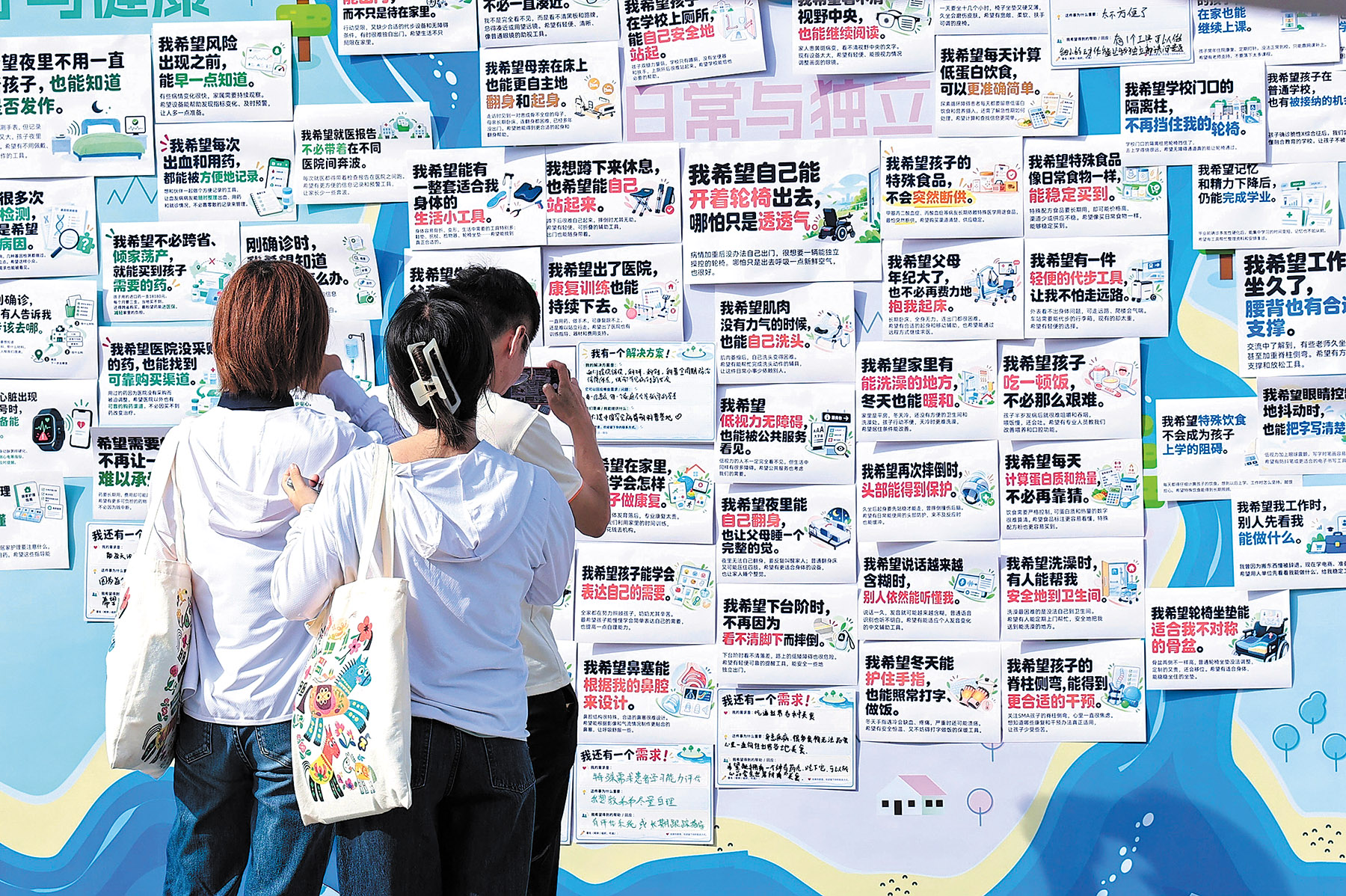
"Over the past decade, many rare-disease patients in China have moved from seeking medical treatment everywhere and having no available drugs to a new stage today, hoping for more convenient travel and socializing as well as better social integration and expression," she said.
"Many people's life conditions are very different from 10 years ago," said Wang, who has osteogenesis imperfecta, commonly known as brittle bone disease.
In mid-October, the foundation hosted an event in Hangzhou, Zhejiang province, a hub for tech firms. Ten teams, including school students and young workers, showcased their solutions to the daily needs of rare-disease patients to help them live more comfortably.
Despite all the improvements, there is still a long way to go in the treatment of rare diseases, experts said. There are over 10,000 known rare diseases worldwide, and about 20 million people in China are affected.
Globally, less than 10 percent of rare diseases have available treatments. In China, about 60 percent of patients with treatable diseases can access medication.
Responding to needs
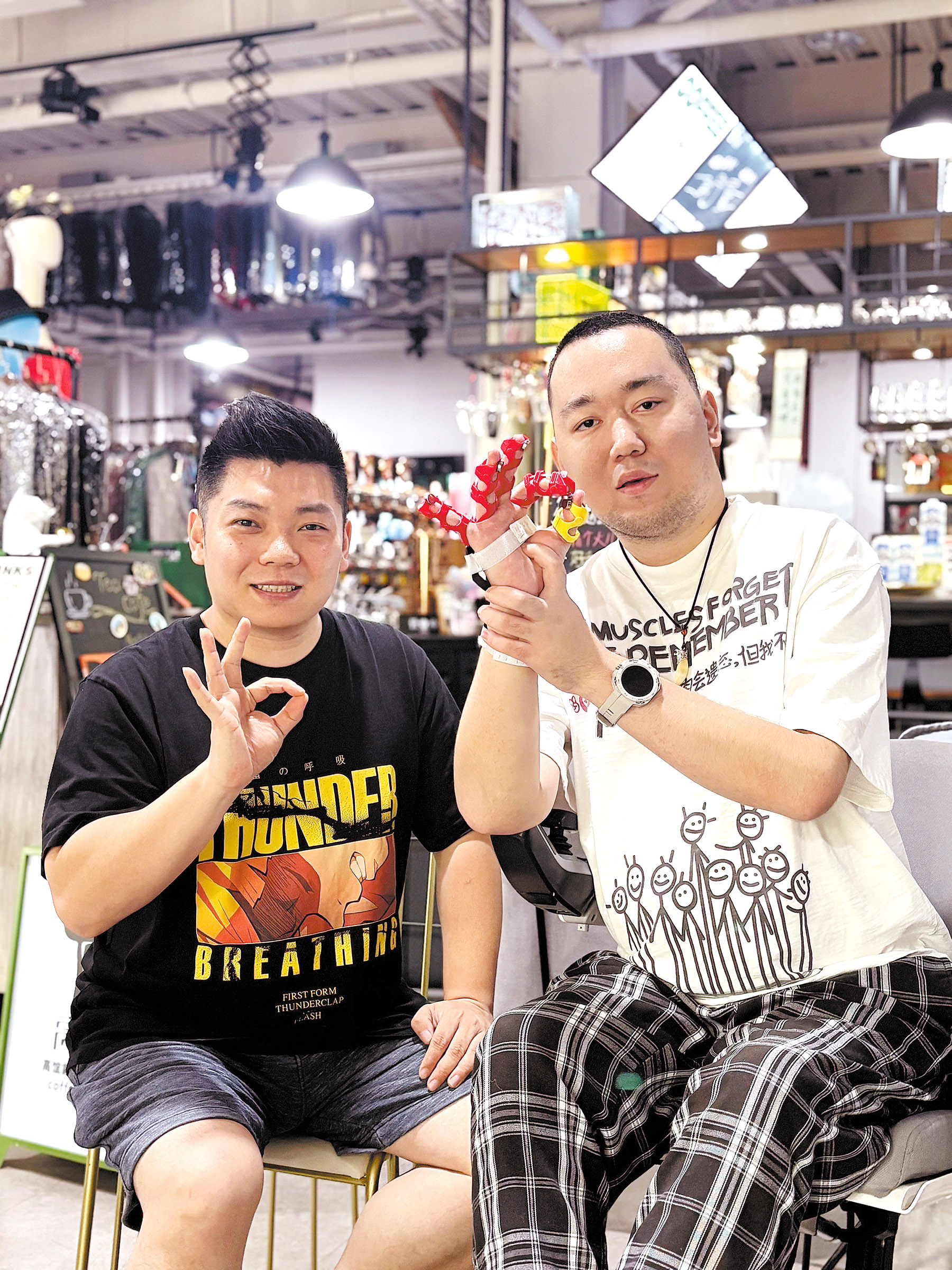
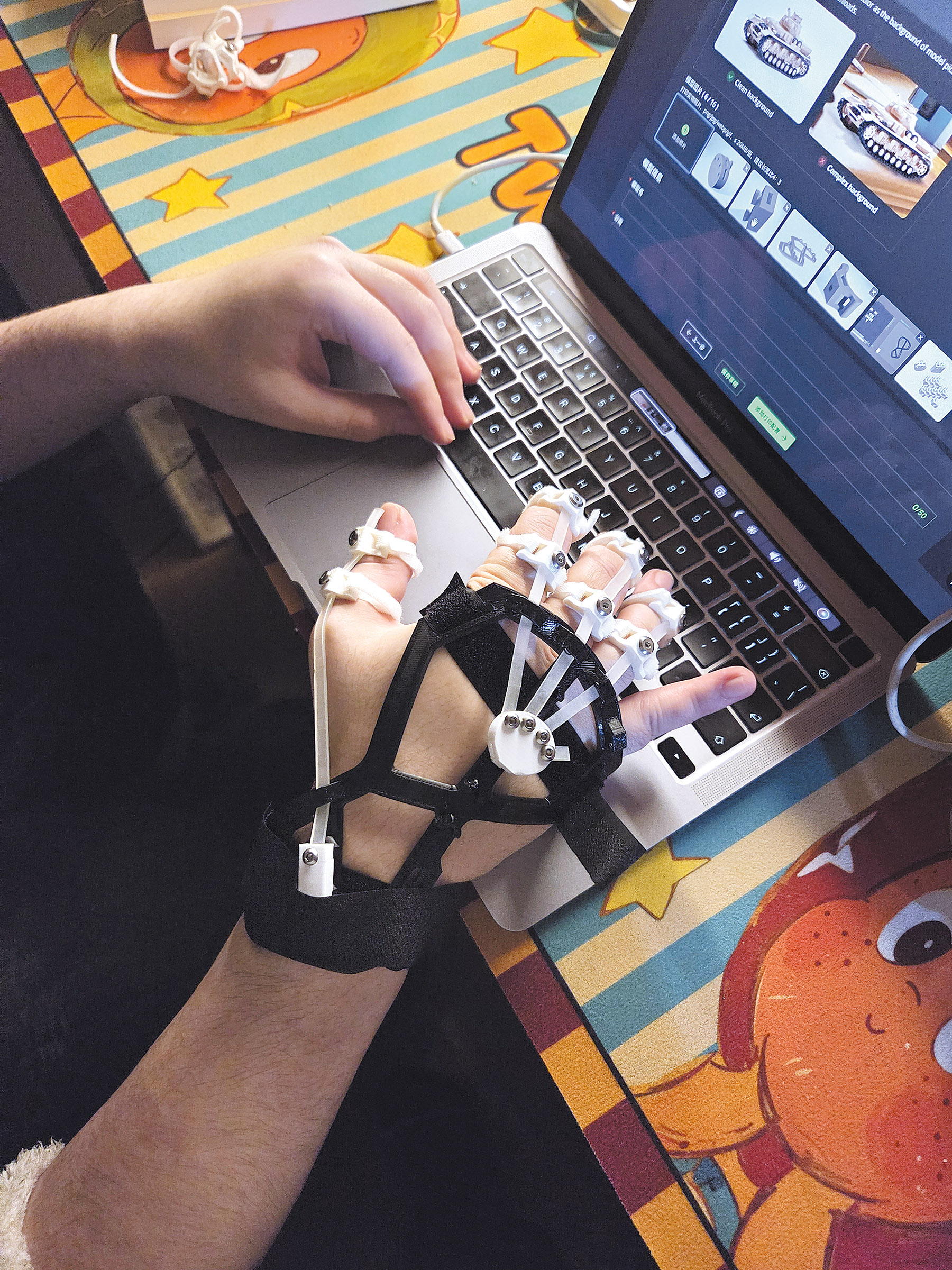
An assistive glove designed to address the inability to stretch fingers due to muscular atrophy attracted interest at the Hangzhou event.
Many individuals with neuromuscular disease experience muscular atrophy. Their clenched palms and fingers make it difficult for them to perform everyday tasks, such as holding a water bottle or typing on a keyboard.
A year ago, together with several peers, Sun Dawei began promoting the application of AI technology through an open-source collaboration to respond to the daily needs of rare-disease patients. Many pointed out that commercially available hand assistive devices were only for rehabilitation.
Sun led a team of middle school students who discussed patient needs and product design.
They developed a specialized glove using a 3D-printed framework, elastic bands, and mechanical design to help patients grasp objects independently. The device, costing only 30 yuan ($4.50), has been tested in nearly 100 households.
"This glove is the most helpful of such products that I've tried, and I'm touched that the final product was developed through continuous communication with patients," said a 35-year-old product tester surnamed Chen from Shanghai.
Sun said the team is now collaborating with Nanjing Medical University and the Yiwu Industrial Association to develop the glove, addressing issues of long-term comfort and overall user experience. The goal is for a mass-produced version to be portable, comfortable, and aesthetically pleasing.
Meanwhile, a group of students from Shanghai-based Fudan University helped a band made up of rare disease patients find their groove.
The drummer couldn't use his feet to play the floor drums due to physical limitations, so the team created a simple head-controlled smart device. The headband, equipped with an accelerometer, allows him to nod to trigger the floor drum pedal.
Li Shuaishuai, a pediatrician from Beijing, came up with the idea of a smart pillbox to make medication monitoring easier. The device has inbuilt sensors that monitor when it is opened and closed and the weight of the medication inside.
"Most pillboxes on the market are aimed at chronic disease patients, with low requirements for medication monitoring. For conditions like hypertension, if someone misses a dose, making up for it the same day will usually work," said Li.
"But rare diseases are different. Missing a dose can lead to loss of life," he said.
For children who need to take medication at school but don't want classmates to see, Li is considering designing it to look like a watch. "However, rather than focusing on designing concealed pillboxes, it might be better to change their mindset by helping children understand that being sick is not shameful. They shouldn't bear unnecessary psychological burdens," Li said.
Sun said the more interaction he has with rare-disease patients, the more he realizes that their needs revolve more around equality and respect.
"By leveraging open-source methods and connecting resources from schools and enterprises, we aim to answer patients' non-standard, customized assistive device needs in daily life, which is our small effort to help them achieve equal living standards," he said.
New therapies
Over the past decade, the government has introduced a series of policies to promote the diagnosis and treatment of rare diseases as well as drug development. More than 200 rare-disease drugs have been marketed. A total of 140 drugs targeting 71 diseases are now covered by national public medical insurance.
Nusinersen, the world's first precision-targeted therapy for the treatment of spinal muscular atrophy (SMA), a rare neuromuscular disorder, was launched in China in 2019 and included in public medical insurance in 2021.
Before being covered by insurance, only about 200 patients in China used the drug, data from the National Healthcare Security Administration showed. Within the first year of being included in insurance, the number of users jumped to about 2,700.
Reimbursement rates for the injection vary across provinces and cities, and patients typically need to pay 30,000 to 35,000 yuan themselves every year. In some regions, like Shanghai, the out-of-pocket amount is almost 50,000 yuan.
There used to be a saying that doctors who can diagnose rare diseases are rarer than rare diseases themselves and a diagnosis could take years.
However, the situation is vastly different today.
"More than 400 hospitals across the country have joined a collaboration network, and the number of specialist doctors is increasing significantly, shortening the diagnosis period," said Ding Weibo, Asia-Pacific region president of US-based company Biogen, which co-developed Nusinersen.
"Before, type 3 SMA patients, who have a later onset and slower progression, typically took three to four years to be diagnosed after symptoms appeared.
"Recent studies showed that most type 3 patients can now be diagnosed within a year, and the diagnosis time for early-onset type 1 and type 2 patients has been reduced to three to four months," he said.
China's rapid advancements in scientific innovation and new drug development have also improved treatment.
Medical technology firm Triastek, for example, is applying its 3D-printing pharmaceutical technology to rare-disease drug development.
Its independently developed T25 is a 3D-printed oral peptide tablet intended for the treatment of adults with acromegaly, a hormonal disorder that can lead to enlarged body parts.
In March, T25 received clinical trial clearance from the US Food and Drug Administration. In July, it received clinical trial approval from China's National Medical Products Administration, securing clinical trial authorization in both countries.
Wang Jinhu, a chief physician at the department of pediatric oncology at the Children's Hospital, Zhejiang University School of Medicine, said the participation of rare-disease patients is also a key factor in speeding up the development of new drugs.
For example, an innovative drug to treat neurofibromatosis, a disease that causes tumors to grow on nerve tissue, faced difficulty in recruiting participants for clinical trials in the US, leading to the termination of the trials.
However, in China, due to the active involvement of patient communities, the recruitment of trial participants, initially expected to take at least two years, was completed in less than three months.
"It was exactly the patients' urgency to improve quality of life that drove this forward," Wang said.
The drug was approved in China in 2024 and included in the national public medical insurance the following year.
Hoping for more
The obstacles for children with rare diseases enrolling in school have significantly decreased, observers said.
Schools nowadays tend to view children more from a perspective of care, and in most cases there is no longer fear caused by a lack of understanding of diseases.
But when it comes to employment, even though the law clearly prohibits job discrimination, biases still exist. Employers may reject job applicants citing reasons such as professionalism, while the real concern is their medical condition.
Zhang Haoyu, 38, is a patient with osteogenesis imperfecta living in Beijing. He works in management at a public welfare foundation.
Holding a master's degree from a top university, he was once rejected by a large internet company, with the reason given that he was "different from others" and couldn't participate in team-building activities.
ALSO READ: Negotiators work to bring down nation's prescriptions
Relying on a wheelchair for daily travel, he hoped for further improvements in accessibility around the city.
Zhang said the issue of subway accessibility is mostly solved, but he still faces challenges using steps and roads.
"As a fan of theater and movies, I also hope that such facilities can make wheelchair access easier and provide seating suitable for wheelchair users," said Zhang, who cannot walk independently and underwent five corrective surgeries on his legs during his teenage years.
At the Hangzhou event, Zhang said he endorsed a solution that helps visually impaired patients play computer games to cater to their leisure needs.
"This may not seem like an urgent need, as cultural entertainment is just leisure for ordinary people. But for patients whose daily lives are limited to hospital rooms or bedrooms, this can be the most colorful and joyful part of life, even a source of hope for living," Zhang said.
Contact the writers at zhouwenting@chinadaily.com.cn
