

Pu'er lures its giant coinhabitants farther from higher-value farmland with fields of corn, sugarcane and pineapple
Editor's note: As protection of the planet's flora, fauna and resources becomes increasingly important, China Daily is publishing a series of stories to illustrate the country's commitment to safeguarding the natural world.
The early morning mist rolling over Nanbanghe village in Pu'er, Yunnan province, used to carry an underlying edge of tension. In this part of Southwest China, wild Asian elephants are not just occasional visitors; they are an indelible part of daily life.
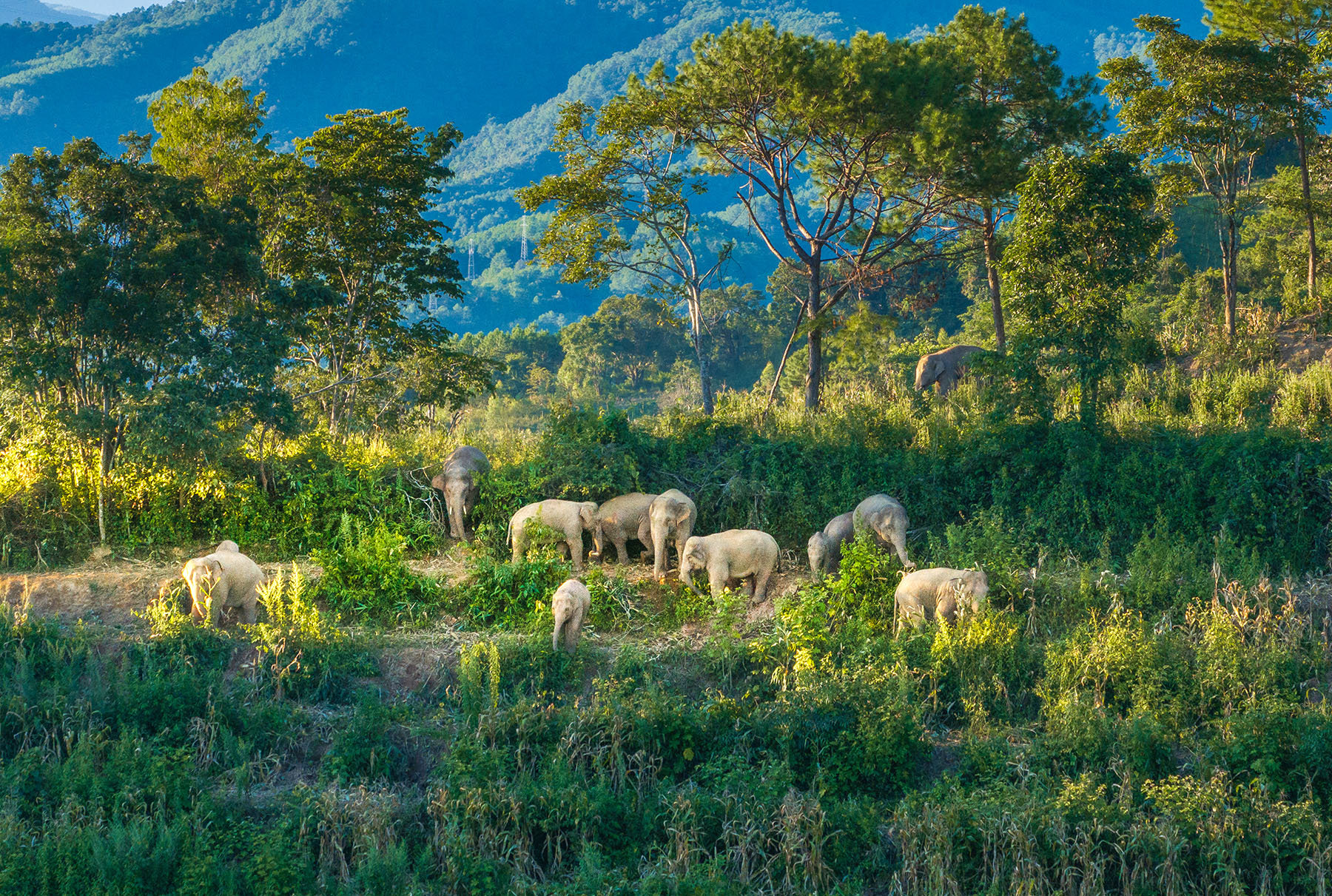
The massive animals move fluidly through farmland, dense forests and narrow rural roads, sometimes gathering in impressive herds.
Li Meixian, Party chief of the village, recalls times when as many as 40 to 50 elephants appeared in the area at once. Even recently, more than 30 have remained actively roaming the surrounding countryside.
On paper, their persistent presence reflects a remarkable triumph of conservation. Yunnan's wild Asian elephant population has grown from 293 in 2018 to nearly 400, according to official figures.
READ MORE: Living alongside Asian elephants
Yet for the farming communities sitting directly along these ancient migration corridors, that conservation success brought a harrowing, everyday dilemma: how can people protect their crops, their homes and their personal safety while actively making room for a protected, four-metric-ton species?
Pu'er set out to answer that question not with barriers or conflict, but with an integrated package of measures combining managed food source bases, constant monitoring, insurance compensation and financial backing for local rural industries. In Nanbanghe, the most visible and innovative piece of this strategy is known locally as the "elephant canteen".
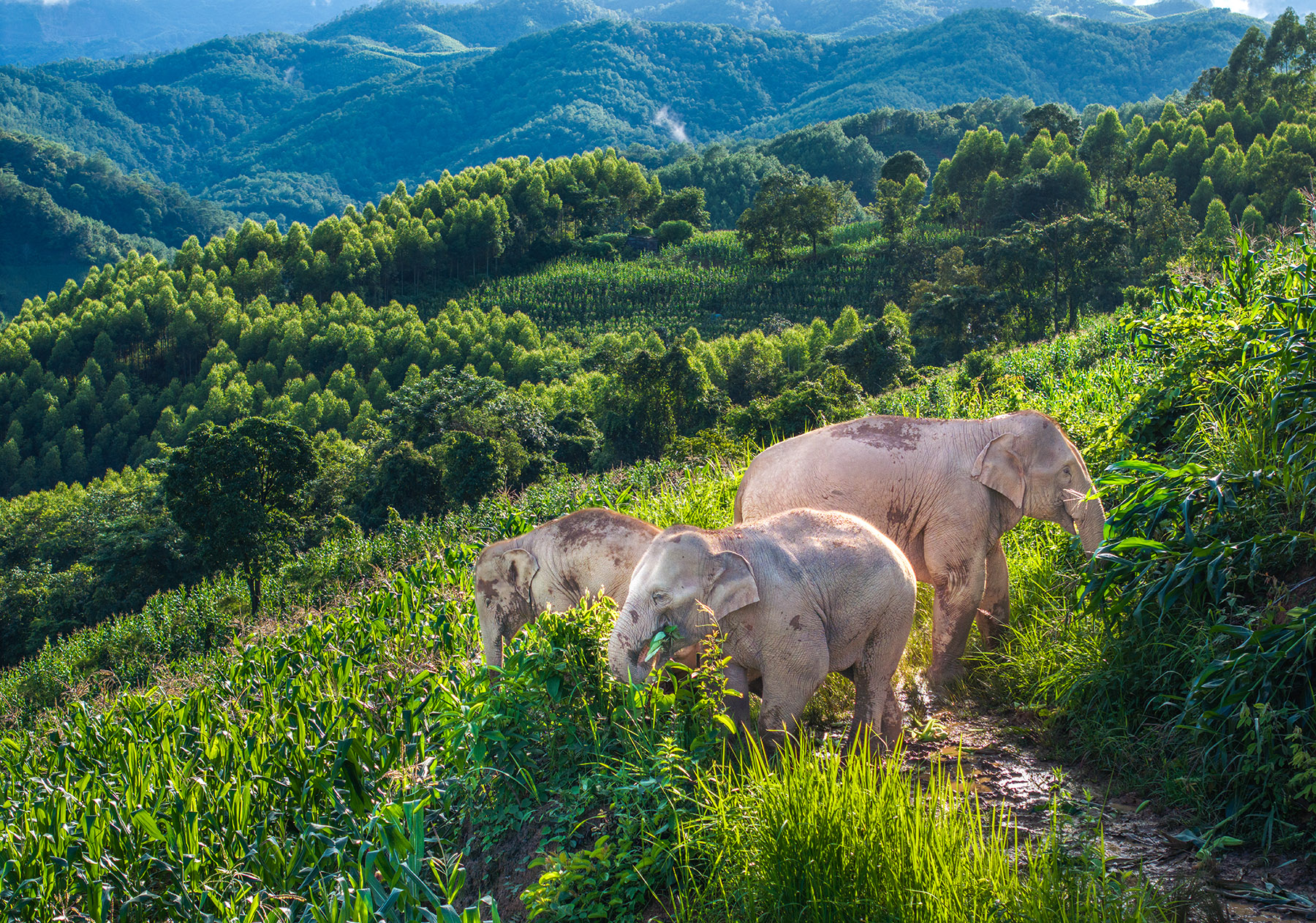
The canteen is not a physical building, but a designated landscape planted intentionally with crops that elephants find irresistible, such as sweet corn, sugarcane and pineapple. Established in areas where the animals naturally move, its core purpose is to guide the herds toward managed feeding zones and keep them away from residential homes and higher-value farmland.
Before these bases were built, Li said, villagers often faced heavy losses. In 2017, her own family planted about 1.3 hectares of corn and rice, only to watch elephants destroy more than half of it. At the time, official compensation stood at a meager 9,000 yuan ($1,345) per hectare, leaving families heavily out of pocket.
To rewrite this dynamic, Nanbanghe began building a government-supported food source base in 2018. Under the program, villagers voluntarily leased their land to forestry authorities, earning a steady land rent of 4,500 yuan per hectare annually, paid in five-year cycles. To further tie local livelihoods to the initiative, villagers were hired to plant and maintain these elephant-friendly crops, earning daily wages of 130 to 150 yuan.
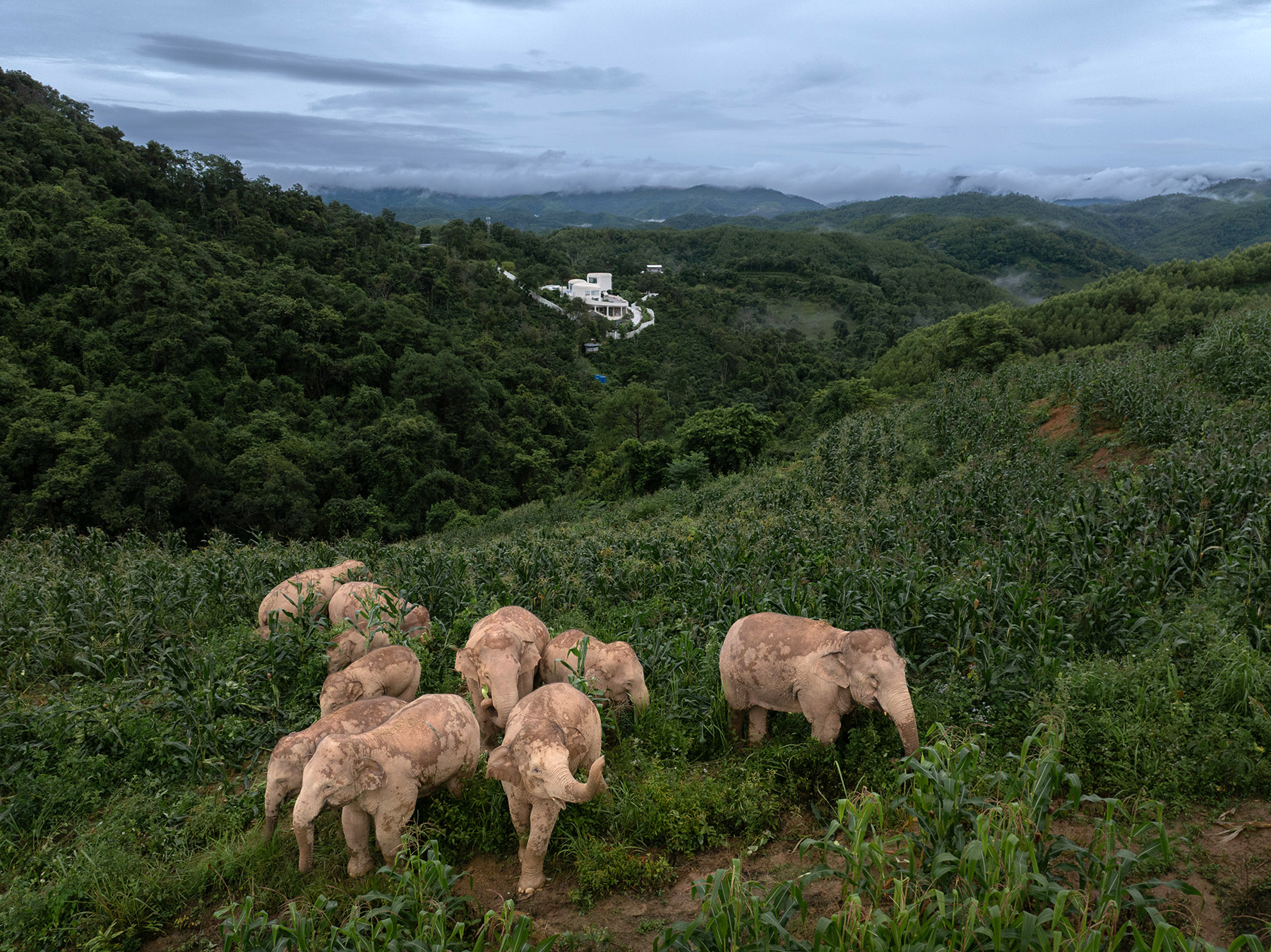
By the time the government-supported program officially concluded in 2023, Pu'er's network of food source bases spanned an impressive 800 hectares across the region.
When the State funding ended in 2023, villagers continued planting corn and other crops favored by elephants, creating scattered, self-organized food-source plots.
Li said practical necessity drove this choice — farmland left idle for several years quickly turns wild and becomes exceptionally difficult to recultivate. Equally important, government compensation standards had improved dramatically in the interim.
Today, damaged corn can be compensated at 15,255 yuan per hectare per season. While this does not cover all manual labor costs, it fully absorbs the price of seeds and fertilizer.
Rice and sugarcane have even higher compensation standards. For local farmers, the system does not erase every single loss, but it successfully establishes a manageable economic balance.
For 48-year-old villager and elephant monitor Yang Zhongping, the change is most visible at night.
Before the feeding zones were built, hungry herds did not limit themselves to open fields. After autumn harvests, when families stored grain inside their dwellings, elephants frequently breached houses in search of food, targeting household corn, rice and pig feed.
"Now elephants still occasionally enter villagers' homes, but the frequency is much lower," Yang said. "People do not have to be so worried at night."
Yang's family has about 0.8 hectares of corn, with roughly 0.5 hectares included in the food source base. For households capable of planting two crop seasons a year, damage compensation can reach up to 30,510 yuan per hectare annually if both harvests are impacted — a safety net that makes sharing land with wildlife viable.
Yet, an edible buffer cannot solve every operational hurdle. Yang grows significantly more tea and coffee than corn. While elephants do not eat tea or coffee, they can still trample the plants while moving through the area. Around 2017, about 900 coffee trees across 0.2 hectares of his land were damaged. Based on current coffee prices, he estimated the loss would be about 20,000 yuan.
Economic crops can also be compensated, but villagers said the payments often fall short of actual losses. Bai Xiao, another Nanbanghe villager, manages about 5.3 hectares of coffee outside the food source base. Last year, elephants trampled about one-tenth of the plantation and the compensation did not fully cover the loss, he said.
This is where wildlife insurance and targeted financial tools step in to bridge the gap.
Wildlife liability insurance is the first line of compensation when elephants damage crops. Yang Zhou, chief of statistics and research at the Pu'er branch of the People's Bank of China, said the insurance mechanism is direct and necessary, but cannot cover all losses. For losses beyond insurance, local banks are guided to support affected farmers through loan extensions, adjusted repayment plans and renewed credit.
More importantly, he said, villagers need stronger income sources so they don't rely solely on compensation.
The local approach is to let lower-cost crops such as corn, rice and sugarcane serve partly as elephant food in suitable areas, while encouraging farmers to develop coffee and other industries on surrounding slopes and valleys. As coffee prices have risen in recent years, those earnings can help offset losses that insurance does not fully cover.
"When villagers' income is protected, they are more willing to plant food elephants like and guide them to those areas," Yang Zhou said. "That forms a positive cycle for human-elephant coexistence."
Financial credit has become the engine driving this cycle. By midyear, outstanding bank loans to Pu'er's expanding coffee sector reached nearly 3.2 billion yuan — a 45.56 percent increase year-on-year. Local farmers easily qualify for unsecured credit, while those possessing collateral or business licenses can secure higher borrowing limits.
Financial institutions have also developed coffee-related products. The Agricultural Bank of China's Pu'er branch launched a coffee loan product covering seedling purchases, standardized planting, field management, processing and sales. Simao Rural Commercial Bank introduced "Xingka Loan", a coffee-related credit product that uses coffee beans and other assets to help solve the problem of insufficient collateral.
According to the People's Bank of China's Pu'er branch, in the first half of 2026, the weighted average interest rate on newly issued loans in Pu'er was 3.55 percent. During the same period, the weighted average rate on newly issued loans to coffee enterprises was only 2.42 percent.
Li borrowed 100,000 yuan through a coffee loan in 2025 and expanded her coffee planting to more than 0.7 hectares. She had grown coffee before, but high input costs made large-scale planting difficult. With credit support and better purchase prices, she decided to invest more.
Bai borrowed 500,000 yuan from Simao Rural Commercial Bank through "Xingka Loan" in January 2025, with an annual interest rate of 3.45 percent. He also borrowed 300,000 yuan from the Agricultural Bank of China for coffee production. Last year, coffee beans were purchased at 7 yuan per kilogram, and his profit exceeded 100,000 yuan.
ALSO READ: Learning to live with elephants
Still, Bai said coexistence with the wild elephants remains complicated. When elephants are nearby, villagers may avoid going out to farm or return home early for safety. In some ways, the food source base has made the area more attractive to elephants, which means monitoring and warnings remain essential.
Pu'er's model is therefore not a claim that human-elephant conflict has disappeared. It is a way to make the conflict more manageable. Food source bases guide elephants toward crops planted partly for them. Insurance reduces the financial shock of damage. Coffee loans help villagers build other income streams. Monitoring teams warn people before encounters turn dangerous.
For Nanbanghe, the elephant canteen is not simply a field of corn and sugarcane. It is part of a negotiated space between a recovering wild population and the people who live beside it.
Contact the writers at houliqiang@chinadaily.com.cn
