

Army of technicians trained to meet demands of burgeoning industry in Inner Mongolia
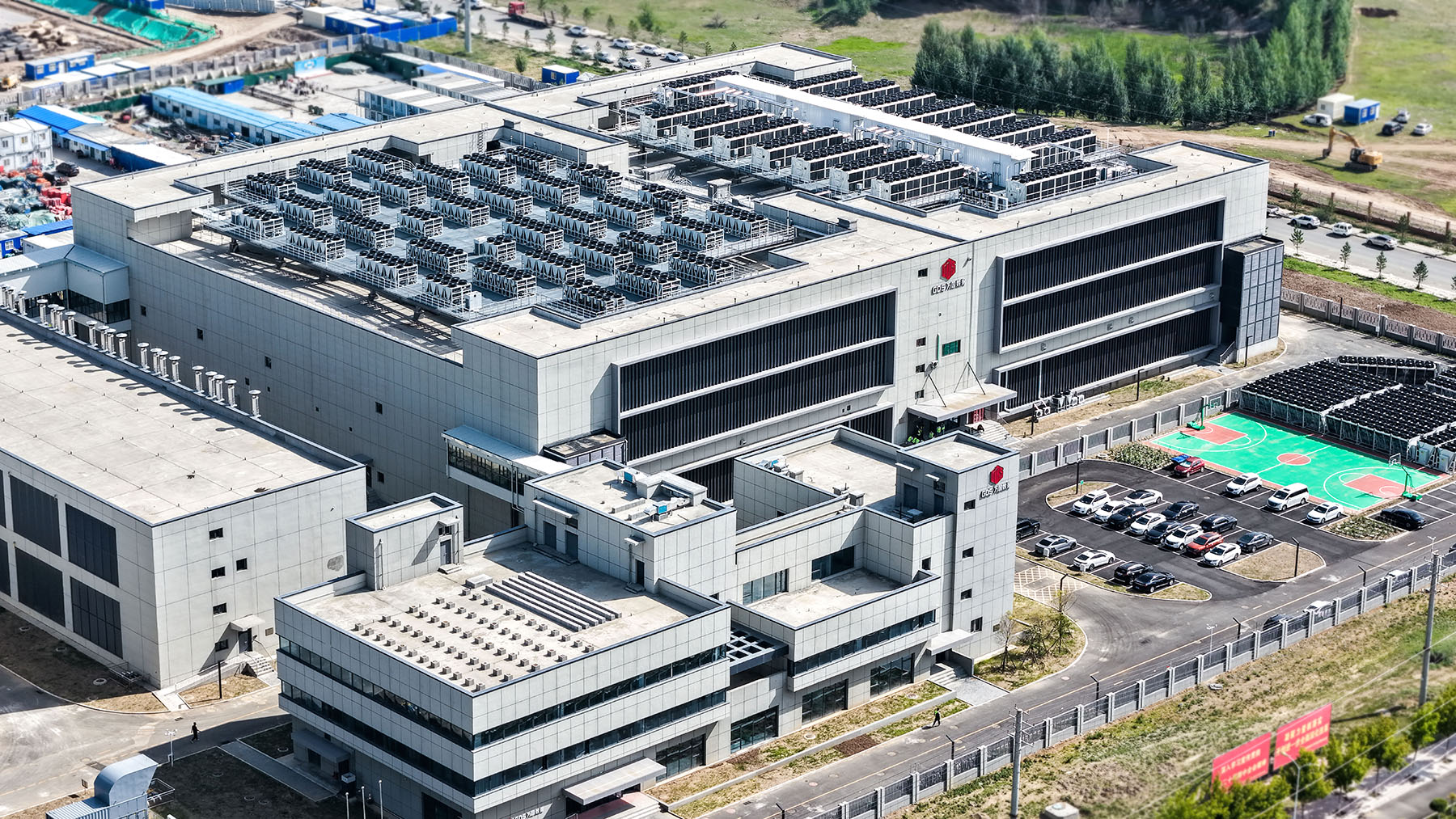
With a flashlight, a set of keys, a two-way radio and an electrical meter in his backpack, shift leader Chen Gang made his rounds through the power distribution rooms and cooling areas of a massive data center in Ulaanqab, Inner Mongolia autonomous region.
The facility, built and operated by GDS Holdings, hosts computing infrastructure for clients running heavy workloads including big-data batch processing, cloud storage and artificial intelligence.
Chen checked instrument readings and indicator lights and made sure that switches were all in the right positions. As part of his duties, he also helps coordinate routine inspections and responses to equipment problems.
His job is radically different from his last one serving guests at a hotel.
Ulaanqab, once mainly known for potato farming, began developing its data processing industry more than a decade ago. It started with a strategic cooperation agreement on cloud computing with electronics giant Huawei in 2013. The Huawei Cloud Computing Data Center opened three years later.
The city's cool climate, abundant wind and solar resources, and high-speed network connections to Beijing made it an ideal location for further data center investment.
High-tech development gained further impetus in 2022, when the "East Data, West Computing" initiative was launched.
The project aims to coordinate the computing capabilities of the country's eastern regions, where the need for computing is high, with inland western regions, where abundant renewable resources are optimal for the construction of data centers. Ulaanqab has since become a key location in the Inner Mongolian hub of an integrated national network.
As of October, the city had signed agreements for 109 computing center projects. It reported an operating capacity of 190,000 PFLOPS — a measure of computer processing speed that equals 1 quadrillion floating-point operations per second and an indicator of how fast a computer can do heavy, precision math calculations.
Career upgrade
After studying hotel management at a vocational college in Qingdao, Shandong province, Chen spent more than a year in hotel service. But with limited opportunities to advance and tiring work hours, he decided to look for a different career. In 2024, he learned from his relatives that data centers in his hometown were looking to train people in new skills.
"At first, I knew little about the data industry," he said. "What attracted me was the chance to enter an emerging sector and learn."
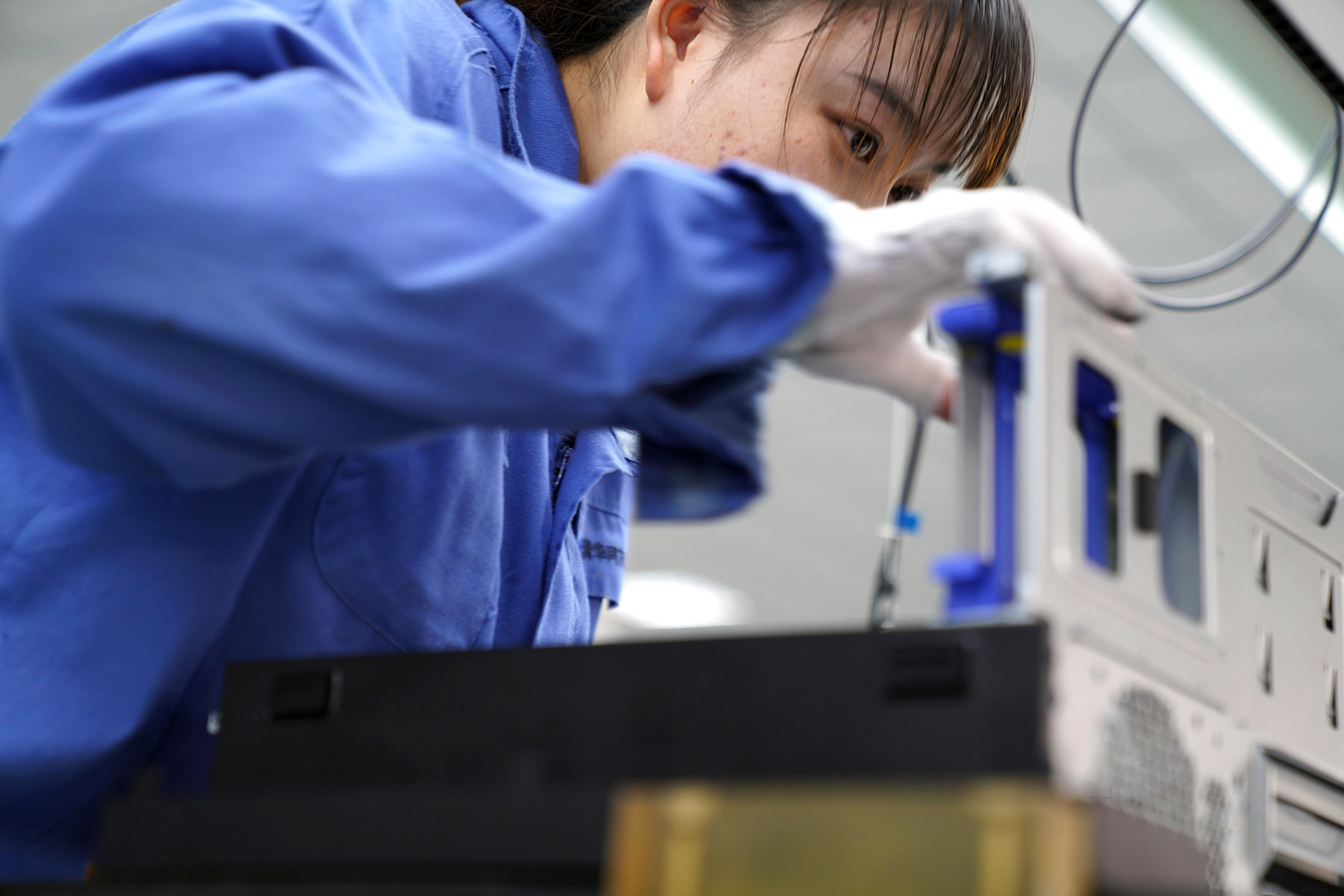
He returned to Ulaanqab for a training course that began in May that year. Chen learned the basics including electrical and cooling systems, and facility operations. He eventually landed a job at GDS, where he rose quickly to the role of shift leader.
Chen said his monthly salary roughly doubled from his previous hotel job income — to more than 8,000 yuan ($1,198). His job also comes with social insurance, housing provident fund contributions and allowances for night shifts.
His work schedule consists of a day shift, night shift and two days off — about 15 working days a month, which gives him time for leisure and his family.
As a shift leader, he needs a thorough understanding of the equipment, must be able to identify potential problems and respond quickly when something goes wrong.
"The job has pushed me to keep learning," Chen said.
His high-tech role is in stark contrast to his family's rural roots. "My grandparents were farmers," he said. "They grew potatoes, oats and buckwheat, and raised pigs and chickens. My father and uncles had to leave home to work as cooks or laborers on construction sites."
Chen himself spent part of his childhood moving between Datong in neighboring Shanxi province and Shijiazhuang, Hebei province, as his family followed job opportunities. Today's data center is a short 20-minute commute from his home.
"I feel more settled and secure now. I can stay close to my family," he said.
Chen has recommended similar training to several friends, some of whom now work for data centers in Ulaanqab. His colleagues also include those who have gravitated to the computing hub from elsewhere.
At GDS's Ulaanqab bases, local employees account for more than 70 percent of the workforce. Their responsibilities range from routine inspections to equipment management and technical upgrades.
Preparing for the future
Training centers and universities are working hard to prepare employees for the new technical jobs emerging around Ulaanqab's expanding data center industry.
Employers need workers who can maintain data center facilities, manage electrical and cooling systems and support network operations. New opportunities are also emerging in AI-related development, data governance and model testing, Liu Junping, deputy director of the Qahar High-Tech Industrial Development Zone administrative committee, said in an interview with China Youth Daily.
More than 15,000 people are directly employed by data centers across Ulaanqab, local media reported in May.
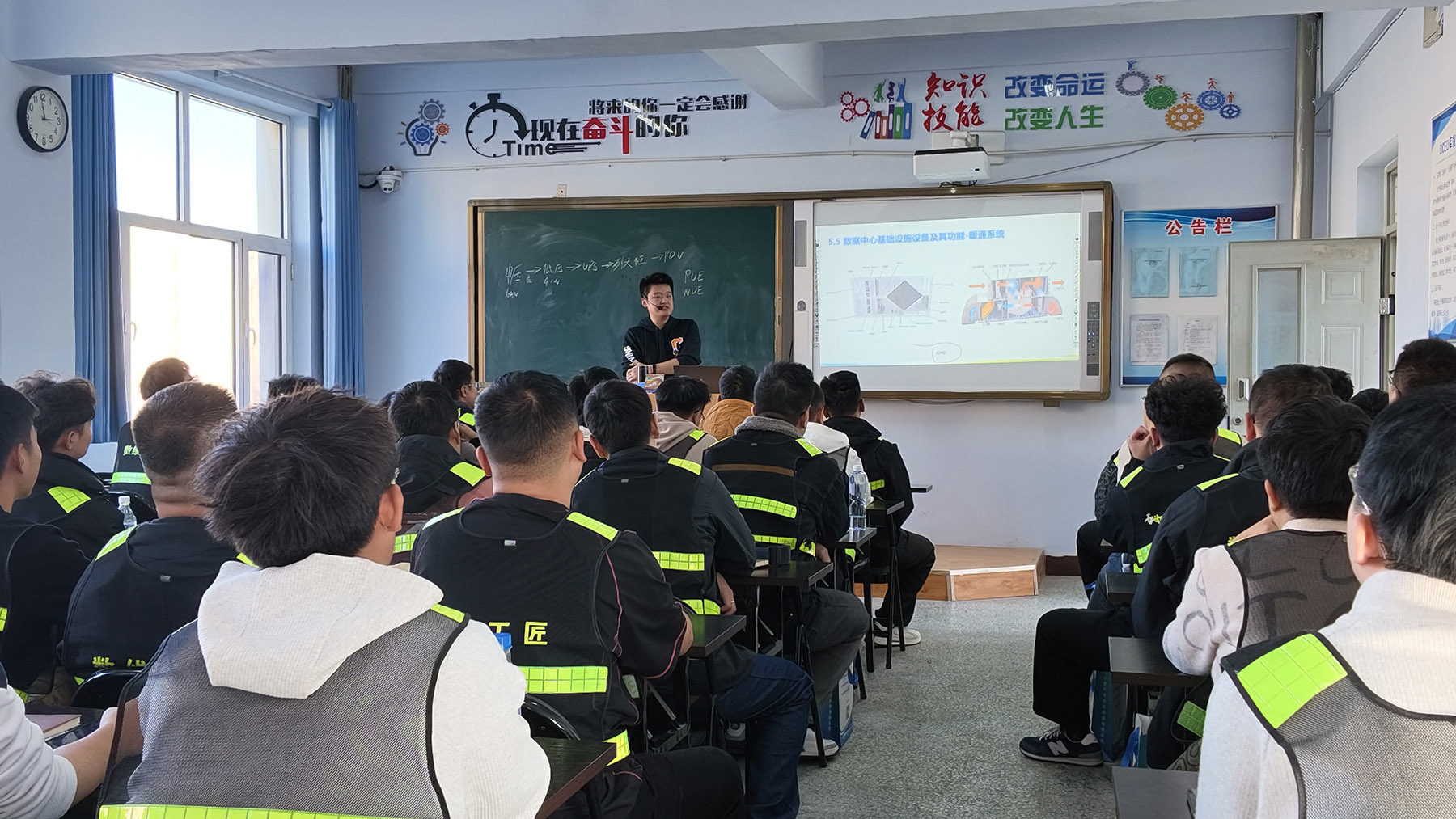
Runchuang Industry College opened in 2022 to meet the growing demand for skilled workers. The college's programs combine classroom instruction with hands-on training. "As the data center industry grows, so does the demand for skilled technicians," said Ao Demu, a teacher at the college.
Every new data center building typically requires 10 to 20 operational staff. "More companies are also coming to us with specific tailored needs," Ao added.
Since its launch, the college has trained 909 people and more than 260 vocational college students. More than half the trainees were changing careers, while some had previous experience in equipment maintenance. Trainees must pass assessments before they can be recommended to potential employers.
Of its 609 trainees in 2025, a total of 528 landed jobs, according to the college. Their employment destinations included data centers and related companies in Ulaanqab and Hohhot, Inner Mongolia, as well as companies in other parts of China.
Jining Normal University is creating an academic route into the sector through research, undergraduate programs and close cooperation with the industry.
The university's Beijiang Computing Research Institute focuses on data-related studies and technology transfers, while providing students with opportunities to participate in research projects and information gathering, said Sun Wei, a faculty member.
Zuo Hemeng, 21, a local student majoring in data science and big data technology, hopes her studies will open up career prospects near home. She hopes to stay in Ulaanqab after graduation and work at a data center or in a job related to computing.
University president Zhou Jianhua said the school is seeking approval for three computing-related majors and five micro-majors focused on specific fields to cultivate talent. It is also exploring closer cooperation with vocational colleges to create pathways from vocational education to undergraduate and postgraduate studies.
Boomtown spin-offs
In nearby communities, the new workers and growth of the industry are changing business operations.
Around 6 pm, dinner service is in full swing at Luo Dongmei's restaurant in Bayantal township, Qahar Right Wing Front Banner. Luo and her husband move between tables, serving customers, many of them employees who have just finished work at neighboring data centers.
"After work in the evening, they come here to eat, have a drink and chat. Shift leaders and foremen at nearby projects often treat their teams to a meal," Luo said.
As business picked up, she and her husband found they could no longer manage the workload alone, so they hired someone to help with food preparation and cleaning.
Luo has been in the restaurant industry for 21 years. She relocated to the current site after the former eatery was demolished to make room for a data center.
The township, located near the national highway and across from the Qahar High-Tech Industrial Development Zone, was once much quieter, she said. Today, traffic is heavier, with more local employees and workers from other parts of China coming and going "like a revolving door".
The center has brought more customers to the restaurant. Daily turnover has risen from around 700 yuan to as much as 3,000 yuan on busy days, Luo said.
The couple have converted rooms on the property into a guesthouse, which currently accommodates 60 to 70 workers.
"In the past, local families relied mainly on farming and raising cattle and sheep, but earnings were limited," Luo said. "Now, more residents are running businesses, restaurants and guesthouses, and their incomes have improved."
A nearby cooperative provides daily necessities and handles parcels for data center workers, some of whom cannot receive deliveries at their workplaces.
Before 2023, Bayantal had only four restaurants, but the number has since risen to 35. The town now has 10 supermarkets and four bathhouses, Du Xile, a member of the town's Party Committee, told Inner Mongolia Daily. Some residents have also turned unused dwellings into guesthouses, opening up another source of income.
Green energy focus
Across the high-tech zone, rows of data center buildings line the roads, and a forest of construction cranes gives an indication of the scale of expansion.
The growing demand for electrical power to run countless computer networks is becoming more apparent. Data centers in Ulaanqab consumed about 5.5 billion kilowatt-hours of electricity in the first nine months of this year, up 84 percent year-on-year, the city reported.
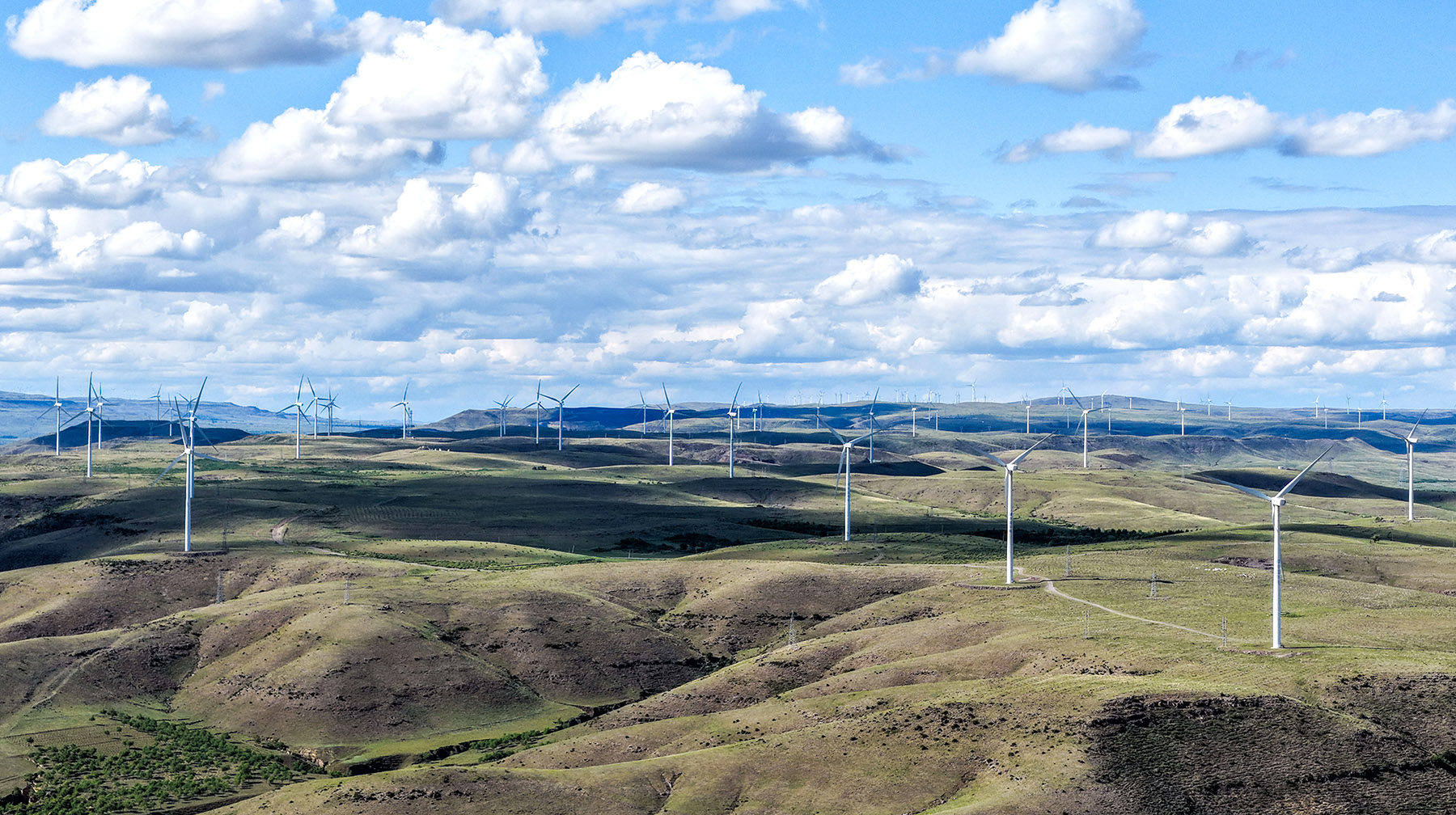
Inner Mongolia is seeking to make greater use of its wind and solar resources to power the growth. Ulaanqab is advancing projects that match renewable energy generation directly with the demands of the data centers. The projects include energy storage and grid development, which help ensure a stable supply of electricity for power-thirsty data operations.
The 2026 Government Work Report also identified closer coordination between computing capacity and electrical supply as an infrastructure priority.
GDS expects to sign a multiyear agreement this month to purchase green electricity for its Phase 1 Campus project, the company's first site in Ulaanqab. The deal is expected to account for about 70 percent of the project's total power consumption.
Across its Ulaanqab operations, GDS is also exploring direct supply of renewable energy to service the computing load. The idea is to coordinate power generation and the grid with electrical demand, energy storage and computing loads, said Zhang Junwu, the base's manager.
At Centrin Data's low-carbon computing base in Ulaanqab, a 16-kilometer line connects the park to wind and solar facilities that have a combined capacity of 300 megawatts. A 45-MW energy storage system helps smooth out fluctuations on the generation side, while the regional grid provides supplementary electricity when renewable output falls short.
The project began operating in July 2025. It is expected to generate and use 848 million kWh of green electricity annually, reducing carbon emissions by an estimated 580,000 metric tons a year, the company said.
Water efficiency is another consideration for data centers operating in the region.
At the Phase 1 Campus project, cooling relies on dry coolers and a dual-coil refrigerant-pump system. All water used by the cooling system comes from reclaimed supplies, the company said. GDS also controls spray volumes and recovers wastewater to reduce consumption.
At the regional level, Inner Mongolia's regulations prohibit data center projects from using groundwater for cooling.
Ulaanqab is seeking a broader role in the artificial intelligence industry. Its three-year action plan for 2026-28 envisions the city developing into a "token capital" — referring to the small units of text or other data that AI models process and generate — and the city plans to develop an ecosystem spanning token production, measurement, evaluation, security and trading.
Contact the writers at guoyanqi@chinadaily.com.cn
