

Aid program fosters long-lasting bonds and systems aimed at advancing region's growth
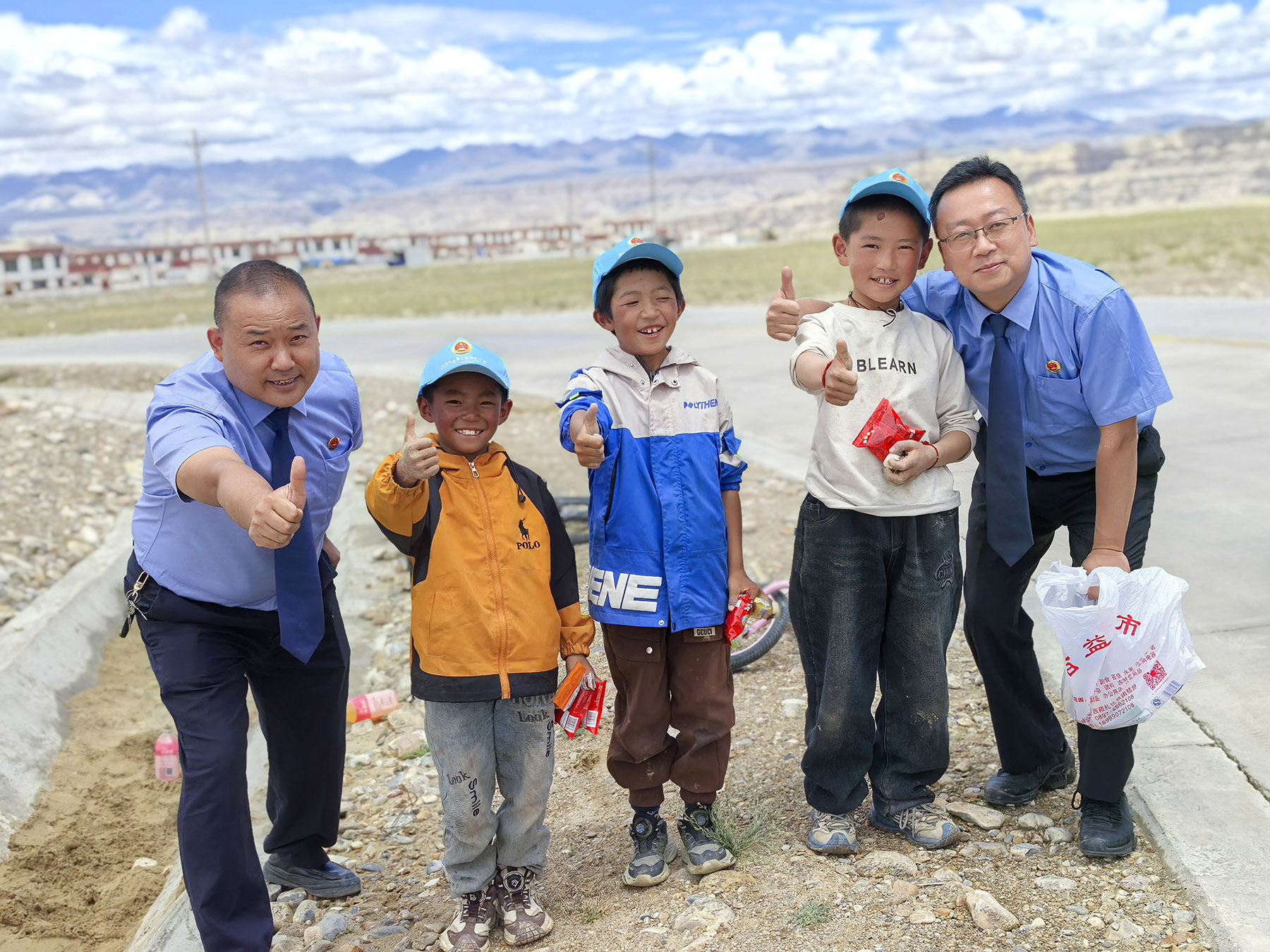
For Tong Xiaozhi, a prosecutor from the Guangxi Zhuang autonomous region, traveling along winding roads over high mountain passes in the Xizang autonomous region has become an integral part of his duties.
Tong has been in Ngari prefecture, in the western part of Xizang, since June. With the move, he had expected thin air and sprawling landscapes. What he had not fully anticipated was how much time he would spend traveling for hours to reach areas in need of his expertise.
As a public-interest prosecutor, Tong has to conduct his investigations on site. A recent trip took him to Zada county to examine the protection of the ancient Guge Kingdom ruins. Ngari covers about 330,000 square kilometers and administers seven counties; some field trips require crossing mountain passes at elevations above 5,200 meters.
"I'm a little afraid of going out on these trips now," said Tong, describing the dizziness and headaches he experiences at times. "But for a public-interest prosecutor, field investigation is indispensable."
ALSO READ: Power of education shines in Xizang
That dilemma, tinged with hardship and duty, is embedded in the stories of prosecutors sent to Ngari from other parts of China, and of those who have chosen to remain.
The deployment is part of the Aid-Xizang program, a national paired-up assistance initiative geared toward the development of the region.
Ngari has an average elevation of about 4,500 meters, a 1,437-kilometer border and temperatures that can fall below minus 44 C at night. The difficult environment has long made the recruitment and retention of legal professionals challenging. In recent years, 11 groups involving 126 professionals from five provinces and regions have served in Ngari.
Yet many of those deployed there say "assistance" tells only half the story. They arrive intending to be of service, and end up learning more than they had expected.
Tong, who began working as a prosecutor in 2007, was assigned to the public-interest litigation department. Compared to his home procuratorate, Ngari has fewer cases, but they reflect the plateau's distinct geography and culture. Cases on ecological conservation, mineral resources and cultural heritage feature more prominently. Zada county alone has three national-level protected cultural heritage sites.
His job includes helping investigate cases and guiding county-level prosecutors on evidence collection, legal writing and case quality, while learning from local colleagues working under very different conditions.
"For me, aid to Xizang is a process of mutual learning, mutual encouragement and common progress," he said.
Choosing to stay
Few people embody that two-way exchange more clearly than 48-year-old Zhang Bo. Zhang first came to Ngari from Shaanxi province in May 2022 on a temporary assignment.
He joined a major duty-crime investigation and spent more than a year working alongside local prosecutors, forming close friendships and beginning to imagine a life he had not planned.
He had spent much of his career handling duty-related and economic crimes and believed his experience could still be useful in Ngari. Colleagues encouraged him to stay. Temporary assistance mattered, they told him, but someone willing to stay could make a more lasting difference.
Zhang discussed the idea with his parents, wife and daughter. They supported him. In January 2023, he formally applied to stay, and in August 2024 he transferred to Ngari. He is now chief prosecutor of Tsochen county.
Personnel shortages soon pushed him beyond what he already knew. A criminal prosecutor by training, Zhang began handling civil cases when colleagues were on leave, learning from local prosecutors before moving on to administrative prosecution and public-interest litigation.
The experience changed his view of expertise. In a small plateau procuratorate, he said, there is little room to remain only a "specialist". Prosecutors have to become capable across several fields. Now, when younger colleagues hesitate over difficult cases, Zhang lends a hand. Over time, he has watched some become capable of handling cases they once feared on their own. "That," he said, "is where mentoring really shows its value."
Not every story of adaptation is about casework. Duan Yangyu, 33, came from Hainan province, more than 3,000 km away. Upon arrival, she found the work easier to adapt to than the silence after work.
She found Ngari's climate far colder and drier than Hainan. Even months later, she woke up at times with a nosebleed. The greater challenge, she said, was psychological.
She called it "learning how to resist emptiness".
Duan was the only woman in this batch of aid cadres and lived alone. In Hainan, an evening after work could mean dinner with friends or a drive to the coast. In Shiquanhe township, where the prefecture procuratorate is located, the range of activities was far narrower. The quiet forced her to confront long stretches of time by herself.
Gradually, she began to see solitude differently. It gave her space to review her work and think about what she wanted to do next. On one trip, she saw mountains, grassland and Xizang residents spending time outdoors. The scene stayed with her. The plateau was testing her, but it was also stripping away distraction.
Local knowledge
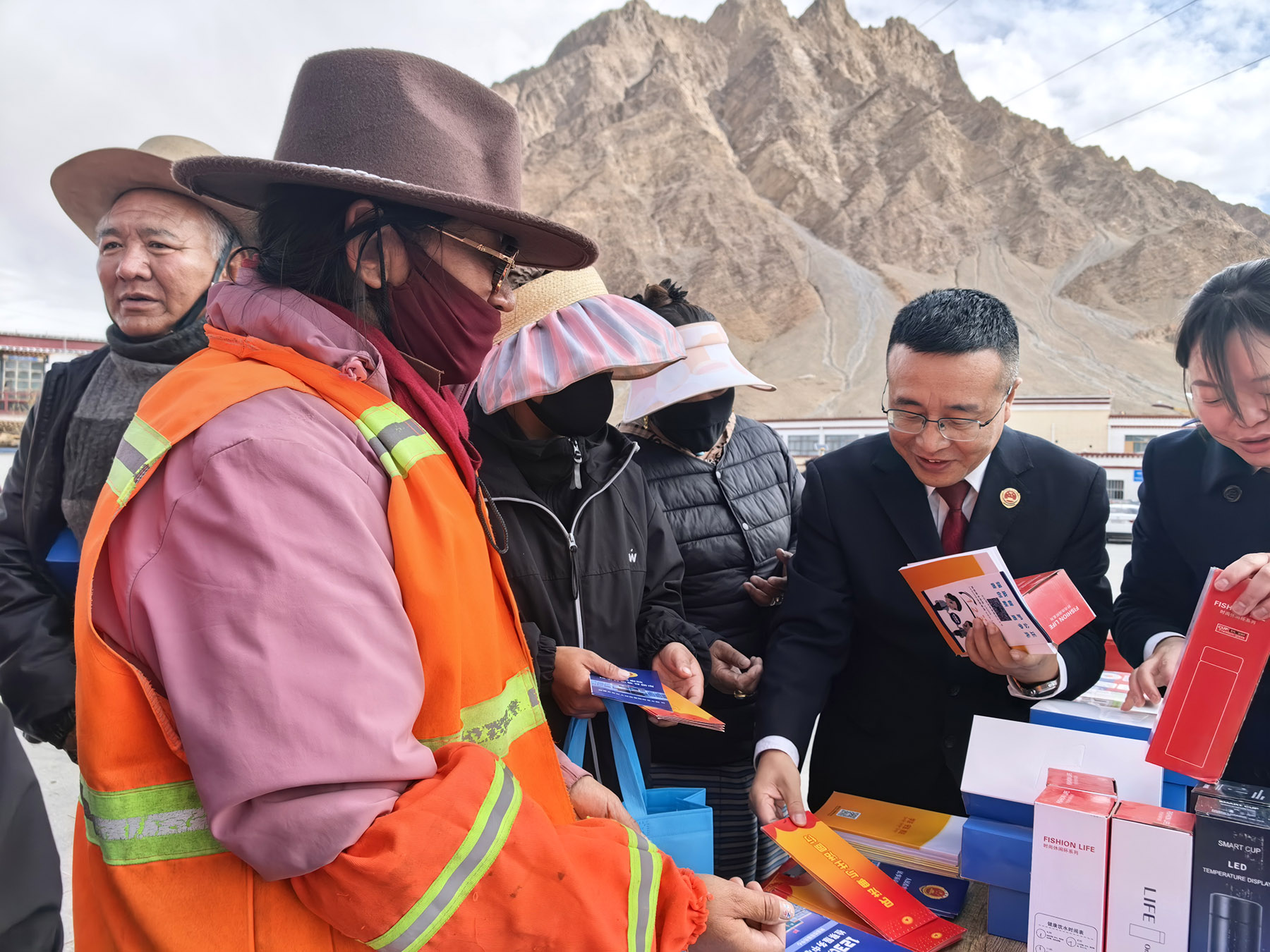
Han Wenjing, a prosecutor from Shaanxi, found another kind of reassurance in the response of local residents. Legal education had long been part of her work, but in Ngari it felt different. Some farmers and herders initially seemed indifferent to the law, partly because they lived far from towns and saw legal issues as removed from daily life. Yet after sessions on women's and children's rights, juvenile protection and safety, their interest became increasingly visible.
Sometimes, after an event, residents brought local produce to the visiting prosecutors and walked them to the roadside.
For Han, those gestures carried a significant weight. They told him the information had mattered and the prosecutors had been accepted.
"The sense of being needed and recognized by the people," he said, was stronger than what he had experienced doing similar outreach elsewhere.
In one fatal traffic accident, the victim's family declined compensation because they believed the driver had not acted intentionally and had also lost a relative in the crash. They even declined judicial assistance.
The response left Han with a deeper impression of what he called the local community's simple but strong sense of fairness — an instinct to distinguish deliberate wrongdoing from tragedy.
Behind these professional experiences are unintended repercussions. Fan Xiaohui left home when his eldest daughter was preparing for an important school examination and his younger daughter still needed daily care. His wife carried the greater share of the responsibilities.
"Home is taken care of. Focus on your work," she told him.
Such words matter in a place where distance can render one powerless during a family emergency. Tong said one of the hardest moments is receiving a call about something happening at home and realizing there is little he can do from thousands of kilometers away.
That distance is also why Ngari prosecutors say the value of the program cannot be measured only by how many people arrive or how many cases they help handle.
Cheng Yu, a senior prosecutor at the Ngari prefecture procuratorate, said what matters most is whether visiting prosecutors leave behind methods, habits and relationships. Former aid prosecutors continue to join case discussions from afar. Their home provinces invite Ngari prosecutors to training programs, and local prosecutors can seek advice when unfamiliar cases arise.
ALSO READ: China launches new round of central environmental inspections
In that sense, the most important journey may not be the one across a 5,000-meter mountain pass. It is the slower movement of experience from one prosecutor to another, until a method becomes local knowledge, a temporary colleague becomes a long-term partner and, in Zhang Bo's case, a short-term assignment becomes a decision to stay, she said.
Tong will eventually return to Guangxi. Others will go back to Hainan, Shaanxi, Hebei and Henan. But the work they describe is not built around the idea of arriving, helping and leaving.
It rests on something more enduring: that on the plateau, support is most valuable when it changes both the people who receive it and those who arrive to give it.
Contact the writers at yangzekun@chinadaily.com.cn
