

From prehistoric times to the Qing Dynasty, artifacts on show offer a lens into the country's rich history through ancient adornments, report Fang Aiqing and Mao Weihua in Urumqi.
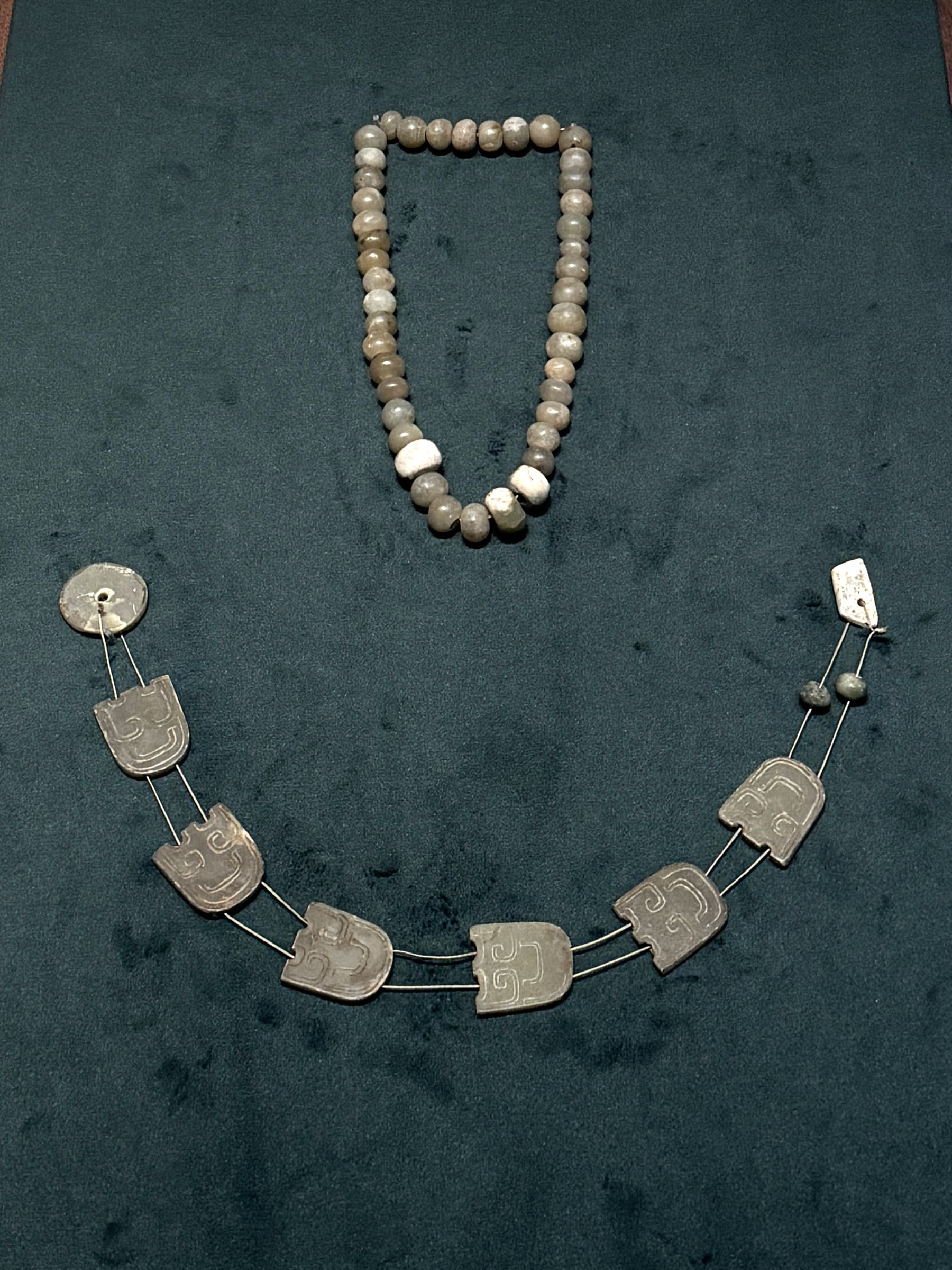
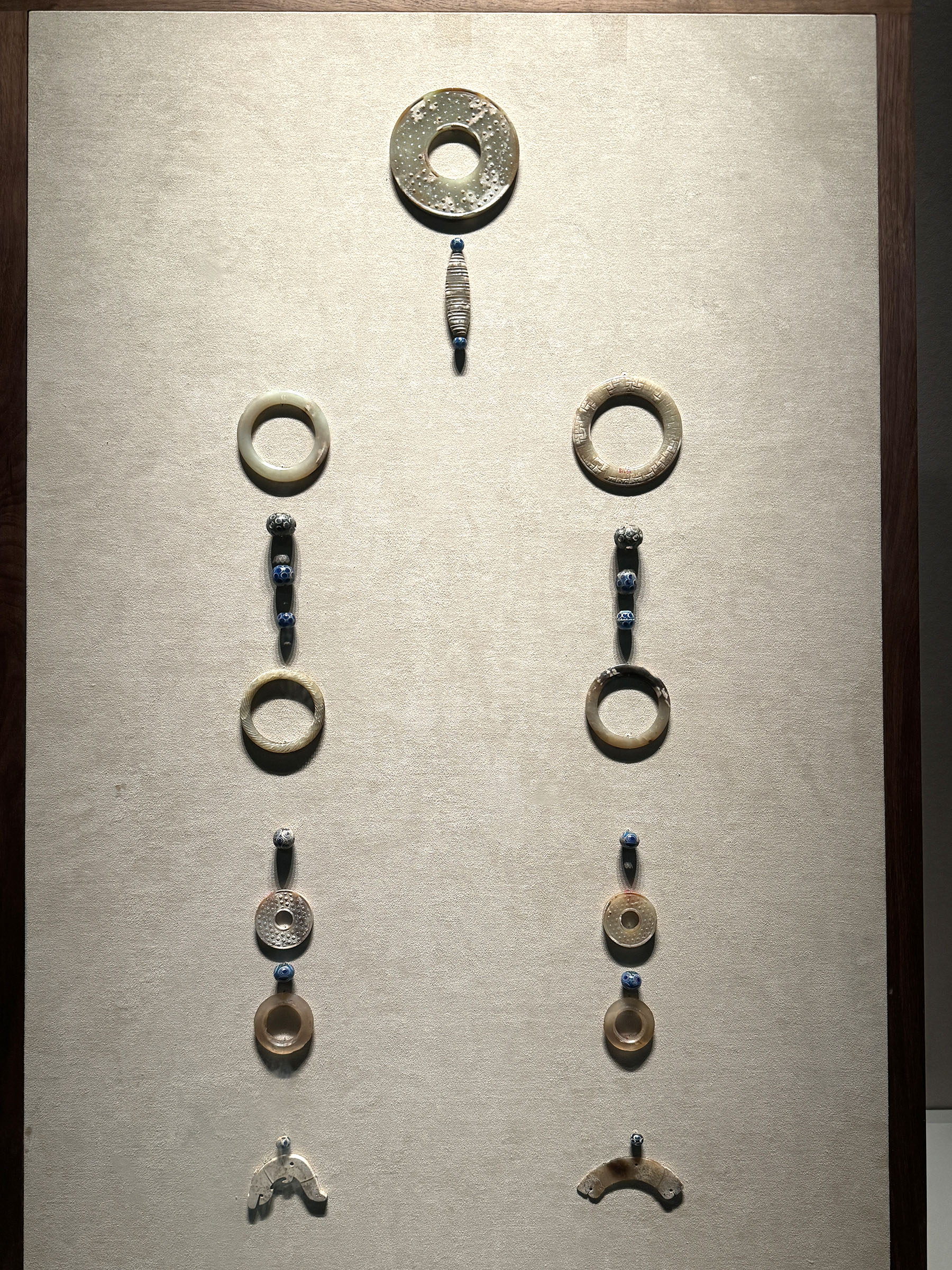
A handful of beads, agates and jade pendants unearthed from a Warring States Period (475-221 BC) noble tomb in Central China's Henan province, with their exquisite craftsmanship and refined aesthetics, almost belie their age of more than 2,000 years.
This set of ornaments from the collection of the National Museum of China is composed of jade discs, loops and huang (arch-shaped pendants), agate accessories, and glass beads with concentric circle patterns that look like dragonflies' compound eyes — therefore known as "dragonfly eye beads". They were found in a burial pit of a high-ranking tomb in Guwei village in Huixian county, Henan.
READ MORE: The alchemy of gold and jade across dynasties
Tong Chunyan, research librarian at the museum, says these ornaments were either the tomb owner's personal belongings or ritual items placed to express grief, a practice rooted in the ancient belief of "serving the dead as if they were still living".
The variety of patterns and crafting techniques, along with the fine materials themselves — dragonfly eye beads originated in ancient Egypt and the Mediterranean — pointed to cultural exchange between China and the West, she adds.
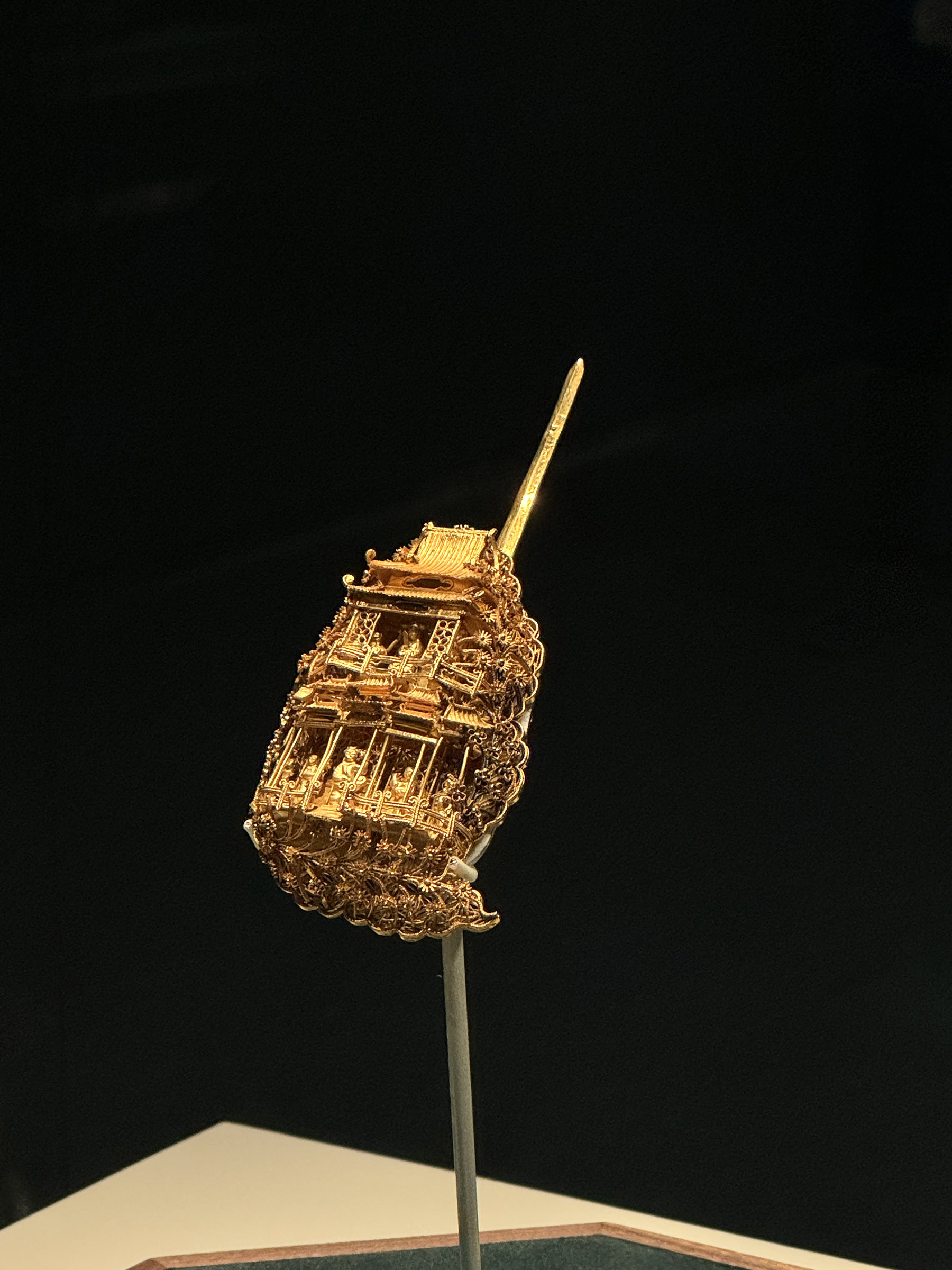
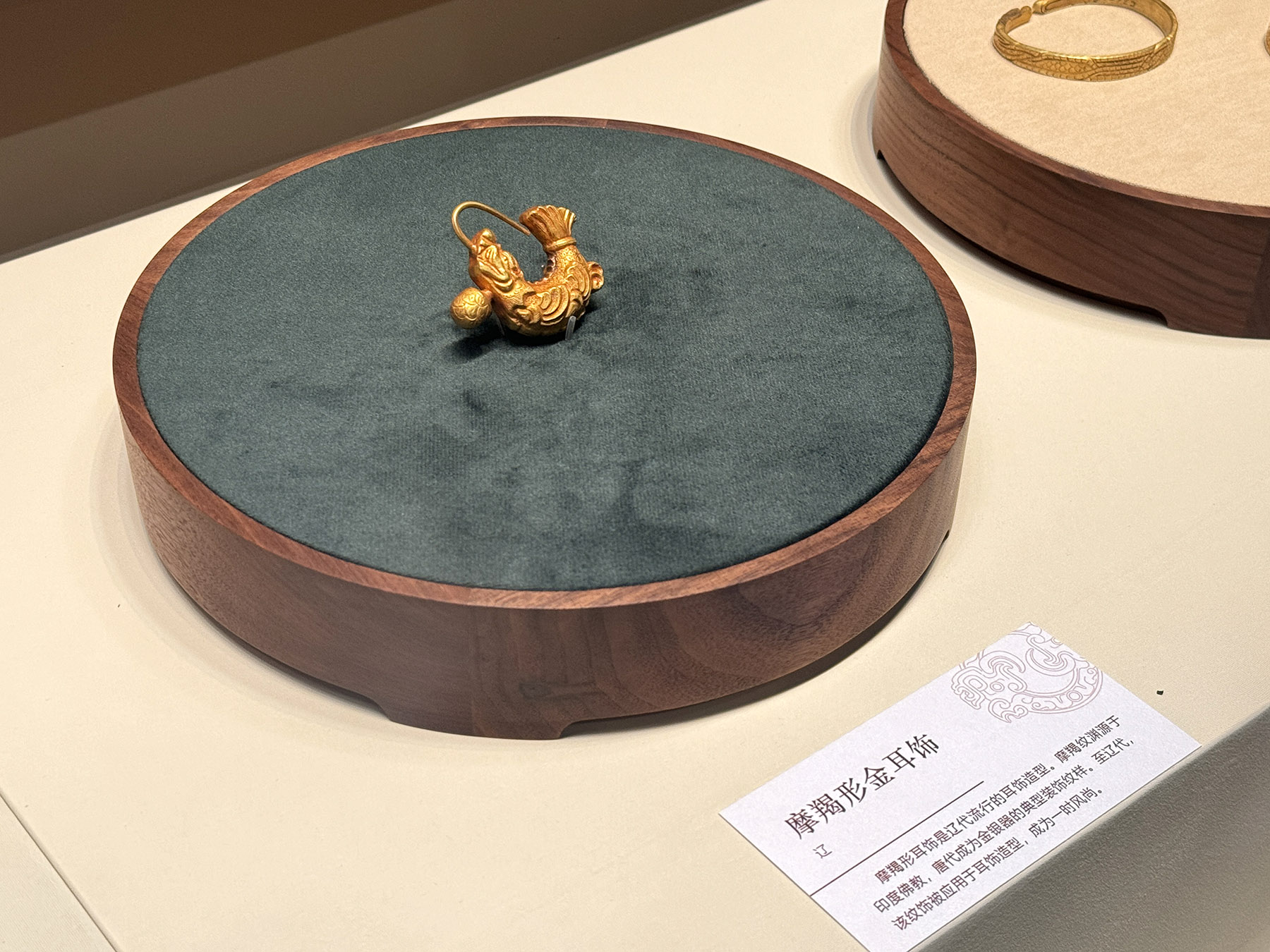
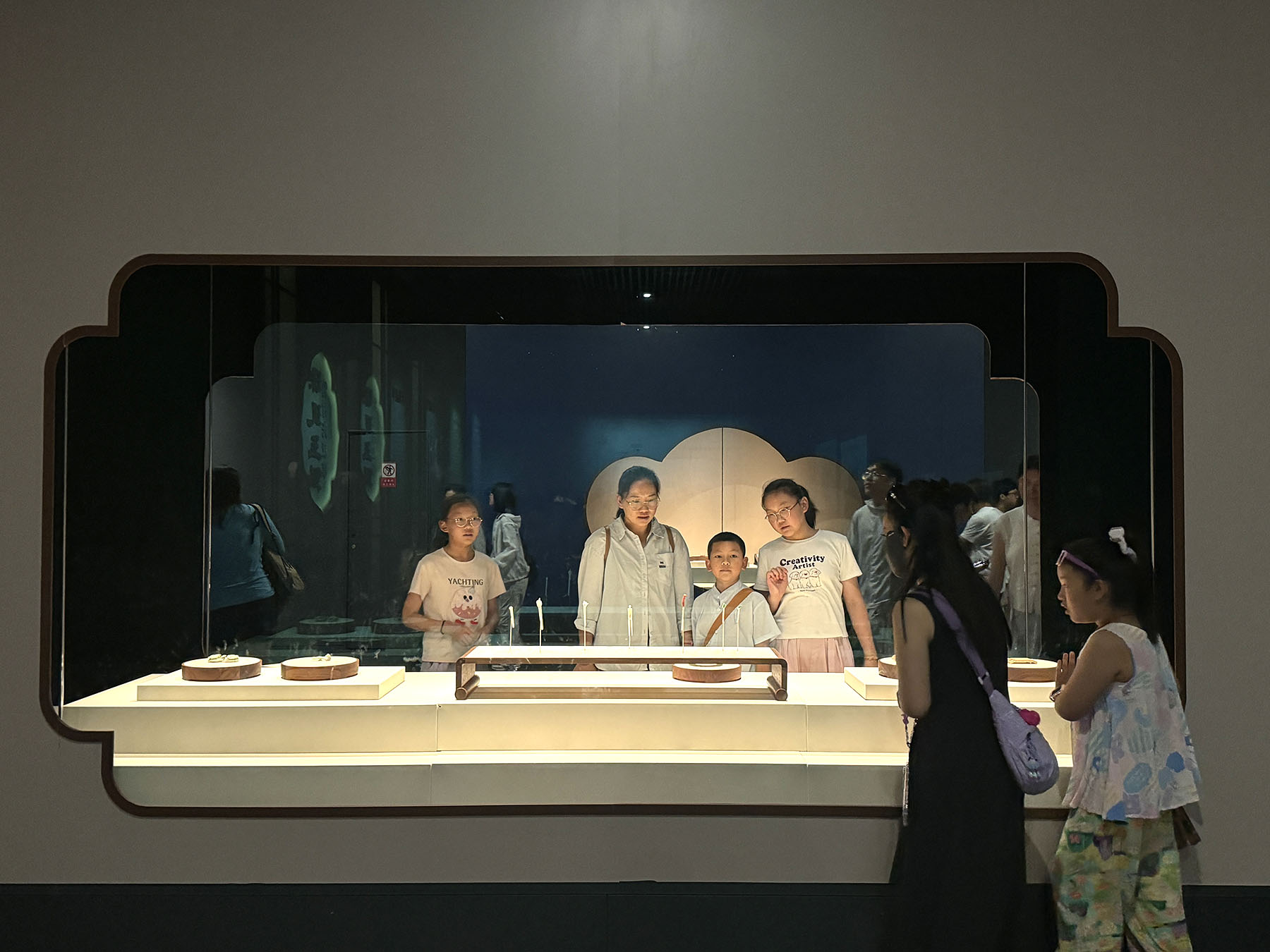
These artifacts, rearranged based on years of research rather than shown in their original layout in the tomb chamber, are now on display at the exhibition Beads and Jade: A Narrative Through Time at the Xinjiang Museum in Urumqi, capital of Northwest China's Xinjiang Uygur autonomous region.
Launched on July 17, the exhibition features some 600 pieces or sets of treasured adornments from the collection of the National Museum of China. The oldest item — a shell ornament with two perforations excavated from the Xianrendong archaeological site in Wannian county, East China's Jiangxi province — dates back 9,000 to 12,000 years to the late Paleolithic to early Neolithic periods.
Tong, who curated the exhibition, notes that ornaments have adorned human life since the late Paleolithic period — even before people had secured a stable food supply — and they still do today.
"They are more than adornments; they are 'living fossils' of civilization," she says. "Through them, we can trace early belief systems and the evolution of aesthetics and human intellect over time. In this sense, ornaments offer a microcosmic history, a lens through which we can interpret the broader arc of civilization."
The exhibition is organized chronologically in three sections. The first looks at how beadwork and jade were used in beliefs and rituals from prehistoric times to the Warring States Period, evolving from spiritual objects linked to harvest, fertility, protection and divine authority, and symbols of social hierarchy, to measures of wealth and value. "In early rituals and sacrifices, they met both spiritual and ceremonial needs, carrying a deep sense of ritual," Tong says.
The second section covers the Qin (221-206 BC) to Yuan (1271-1368) dynasties, showcasing the exchange and integration between Central Plains styles and those of Xiyu (Western Regions) — encompassing today's Xinjiang and parts of Central Asia — the steppe farther west, and in the south.
Its final section highlights the technical mastery of the Ming (1368-1644) and Qing (1644-1911) dynasties, contrasting the strict hierarchies, precious materials and intricate craftsmanship of court ornaments with fun folk pieces made for everyday life.
"Through ornaments, from a perspective somewhere between the big picture and the close-up, we hope visitors will grasp the inner logic of civilization's development and the cultural meaning of these objects," Tong says.
According to He Xiao, research librarian at the Xinjiang Museum, the curatorial team spent half a year preparing for the show. One major challenge was the gallery design, as the exhibition hall is large, but the displayed objects are quite small.
To solve this, they worked with a team from the arts and crafts department of the Central Academy of Fine Arts, decorating the vitrines with traditional Chinese window frames and designing exhibit stands in a range of shapes — fans, circles, hexagons, octagons, water droplets, stone chimes and scrolls — to reflect traditional Chinese elegance and the ethos of artisanship, she says.
Tong says most of the exhibits are excavated artifacts, some from major sites like the 3,000-year-old tomb of Fu Hao in Anyang, Henan. For many of the exhibits, this is their first time on display outside of the National Museum of China.
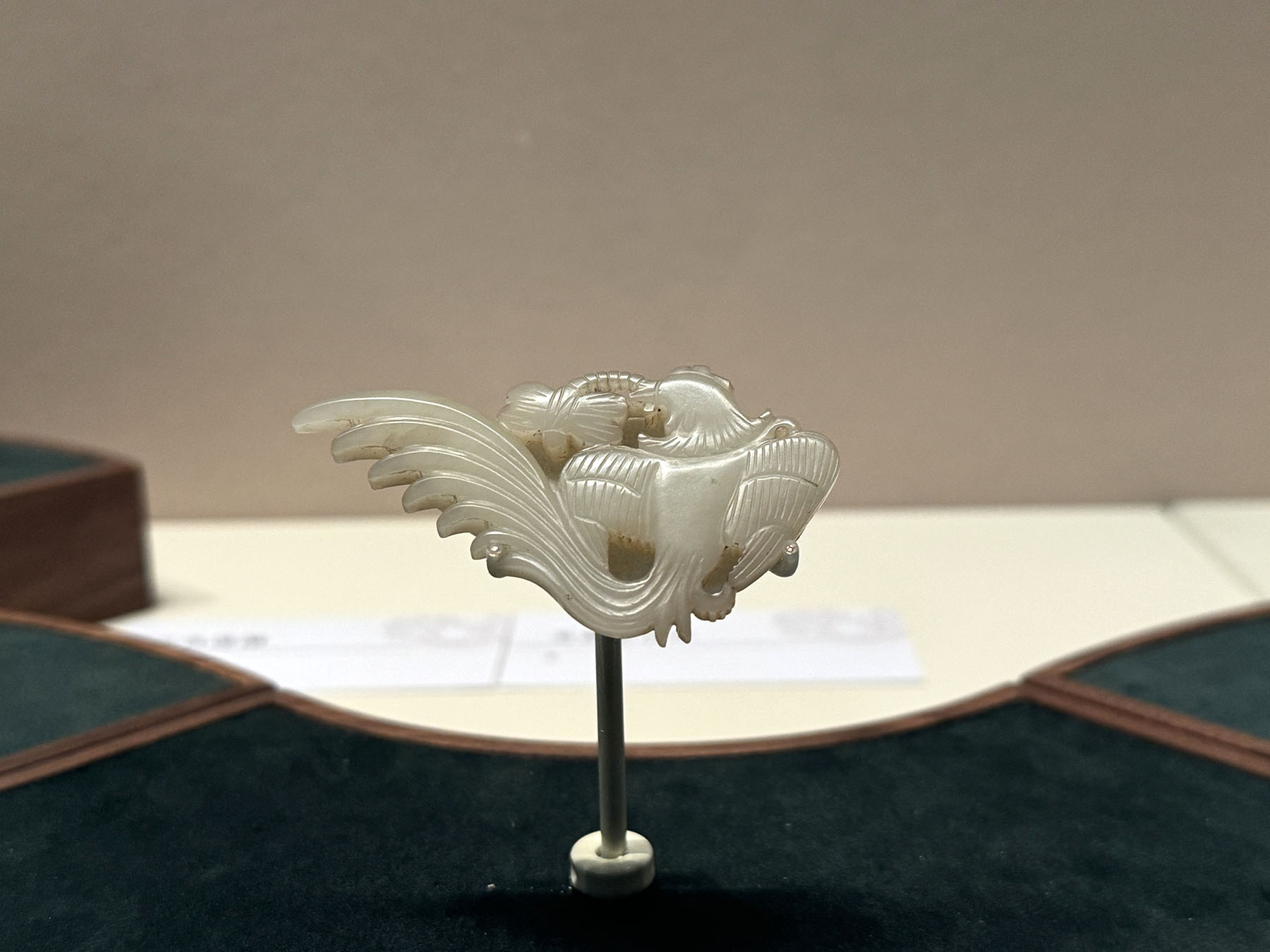
Notably, some pieces are linked to archaeologist Huang Wenbi (1893-1966), who made four trips to Xinjiang for investigation and excavation between the 1920s and 1950s.
Tong says it's significant that the exhibition is being held in Xinjiang, a key node on the ancient Silk Road where Eastern and Western cultures met. The introduction of foreign materials, patterns and techniques, and their adaptation and evolution by Chinese craftsmen, demonstrates how Chinese civilization grew by absorbing and transforming outside influences.
ALSO READ: Exhibition zooms in on Yangtze's tide of history
In 2023, the National Museum of China Gallery was set up at the Xinjiang Museum as a dedicated venue to host touring exhibitions. Over the past three years, it has featured shows on ancient bronzes, bronze mirrors, musical instruments and traditional Chinese medicine. The current exhibition runs through Nov 5.
Contact the writers at fangaiqing@chinadaily.com.cn
