

An intimate live performance captures the heartbreaking reality of illness alongside deeply held personal bonds, Chen Nan reports.
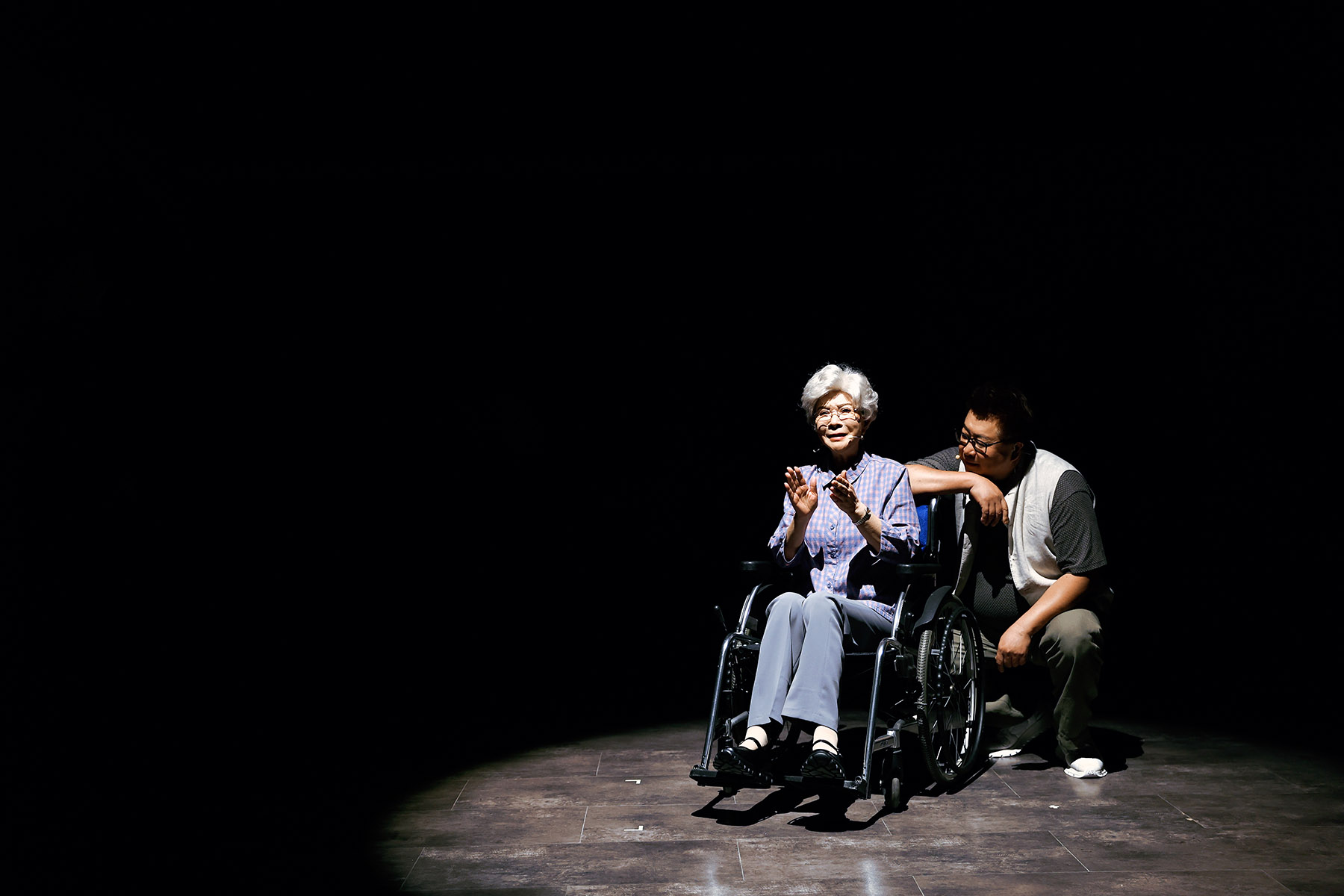
As the final scene of the Chinese musical Let Me Sing My Heart to You, My Mom ended, the audience did not immediately applaud. Instead, they sat in silence, deeply moved by actress Cai Ming's portrayal of a mother living with Alzheimer's disease and a son struggling to hold on to their bond.
Onstage, Cai had just completed one of the most emotionally demanding roles of her career: a mother whose memories gradually fade, with composer and playwright Xiao Ke portraying her guilt-ridden son. Many audience members sat motionless, wiping away tears before finally breaking into long and heartfelt applause.
Running from Aug 1 to Sept 13 at Xiao Ke Musical Theatre in Beijing, the production marks more than the return of a beloved musical.
For Cai, 64, the premiere also fulfilled a promise she had made nine years earlier.
"This is the day I've fulfilled a dream," Cai told the audience as the cast presented her with a cake celebrating her first-ever musical theater performance. Stepping onto a small musical stage in her 60s, she has shown that artistic discovery can happen at any age — and that some promises are worth waiting nine years to keep, as Xiao Ke puts it.
The journey began in 2017, when singer-songwriter Xiao Ke decided to create a musical inspired by his own mother, who had begun showing early signs of Alzheimer's disease. He wanted to create a work that could express emotions he had never been able to put into words.
When Cai heard about the project, she immediately responded: "You write it. I'll play the mother."
The script was completed in 2019, but scheduling conflicts prevented Cai from joining the original production. Over the following years, the musical and the actress repeatedly missed their chance to work together.
When Xiao Ke revived the production this year, he reached out once again. This time, Cai rearranged her other commitments to take part.
Although she had spent decades performing on stage and screen, musical theater was unfamiliar territory. While she had sung in previous performances, she knew the demands of a live musical required an entirely different level of preparation.
At first, Xiao Ke told her she only needed to sing one song. That promise did not last.
As rehearsals progressed, he was increasingly impressed by Cai's vocal ability and dramatic instincts. One song soon became three.
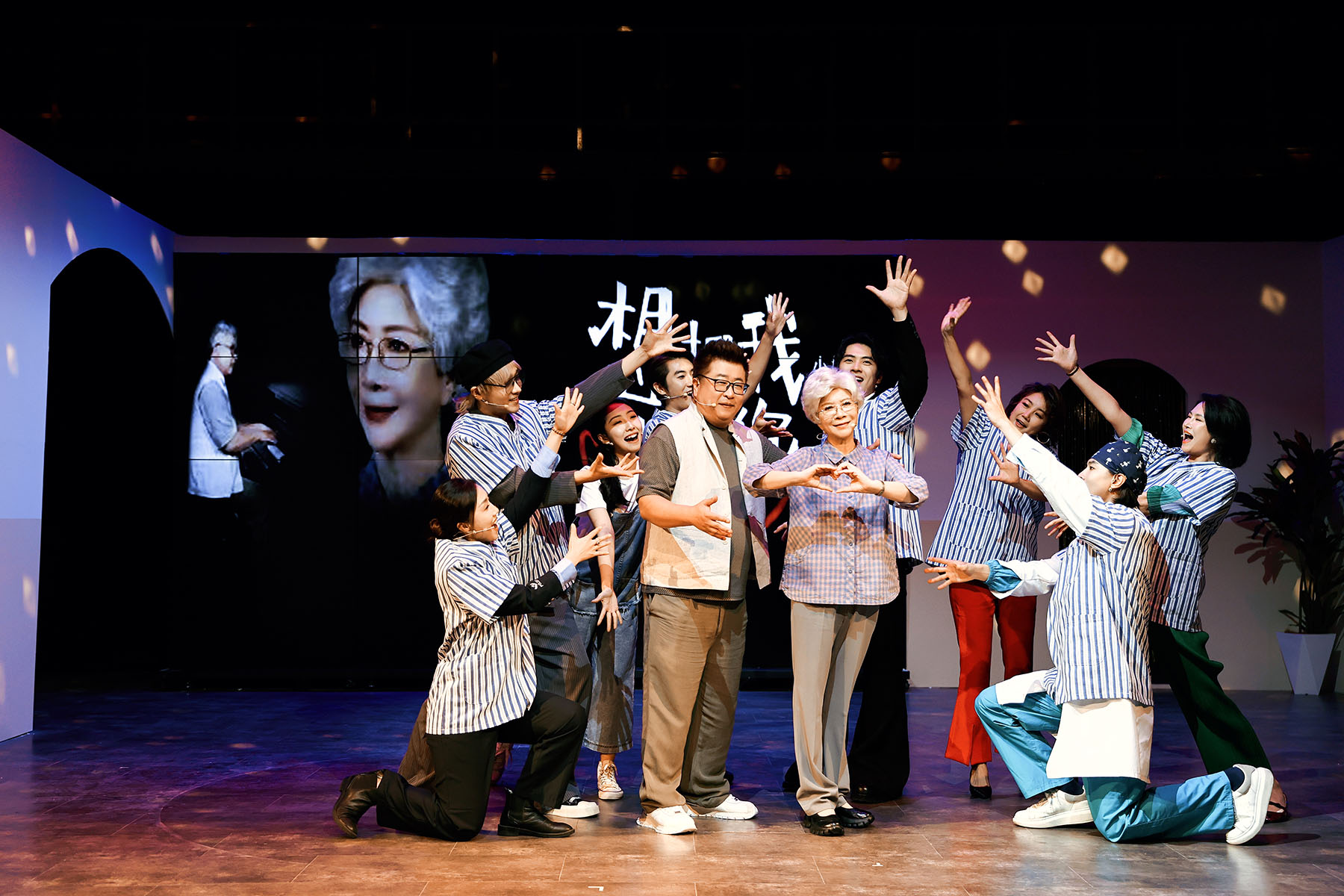
At the premiere, their duet Little One, Don't Be Afraid became one of the evening's most touching moments, while Cai's solo I've Changed, Yet I'm Still Me revealed the emotional depth behind the character. In another scene, Cai unexpectedly sang a famous aria from the Chinese folk opera The Marriage of Xiao Erhei. The moment emerged spontaneously during rehearsal, and Xiao Ke immediately decided to keep it in the production.
Cai later joked that she had been "tricked".
"He told me it was only one song," she says, laughing.
But there was no mistaking her enjoyment of the role.
Known to generations of Chinese audiences for her sharp comedic performances, Cai took on a completely different persona in Let Me Sing My Heart to You, My Mom. The musical explores memory, family and the pain of realizing that some goodbyes come too late.
Xiao Ke, whose real name is Ke Zhaolei, is best known for folk and pop songs. Born in Beijing, Xiao Ke was trained in classical music. The singer-songwriter's eponymous album was released in 1996, and he has also written songs for pop stars, including Because of Love for pop diva Faye Wong and Hong Kong singer Eason Chan. One of his most famous songs is Beijing Welcomes You, which was written to mark the 100-day countdown to the 2008 Beijing Olympics.
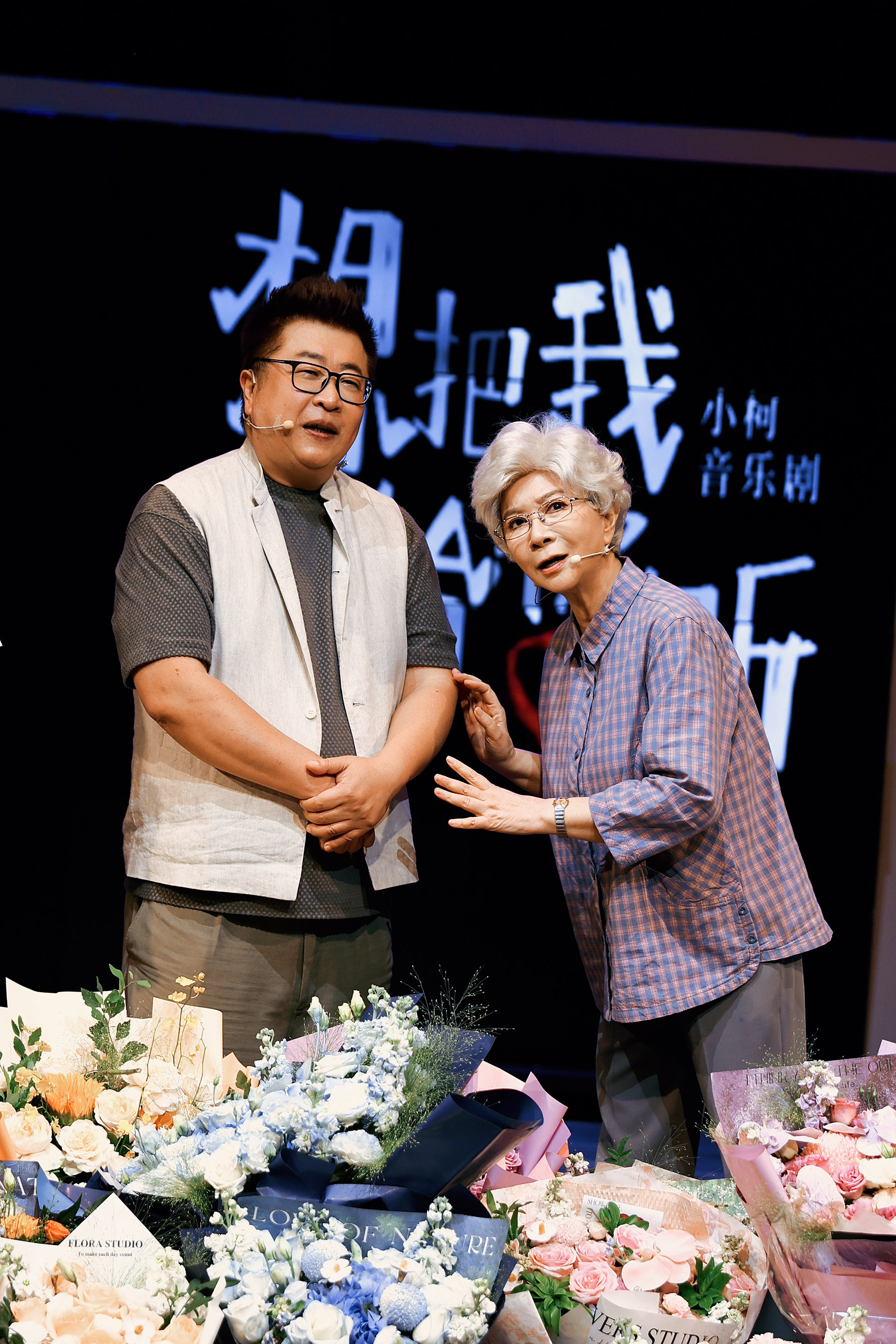
His journey into theater began in 2007. About 15 years ago, he launched Xiao Ke Musical Theatre in Beijing's 798 Art Zone, where more than 10 Chinese musicals, all written by him, have been staged.
For Xiao Ke, Let Me Sing My Heart to You, My Mom is far more than a musical. It is a personal letter to his mother.
Written in 2019, the musical was inspired by her early symptoms of Alzheimer's disease and became his way of expressing feelings that were too difficult to say aloud. It was also the last production she watched at his theater, making the work an especially personal tribute.
The story follows Hu Keyi, a middle-aged singer who dreams of success but finds himself trapped by disappointment and financial struggles. When he learns that his mother is losing her memory, he is forced to confront not only her illness but also his own absence and regret.
ALSO READ: Beloved opera flowers again
His emotional outburst reflects the experience of many people who leave home to pursue their dreams while struggling to find time for aging parents waiting for them. Through one family's story, the musical asks a universal question: How do we express our love before it is too late?
The production's emotional weight was not limited to the stage. During rehearsals, Xiao Ke found one hospital-bed scene so painful that he repeatedly walked away rather than performing it.
"He would stand up and leave," Cai recalls. "It was simply too painful."
Only during the final rehearsal was Xiao Ke able to complete the scene. Afterward, he broke down in tears.
Although both artists were deeply affected by the story, they were moved by different moments.
"For him, the hardest part is when the mother no longer recognizes her son," Cai says. "For me, it is when the child calls for his mother, and there is no answer. That is the moment that breaks my heart."
Contact the writer at chennan@chinadaily.com.cn
