

Choreographers add wing chun movements to production, bringing together not only two physical art forms but also infusing tradition, emotion and endurance into performance, Chen Nan reports.
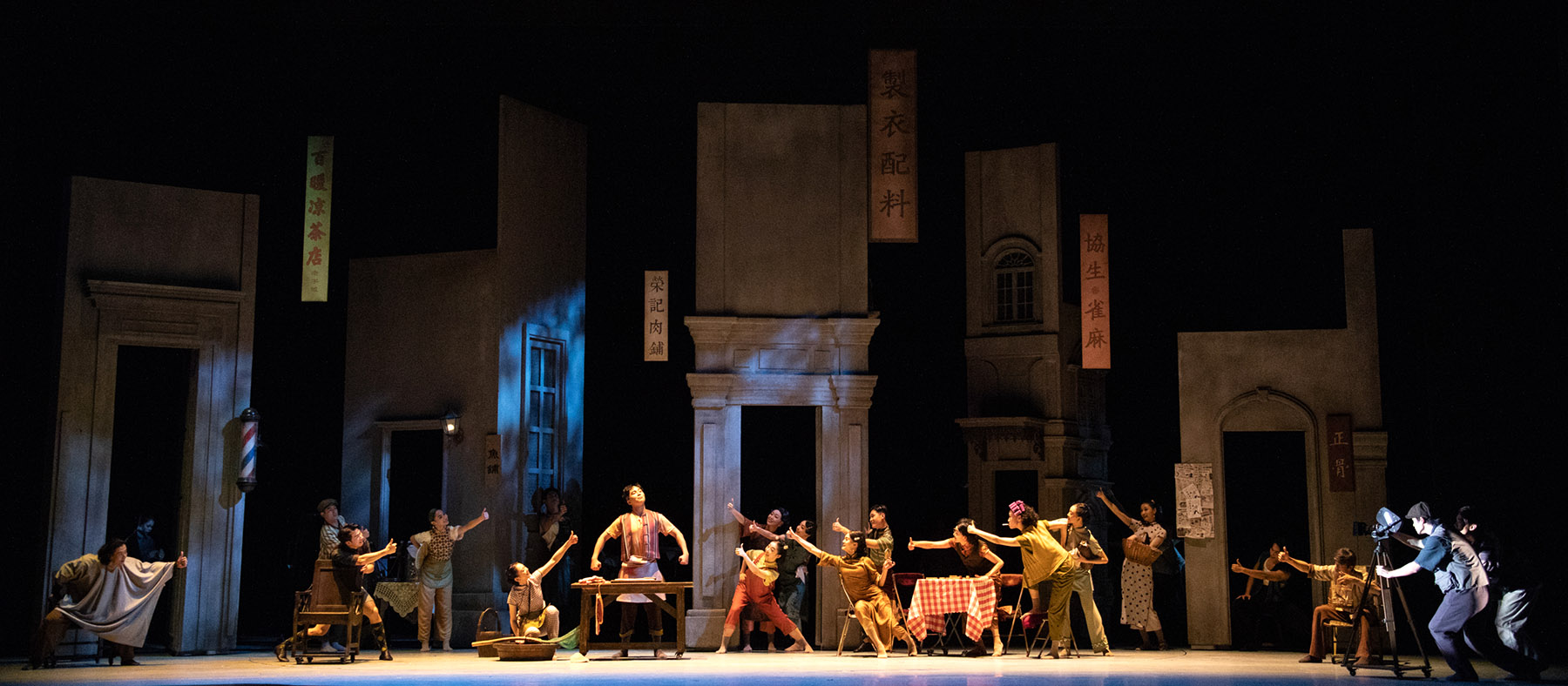
When audiences in South Korea's Andong rose to their feet in applause after watching the Chinese dance drama Wing Chun, it reminded everyone that stories rooted in one country's traditions can resonate far beyond its borders.
Created by choreographers and directors Han Zhen and Zhou Liya, the production has become a cultural highlight of the 2026 APEC "China Year". As part of its Asia-Pacific tour, it was staged in Andong on July 31 and Aug 1, bringing Chinese martial arts and performing arts to audiences in another APEC member economy. Organizers described the performances as a cultural invitation to the broader APEC community.
The production previously made its North American debut in Toronto, Canada, with a 20-performance engagement from Dec 16, 2025, to Jan 4. Canada and South Korea are APEC member economies, making the two stops part of a broader effort to strengthen cultural exchange and connections across the Asia-Pacific region.
READ MORE: A punch of kung fu culture
An excerpt from the dance drama was also scheduled to be presented during the APEC Economic Leaders' Meeting in Shenzhen, Guangdong province, on Nov 18 and 19, says Yang Jun, Party secretary of the Shenzhen Opera and Dance Theatre, the company behind the production.
For the creative team, taking Wing Chun onto an international diplomatic and cultural stage has been both an opportunity and a responsibility. Rather than fundamentally changing the production to accommodate overseas audiences, Han and Zhou focused on allowing its artistic language and emotional narrative to transcend cultural boundaries.
The dance drama was accompanied by a broader program of cultural exchange during the July 31 and Aug 1 performances.
Audiences were introduced to wing chun and Xiangyunsha, a traditional silk fabric from Guangdong province, known for its distinctive plant-dyeing and river-mud finishing process. Both are recognized as Chinese intangible cultural heritage.
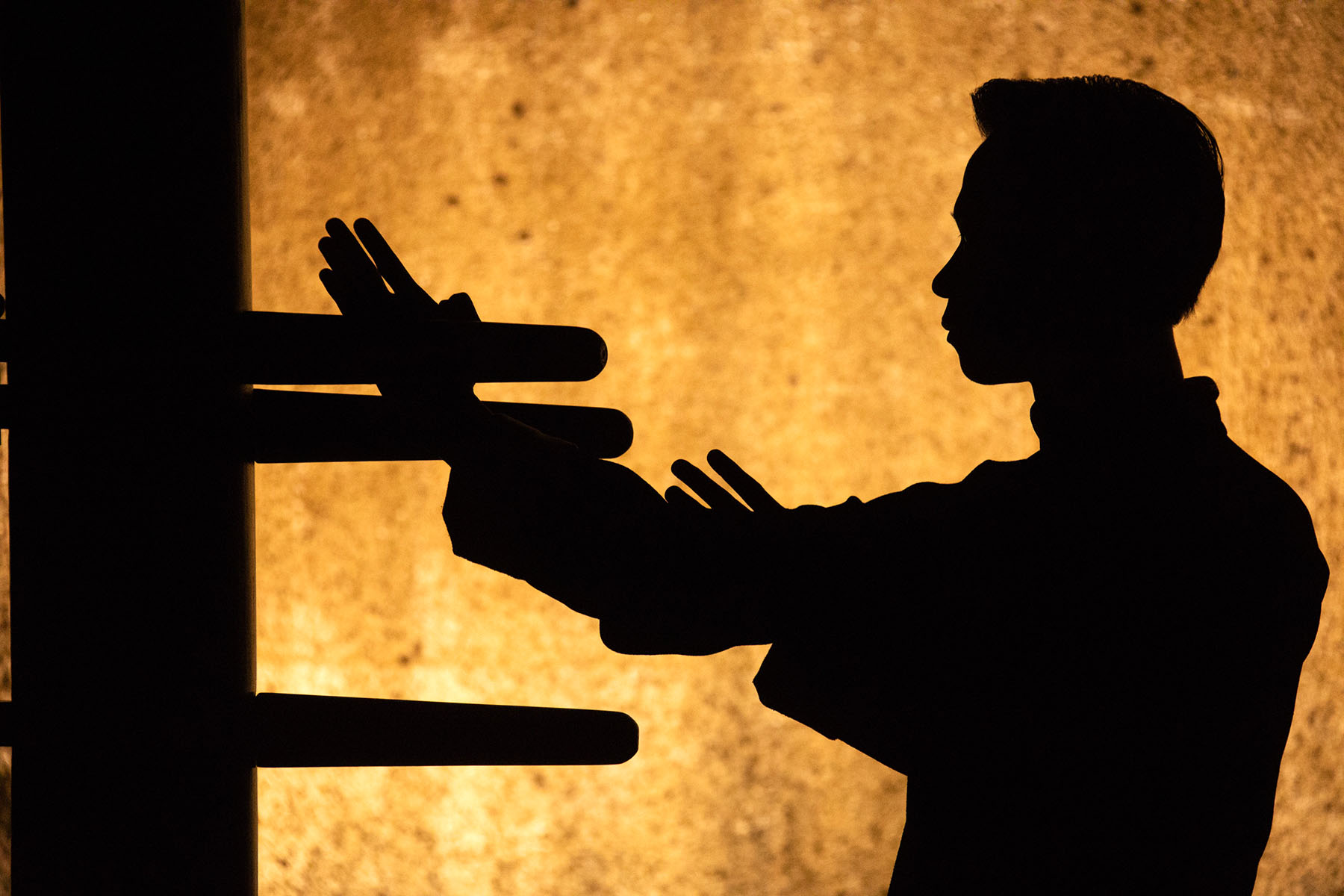
Visitors could also participate in activities that offered a closer look at traditional Chinese culture, including wing chun demonstrations and techniques using wooden training dummies, Chinese calligraphy and traditional stone rubbing, an ancient method for reproducing inscriptions and designs carved into stone.
The response from local audiences was particularly encouraging, Yang recalls. Some spectators traveled nearly four hours from Seoul to attend the performances, and many in the audience gave standing ovations at the end of the shows.
Beyond introducing Chinese martial arts to international audiences, Yang believes the production has also become a significant promotional driver for Shenzhen, the southern Chinese city where it originated.
Wing Chun has visited six cities across six countries on its international tour: Singapore, France, the United Kingdom, Russia, Canada, and South Korea. Along the way, it has introduced Shenzhen to spectators who may previously have known little about it.
"Many had little knowledge of Shenzhen, but came to associate the city with production and creative energy," Yang says.
She hopes the dance drama will inspire more international visitors to discover Shenzhen, a city widely known for innovation, dynamism and cultural vitality. For Yang, the value of an artistic work lies partly in its ability to leave a lasting impression, creating an emotional connection that encourages audiences to learn more about the metropolis and people behind it.
The two choreographers, Han Zhen and Zhou Liya, are known for their dance dramas, especially Poetic Dance: The Journey of a Legendary Landscape Painting, inspired by the classic artwork A Panorama of Rivers and Mountains, an 11-meter-long scroll painting by Wang Ximeng of the Song Dynasty (960-1279).
For Han and Zhou, however, Wing Chun's international appeal begins with the story. The creative challenge was to go beyond presenting the martial art as a spectacular fighting technique and reveal the philosophy and human values behind it, including discipline, righteousness, perseverance, and respect.
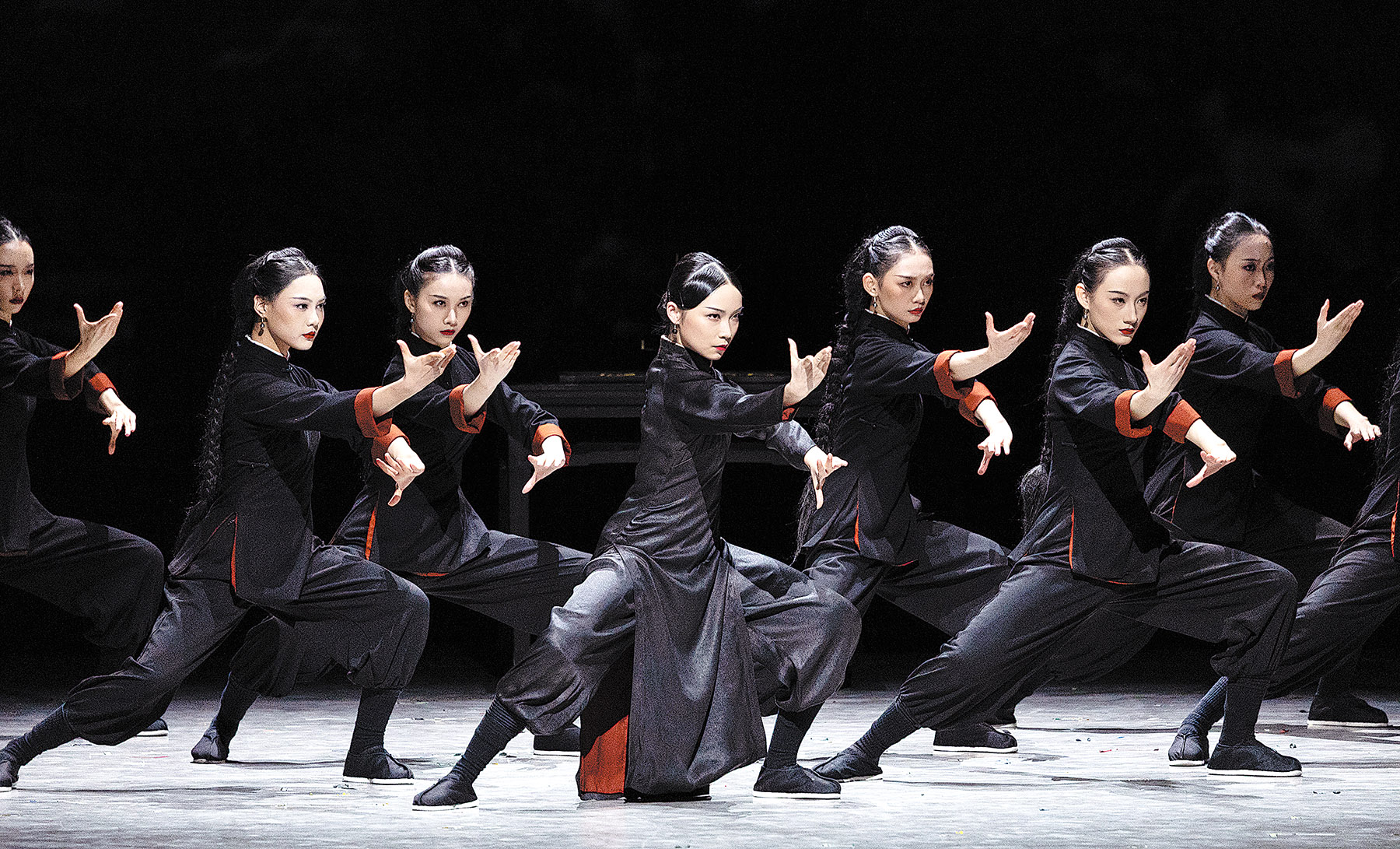
With the 1990s Hong Kong film production setting, the story weaves together the lives of Chinese kung fu masters and an ordinary film set worker. It incorporates five traditional Chinese martial arts styles, including wing chun, tai chi and bagua zhang, or eight-diagram palm, translating their distinctive movements and techniques into a theatrical dance vocabulary.
The story of Ip Man is at the heart: the renowned wing chun master whose journey from Foshan, Guangdong province, to Hong Kong, and his commitment to passing on the martial art form, form one narrative thread. Running alongside it is the story of an unsung film set worker, whose dedication to his craft reflects the perseverance of ordinary people pursuing their dreams.
By placing the lives of martial arts masters alongside those working behind the scenes, the production explores Chinese kung fu on a broader human dimension. The parallel stories allow audiences to connect with the characters through shared emotions and aspirations, even if they are unfamiliar with the techniques or history of Chinese martial arts.
Production preparations began in 2021, marking the first time Han and Zhou had taken on a production so heavily centered on kung fu. However, martial arts elements had appeared in some of their earlier stage works.
The two choreographers immersed themselves in the world of Chinese martial arts, making repeated trips to Guangdong province to research its history, traditions and styles. Their inspiration, however, also came from childhood memories of kung fu cinema, which had shaped their early impressions of martial arts masters and heroes.
"Growing up, we watched a lot of kung fu films, particularly those made in the 1980s and 90s. They shaped our ideas of martial arts masters and heroes. We wanted to bring those childhood impressions to the stage, which is why we chose a film set as the backdrop and adopted a play-within-a-play structure," Han says.
That sense of admiration, she adds, stayed with them into adulthood and became an emotional thread running through the production. Rather than re-creating familiar kung fu movie scenes, the choreographers strived to revisit the spirit of the heroes they admired as children and explore what made those figures so compelling.
Among the martial arts figures who inspired the work was Ip Man (1893-1972), the renowned wing chun master born in Foshan and later moved to Hong Kong. He is also remembered for teaching Bruce Lee, who went on to become one of the most influential figures in international kung fu cinema.
To develop Ip Man's story, Han and Zhou visited Foshan to explore memorial halls and former residences associated with martial arts masters. They also spoke with kung fu instructors to gain a deeper understanding of the art's history, traditions and evolution.
Han says the team was particularly interested in preserving wing chun's authenticity. They studied original footage of Ip demonstrating the martial art, seeking to understand and retain the characteristics of his movements rather than relying solely on the stylized fighting sequences familiar in movies.
Translating martial arts into a theatrical language presented another creative challenge. The task was not simply to reproduce fighting techniques onstage, but to transform them into movements that could convey character, emotion and dramatic tension.
The visual design also plays an important role in bringing the story to life. With 1990s Hong Kong as the backdrop, the production brings together Chinese and Western architectural influences to reflect the city's distinctive cultural atmosphere. Folding screens inspired by Lingnan cultural aesthetics, along with stage settings evoking bamboo groves and Hong Kong's narrow lanes, create distinct visual environments for martial arts encounters and the unfolding stories.
The physical demands on the performers were equally considerable. Zhou says the dancers underwent intensive martial arts training before learning the choreography, ensuring that their movements were grounded in an understanding of the techniques rather than simply imitating their outward appearance.
"It's a great challenge for the dancers since the dance drama is physically demanding," Zhou says. "They not only need to move with grace, but also with speed and strength, while pouring a ton of emotion into the characters."
The production premiered in Shenzhen in December 2022 and soon began attracting attention beyond the theater. On Dec 31,2022, a 13-minute excerpt from Wing Chun, featuring masters of different kung fu styles competing with one another, was presented during the New Year's Eve gala broadcast by Chinese streaming platform Bilibili, a popular online community among younger audiences. The performance received an enthusiastic response from viewers.
Its national profile grew further when an excerpt was presented at the 2024 CGTN Spring Festival Gala, bringing the production to millions of television viewers across the country. One of the most memorable moments featured female dancer Zhang Yashu in a vibrant red costume. Combining the speed, precision and explosive power of wing chun with the fluidity and grace of dance, her performance offered a fresh portrayal of women in martial arts. Her sharp movements and commanding stage presence turned traditional kung fu techniques into a visually striking theatrical spectacle.
For Chang Hongji, who plays Ip Man in the production, embodying the martial arts master has been both a demanding physical challenge and an emotional journey.
When Wing Chun premiered in Shenzhen, the then 24-year-old dancer broke down in tears backstage, overwhelmed by the experience. Han, the production's chief choreographer, praised his emotional commitment, saying that performers should immerse themselves completely in their roles.
"I felt as if I had finally touched Master Ip Man," Chang recalls of that first performance. "It moved me deeply. I also felt the strength of everyone coming together to overcome difficulties."
Although Ip Man's age and life experience were far removed from his own, Chang found a personal connection with the martial arts master through their shared determination and pursuit of ideals.
"I think he had a strong, unwavering inner strength. That's something I can relate to. His dedication to pursuing his ideals resonates with my own commitment to dance," he says.
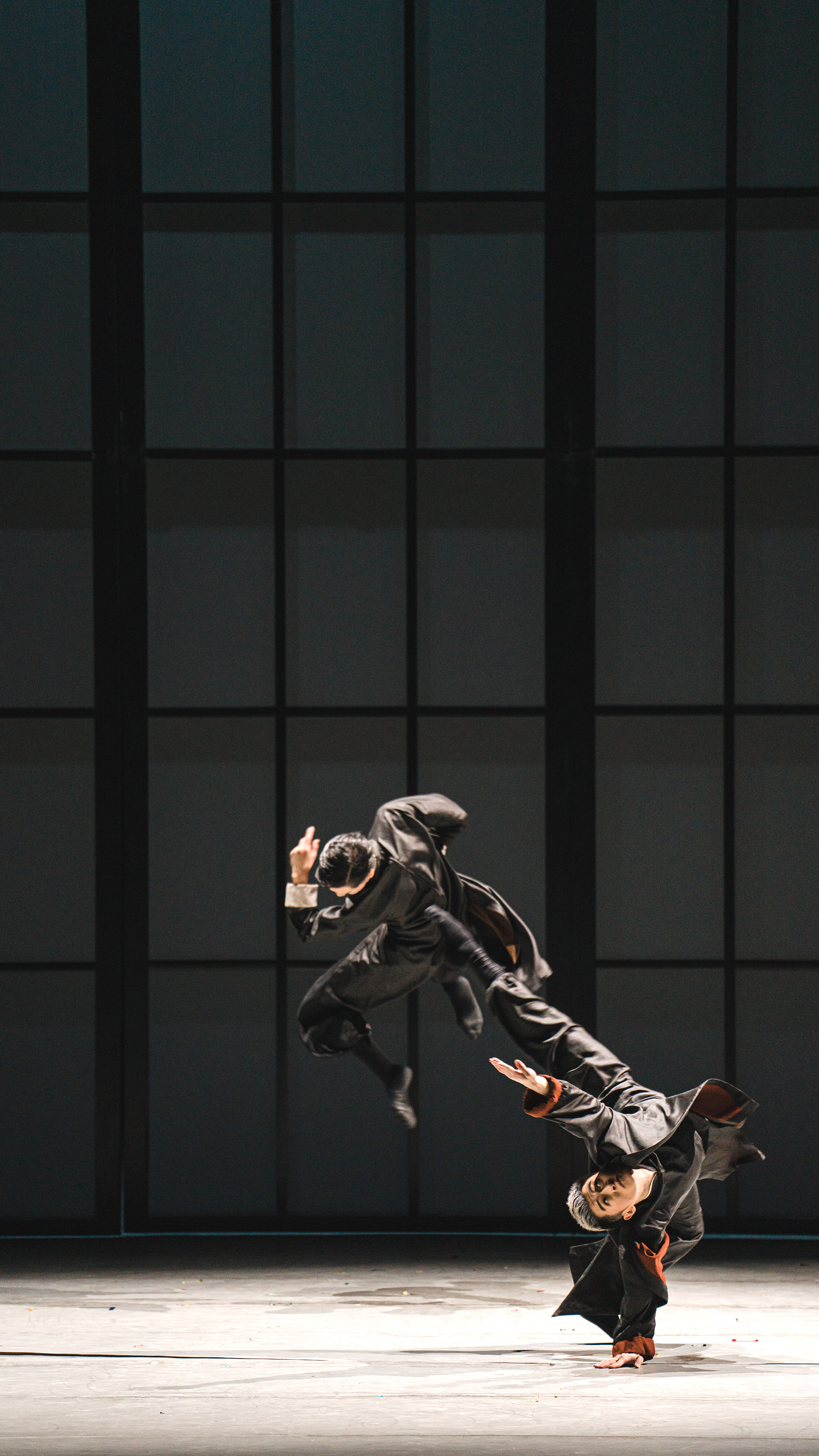
The role required a year of intensive martial arts training, during which the cast practiced wing chun, bagua zhang and tai chi, among other disciplines. Individual movements were repeated hundreds, sometimes thousands, of times, while frequent sparring sessions occasionally resulted in injuries.
ALSO READ: When getaways come with hands-on lessons
For Chang, whose fighting sequences run through much of the production, the training was particularly demanding. Onstage, he must strike the wooden training dummy with speed and force and have encounters with masters representing four other martial arts schools. The movements require not only physical strength and precision, but also the stamina to sustain an intense performance throughout the show.
Martial arts gradually became part of the cast's everyday lives. Chang recalls that for a long time, the performers greeted one another by playfully exchanging a few martial arts moves, as if they were masters meeting in a kung fu film.
Yet, despite the demanding physical preparation and the responsibility of carrying the central role, Chang says he never imagined he would be chosen to play Ip Man. His journey to the leading role was, in many ways, a departure from the position he had occupied throughout his early dance training. It required him to discover a new level of physical endurance, emotional commitment and confidence in his abilities.
"Ever since I started learning dance as a child, I was never the one standing in the center. I was always at the far end of the last row. So when I was selected to play the lead in this production, I could hardly believe it," he says.
Contact the writer at chennan@chinadaily.com.cn
