

There's a saying among locals that you haven't truly seen Foshan if you skip its ancestral temple.
I can't vouch for who coined the phrase, but just after 9 am, I was crossing the temple's threshold, kicking off a one-day city walk across Chancheng district, the historic heart of Foshan in Guangdong province.
First built during the Northern Song Dynasty (960-1127) as a site for worshipping Emperor Zhenwu, the temple complex is one of the largest and best-preserved ancient architectural ensembles in the region.
Think of it as a concentrated microcosm of traditional Lingnan architecture. Lingnan mainly refers to China's southern regions including Guangdong, Hong Kong and Macao.
READ MORE: Home of southern heritage
The whole complex is dotted with the region's signature decorative features: gilded wood carvings, brick and stone carvings, glazed pottery sculptures and lime stucco.
What really grabbed me were the pottery sculptures on the roof ridges.
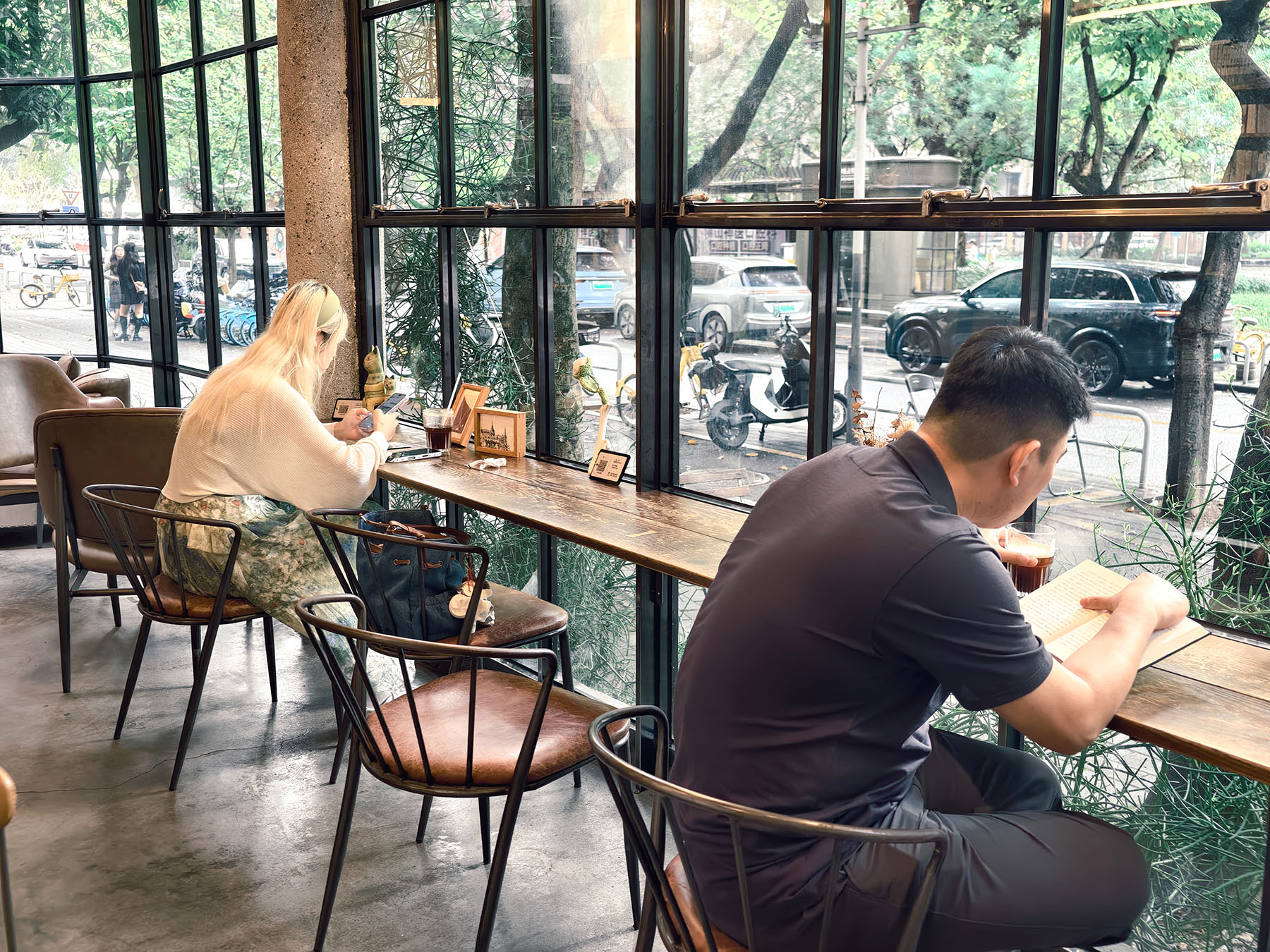
Take San Men, the main gate of the central complex: its roof ridge runs more than 30 meters long, and both the front and back faces are covered with glazed pottery scenes depicting figures, flowers, animals and pavilions — more than 300 figures in all, each vivid and lifelike, standing at a slight tilt among a dozen or so miniature pavilions and houses, angled so that people looking up from below can see them properly.
These scenes are said to tell classic stories from Cantonese Opera, which I know nothing about. Even so, I had a great time zooming in on the figurines with my phone: a pair chatting over a pavilion railing, two monkeys carrying a giant peach on a shoulder pole toward a doorway, a child kneeling in salute before an elder, with a white bird on the child's left.
Looking up at these little figures was oddly addictive. My neck was aching, and I still didn't want to stop looking.
These roof-ridge figurines, glazed chiefly in five hues — yellow, green, sapphire blue, brown and white — were first installed in 1899, when the temple underwent a major renovation during the Qing Dynasty (1644-1911).
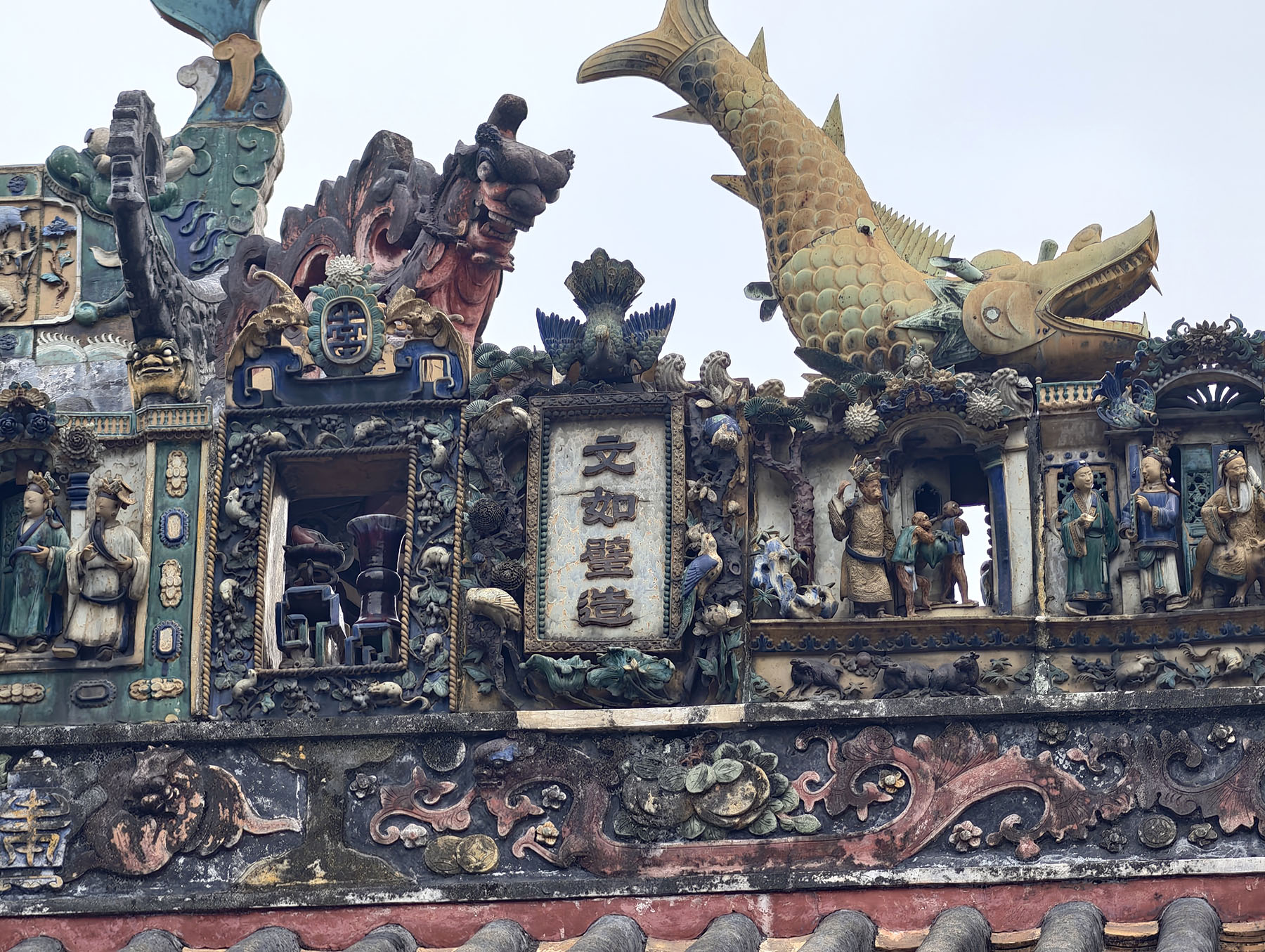
And yet, after all those years of exposure to the elements and wear, they're still as bright and lifelike as ever, a real testament to how well the pottery craft of Shiwan town in Foshan has stood the test of time.
Shiwan's pottery history goes back 5,000 years, to the Neolithic Age.
By the Tang Dynasty (618-907), large kilns had appeared in Shiwan, which began mass-producing household pottery and gradually became the ceramics center of the Lingnan region.
Shiwan pottery figurines brim with life and expression. Whether depicting a human figure, an animal or a vessel, the craft seeks to capture each subject's essential spirit. Each work carries its own distinct personality. The art reaches an ideal: 100 objects take 100 forms, and 1,000 figures wear 1,000 faces. Pieces are seldom repetitive, finely wrought and strikingly lifelike.
That is why viewing these roof-ridge figurines is such a delight, much like leafing through a picture-story book, yet packed with far more detail.
Heading deeper into the complex, I reached the Wong Fei-hung Memorial Hall, which chronicles the life of the Foshan-born martial arts master and exhibits film and TV productions themed around his story.
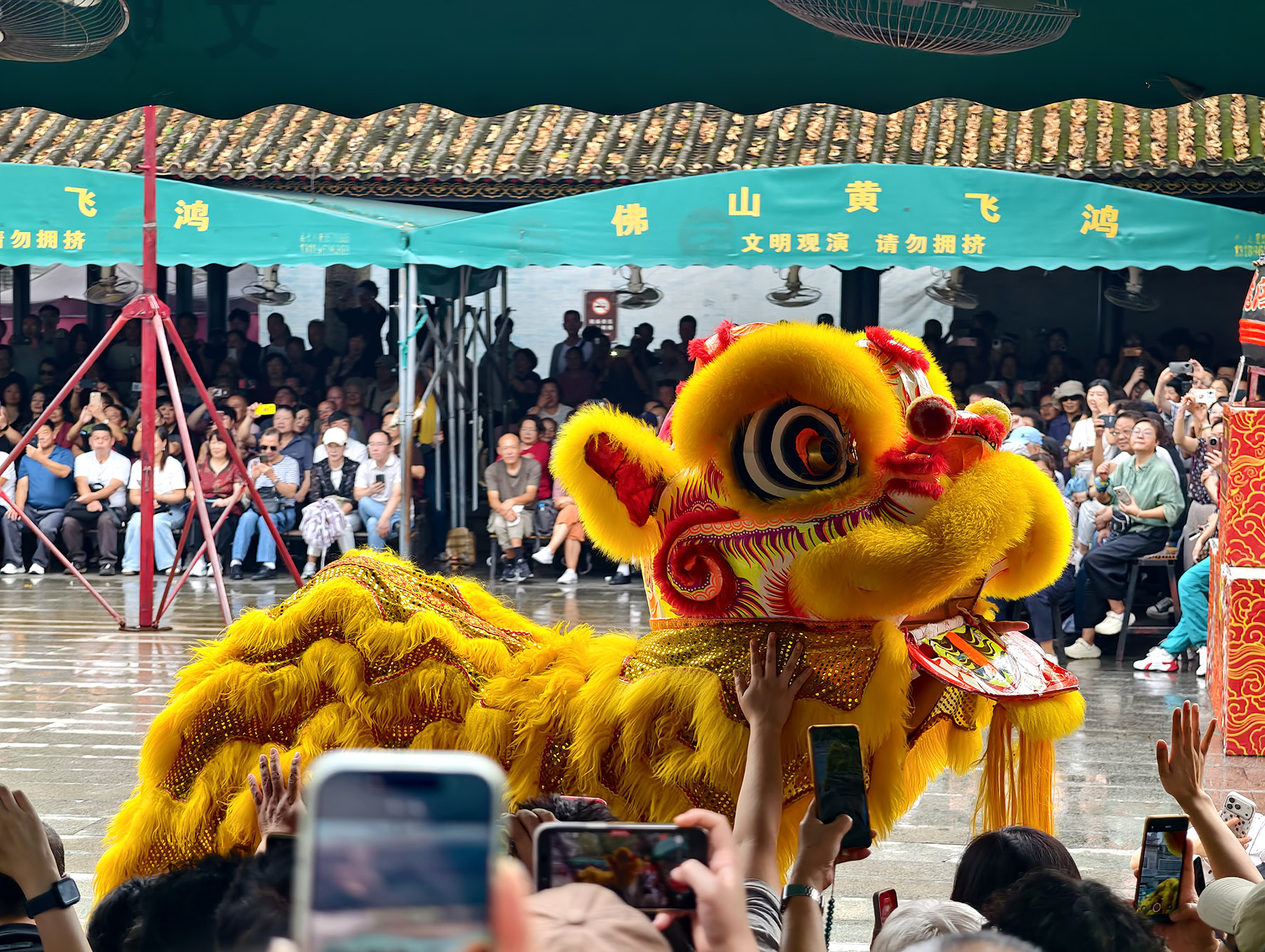
By almost 10 am, the square in front of the hall was packed with visitors, all waiting for the day's first performance of Hung Gar martial arts and southern lion dance.
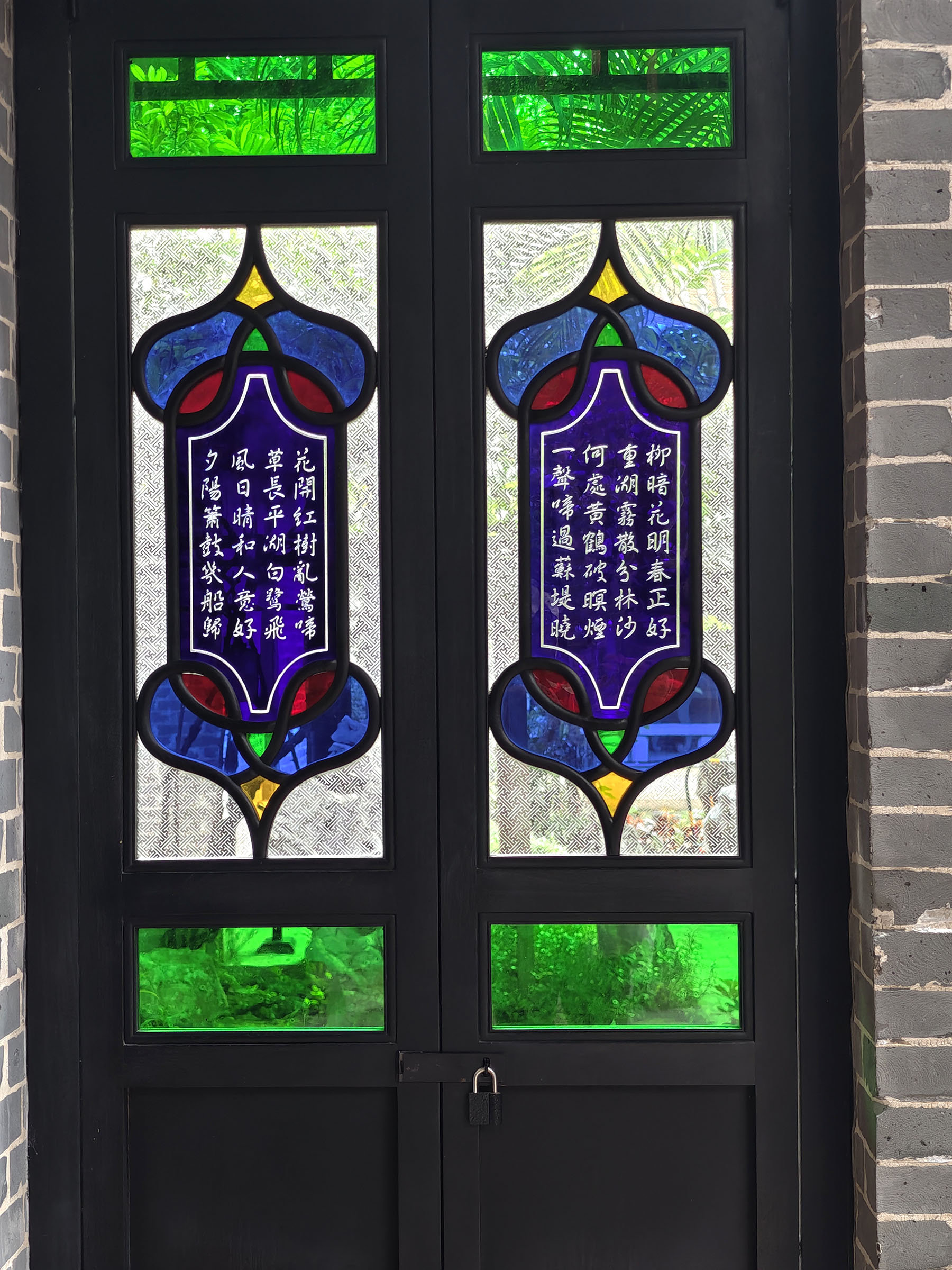
The show lasts roughly 40 minutes, with three performances daily — one in the morning and two in the afternoon — and visitors often arrive half an hour early to secure a good spot.
Amid a clatter of gongs and drums, Hung Gar performers of various ages took turns demonstrating routines, with narrators on hand to explain each set.
The highlight came with the entrance of the lion dancers.
After the narrator called out that in southern lion dance tradition, "touch the lion's forehead, and good fortune will rest upon you", the dancing lion leaned toward the crowd, and visitors vied to pat its forehead to draw in its blessing.
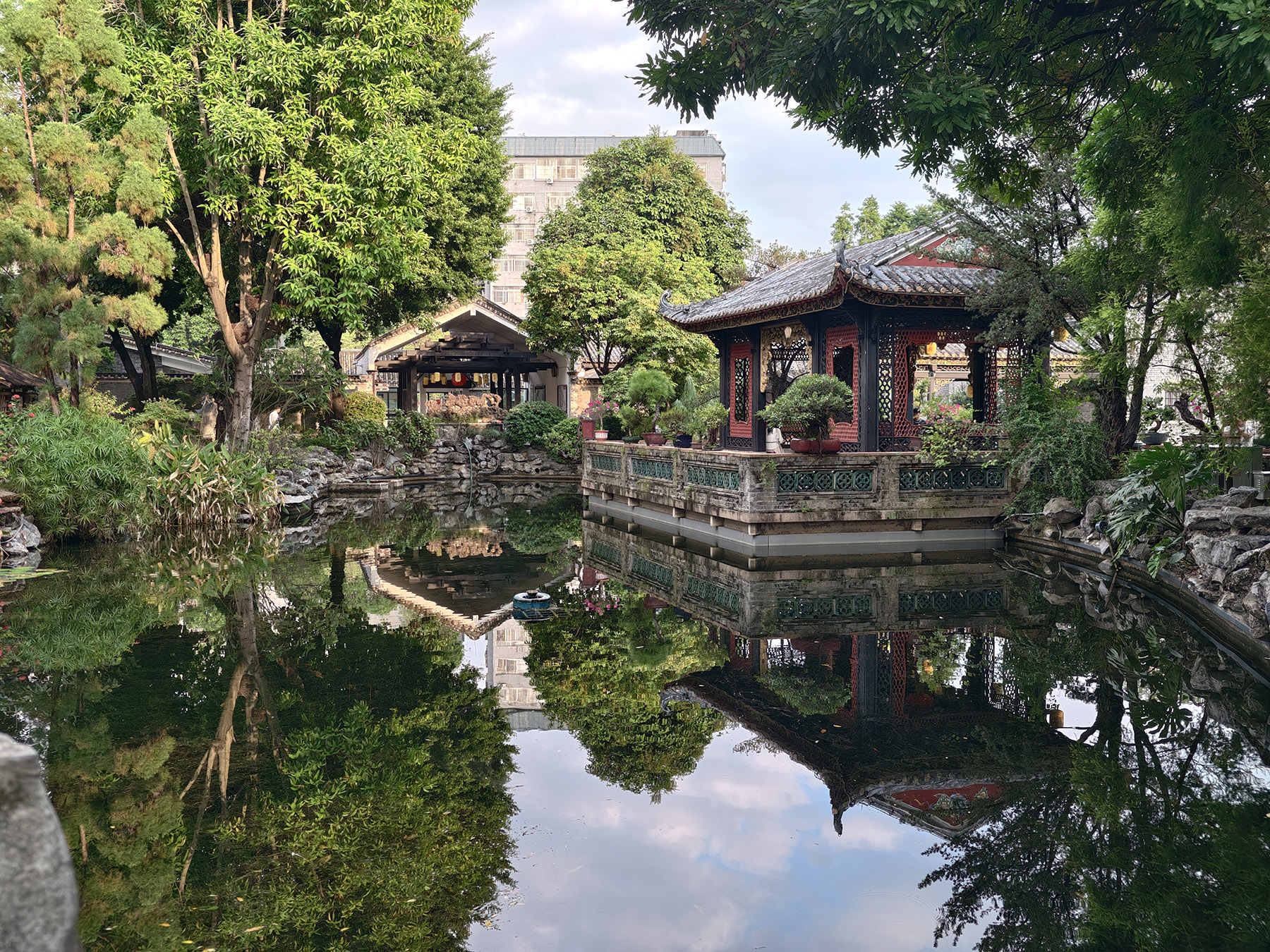
Stepping out of the temple, I continued as planned, walking about 1.3 kilometers to Liang's Garden, a fine example of Lingnan garden design.
Built gradually between 1796 and 1850 by four local scholar-artists of the Liang family, it is celebrated for its graceful ponds, hundreds of natural scholar's rocks and a fine collection of calligraphy and paintings by masters.
Upon entering, you can wander counterclockwise along the waterways across the 13,000-square-meter grounds, where the scenery shifts with every step.
The buildings are modest in scale but feel delicate, light and open, and their carved ornaments, window lattices and partition screens are equally refined.
What stayed with me most was a curious pavilion whose ground floor forms a half-hexagon while the upper story is a full square.
Known as Banbianting, or the Half Pavilion, it was conceived to embody the beauty of imperfection and inspire visitors to seek a fuller spiritual life. This embrace of imperfection also runs through the garden's collection of stones of wildly varied shapes.
That same embrace made me forgive the rain for cutting short my further exploration of the garden. I decided to find somewhere to order a coffee and take a short break. I picked Sensing Bookstore, which social media keeps calling the most beautiful bookstore in the city.
On my way there, I cut through Chuihong Park, where banyan trees and other broad-leaved trees I couldn't name spread their branches freely, wrapping the stone-paved path and everyone on it in a sweeping canopy of green.
In November, Foshan still offers both the people and the trees here comfortable humidity and warmth, allowing them to exist in a relaxed, unhurried state.
ALSO READ: When getaways come with hands-on lessons
The bookstore is absolutely a place where you can just relax.
Besides coffee, drinks and everything a bookstore should have, it has floor-to-ceiling windows overlooking the street and the trees of Chuihong Park, a listening booth where you can put on headphones and play old records, a cat curled up quietly asleep on a sofa, and all kinds of literary and Foshan-culture-themed notebooks, fridge magnets, tote bags and other creative products.
I lingered by the window with my coffee, watching the rain streak the glass and the park blur into green, and felt the day slow down at last.
Before leaving, I picked a notebook with a quote from the British poet Mina Loy on its cover: "Fling yourself at life and let yourself feel what you do feel upon the very tick of the second; snatch the images of life that fly through the brain."
That is also what I hope for my stay in Foshan and, hopefully, for my everyday life.
