

With its spirited movements and infectious rhythms, a traditional art form from Guangdong is winning admirers abroad, Yang Feiyue reports.
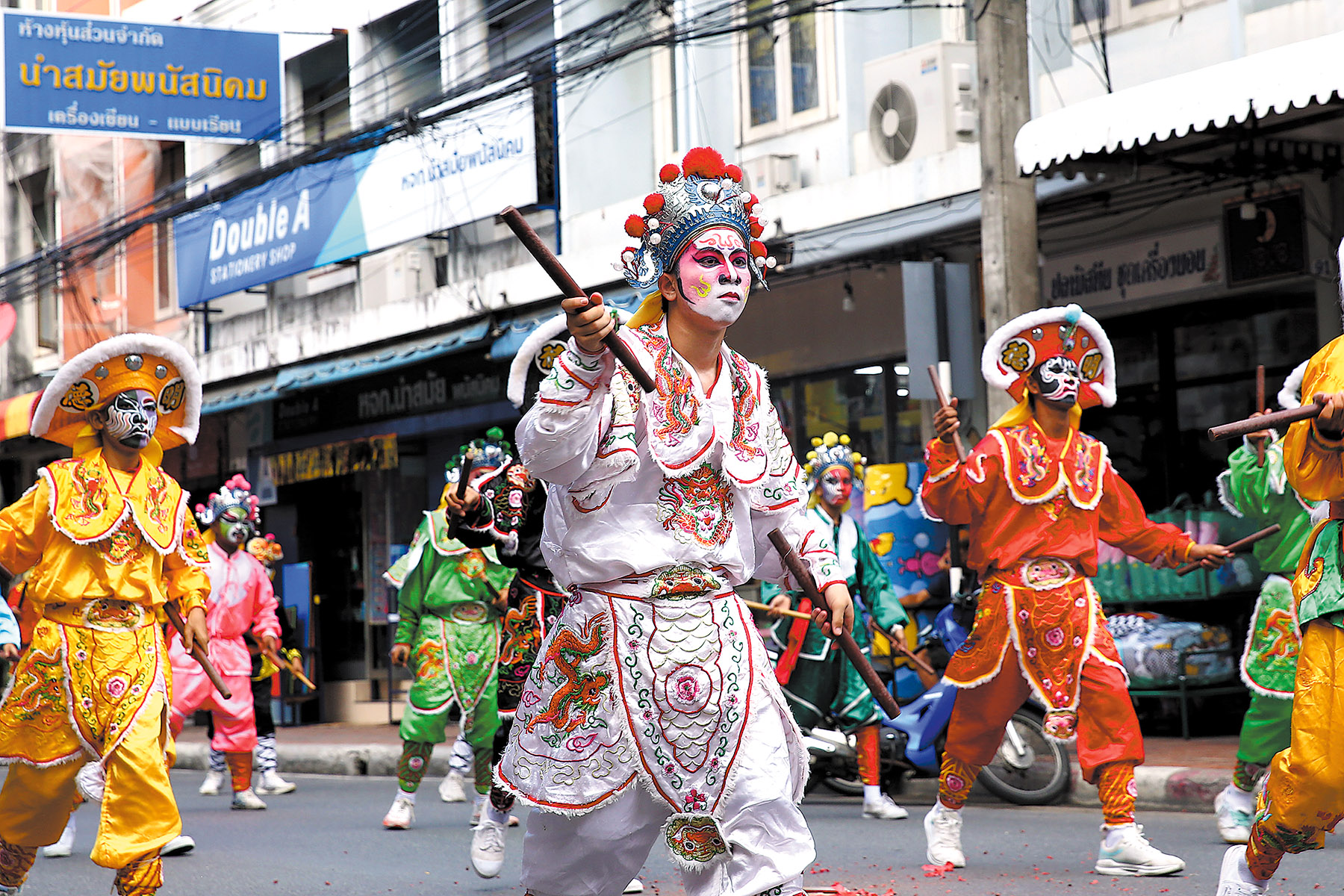
Li Junhao still vividly remembers the cheers and curious faces he encountered during his team's visits to Russia and the United States this year.
For the coach of a traditional Chinese Yingge dance team, some of the most rewarding moments came from watching overseas audiences take an interest in the art form and try it for themselves.
During the team's visit to the US in August, two hotel staff members watched with curiosity as Li applied his performance makeup. They later asked, through a local guide and translation software, whether he could paint their faces, too. Li readily agreed.
"They were particularly interested in our facial patterns," he said.
ALSO READ: Dance finds a digital stage
Another encounter left an even deeper impression. After watching the team's performance, a foreign spectator wanted to learn more about the dance. He searched online for its name and cultural background, and then returned the following day to watch the team perform again.
"Seeing him go out of his way to learn about Yingge and come back to see us made me very happy," Li said.
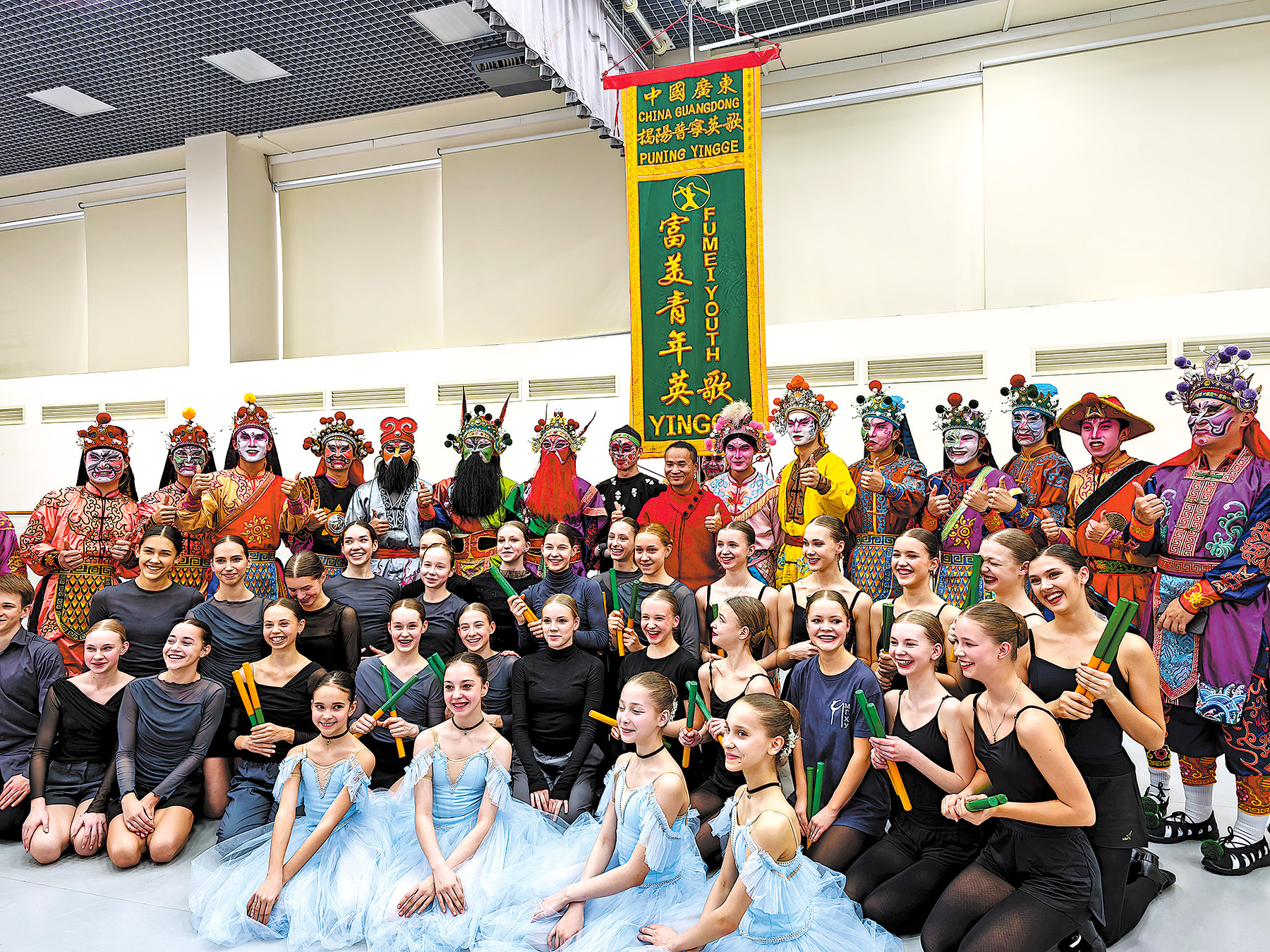
Rooted in the Chaoshan area of Guangdong province, Yingge is a vigorous folk dance that combines martial arts and traditional theater. Performers wield short wooden sticks, moving in tightly coordinated formations to the powerful rhythms of drums and gongs. The performances draw inspiration from the story of the Liangshan heroes in the classic Chinese novel Outlaws of the Marsh.
Li, a municipal-level inheritor of Puning Yingge, believes the dance's energetic style helps it connect with audiences even when performers and spectators do not speak the same language. "I think the best way to communicate is to have them dance with us," he said.
During performances in the US, his team demonstrated basic movements and invited audience members to join in.
Since embarking on overseas cultural exchanges in 2024, the team has performed in Thailand, Malaysia, Russia and the United States, among other destinations. Its efforts have also extended beyond the stage. In Malaysia, Li and his colleagues have helped train two local Yingge teams, bringing together ethnic Chinese participants and other members of the local community.
Li has particularly fond memories of his first visit to Thailand in 2024. Local organizers lined the route with Chinese and Thai national flags and arranged for Thai women dressed in qipao, a traditional Chinese dress, to welcome the performers.
As the team entered the performance area beneath the flags of the two countries, Li was broadcasting the event live.
"I felt particularly proud to be representing Chinese culture overseas," he recalled. "I was so moved that I almost cried."
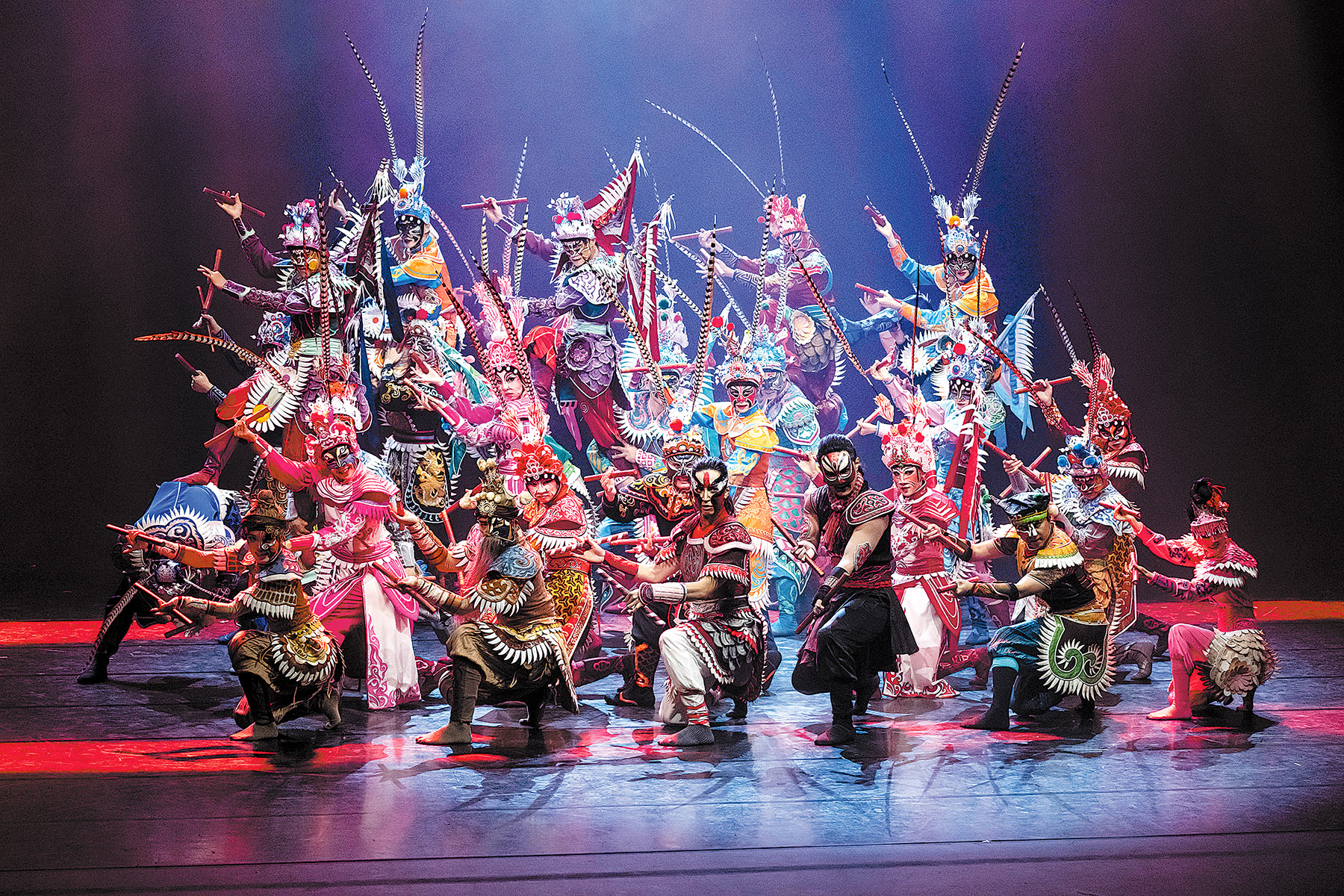
For Chen Laifa, coach of the Nanshan Yingge Team and a national-level inheritor of the art form, taking Yingge overseas is part of a much longer effort to ensure its survival and continued growth.
The team performed at the Expo 2025 Osaka in Japan and traveled to Hawaii this year for a folk cultural exchange event in Honolulu's Chinatown. Its street performance drew crowds of local residents and visitors.
Born in 1957 in Puning, a part of the Chaoshan area, Chen first encountered Yingge as a primary school student. He formally joined the Nanshan team at 18 and became its coach in 1990.
ALSO READ: Reimagining reunion
Over the decades, Chen has sought to make the dance more accessible to wider audiences. He changed traditional formations to make performances more audience-friendly, developed sequences that better conveyed the stories behind the movements and challenged long-standing restrictions that limited participation to men from within the village.
"Yingge should be protected and passed on to a much wider community," Chen said, adding that overseas exposure was equally important for its future.
"Yingge must go out and reach a wider audience," he added.
Contact the writer at yangfeiyue@chinadaily.com.cn
