

World's largest small-commodities market a happy home to all 56 Chinese ethnic groups
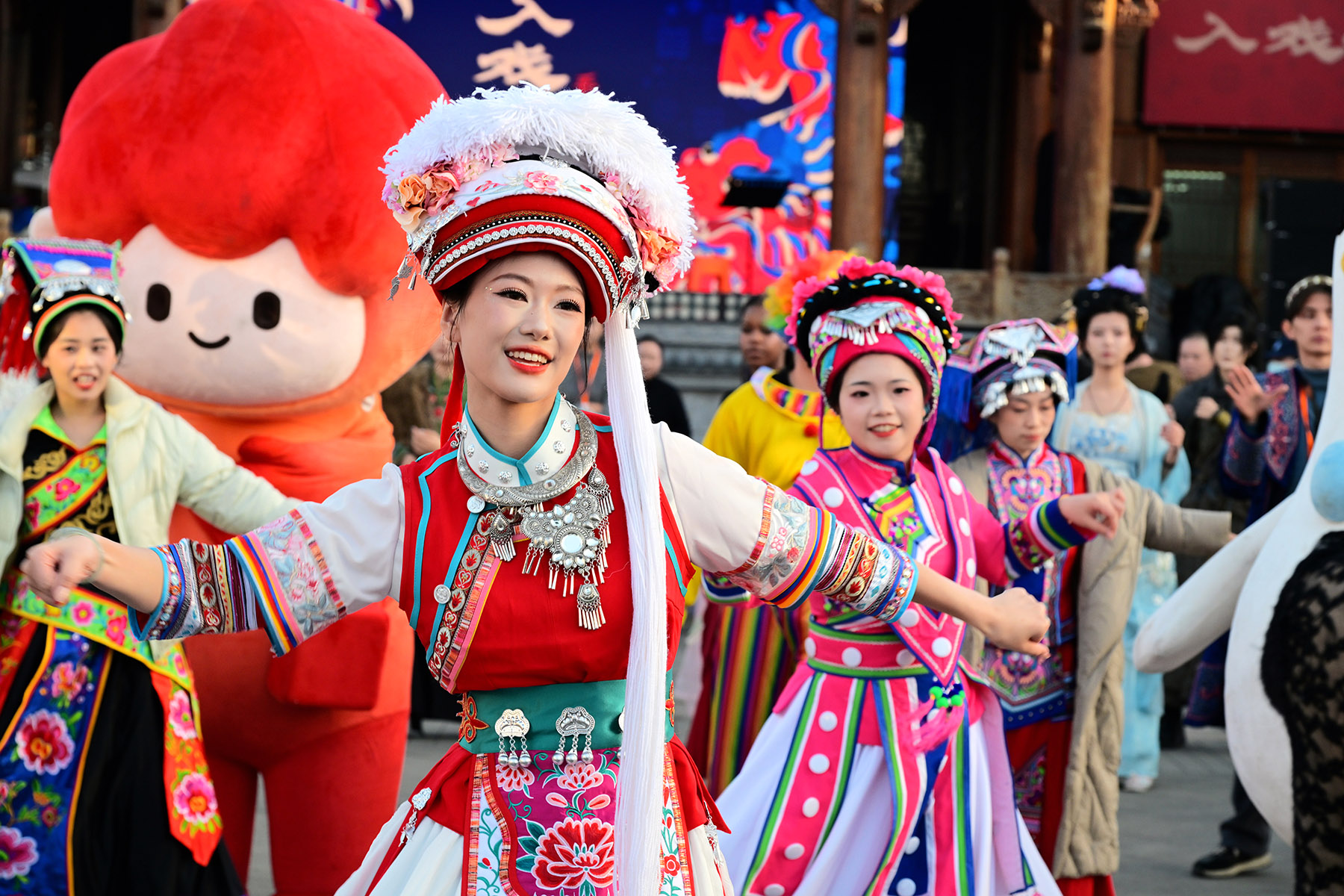
The eastern commercial hub of Yiwu in Zhejiang province has long been known as a melting pot of cultures, attracting traders from across China and further afield with the lure of economic prosperity.
In more recent times, Yiwu has come to symbolize and embody the ethos behind the nation's Ethnic Unity and Progress Promotion Law, which was implemented on July 1.
Home to residents from all 56 of China's officially recognized ethnic groups, including 323,000 ethnic minority residents, Yiwu was formally named a national demonstration zone for ethnic unity and progress on Jan 29.
READ MORE: National law to boost ethnic progress, unity
Local officials and entrepreneurs say the city's rapid commercial growth — fueled by its status as the world's largest small-commodities market — has created an environment where cultural preservation and economic mobility reinforce one another.
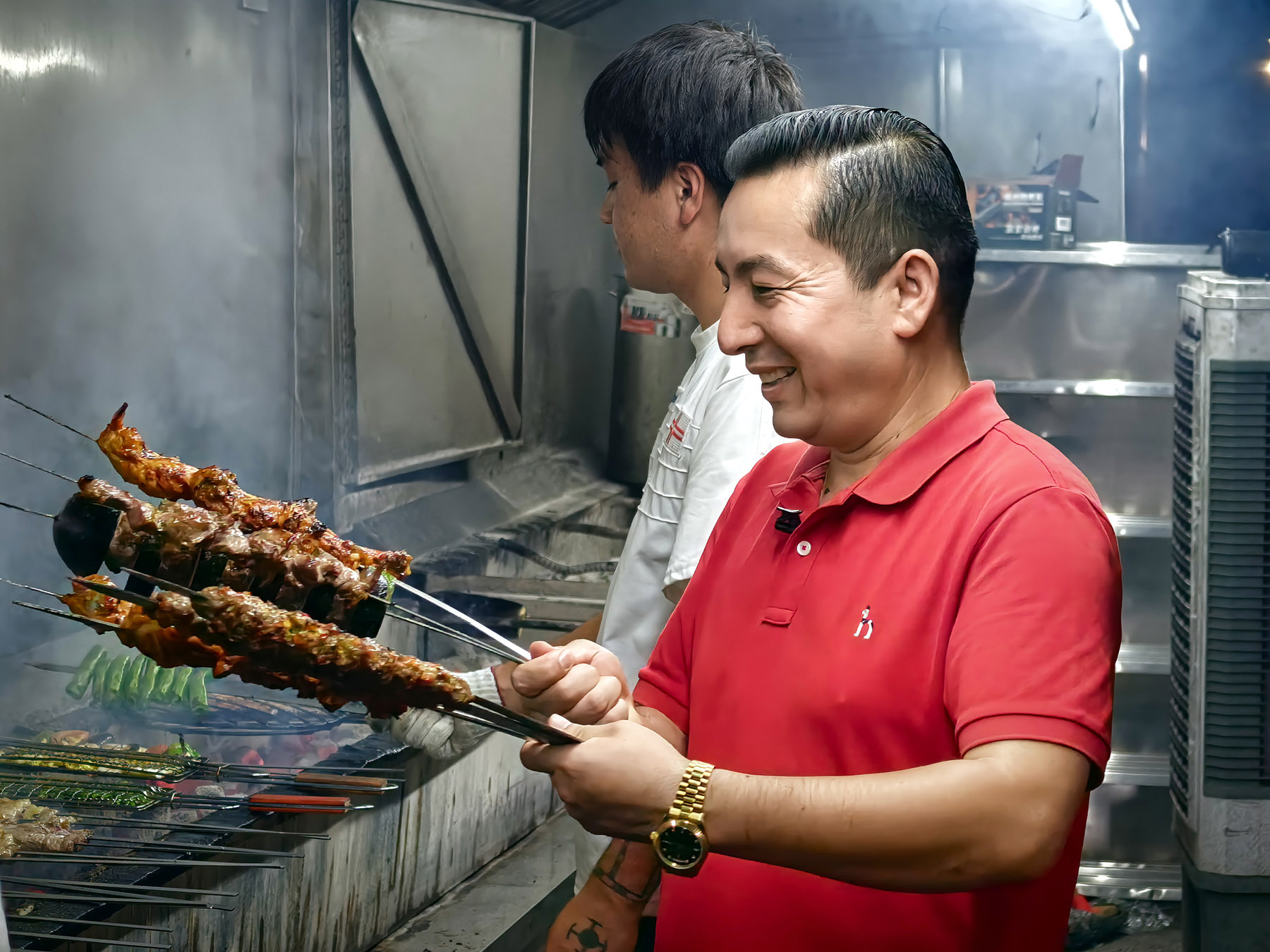
At dusk, Yasin Ibrahim's corner restaurant begins to bustle, the aroma of roasting kebabs drifting into the evening air as employees from more than 10 ethnic groups serve an international clientele.
Yasin, originally from the Xinjiang Uygur autonomous region, arrived in Yiwu in 2008 with his wife after trying his hand at various ventures back home. Starting with a small kebab stand bringing in roughly 100 yuan ($14) a day, they steadily built their customer base until daily sales reached 10,000 yuan, enabling them to open their first brick-and-mortar restaurant in 2015.
Today, Yasin operates multiple restaurants and cafes across the city. His flagship location — open from 11 am to 3 am daily — employs more than 40 workers from Han, Uygur, Kazak, Bai, Dai, Hui and Yi backgrounds. To cater to Yiwu's global visitors, the kitchen has adapted traditional specialties like kebabs, pilaf, fried noodles and yogurt with international flavors.
"The restaurant belongs to all of us, and we work as a family," Yasin said. As the owner of a business that brings together people from diverse ethnic backgrounds, he encourages his employees to work together and support one another.
Reflecting on his journey in a city thousands of kilometers from his hometown, Yasin said maintaining a positive outlook and being grateful every day were important. He now considers Yiwu his second home, where he and his wife have raised their three daughters and a son.
Like Yasin, many people from ethnic minority groups have put down roots and built successful lives in the city through hard work.
Striving for success
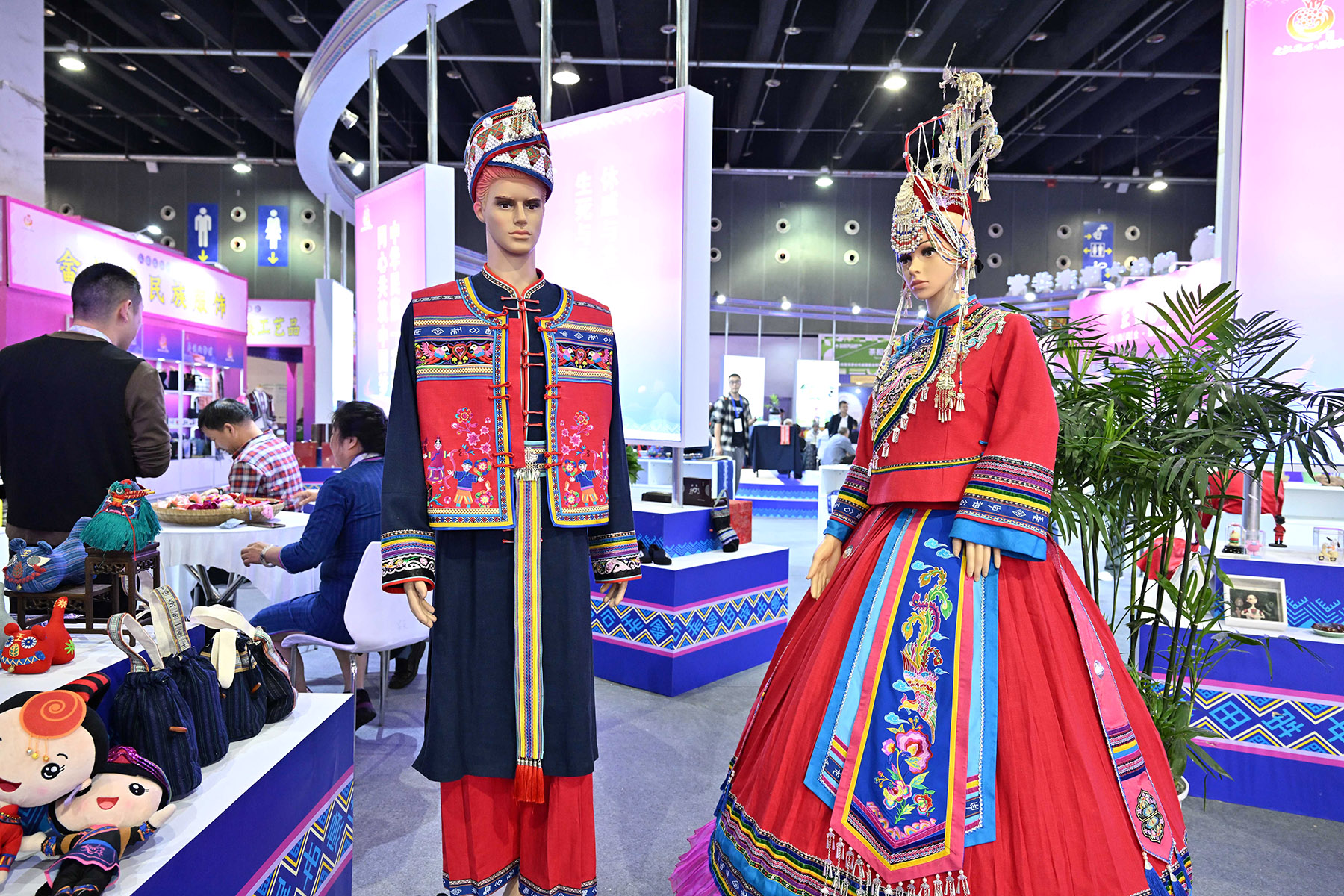
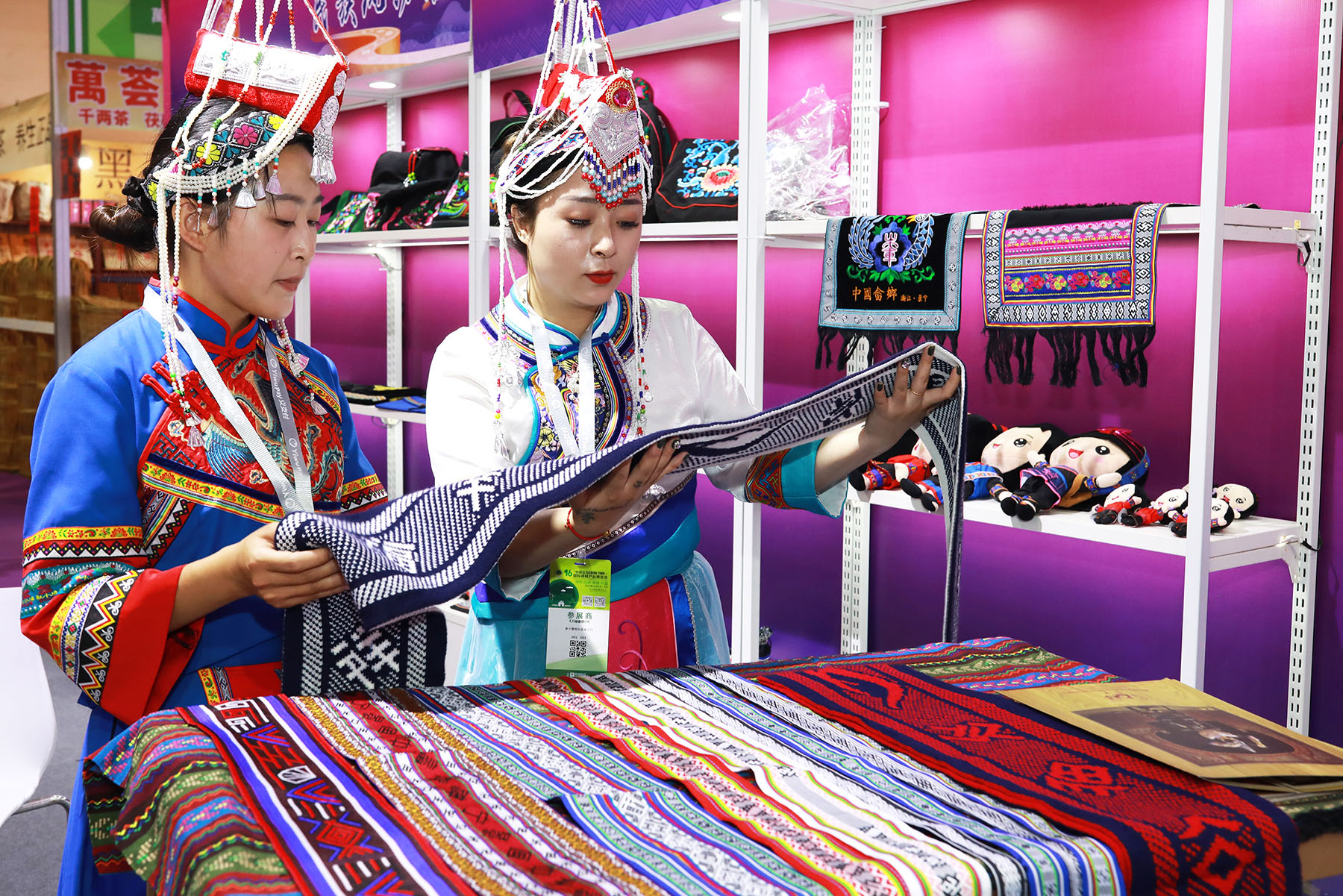
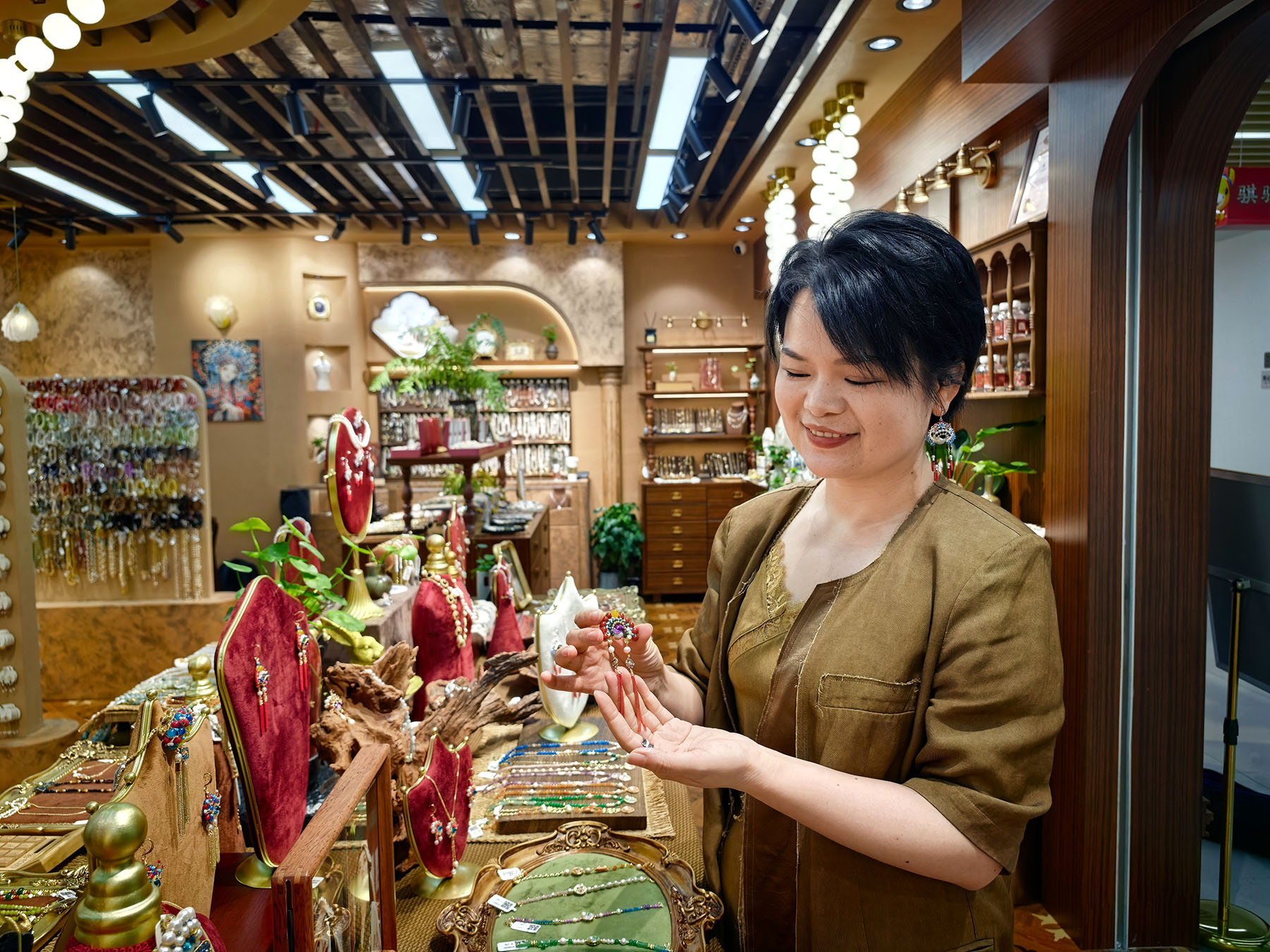
For other entrepreneurs, Yiwu's vast supply chains have provided a lifeline for rural heritage crafts. Zhong Min, a member of the She ethnic group from the mountainous communities of Ningde, Fujian province — where residents have traditionally relied on tea picking — relocated to Yiwu in 2018 to commercialize her community's hand-weaving traditions.
Starting with a small booth, Zhong trained women in her hometown to craft intricate accessories incorporating She ethnic patterns and colors, selling the goods in Yiwu's markets. One signature design — earrings shaped like bird's nests that require painstaking thread-winding — has alone sold more than 200,000 pairs.
After realizing that few people outside her hometown knew about the She heritage, she began weaving traditional ethnic patterns and colors into modern designs.
"These efforts are aimed at preserving our culture," she said.
Seeing their handicrafts embraced by the market, other members of the She ethnic group also felt happy and proud. Meanwhile, Zhong continued to learn new handicraft techniques. Her work brought her into contact with other ethnic cultures, providing fresh inspiration.
In 2025, Zhong began opening physical stores across the country, with the number now exceeding 50. "The goal is to better understand market demand and make our designs better match customers' needs," she said. "As so many people are following me, I hope I can lead everyone in the right direction."
Natural integration
Liang Minmin, who moved to Yiwu 11 years ago from Yanbian Korean autonomous prefecture in Jilin province, said there was no distinction between locals and newcomers.
Liang is general manager of Yiwu Pula Food Co, whose range of candy products has reached overseas markets, including the United States and Japan. Over the years, the company has evolved from a purely trading business into a candy manufacturer.
Yiwu's well-developed manufacturing chain and convenient sales channels have provided favorable conditions for the company's growth, he said.
Moving from Yanbian to Yiwu, Liang said he was initially apprehensive about settling in an unfamiliar city. "Many people helped me, and I also benefited from supportive policies," he said.
As a member of the Korean ethnic group, Liang also serves as vice-president of the Yiwu Association for the Promotion of Ethnic Unity and Progress. He said interactions with people from other ethnic groups had given him opportunities to learn from their strengths while sharing Korean ethnic culture.
The integration of different ethnic cultures has become a natural part of daily life in Yiwu, Liang said.
"We continue to observe our ethnic traditions during festivals, and traditional Korean ethnic foods are readily available here," he said. "Some restaurants even combine flavors from different ethnic cuisines."
Mutual support
Younger generations of ethnic minority communities have also worked hard to build their lives in the city. Zou Yuting, a 25-year-old member of the Yi ethnic group from Yunnan province, moved to Yiwu in 2024.
"Since coming to Yiwu, I've become even prouder of my ethnic minority identity," she said. Starting out as a street singer, Zou soon discovered that Yi ethnic songs resonated particularly well with audiences. Whenever she performed, passersby would gather around to listen, captivated by her clear voice and the melodies of the traditional songs.
Despite biting winter winds and scorching summer sun, Zou continued to perform in the park with a microphone and speaker.
Now boasting more than 100,000 followers on Douyin, Zou regularly livestreams her singing. Meanwhile, she runs a printing store.
"Singing as a hobby did not bring in much income. Being on my own in an unfamiliar city, I need to find my footing first and secure a steady income before pursuing my dreams," she said.
After joining the Yiwu Association for the Promotion of Ethnic Unity and Progress in 2025, Zou found a mentor in Zhang Li, a Miao entrepreneur from Hunan province and fellow association vice-president. Having moved to Yiwu in 2003, Zhang built extensive experience in e-commerce and entrepreneurship before dedicating herself to helping minority newcomers launch businesses and navigate city life.
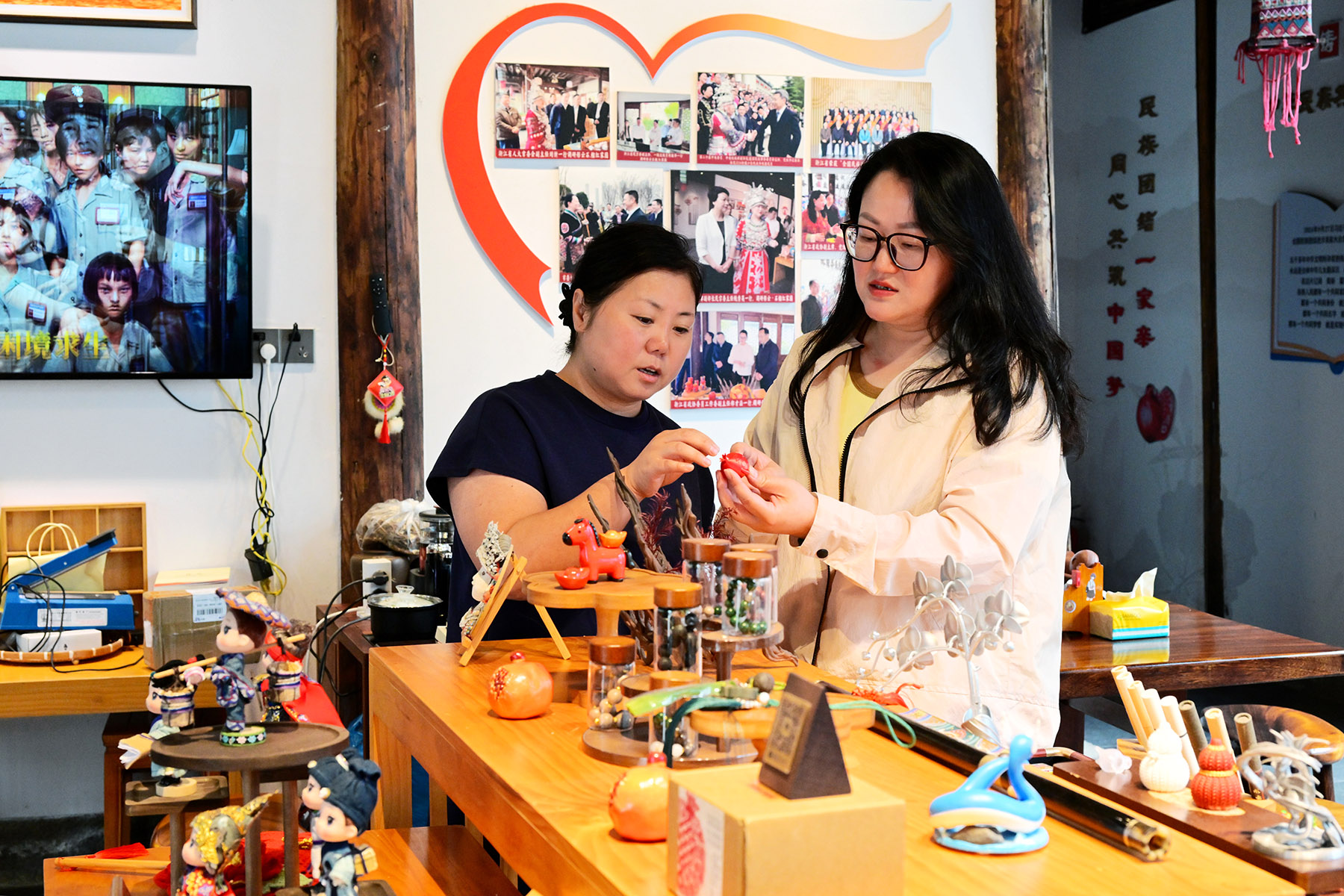
In Yiwu's Fotang ancient town, Zhang runs a "pomegranate red community" space on the old street that showcases minority-made products, hosts cultural lectures, and holds community meetings to resolve residents' daily administrative or business hurdles. Her work earned her recognition as a national role model for ethnic unity and progress in Beijing on Sept 27, 2024.
ALSO READ: The commercial evolution of Yiwu
Zou regularly visits the old street to seek Zhang's advice — learning about Miao customs in the process — and hopes to pay that mentorship forward once she is more established.
Inside Zhang's community hub hangs a traditional Chinese painting of a ripe pomegranate, a common motif in Chinese ethnic policy symbolizing tightly bound communities. Pointing to the tightly packed red seeds, Zhang said residents from different backgrounds are much the same — distinct, yet closely connected.
"I always tell them that it is important to keep in mind that we all share the same root and to respect the customs of different ethnic groups," she said.
Contact the writers at lishangyi@chinadaily.com.cn
