

Through better infrastructure and amazing snaps, travelers are choosing nighttime destinations for their next vacation, reports Xu Lin.
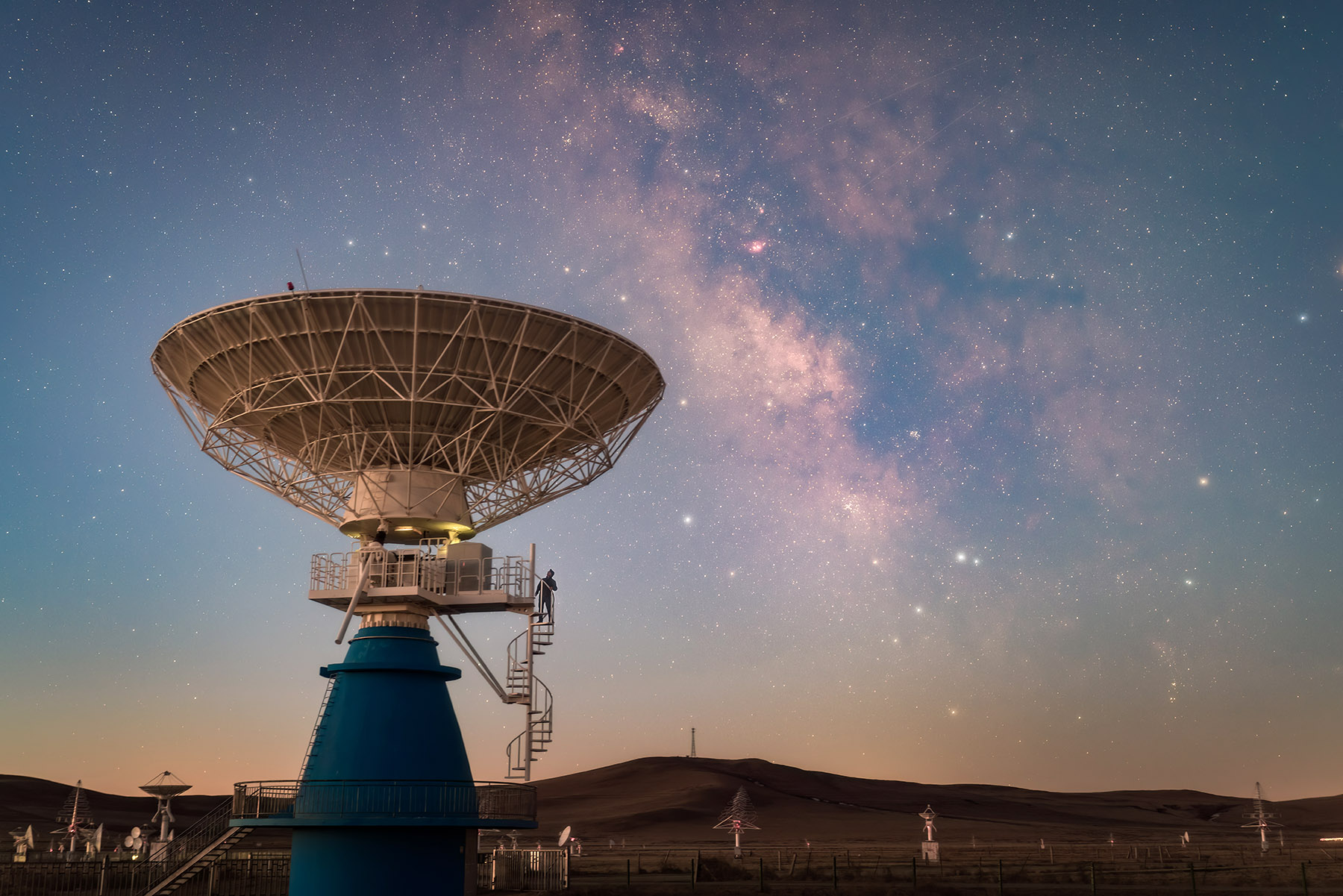
Under a canopy so dense that the Milky Way seemed to spill across the heavens, a father and his son stood on the grasslands, their heads tilted back in shared awe. "It's so beautiful. I want to come back to see the stars again," says Liang Jiacheng, who traveled with his father to Ming'antu town in Zhengxiangbai Banner, the Inner Mongolia autonomous region, from Hohhot, the regional capital 400 kilometers away.
"It's nothing like the city sky, where bright lights and haze blur the stars. In Ming'antu, with little pollution, the dazzling stars are brighter than anything we see back home," Liang Tian, the father, says.
During the day, they enjoyed views of rolling grasslands dotted with cattle and sheep. The pair also viewed the radio telescopes at the Ming'antu Observing Station, part of the Chinese Academy of Sciences' National Space Science Center.
READ MORE: Tourism written in the stars
At a stargazing cultural and tourism camp near the station, many tourists come for stargazing, astrophotography and study tour programs, especially during peak summer months. Visitors recline on rotating lounge chairs to gaze at the stars, or admire the night sky from rooms fitted with telescopes and roofs that slide open on tracks.
"The region is exceptional for astronomical sightings, an arid climate, clear skies, low pollution, and ideal stargazing," says Liang Hua, head of the stargazing camp. The camp offers part-time jobs to local villagers whose income previously depended on animal husbandry.
A novice stargazer can gain basic astronomy knowledge at a domed planetarium, where simulations show the evening sky and how the constellations shift over time. He says cultural content should be woven into stargazing experiences, noting that stargazing is deeply rooted in Chinese traditional culture, from the 28 mansions in Chinese astrology to ancient observatories.
Awestruck by the spectacle
Ming'antu is not an isolated experience. More destinations are turning dark skies into tourism resources nationwide, combining stargazing with natural scenery, cultural heritage, science popularization, study tours, and astrophotography.
In 2019, Geyuan town, Jiangxi province, was designated a China conservation area for dark and starry sky. In recent years, urban visitors from neighboring cities have been flocking to Shiqiao village in Geyuan to enjoy the natural scenery, climb Mitoujian Peak, view wind turbines, hike the ancient trails, watch the sunrise and sunset, and stargaze.
In addition to an observatory on the top of Mitoujian Peak, guests can stargaze in Cipo Hengfeng's yard, a high-end minsu (Chinese-style bed-and-breakfast hostel) in the village. Its street lamps stay dim and angled downward, minimizing light pollution and leaving stargazing virtually unaffected.
"Most visitors are young, usually born in the 1990s, who bring their children," says Deng Ke, the hostel manager. It employs local villagers and sources produce from nearby farms, spreading the benefits of stargazing tourism. "As a local, I studied and worked away for years and hadn't really seen the stars in a while. Here, you can look up and see the same starry sky from childhood," Deng says.
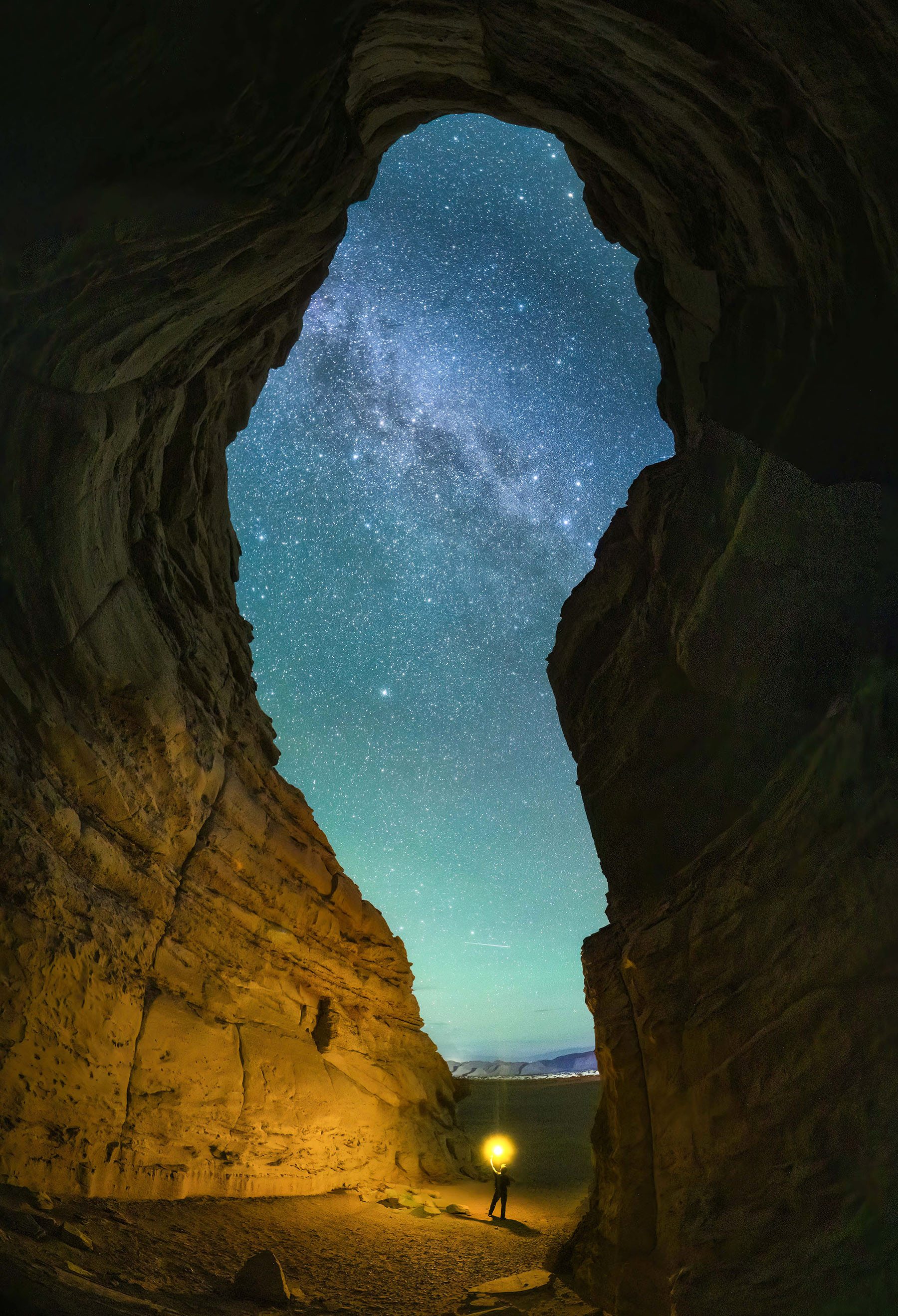
Far to the northwest, the Pterosaur-Yardang Dahaidao Scenic Area in Hami, the Xinjiang Uygur autonomous region, is an ideal location for stargazing and astrophotography because of its vast, varied wind-eroded Yardang landforms and minimal light pollution. Stargazers can spot the Milky Way over the Yardang formations. Astrophotographers pair these dramatic landforms with celestial subjects to create one-of-a-kind photographs.
Every year, the Sweet Whispers to the Galaxy Festival in Hami attracts astrophotographers and drone photographers from across the country, reinforcing Hami's reputation as a premier stargazing destination.
"Bright stars cluster to form the Milky Way, reminding us of the ancient Silk Road. Dahaidao was an ancient byway of the Silk Road, where travelers and merchants navigated by the stars," says Beijing-based astrophotographer Wang Junfeng, a co-founder of the China StarVision Alliance, a domestic platform for nearly 1,000 Chinese astrophotographers.
He says that ancient Chinese people observed and studied celestial phenomena, drawing a wealth of cultural knowledge closely tied to daily life. Many folk traditions are deeply linked to star patterns.
"We want to share the beauty of the starry sky, improve ourselves in the process, and help others capture their ideal night sky images. It encourages us when we see people lay eyes on a star-studded sky and become filled with awe and excitement," says Wang, who leads stargazing group trips.
Astrophotography booms
Meanwhile, a fast-growing community of astrophotographers is changing how the public sees the night sky thanks to their magnificent photos. Jiang Chenming, a co-founder of the China StarVision Alliance, says that astrophotography is boosting stargazing tourism.
"Once people can photograph the stars, they want to get closer to them and learn more about astronomy. This is also expanding the communities of both astrophotographers and astronomy enthusiasts," he says.
He notes that a major catalyst is the rapid improvement in smartphone cameras. Astrophotography once required high-end professional cameras, but improvements in modern handsets, including better low-light performance, make it possible for ordinary people to capture the Milky Way using just a phone and a tripod.
ALSO READ: Stargazing tourism shines bright in China's Ningxia
Jiang says CSVA astrophotographers nationwide post their finest starry-sky photographs to raise public awareness of the cosmos. These striking visuals inspire the public to venture outdoors and observe the stars themselves. Once visitors reach stargazing locations, demand surges for lodging, dining and astronomy-education programs. That demand, in turn, attracts investment for supporting tourism infrastructure.
"Many stargazing sites are not destinations at first. A photographer finds an angle, presses the shutter, and makes the site famous. Increasing visitor interest then prompts local governments and investors to build scenic areas and homestays. In turn, improved reception attracts more photographers."
Stargazing tourism in China is still in its early stages, and its systematic, rapid development began only around three years ago, after a long incubation period, Jiang adds.
Yet China's advantages are distinctive: a vast consumer market, various landforms that pair well with the night sky, and a profound Chinese constellation culture. "The biggest remaining gap is public awareness. Encouraging more people to look up is the priority."
Contact the writer at xulin@chinadaily.com.cn
