

Rather than replacing human uniqueness, artists and creators use new technologies to expand their creativity, Wang Xin reports.
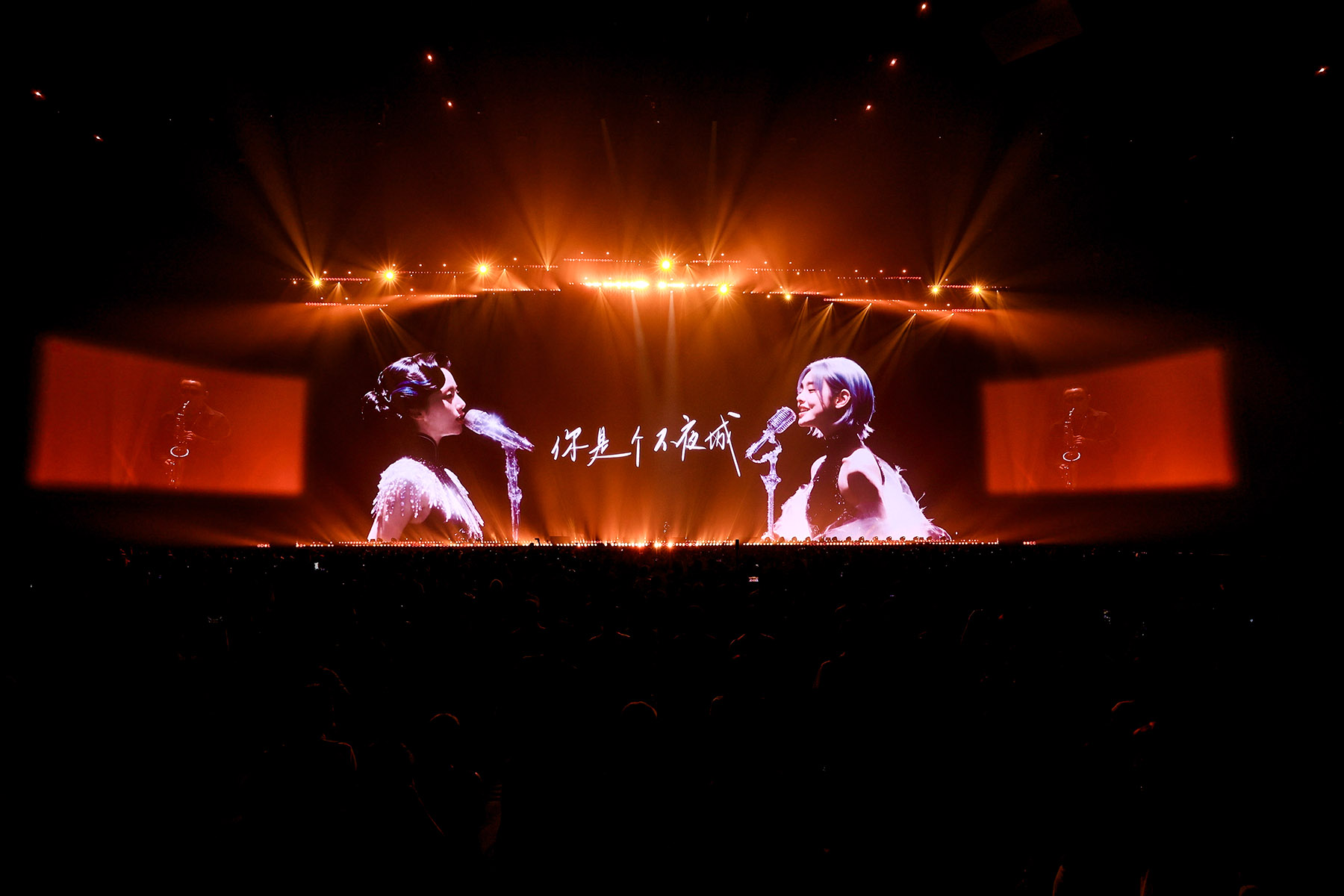
On an early September night, thousands gathered at a concert in Shanghai not to see a human celebrity but the artificial intelligence-generated artist Yuri.
The singer, China's first virtual AI idol to receive official digital avatar certification from a Beijing district, completed her first offline live global performance on Sept 11, as part of the AI Art Festival during the 2026 Inclusion Conference on the Bund.
Yuri performed solo songs and also shared the stage with the Chinese indie folk duo The Landlord's Cat, a children's choir and traditional folk musicians.
Yuri sang, spoke, smiled, danced, and interacted with the audience like a human. Bringing her presence off-screen to a live, in-person experience, Yuri wowed and impressed audiences on stage.
READ MORE: Preserving the future of music
Born last June, Yuri has garnered nearly 800,000 followers on social media platforms, and her debut single Surreal has been streamed over 11 million times so far. She is also believed to be the first generative singer to secure commercial partnerships with top brands in the gaming, technology and fashion sectors.
Unlike traditional virtual idols, Yuri is not simply a replica of a real person; she has gradually developed her own unique style and personality through ongoing music creation, video generation, and interactions with the real world, according to Zhao Hanqing, Yuri's creator and the founder of AI.Talk.
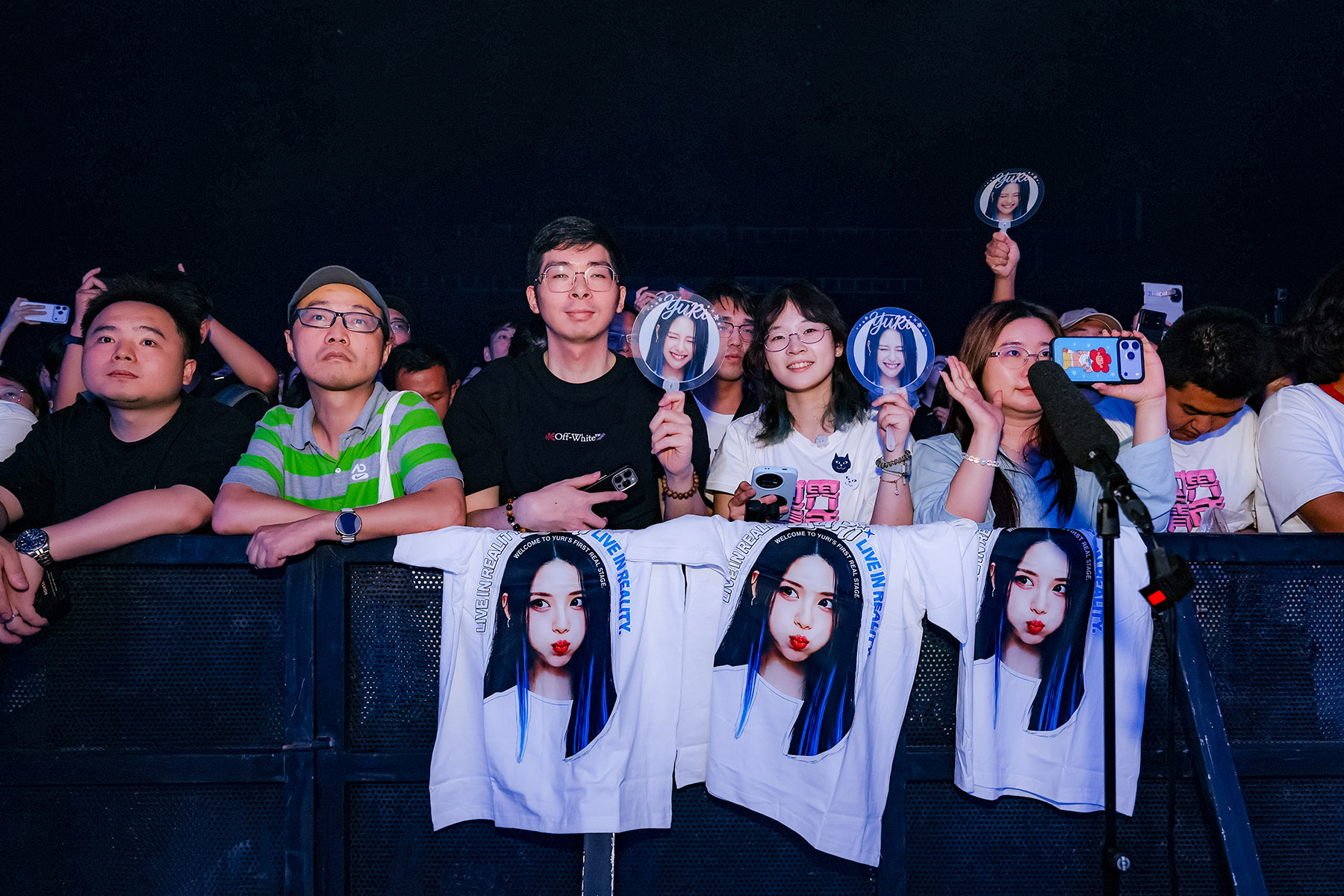
Zhao says that Yuri generated many of the performance designs and interactive conversations with people at the concert, which also surprised the production team. What touched them more that night was the real emotional connection between Yuri, the human performers and the audience.
"The value of AI lies not only in more efficient content production, but also in exploring new formats unique to AI. When an AI — devoid of a childhood or biological family — begins to discuss growth, confusion and choices, it also offers humans a new perspective from which to understand themselves and their emotions," says Zhao.
Zhang Youhong, producer of the AI Art Festival, describes the concert and the festival as an "experiment". She notes that continuously deepening the integration of technology with the humanities and arts is redefining the relationship between humans and AI. Through art, the production team hopes everyone has a chance to gain firsthand experience of these changes and better reflect on the true value of AI and human relationships.
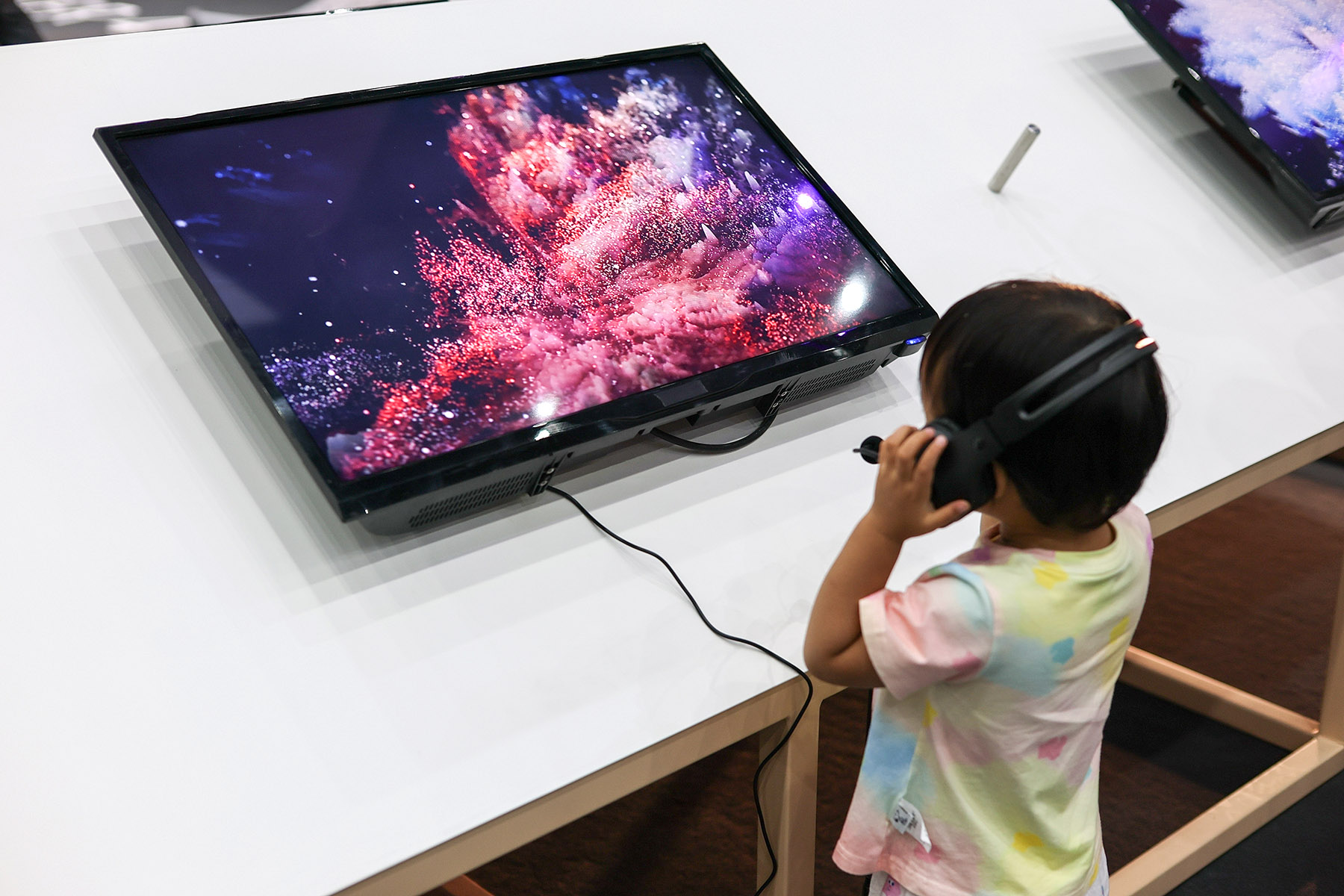
In addition to the AI concert, the festival includes an AIGC film screening featuring more than 100 AI-generated works, showcasing AI's boundless possibilities in visual creation, as well as an AI digital art concept exhibition that explores the intertwined future of humans and AI.
Curated by an art team called ";C.Setup", the exhibition probes the shifting balance of decision-making authority between humans and AI and the blurring of boundaries between them.
The exhibition features diverse creations from over 20 digital artists worldwide. Among the artworks is the eye-catching AARON at Tsukuba, #2 19-3-85, which was independently created and signed by AARON, an AI system developed by AI art pioneer and British artist Harold Cohen (1928-2016).
The curating team noted that AARON is considered the world's first AI system designed specifically for artistic creation, and this piece is currently the only known artwork independently signed by the system.
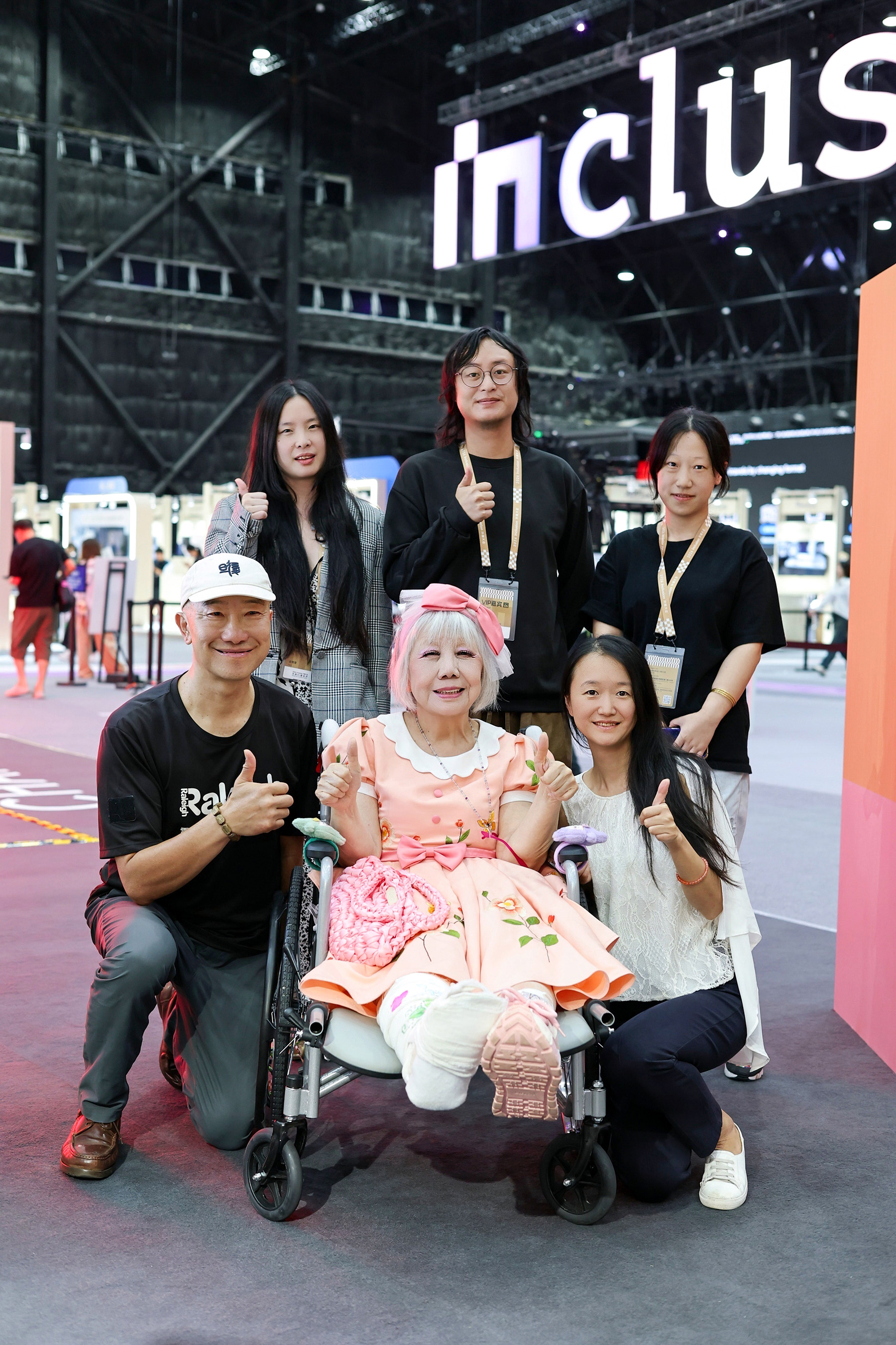
With AI agents guiding the tour, the exhibition invites visitors to rethink the rules of existence in the AI era. The academic co-chairs point out that in the age of AI, when machines have taken over almost all the "doing", irreplaceable human capacity should ask questions, solve problems with people, and exercise their brains as muscles to prevent cognitive atrophy.
"Humans and AI will find a way to coexist peacefully and harmoniously. In today's world, creativity requires something rare and unique," says Nian Zixuan, the exhibition's lead curator.
Luo Cheng, a 37-year-old director, curator and artist, has created hundreds of visual AI works since 2022. Born into an artistic family, Luo also stresses the "rareness and uniqueness" of human art creation.
In Luo's view, what AI produces is "high-quality, average content", which means it can efficiently learn and execute the existing rules. Looking ahead, he believes human artists with unique artistic expressions never seen before will remain invaluable.
"With the advent of AI, when production becomes limitless, and people no longer need to worry about production efficiency, art may bring us back to the meaning of human existence. That is, I create and share purely because it makes me and others happy. That would also be a wonderful state," says Luo.
Lu Xiaoxu, a 46-year-old AIGC artist and founder of Xiaoxu Music, has been actively embracing AI to unlock new career trajectories.
After making music for about two decades, Lu learned about the AI music-generation platform Suno in early 2024 and quickly predicted the trend of industrial transformation. His team delved into AI music production that May, and has gradually expanded its footprint from music to video generation, creating AI singers, and beyond. Their AI-generated works have garnered over 200 million streams and views over the past five months.
"The AI tools for music creation have been evolving quickly. Sometimes, you can barely discern them from human artists. Currently, a vast majority of human musicians are using AI to assist in their creations," says Lu.
Today, Lu's team has created a dozen digital singers, many of which have gained extensive social media popularity. Lu has also seen rapidly increasing acceptance and recognition of AI music from the wider public, who are not ashamed to write genuine comments on AI-generated songs and videos.
"AI is working well in creating music with existing styles, but human aesthetic sensibility is still required to make judgments and selections among the generated results. It's still challenging for AI to generate unique creations, such as folk music, intangible cultural heritage and mixing styles," says Lu.
Lu is now exploring more possibilities with AI in a wide range of new sectors, such as AI music education, as well as live performances and talent shows.
ALSO READ: AI changes the score
For Guo Wanyu, 30, whose painting featuring irises burst onto the scene in May, AI is also a helpful "assistant". Now running a small OPC (one-person company), Guo says that AI offers new perspectives and inspiration, and has also helped create derivatives of her artworks, such as merchandise and digital collectibles.
"Digital collectibles can make artworks more accessible to the public. I don't think artists should shy away from AI; it is a tool that can bring our work to fruition," says Guo.
Drawing since she was 9, Guo is the soul of her artwork. She believes that human artists will always have their own core competitive advantages and indispensable skills.
"Technology will continue to evolve and times will change. What will truly endure is the sincerity and aesthetic sensibility within the artwork, as well as the connections formed between people," she adds.
Contact the writer at wangxin2@chinadaily.com.cn
