

Indonesia's '10 New Balis' program pays off as visitor numbers swell in Flores Island town and nearby Komodo

Indonesia is betting on dragons — both mythical and symbolic — to lure Chinese travelers to its eastern frontier.
Tourism promoters have tied Labuan Bajo on Flores Island, nearby Komodo Island and other islands to China's Year of the Dragon, hoping the cultural resonance will draw visitors to the islands' sandy beaches, vibrant coral reefs, and famed Komodo dragons — large monitor lizards found only in Indonesia.
At Meruorah Komodo Labuan Bajo, a five-star hotel that hosted the 42nd Association of Southeast Asian Nations Summit in 2023, Chinese guests now account for 43 percent of occupancy, according to Sankar Adityas Cahyo, the hotel's marketing communication and PR manager.
It has taken steps to cater to Chinese visitors, which include offering Chinese cuisine and special menus for Spring Festival, as well as providing Mandarin-language assistance. In March, the hotel received Trip.com Group's "Chinese Friendly Hotel 2026" certification for providing visitors with a more familiar and welcoming experience.
Besides Meruorah, there are five other five-star hotels in Labuan Bajo, the capital of West Manggarai Regency. In the early 1980s, it was an undeveloped fishing town and an inter-island ferry terminal. Visitors, including Chinese tourists, also stay at hotels without star ratings and at budget hotels.
"China is currently our number-one source market," Cahyo told China Daily. He said that as of August, the number of Chinese visitors staying at Meruorah Komodo had increased by 20 percent from 2025's total.
Chinese tourists were also among the top clients in other upscale hotels in Labuan Bajo. Tour operators said Chinese travelers often arrive in groups, use translation apps to communicate, and are adventurous in exploring destinations ranging from traditional villages to volcanic lakes.
Jefrianus Jebarus, resort manager of Plataran Komodo Resort & Spa in Labuan Bajo, said that China had been among the hotel's top three source markets over the past two years.
"This shows that the Chinese market has continued to grow and provides a big market for us," Jebarus said.
He said the number of Chinese arrivals increases significantly during the Chinese New Year and Golden Week periods.
The Indonesian government is leaning on tourism to help lift growth, aiming for the sector to contribute 4.7 percent to GDP this year.
The resort island of Bali has long been the crown jewel of Indonesia's tourism sector, contributing more than half of the country's tourism earnings.
In 2016, then-president Joko Widodo launched the "10 New Balis" tourism program to attract visitors to other parts of the country. The destinations are located across 10 provinces in Indonesia's western and eastern regions.
They have been developed to showcase their diverse attractions, unique landscapes, ancient heritage sites, traditional cultural performances, tropical islands, world-class diving sites, and the Komodo dragon.
A rising destination
Labuan Bajo, named one of "The Best Places to Go in Asia in 2026" by Conde Nast Traveler in late 2025, is part of the "10 New Balis" program.
Located on the western tip of Flores Island in East Nusa Tenggara Province, east of Bali, Labuan Bajo has developed since 2015 from an isolated, underdeveloped fishing town into an international tourism destination.
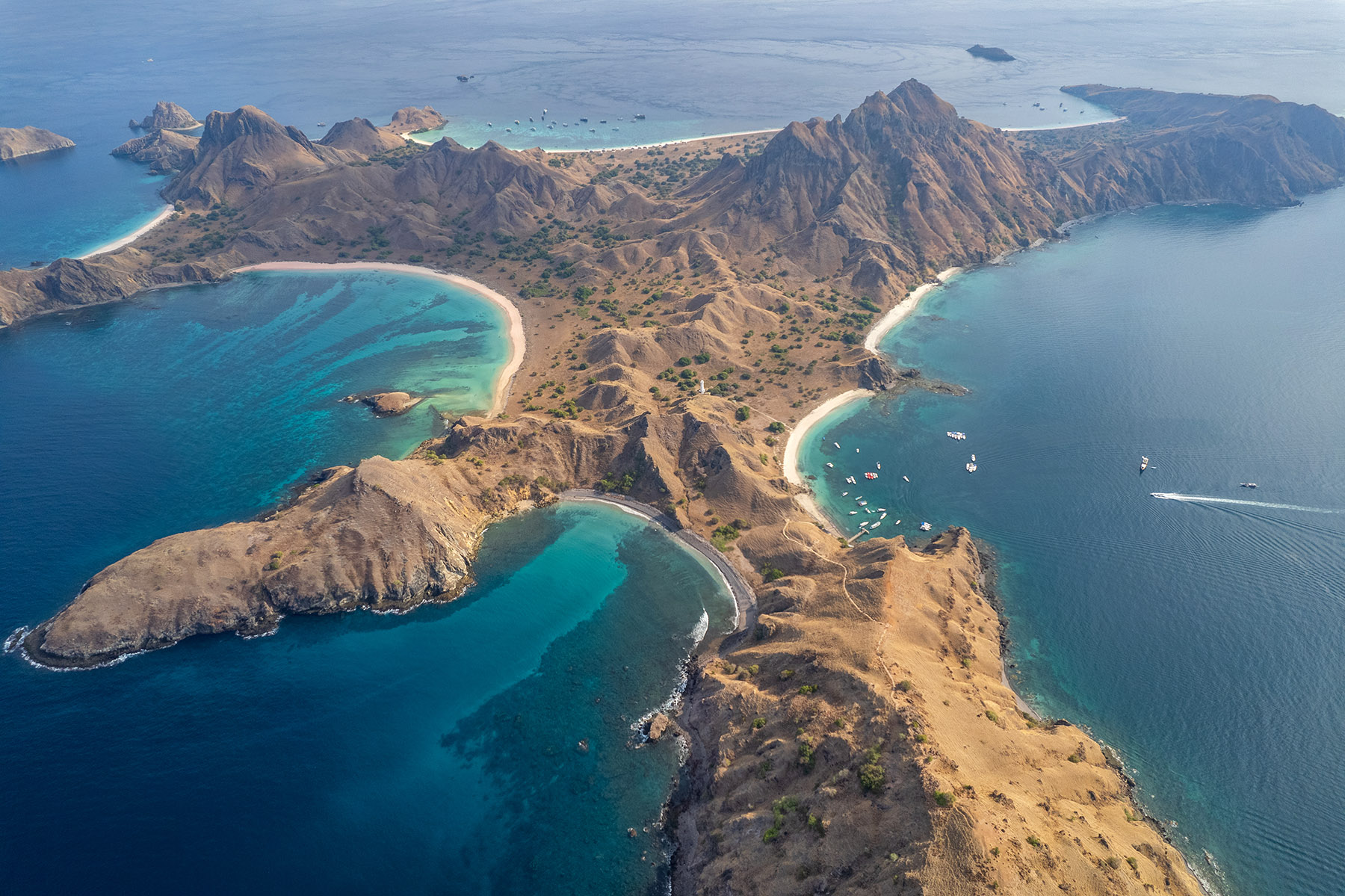
Labuan Bajo now serves as the gateway to Komodo National Park on Komodo Island. Travelers can also explore Padar and Rinca, two tiny islands near Komodo famed for their pristine white-and-pink sand beaches and excellent snorkeling.
A visit to Komodo, Rinca and Padar offers tourists three distinct experiences: coming face-to-face with Komodo dragons, exploring the wilderness on land and admiring breathtaking scenery beneath the sea.
In Komodo, the largest of the islands, visitors can have close encounters with Komodo dragons. In Rinca, tourists can not only meet the lizards but trek through its savanna and hills, while Padar offers spectacular panoramic views of rugged hills, curved bays and contrasting beaches.
A 28-year-old Chinese tourist from Beijing, identified only as Mia, told Labuan Bajo Today in October 2025 that Komodo dragons are famous in China, prompting increasing numbers of Chinese tourists to visit Labuan Bajo. "This place is very unique and, of course, beautiful," she said, referring to the area's combination of the sea, hills, forests and savanna-covered islands.
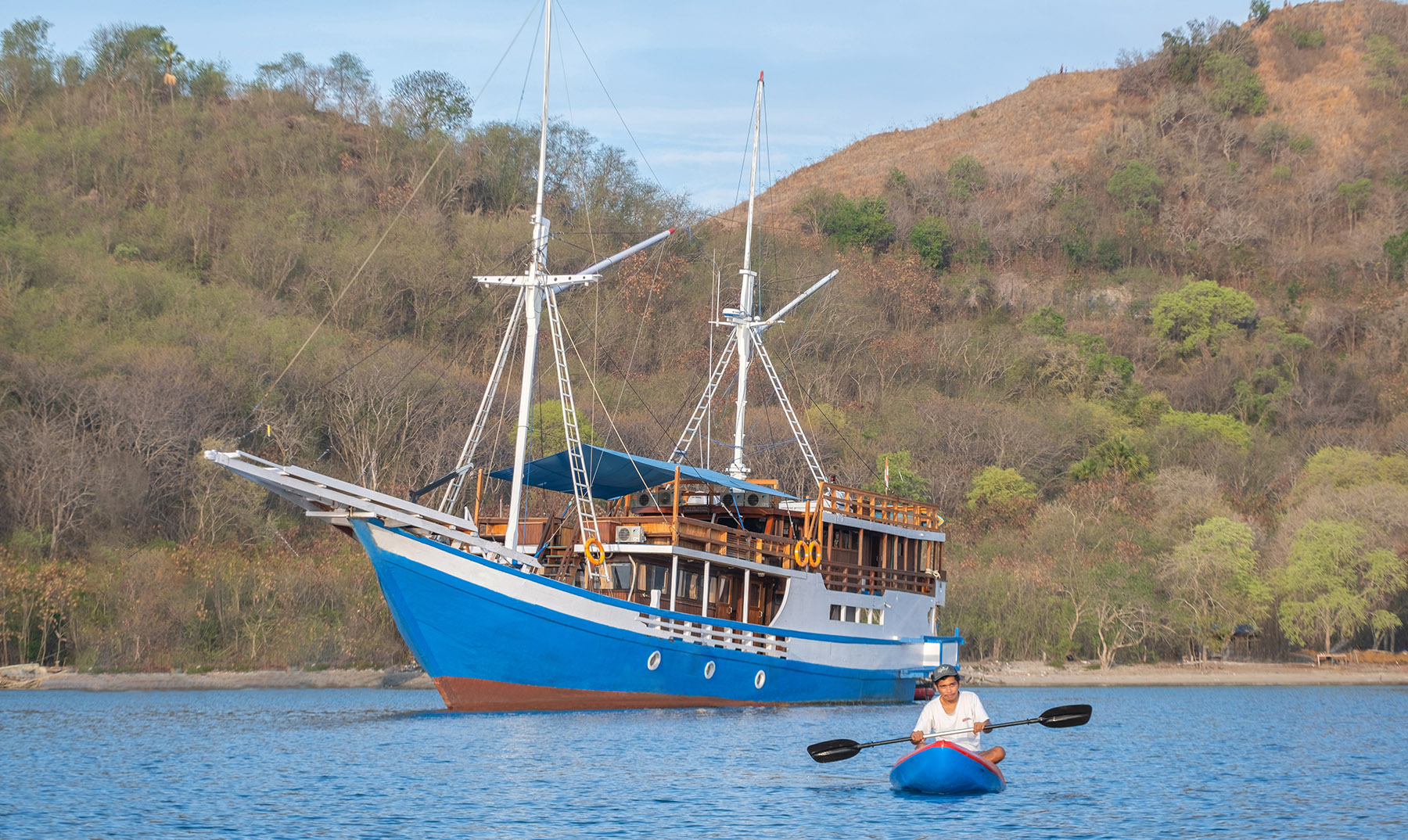
Labuan Bajo stepped into the spotlight when it hosted the ASEAN Summit in May 2023, which saw Southeast Asian leaders sail aboard a traditional phinisi yacht through the waters of the Flores Sea while enjoying the sunset.
The leaders experienced being on board the wooden vessel, which is rooted in the maritime traditions of Bugis and Makassar seafarers in South Sulawesi.
Recognized by UNESCO for its ancestral craftsmanship, the phinisi is traditionally equipped with sails, but can be powered by engines and serve as a liveaboard vessel.
For centuries, sailors from South Sulawesi carried people and goods across the Indonesian archipelago, reaching parts of Southeast Asia, Australia and Madagascar. Researchers say that the Malagasy people have Southeast Asian ancestry.
Paul Edmundus Tallo, director of Floressa Bali Tours, said that flights from Bali to Labuan Bajo are full every day. He said most tourists want to check out the former fishing village.
According to official data, Labuan Bajo received more than 60,000 foreign tourist visits in 2022 and a staggering 340,000 in 2025.

Growing market
In April 2025 alone, Chinese travelers accounted for 28.6 percent of the 42,000 tourist arrivals in Labuan Bajo, a figure that includes both foreign and domestic visitors.
In June 2026, a total of 41,806 foreign tourists visited Komodo Island, compared with 7,850 domestic visitors, according to official data from Komodo National Park.
The Indonesian government has set a target of attracting up to 1.7 million Chinese tourists this year, compared with a total target of 16 million to 17.6 million foreign visitors.
Indonesian tourism authorities have launched programs to attract more Chinese tourists. For example, the country offers visa-on-arrival facilities to Chinese visitors and citizens of 96 other countries, and allows an initial stay of 30 days, which can be extended for another 30 days.
Tallo of Floressa Bali Tours said that Chinese travelers to Labuan Bajo and other destinations would become the largest visitor group because Indonesia is relatively close to China compared with the United States, Europe, and Australia.
Labuan Bajo now has a Chinese language center specializing in tourism, which officially began operations in May.
Tallo said he expects more Chinese tourists to come if direct flights from China are introduced. Most tourists can only reach Labuan Bajo by transiting from either Bali or the capital city of Jakarta.
For international flights, Scoot, a subsidiary of Singapore Airlines, operates three direct flights a week from Singapore to Labuan Bajo. Malaysian budget airline AirAsia operates up to seven flights a week from Kuala Lumpur to Labuan Bajo.
Labuan Bajo's Komodo Airport was officially granted international airport status in April 2024 and handled its first scheduled international route, connecting Labuan Bajo with Kuala Lumpur, in September that year.
Built in 1975 and initially operating with a grass runway, the airport was named Mutiara II Airport in 1980. It was renamed Komodo Airport in 1991, reflecting the lizards' status as the region's iconic symbol.
There have been discussions about establishing direct flights from China to Labuan Bajo.
Seeking direct links
During a visit to Beijing in November 2025, East Nusa Tenggara Governor Melki Laka Lena discussed the possibility of direct flights from China to Labuan Bajo and expressed hope that they would become a reality before long. He had also discussed the reopening of direct flights between Darwin, Australia, and Kupang, the provincial capital.
Heribertus Ajo, the Labuan Bajo manager of Floressa Bali Tours, said that it would not be long before the number of tourists from China was comparable to the number coming from other countries combined.
"Chinese tourists are quite adventurous and bold, and they are polite," Ajo said.
Ajo said more tourists are enjoying places other than Labuan Bajo and Komodo on Flores Island. It offers several overland destinations, including traditional villages, unique cultures, and three-colored volcanic lakes.
Wae Rebo, a traditional highland village about a six-hour drive from Labuan Bajo followed by a roughly three-hour trek, offers visitors a combination of lush green mountain scenery, Manggarai culture and a traditional way of life. Tourists can stay overnight in a traditional house, eat meals prepared by local residents and draw water from mountain springs.
Ajo said the number of tourists taking overland tours of Flores from Labuan Bajo was rising, including the number of Chinese visitors. "They are mostly from Europe, but more and more Chinese tourists are also doing the same," he said.
"Some tour operators from China have conducted surveys on overland travel in Flores, and it is not impossible that such tours could become a strong trend among Chinese visitors," Ajo said.
From Labuan Bajo and Wae Rebo, tourists can travel eastward to witness the beauty of Lake Kelimutu, a group of three volcanic crater lakes in Ende Regency, central Flores, about 14 hours by road from Labuan Bajo. The lakes in the three craters can unpredictably change color, ranging from blue, green, red, and brown to other hues, a phenomenon that NASA describes as unique to Kelimutu.
Nyoman Kirtya, founder of Grand Komodo Tours, said his company is looking to cater to more Chinese tours as "the Chinese market is becoming an important market for Labuan Bajo and Komodo".
Grand Komodo Tours offers liveaboard vessels equipped with cabins, bathrooms and diving facilities, accommodating up to 12 guests.
Prime Sarmiento in Hong Kong contributed to this story.
The writer is a freelance journalist for China Daily.
