

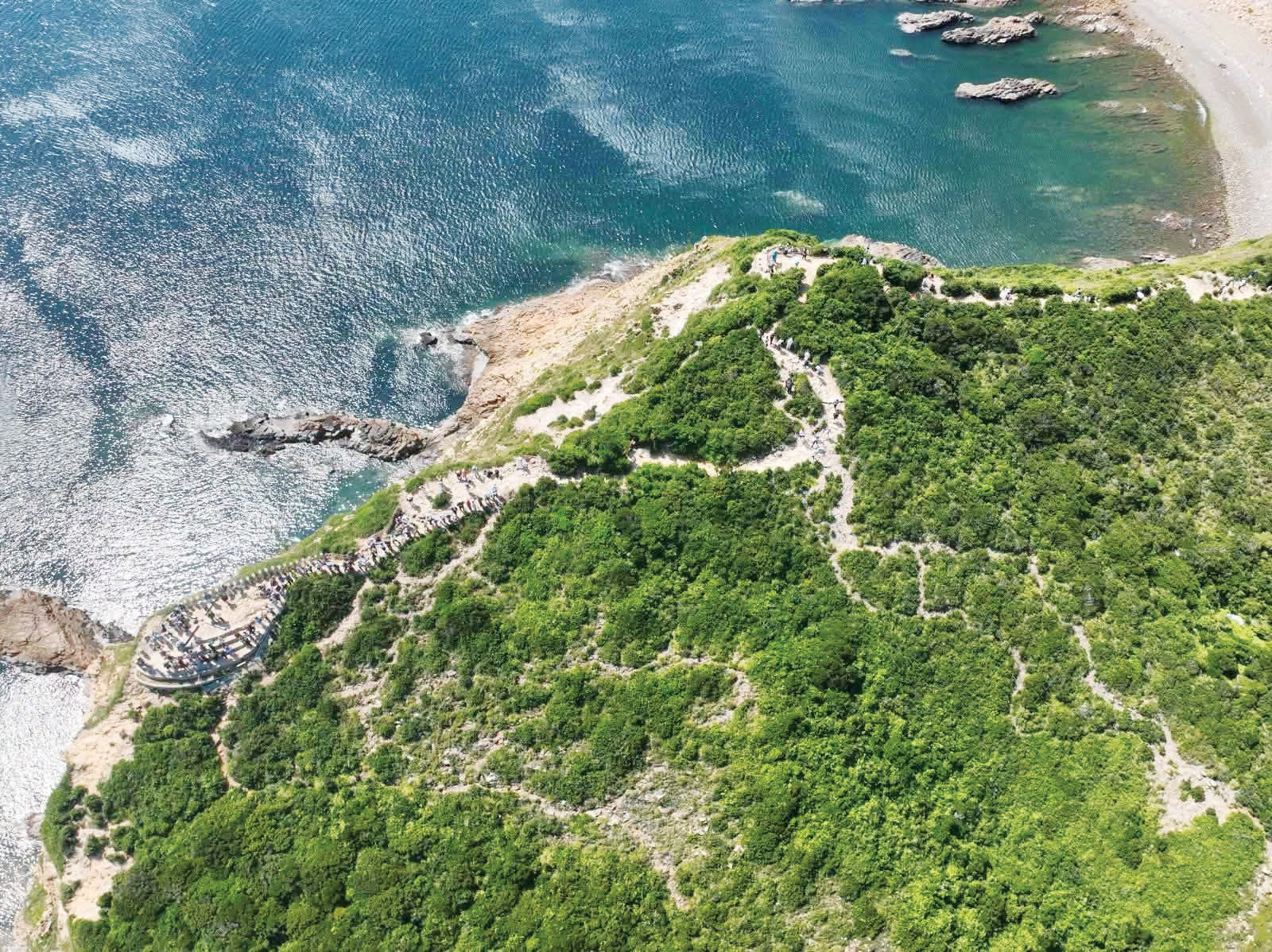
Hong Kong’s world-renowned Victoria Harbour, the spectacular fireworks displays, and other traditional urban attractions aren’t the only crowd-drawers during the National Day Golden Week holiday, which ends on Wednesday.
The city’s lush countryside, including popular hiking trails and vibrant marine life, has drawn throngs of vacationers, notably from the Chinese mainland, who’re eager to explore as Hong Kong breathes life into its “tourism is everywhere” appeal.
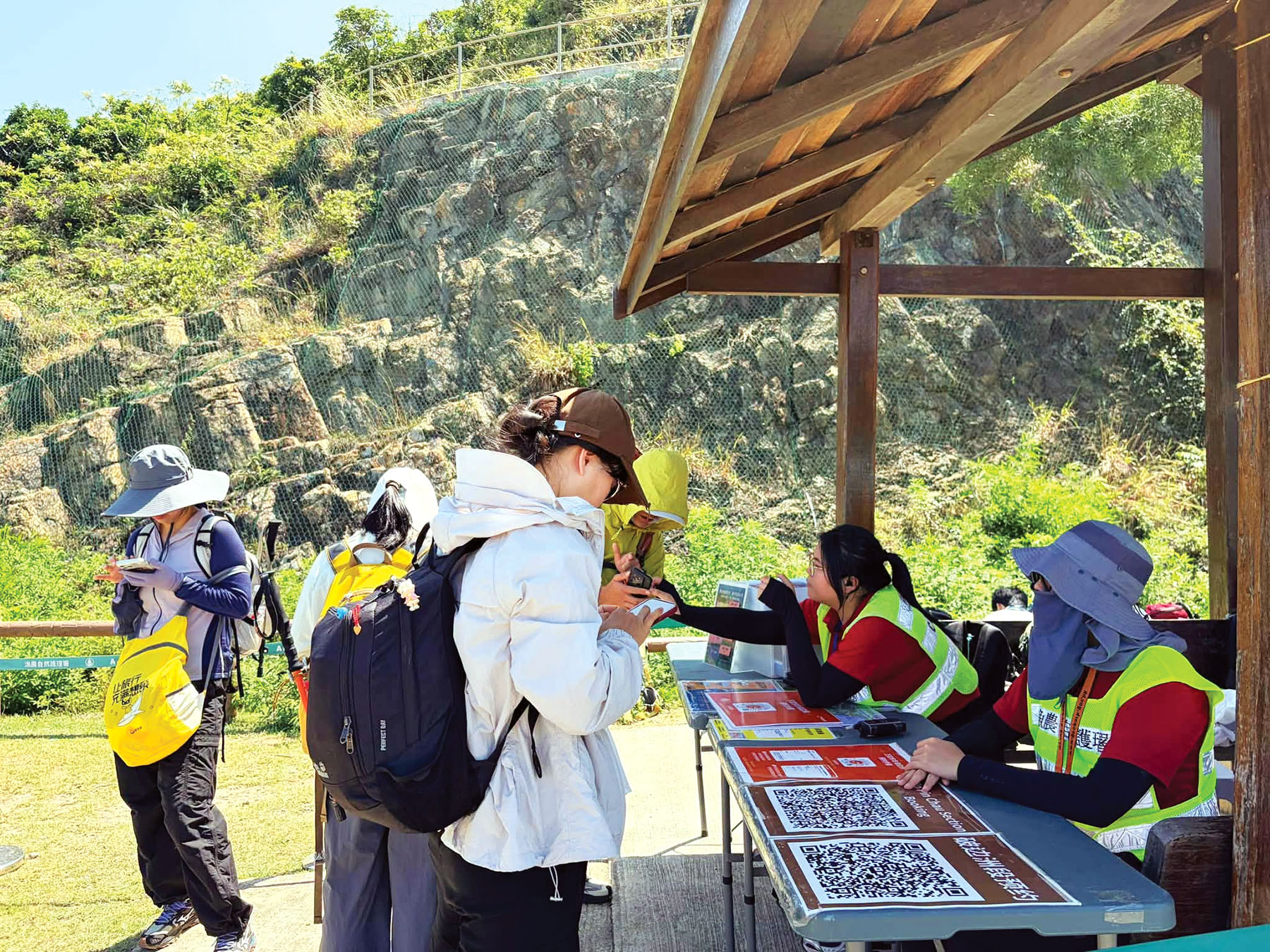
To better manage visitor flows, the Po Pin Chau section of the High Island Geo Trail in Sai Kung district — a geological attraction that is now a major photography hotspot — launched its first trial reservation system for designated dates from Sept 5 through today.
READ MORE: HK to pilot online booking for Po Pin Chau starting September
With visitor numbers capped at 2,000, Po Pin Chau was fully booked for the first six days of the National Day holiday, according to the Agriculture, Fisheries and Conservation Department.
Visitor numbers at the site saw a marked increase on Oct 1, according to lawmaker Christine Fong Kwok-shan. “Inbound tourists accounted for about 94 percent of those with confirmed reservations for Po Pin Chau,” she said.
“I came here to hike at the world-famous geological wonder. It was a sunny day, with crystal-clear coastal waters and the sheer cliffs beyond my expectations, leaving me awed,” said Bi Tongya, who visited Po Pin Chau on Oct 1 after making her reservation nine days in advance.
“Despite the long lines at some popular photo sites, the overall visitor flow on that day wasn’t particularly heavy,” Bi said.
Ricky Tang Siu-fai, a certified scuba-diving instructor with the National Association of Underwater Instructors, had been heading out to sea from the Sai Kung Public Pier daily in the past week to teach scuba-diving enthusiasts, sometimes twice a day.
“Many of the students were nonlocal residents who had signed up during the holidays,” he said, noting that the number of visitors interested in scuba diving has been on the rise in recent years.
“Visitor demand is now different from what it used to be. Hong Kong was once known for its shopping and neon lights, but its stunning natural environment, including the coastlines and mountains, will become new tourism symbols for the city,” said legislator Judy Chan Ka-pui.
Beyond numbers
The surge in visitors to the city’s outlying areas, including day-trippers and campers, has raised the question: How much of this visitor increase is translating into spending?
ALSO READ: HK logs 1.06m visitor arrivals during first 4 days of Golden Week
According to the Hong Kong Tourism Board, the average length of stay among visitors fell to 3.1 nights last year from 3.6 nights in 2023. Per capita spending by same-day visitors dropped to HK$1,139 ($145) in 2025, about half the level recorded in 2018.
“Whether visitors stay overnight or not, having a large number of them is important to Hong Kong’s economy,” said Timothy Chui Ting-pong, executive director of the Hong Kong Tourism Association. He said that overall visitor arrivals had approached 50 million last year, with both overnight and same-day visitors increasing.
Hong Kong’s hotels have maintained average occupancy rates of 80 to 90 percent, and during the National Day holidays, the city would not have enough hotel rooms to accommodate all visitors intending to stay overnight, he said.
“The most important thing is to keep Hong Kong attractive enough for them to return,” Chui said, adding that visitors would find other ways to experience the city, benefiting other businesses in the tourism industry.
“I would like a longer trip with both mountain and sea activities,” said visitor Su Jieyu, who hiked along the Po Pin Chau section earlier this year. After walking along the coastal trail for a day, she did not have the chance to go out to sea, she said. For a more immersive tour experience, she suggested launching tourism products that would combine hiking with a yacht trip or sea fishing.
Chui said the tourism sector should develop deeper, higher-quality experiences for visitors to sustain long-term interest in Hong Kong’s outdoor activities, adding that backpackers are willing to pay for them.
As some geological sites have limited room for commercial facilities due to their ecological sensitivity, he suggested adopting a “group in, group out” approach, in which visitors are professionally guided through the area before heading elsewhere for dining and accommodations, extending spending to other sites.
Contact the writers at charlottezhou@chinadailyhk.com
