

A Shandong fishing ground, quarry-scarred valley, and idle harbor now thrive with travelers
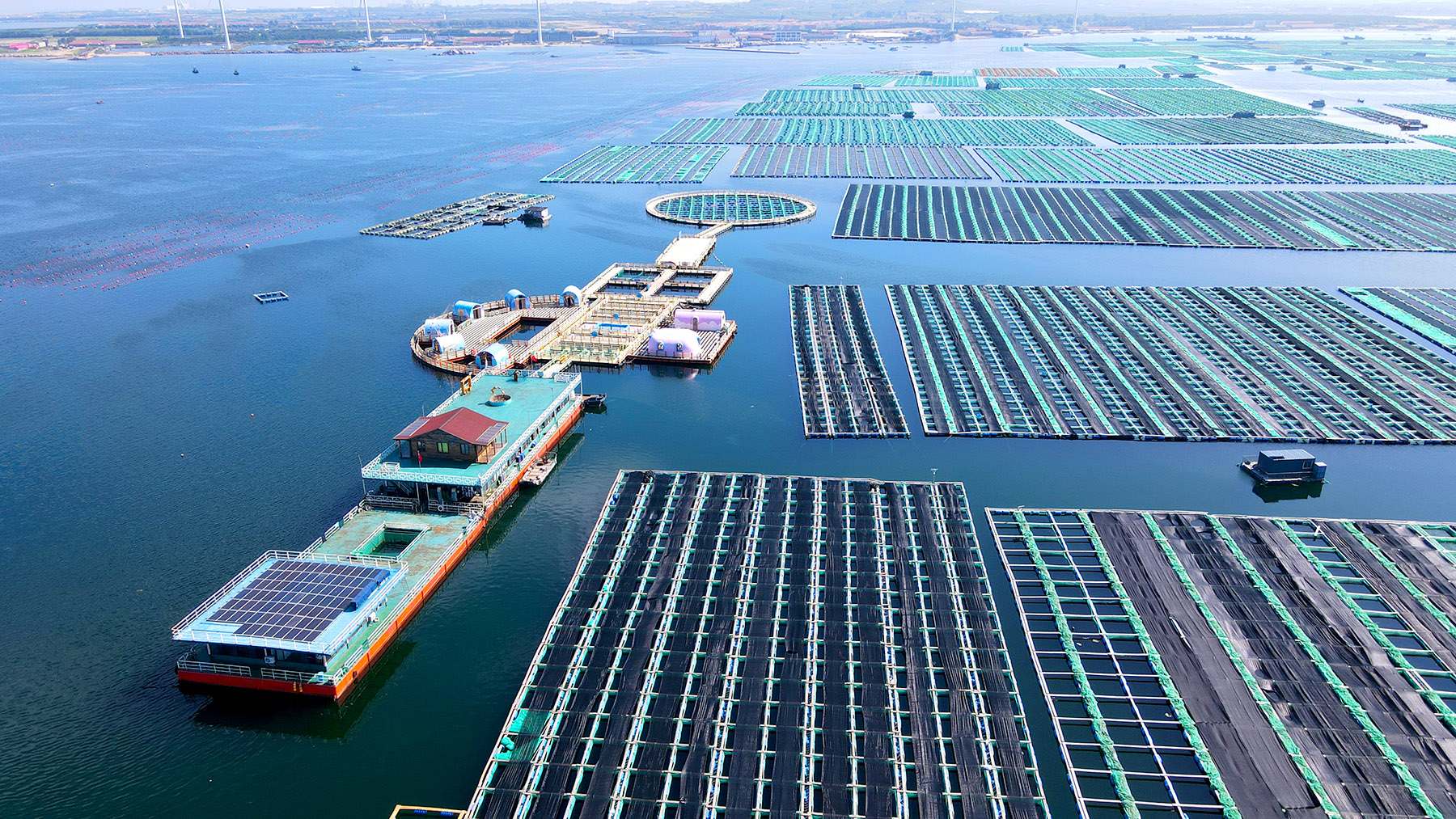
The engine sputters to life, and a traditional wooden fishing boat glides into the emerald waters of Sanggou Bay in Rongcheng, a county-level city of Weihai, Shandong province. Seagulls trail the vessel, diving and wheeling as passengers toss bits of sausage into the air.
It is early autumn, and the sea breeze is soft, the water impossibly clear. This is China's easternmost ocean bay.
Its distinctive C-shaped geography creates a natural harbor with turbulent currents outside, calm and clean waters within. Some 180 hectares of sea here nurture an abundance of marine life and an ethos that has endured for generations.
READ MORE: The route to nature
"Look down there," says the guide, pointing to a field of buoys bobbing on the surface. "Those are oysters. They hang from ropes beneath the floats, feeding entirely on plankton in the water. No artificial feed, minimal human interference."
The boat passes over the shellfish farming zone, and visitors learn how the bay's aquaculture operates on a raft-and-rope model.
Oysters grow slowly on the hanging ropes; sea cucumbers and fish are raised in simulated wild environments. The result is premium seafood from an ecosystem that has drawn attention abroad: In 2022, visiting researchers from Australia, the United Kingdom and France praised its conservation model, according to local authorities.
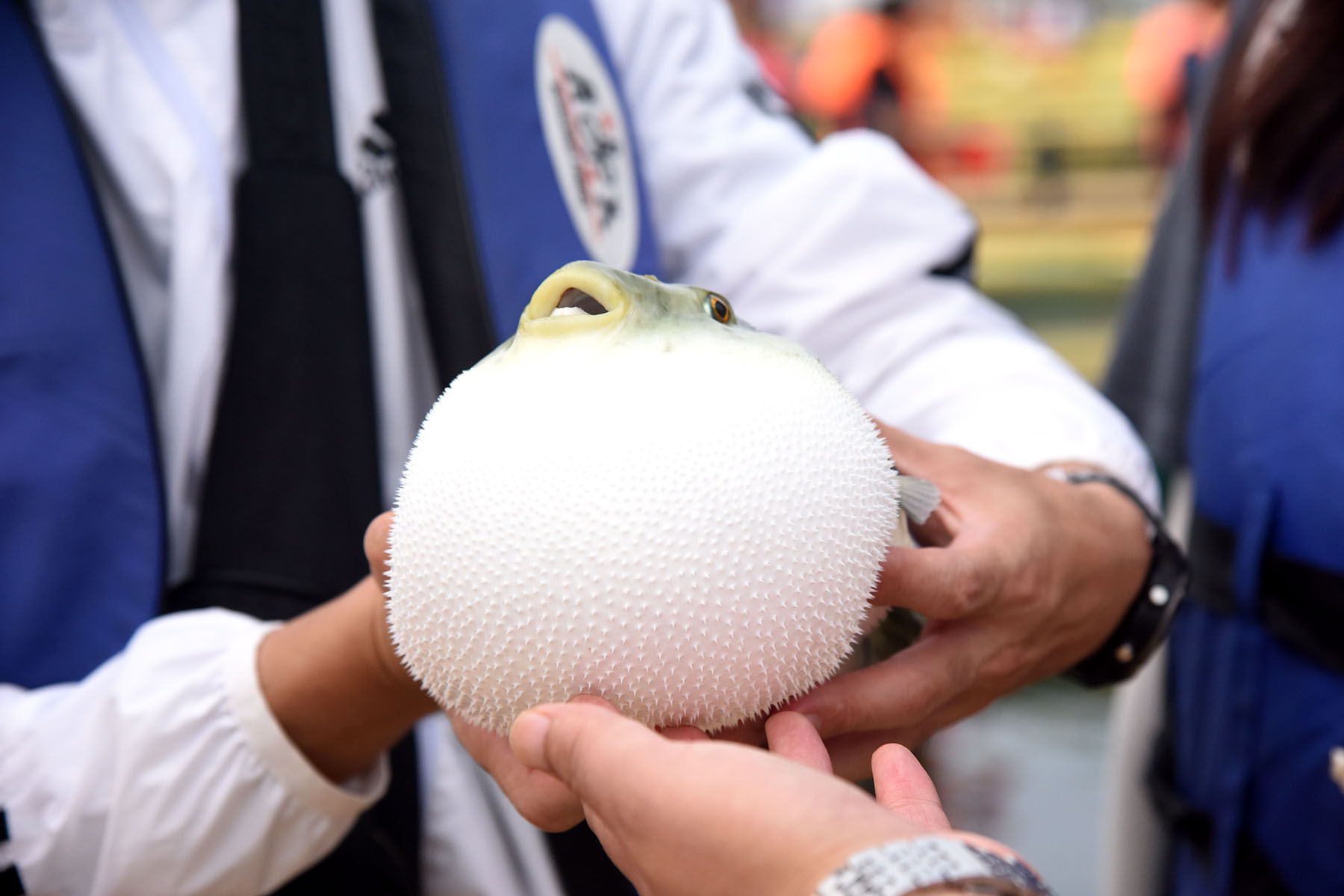
At the heart of the experience is the pufferfish, the bay's most charismatic resident.
As one of China's largest seawater pufferfish breeding bases, the farm raises some 50,000 pufferfish annually, with each 10-meter-by-10-meter cage holding 2,000 to 3,000 fish. Touch one, and it puffs up into a spiky ball, instantly the star attraction.
"The pufferfish is our farm mascot," says Yu Yongchao, general manager of the Sanggou Bay marine ranch. "People come to see them, hold them and then taste them."
On the floating platform, visitors can pick shellfish, touch sea cucumbers and try their hand at fishing. There are starfish, sea urchins and octopuses to observe up close. A second-floor viewing deck and a floating restaurant complete the experience.
For Zhao, a mother visiting from Beijing with her child, the appeal is simple. "You can't just dig sand at the beach," she says. "Kids need to see something real. You can't find this kind of experience around Beijing."
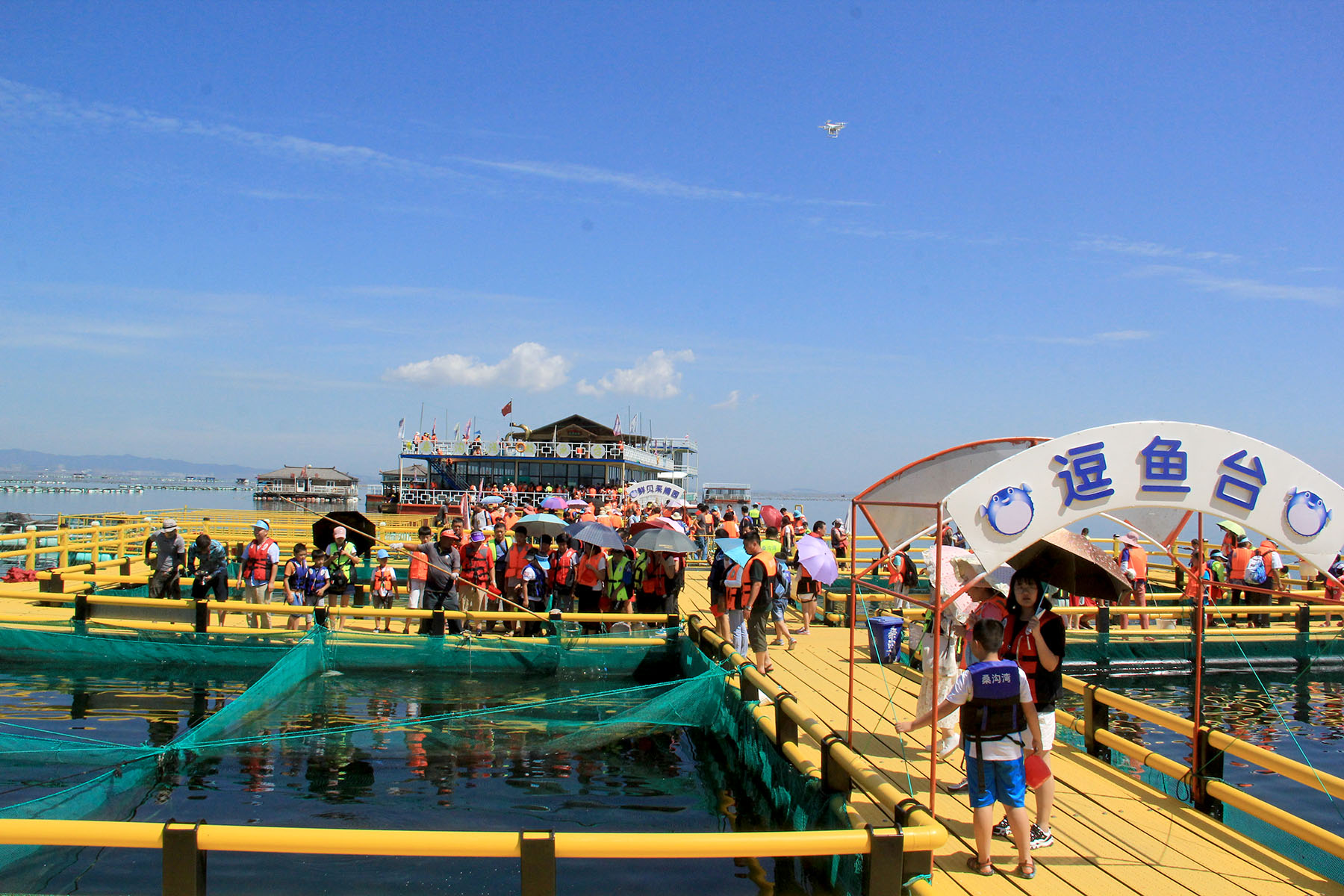
Over the past decade, the ranch has turned from a traditional fishing ground into a national-level leisure destination that combines ecological aquaculture, hands-on activities, marine education and fishermen's cuisine.
"The peak tourism season coincides with the off-season for fishing," says Yu. "We receive over 100,000 visitors a year, generating 7 to 8 million yuan (about $1 million to $1.2 million) in tourism revenue. It fills the gap in our fishing income."
Impressed by the quality of the seafood and the pristine water, many visitors seize the chance to place an order. They purchase over 5,000 kilograms of sea cucumbers alone each year.
Sanggou Bay's transformation reflects Weihai's broader coastal tourism strategy.
With the sea on three sides and a 1,001-kilometer scenic coastal highway, the city has woven together beaches, fishing villages and landmarks into a comprehensive resort network.
To overcome the seasonal slump, Weihai has developed year-round attractions: marine ranches, beachcombing, fishing village experiences in summer and migrating whooper swans in winter.

Bays and mountains
Follow the coastal highway as it transitions inland, and salt air gives way to mountain breeze. Likoushan, a hilly area in Huancui district, is a world apart. It is home to a green enclave of four villages that date back to the Ming Dynasty (1368-1644).
Forests blanket the rolling hills, and tea grows on the slopes. In the old villages, visitors wander narrow lanes past fruit and vegetable stalls, bakeries and cafes. Deep in the valley, 14 smart RVs sit tucked among persimmon trees.
It was not always so. The area was once scarred by abandoned quarries, idle farmhouses and stagnant village development. Over the past decade, local authorities have invested 430 million yuan in restoring mines, rivers and lakes and reforesting with native black pine and shrubs.
More than 400 vacant homes were revitalized, and the villages' scattered resources were brought under unified management. Once barren and run-down, the hills are now a quiet, livable suburban retreat with something to see for every season.
After the restoration, the local government set up a service center to run the four administrative villages as a single area.
"The environment had to improve first before we could attract visitors," says Qi Yuanyuan, who works with the center.
Today, Likoushan hosts over 140 agricultural and cultural tourism projects, from homestays to farm restaurants and cafes, giving visitors places to eat, stay and shop.
One standout is a red ginseng courtyard, home to a century-old well, a persimmon tree of the same age and a rare courtyard waterfall. "This summer we hit a record with over 1,000 visitors a day," says Lin Xuguang, the courtyard's manager.
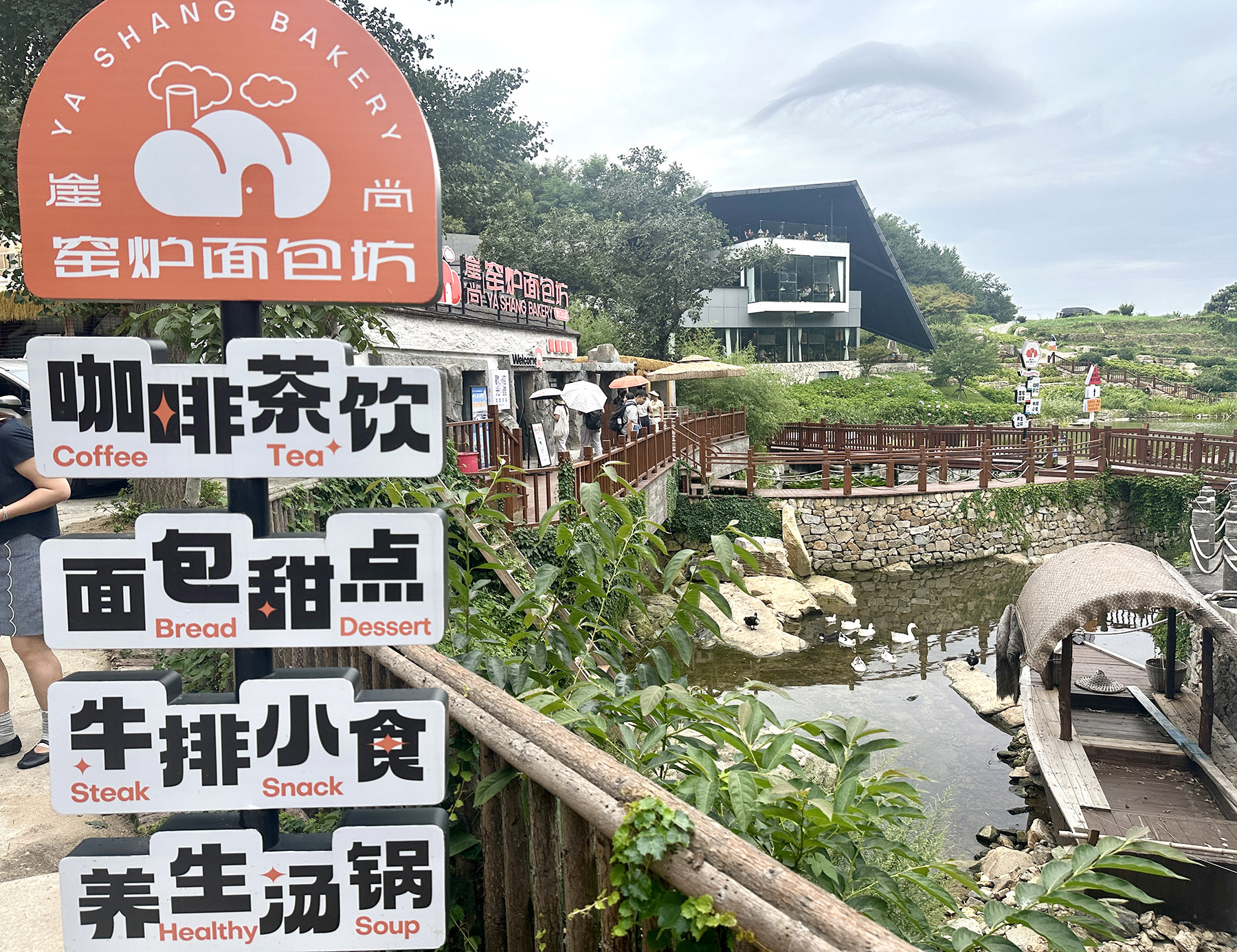
Nearby, a bakery fires its oven with applewood and adds no eggs, milk, oil or sugar, so its bread tastes of pure wheat. A three-story cafe offers panoramic views of the surrounding landscape.
In 2025, Likoushan received 1.71 million visitors and generated nearly 85 million yuan in tourism revenue. During the first half of this year alone, that figure climbed to 45 million yuan, already outpacing the same period last year.
The steady influx of visitors has also given villagers a fresh market for their produce. Liu Juntong, 47, returned to the village to run her family's orchard. Her apples, grapes and pears are natural and sweet.
"I used to ride my bike to town to sell fruit," she says. "It was time-consuming, and the prices were low. Now I sell at my doorstep — picked in the morning, sold out by noon."
Visitors can also try northeastern Chinese cooking at a restaurant run by 47-year-old Jiang Fei, who moved to Weihai from Jilin province 20 years ago. The establishment is about the size of a family apartment and specializes in authentic iron pot stew.
Chicken, fish and ribs slow-cook in a large iron pot, soaking up savory flavors that have won over numerous diners. Business has grown with the flow of tourists to Likoushan, Jiang says, and weekends and holidays are busiest.
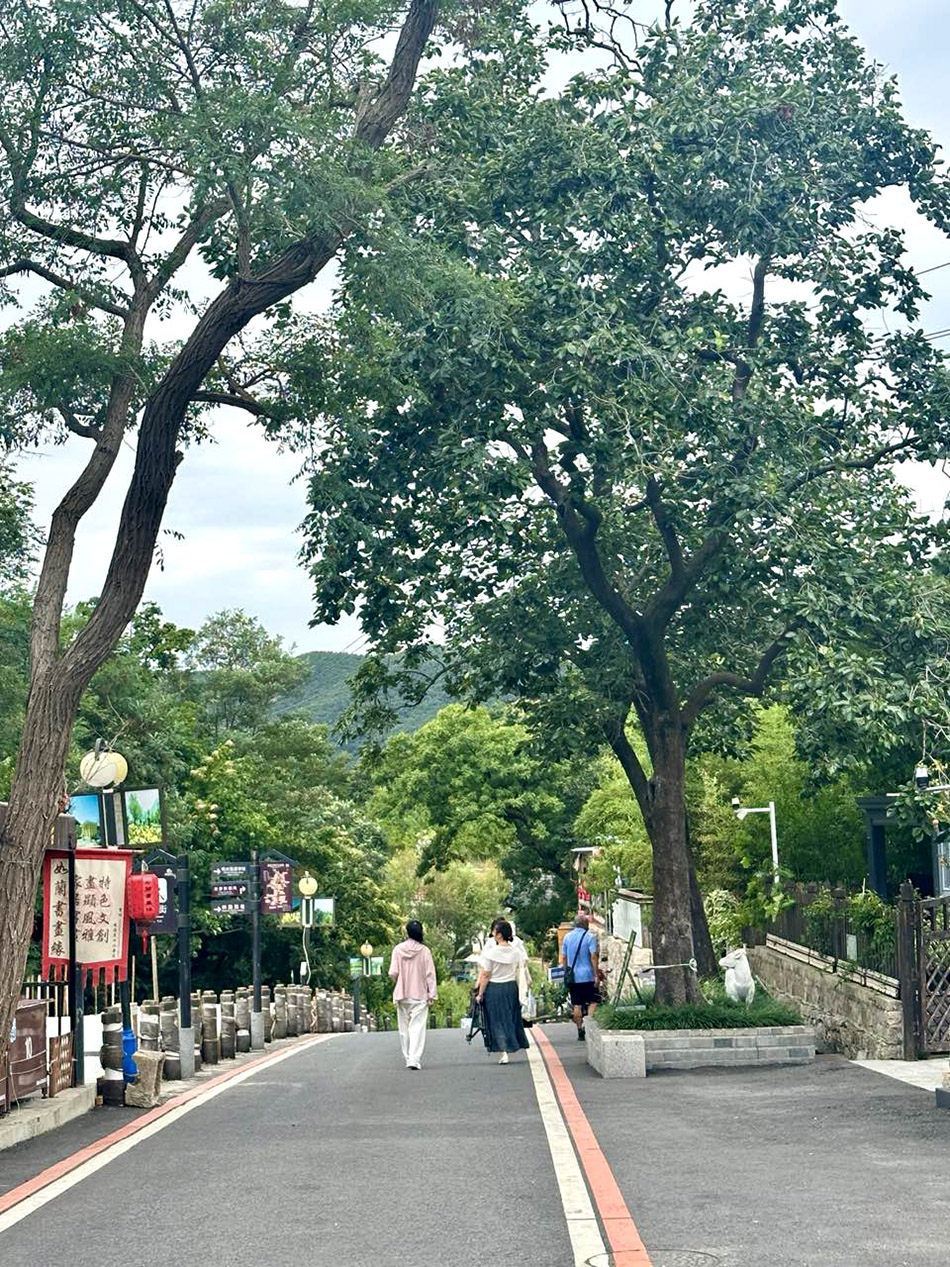
A short distance away lies a tea garden, the centerpiece of the tea tourism in Likoushan. Green tea doesn't typically grow this far north, but the garden's manager, Yu Xiaona, says it is made possible with access to premium tea-producing resources. The garden includes tea fields, a tea culture area and a spot for birdwatching.
A half-hour drive from Likoushan can bring visitors to Huancui's coast. Here, a sports ground jutting into the sea has become a favorite spot for leisure and fitness. It was once a loading dock at Weihai's old port, first built in 1918.
After the port relocated in 2013, the original harbor sat idle. In recent years, the city has renovated the area while preserving as much of its heritage as possible, including the century-old trestle bridge and the ruins of the pier.
ALSO READ: Underwater grassland proves to be a rich habitat for life
Today, the 118,000-square-meter complex, roughly the size of five of the world's largest container ships laid side by side, holds soccer pitches, basketball courts and running tracks, with the city at its back and the sea in front.
For visitors, the experience is a blend of history and modern leisure. They can jog along the waterfront track, join a pickup game of basketball or soccer, or stroll the old pier and bridge, taking in wide ocean views where cargo was once loaded.
From the singing sea of Sanggou Bay to the quiet renewal of Likoushan, a 1,001-kilometer coastal highway weaves together a story of high-quality development in Weihai.
Fisheries and tourism, ecology and community, sea and valley — together they make Weihai a premier destination for travelers seeking natural beauty and rural charm at the eastern edge of China.
Contact the writers at zhaoruixue@chinadaily.com.cn
