

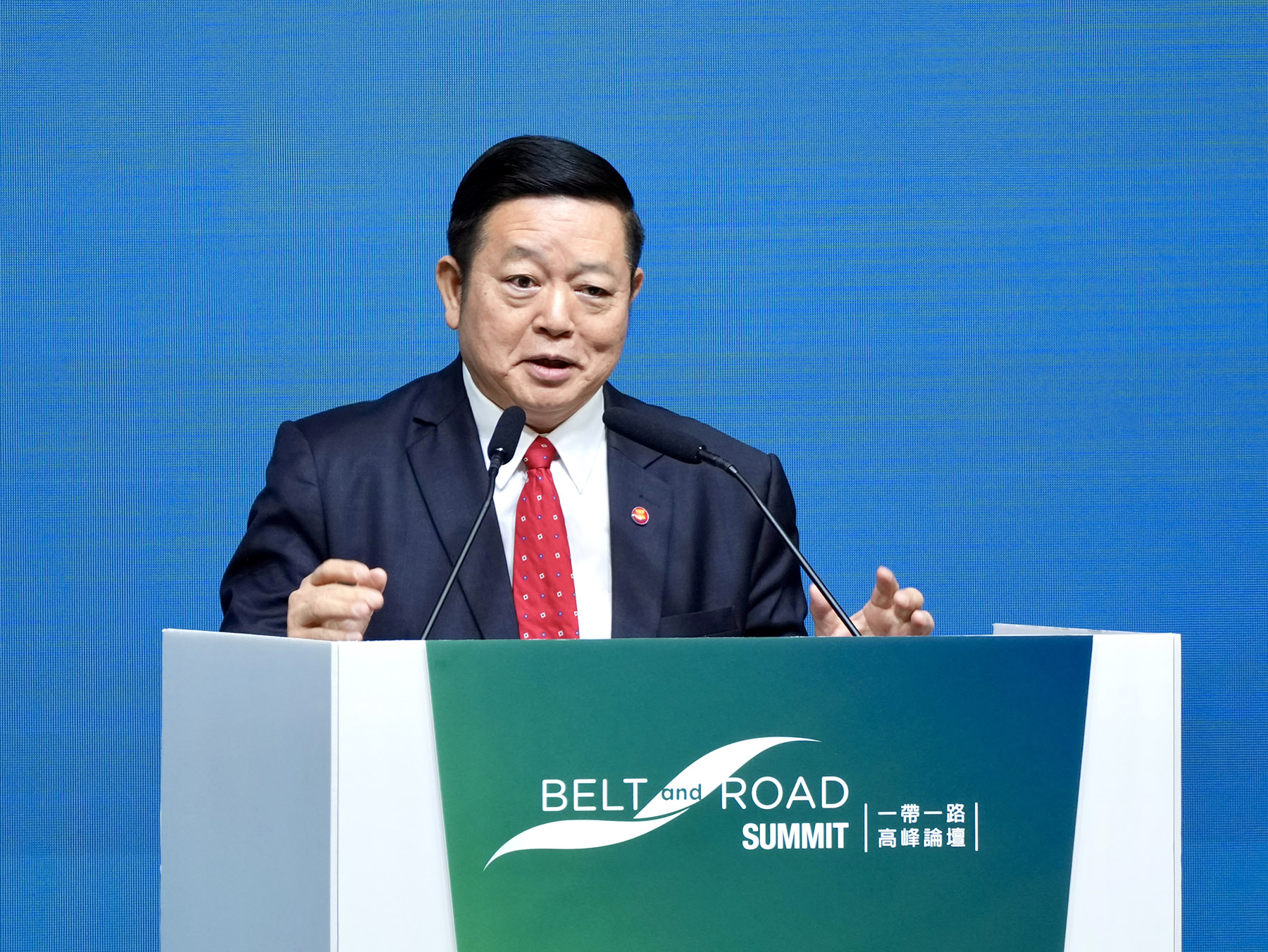
Kao Kim Hourn, secretary-general of the Association of Southeast Asian Nations, on Wednesday said the region will develop deeper cooperation with the Hong Kong Special Administrative Region under the Belt and Road Initiative to enhance supply chain resilience, digital connectivity, energy transition, and sustainable finance.
In his keynote address at the 11th Belt and Road Summit, Kao said that changes in the global economic landscape “reinforce the importance of staying open, connected, resilient, and forward-looking”.
Describing Hong Kong as an “important partner”, Kao said the two sides are well placed to build on shared priorities and leverage synergies under the BRI to promote investment, connectivity, and innovation, and create tangible opportunities for businesses, communities, and people.
READ MORE: Belt & Road countries see value of HK strategic connectivity role
Specifically, Kao said Hong Kong’s financing expertise can contribute to ASEAN’s infrastructure development needs, which require an estimated $210 billion in annual investment through 2030. He said this helps transform infrastructure into enhanced connectivity, resilient supply chains, and ultimately shared prosperity.
The region’s drive toward greater energy interconnection and digital connectivity also presents a vast opportunity for Hong Kong, he said, adding that the city’s capital market can be a bridge between global capital and sustainable projects in ASEAN.
“Our task now is to move from ambition to implementation — to turn connectivity into opportunity, investment into sustainable growth, and partnership into shared prosperity,” Kao said.
Hong Kong SAR Financial Secretary Paul Chan Mo-po, in his welcome speech, said that ASEAN has outpaced the global economy over the past decade, and is becoming an increasingly important partner in technological advancement and industrial upgrading.
Demographic, market and technology dividends are reshaping the region’s growth prospects, with artificial intelligence potentially the most transformative, by enabling new business models and forms of collaboration, he added.
Chan said Hong Kong can connect global investors with innovative companies, while the Guangdong-Hong Kong-Macao Greater Bay Area provides a testing ground for developing and validating products across different markets and regulatory environments.
He also emphasized Hong Kong’s talent pool and innovation ecosystem, which draws long-term investors and patient capital. “Hong Kong is ready to play its part: connecting innovators with global markets, mobilizing patient capital, and providing a place where talent from across the region can thrive,” he said.
ALSO READ: Regional ties in focus as ASEAN film festival returns
Wang Shuguang, vice-chairman of the board, president, and member of the management committee at China International Capital Corp (CICC), highlighted Hong Kong’s unique position as a global capital hub, particularly under the BRI, serving as a key node connecting the Chinese mainland with global markets.
“In 2025, Hong Kong raised over HK$285 billion ($36.6 billion) in initial public offerings, reclaiming its position as the world’s top spot for IPOs after six years,” Wang said. He noted impressive financing scale this year, which demonstrates Hong Kong’s strength and vitality as an international financial center.
Citing CICC’s active participation in BRI-related cross-border finance and its role in helping companies from the Middle East and ASEAN list in Hong Kong, Wang said these innovative practices exemplify high-quality Belt and Road cooperation.
Zhang Hui contributed to this story.
Contact the writers at kelly@chinadailyapac.com
