

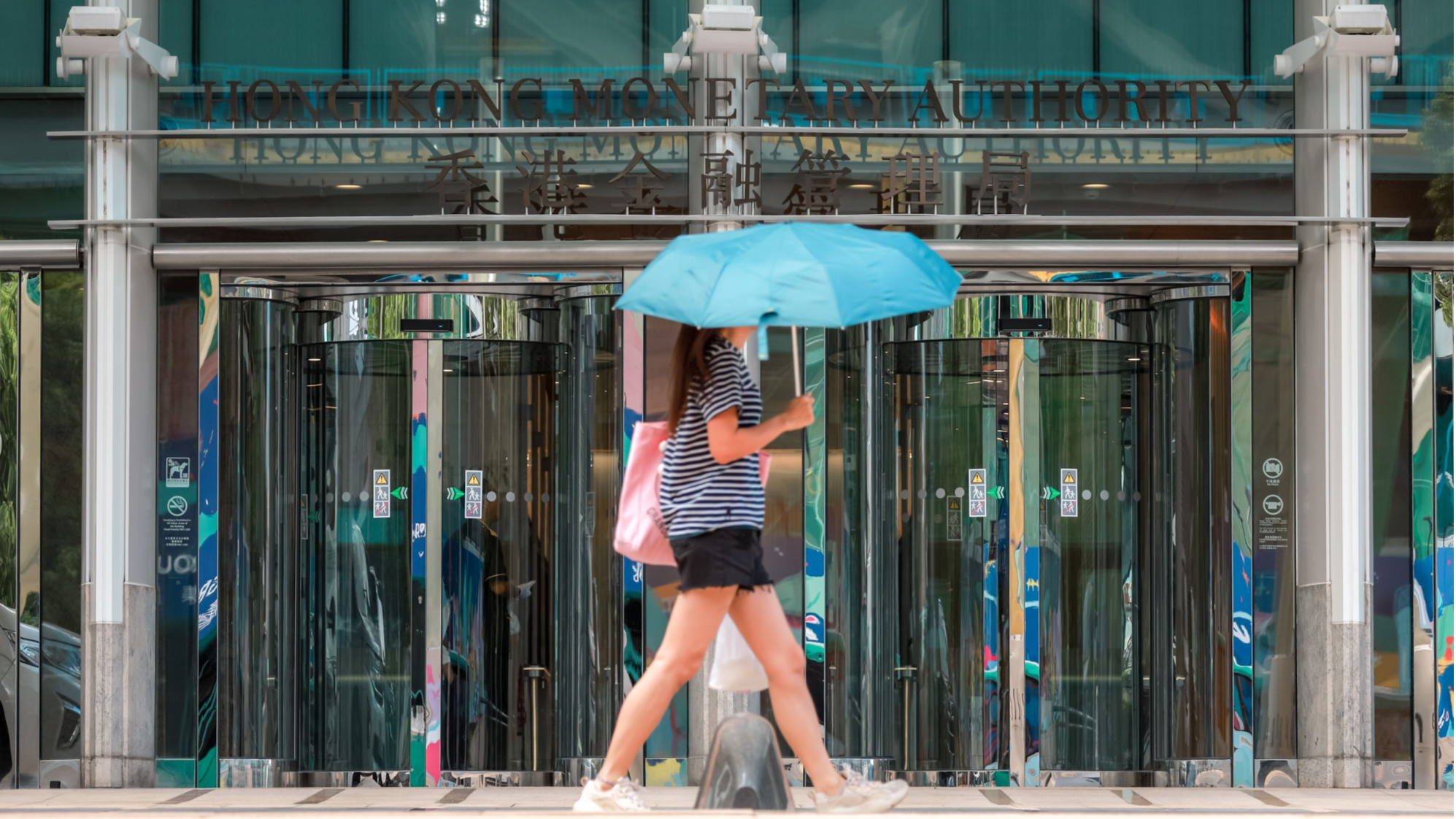
Hong Kong’s financial regulator will explore requiring banks to provide more disclosures on climate finance, as it rolls out the latest version of its guidelines for funding projects that cut CO2 emissions or shield against weather risk, according to Bloomberg.
The Hong Kong Monetary Authority is planning to conduct a survey next year into how banks use its sustainable finance taxonomy, Executive Director for Banking Policy Donald Chen told Bloomberg in an interview. The responses will determine “how to incorporate the taxonomy into our supervisory practice,” he said.
“We have not come down onto the specifics yet,” Chen said. “But usually that will also mean, for example, certain disclosures to us about the extent of investment or finance that has been benchmarked against the taxonomy.”
The regulator released a new version of its two-year-old taxonomy for public consultation earlier this month, to help banks classify project financing for shoreline protection and flood management — two key risks facing the city. It also added more activities and technical criteria for what’s considered a green or a transition deal.
According to the draft, the adaptation projects whitelisted under the taxonomy span six sectors: energy, transportation, buildings, telecommunications, risk management and response, and water. They include areas such as installation of automated grid controls, vegetation management around power lines and use of off-grid renewables and batteries.
ALSO READ: Hui: HK embracing role as leader, innovator in green transformation
Some jurisdictions ask banks to disclose whether certain products are in line with the taxonomy. That “is one possible way,” Chen said. “We will think about it later, after we have done the systematic collection of information.”
The aim of the taxonomy is to attract more private capital into such projects across the Hong Kong Special Administrative Region, and potentially in the Chinese mainland and Southeast Asia, Chen said. For instance, taxonomy-aligned mitigation instruments such as syndicated loans, notes and bonds have ranged from $10 million to $800 million in size, he added.
Entities domiciled in Hong Kong have issued about $150 billion of labeled debt based on environmental, social or governance metrics since 2020, according to data compiled by Bloomberg Intelligence.
For now, Hong Kong requires listed and unlisted financial firms to assess and manage their exposure to climate risks, and asks some to disclose issues that can have a material financial impact on cash flows and financial performance. It has rolled out a physical risk assessment tool to help companies.
READ MORE: HK serving as Asia’s frontrunner in green finance, forum hears
Standard Chartered Plc said that 16.6 percent of its wealth and retail banking portfolios backed by property collateral in Hong Kong were exposed to flood risk as of September 2025, according to its annual report. Meanwhile, HSBC Holdings Plc started implementing physical-risk assessments at mortgage origination for retail clients last year. Hang Seng Bank Ltd, now owned by HSBC, said the group’s largest commercial real estate portfolio is located in Hong Kong and is primarily exposed to flooding risks, including coastal inundation and tropical cyclones.
Last week, the city released its first five-year economic plan, stating it aims to stop using coal for electricity generation by 2035 and increase the share of zero-carbon energy to about 60 percent-70 percent.
“The taxonomy is a living document,” Chen said. “The list of activities that you see there will keep expanding.”
