

Need for local compliance, market adaptation and sustainable competition overseas stressed by regulators
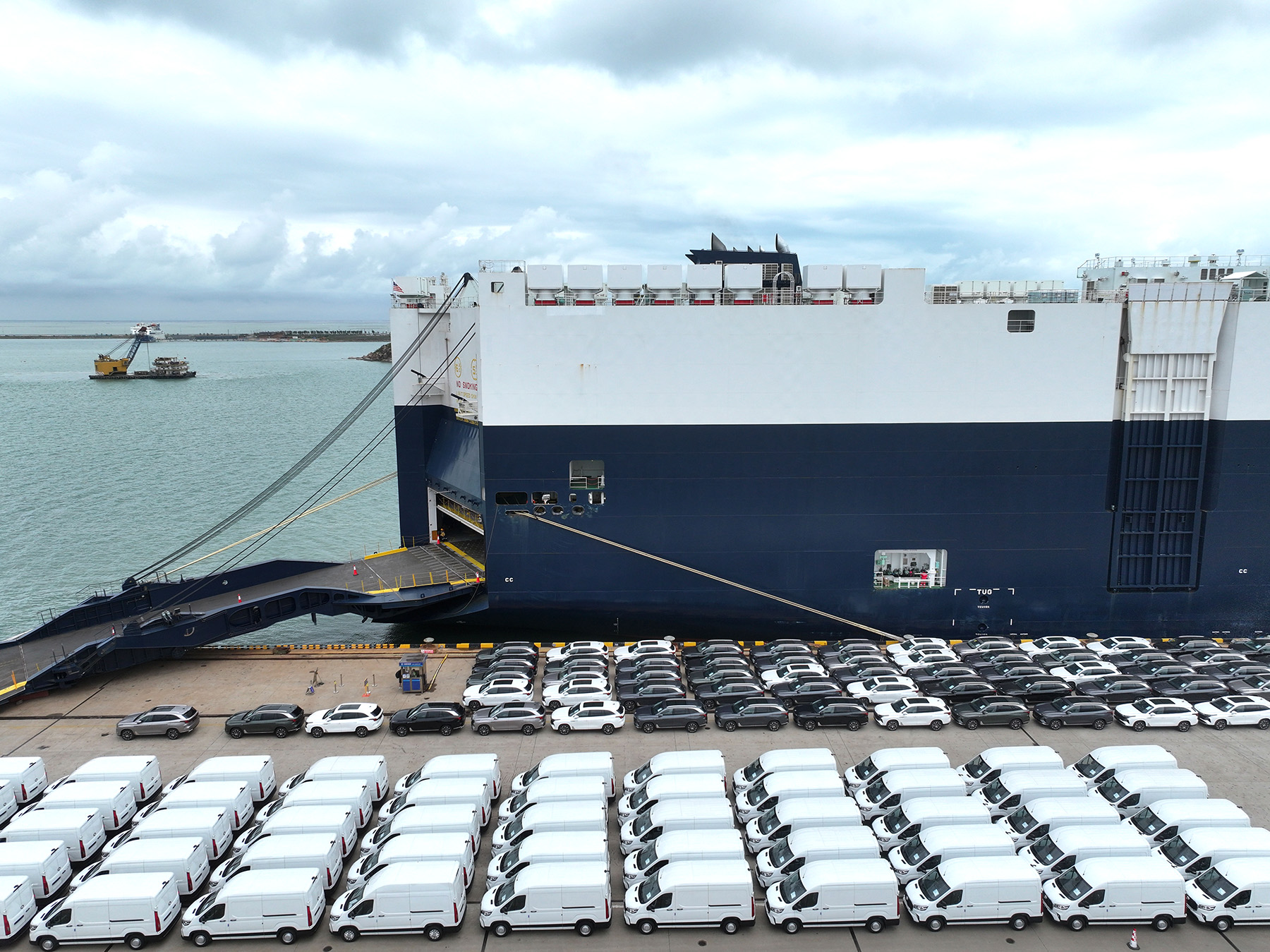
China has issued guidelines urging automakers to strengthen compliance and promote orderly competition in overseas markets as the country's automakers expand their presence globally.
The guideline, released by the Ministry of Commerce, the Ministry of Industry and Information Technology and the State Administration for Market Regulation last week, calls on automakers to base overseas pricing on costs and market conditions, avoid disruptive competition and refrain from frequent or substantial price fluctuations.
It also asks companies to respect the pricing autonomy of overseas dealers, make pricing and promotional policies transparent and ensure that advertising and other marketing activities are truthful and compliant with local regulations.
READ MORE: Automakers benefit from strong exports
The move comes as China's automobile industry has entered a new stage of globalization.
China became the world's largest automobile exporter for the first time in 2023, when it exported 4.91 million vehicles, up 57.9 percent year-on-year, according to the China Association of Automobile Manufacturers.
China has since further expanded its lead. The country exported 7.098 million vehicles in 2025, up 21.1 percent year-on-year, maintaining its position as the world's largest automobile exporter for the third consecutive year, according to the CAAM.
In the first half of 2026, exports reached 5.31 million units, up 53 percent year-on-year. Of them, 2.355 million were NEVs, up 120 percent year-on-year.
Monthly automobile exports exceeded 1 million units for the first time in June, reaching 1.037 million units. The momentum continued in July, when exports reached 1.043 million units, up 81.3 percent year-on-year.
Carmakers are also reaching their own new milestones overseas. Chery Group's cumulative vehicle exports exceeded 7 million at the end of August, reaching 7.18 million units and making it the first Chinese automaker to surpass the milestone.
BYD, meanwhile, has been rapidly increasing its presence in Europe. The company registered 135,307 vehicles across the European Union, European Free Trade Association countries and the United Kingdom in the first five months of 2026, accounting for 2.3 percent of new vehicle registrations in those markets. Tesla's share stood at 2 percent over the same period.
Behind the figures is a complicated picture that involves local dealers, employees, suppliers, manufacturing facilities, research and development, after-sales services and relationships with regulators and consumers.
"China's auto globalization is no longer just our own business. To a large extent, it has become a global issue," said Zhang Yongwei, president of China EV100.
The new guideline reflects this change in the nature of China's automotive globalization.
As Chinese automakers gain a larger presence in overseas markets, the industry's challenge is gradually shifting from how to enter foreign markets to how to compete and operate sustainably once they are there.
The guideline therefore goes beyond pricing and competition. It calls on companies to conduct risk assessments before expanding overseas, comply with local requirements on production safety, product quality and after-sales services and properly protect workers' rights and interests.
It also addresses areas that have become increasingly important as vehicles become more connected and software-defined.
Companies are encouraged to strengthen compliance in cross-border data transfers, personal information protection, intellectual property rights and antitrust matters.
Environmental responsibility is another area covered by the guideline, which calls for the development of greener supply chains in overseas operations.
Analysts said these requirements reflect the growing complexity of overseas operations for Chinese automakers.
When a company only exports vehicles, its relationship with an overseas market is relatively simple.
But once it builds factories, hires local employees, works with local suppliers and establishes long-term dealer networks, its responsibilities become much broader, they said.
The guideline's emphasis on avoiding frequent and substantial price changes could also help companies maintain more predictable relationships with overseas distributors and reduce potential disruption to local markets.
At the same time, the document asks companies to respect the pricing autonomy of overseas dealers rather than simply imposing domestic strategies on foreign markets.
Analysts said this highlights another important change in Chinese automakers' approach to globalization: localization is becoming less about putting Chinese products into foreign markets and more about adapting business operations to local markets.
That means understanding local consumer preferences, regulations, labor practices and competitive environments rather than simply replicating business models developed in China.
The shift is particularly relevant for new energy vehicles. Chinese companies have built competitive advantages in areas including batteries, electric drivetrains and intelligent vehicle technologies.
As these products enter more mature markets, companies increasingly need to demonstrate not only technological competitiveness but also their ability to operate within established regulatory and commercial systems.
In 2025, Chinese companies exported vehicles to more than 200 countries and regions and invested in automobile manufacturing projects in more than 80 countries and regions, according to the Ministry of Commerce.
ALSO READ: China's auto exports surge; BRI markets hottest
Lu Fang, chairman of Voyah, Dongfeng Motor's premium NEV brand, described the process as "going out", then "moving up" and finally "integrating in".
"Going out" means entering overseas markets, "moving up" means gaining recognition for brand value, while "integrating in" means becoming part of the local ecosystem, Lu said.
He stressed that localization should extend from product development and certification to sales, services and cooperation with local partners.
For an industry that has moved from being a major exporter to becoming an increasingly important global automotive player, the ability to operate responsibly overseas could become as important as the ability to build competitive vehicles, said analysts.
Contact the writers at lifusheng@chinadaily.com.cn
