

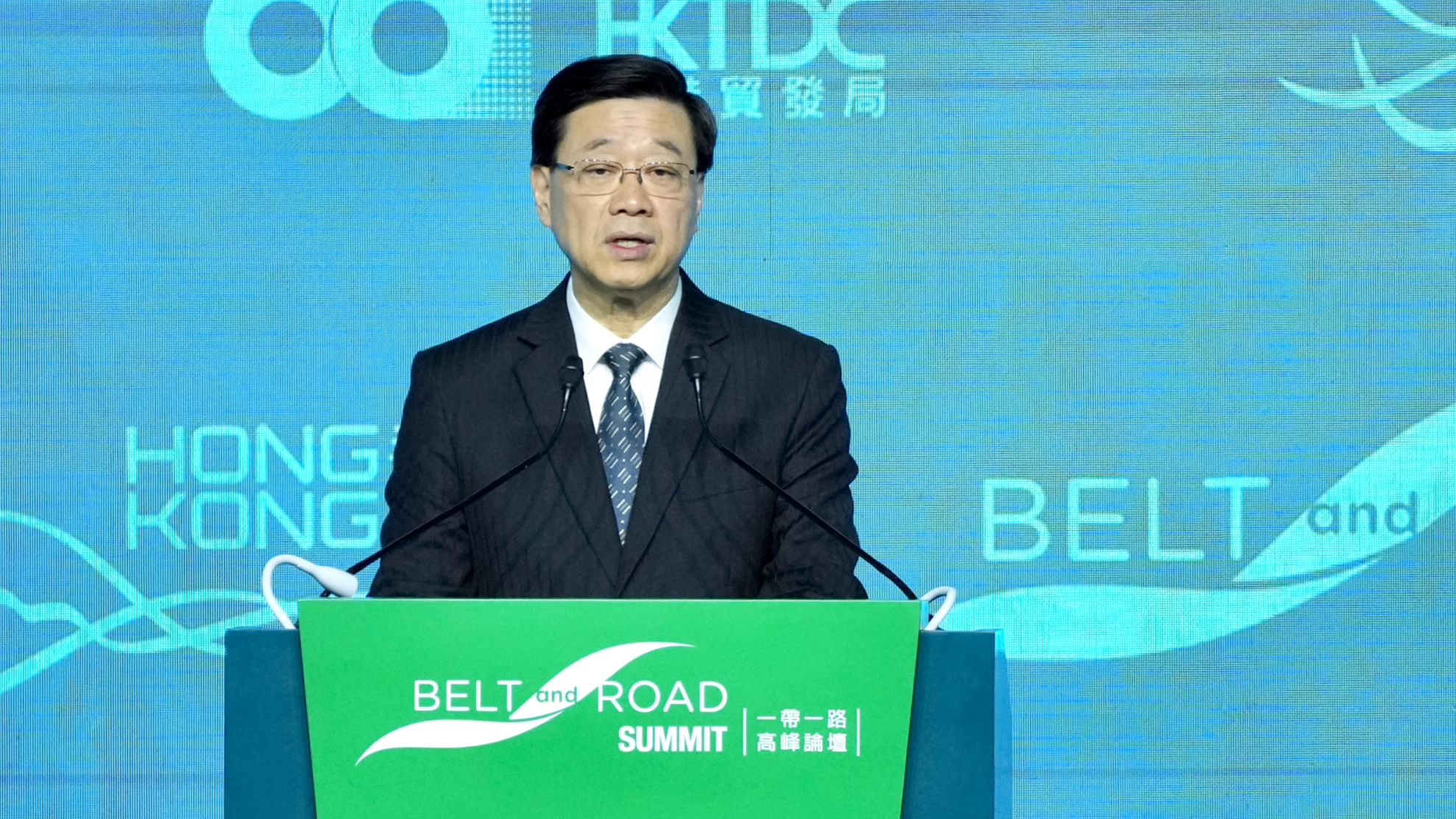
The 11th Belt and Road Summit opened in Hong Kong on Wednesday with fruitful results in promoting international cooperation and facilitating business partnerships, as 32 memoranda of understanding and agreements were signed in areas like finance, professional services and construction.
The deals involved government bodies, institutions and companies from the Chinese mainland, Australia, Indonesia, Kazakhstan and other markets. Among them were 10 government-to-government arrangements, including one between the Hong Kong Special Administrative Region government and Bangladesh on the promotion and protection of investments.
HKSAR Chief Executive John Lee Ka-chiu said in his opening remarks the two-day conference will witness the exchange of more than 60 government agreements and MoUs, as well as business MoUs and transactions with Belt and Road partners. Projects and deals concluded in recent days have reached more than $3.1 billion, he said.
Lee said Hong Kong has, so far, signed free trade agreements with 14 countries involved in the Belt and Road Initiative, investment agreements with 20 BRI economies and comprehensive avoidance of double taxation agreements with 43 BRI tax jurisdictions.
Beyond closer trade and economic ties, Lee said the SAR is “committed to developing a shared Belt and Road talent pool, a long-term foundation for expanding people-to-people bonds and regional cooperation”.
RELATED ARTICLES
- Belt and Road countries see the value of HK’s strategic connectivity role
- Hong Kong eyes role as BRI resource allocation hub
- HK and Central Asia: New opportunities along Belt and Road
- Belt and Road Initiative poised to unlock regions' potential
The HKSAR government’s Belt and Road Scholarship has supported more than 830 recipients, while about 5,000 students from BRI countries and regions are enrolled in programs at Hong Kong’s publicly-funded universities this year, Lee said.
In special remarks at the summit, Yan Dong, China’s vice-minister of commerce, said the central government will advance the comprehensive upgrading of the Mainland and Hong Kong Closer Economic Partnership Arrangement, expand mainland market access for Hong Kong in key sectors, and back the city’s early accession to the Regional Comprehensive Economic Partnership.
He said the central government will guide Hong Kong enterprises in providing professional services for Belt and Road projects. It will also strengthen information exchanges between mainland and Hong Kong companies, encouraging them to jointly explore overseas markets and achieve mutual benefits.
China’s goods trade with Belt and Road partners reached $3.3 trillion in 2025 — up 5.7 percent year-on-year — Yan said, emphasizing that the trade structure continued to improve, with computers, electronic components and machinery recording solid growth.
Li Zhen, vice-chairman of China’s State-owned Assets Supervision and Administration Commission of the State Council, said central state-owned enterprises have initiated more than 5,500 investment cooperation projects and established 11 Belt and Road joint laboratories since the initiative was proposed 13 years ago.
Looking ahead, he said SASAC will support central SOEs in opening up project resources to partners, making projects more transparent, accessible and commercially viable.
Li said Hong Kong could play a greater role as an international financial center by providing support in project financing, listings, bond issuance, and asset management, enabling more international capital to understand and participate in central SOE projects. He said Hong Kong should become a “meeting room” for long-term and patient capital.
Uzbek Prime Minister Abdulla Aripov described the Belt and Road Initiative as an effective platform for cooperation in various areas, including transport and logistics, green energy, artificial intelligence and the digital economy.
He invited Hong Kong institutions to take part in the development of the Tashkent International Financial Center, saying the two sides could jointly explore opportunities in the Central Asian market.
Uruguayan Vice-President Carolina Cosse said Hong Kong is a leading international financial, trade and shipping center with distinctive comparative advantages, and expressed strong interest in the development of the Guangdong-Hong Kong-Macao Greater Bay Area.
Uruguay, she said, serves as a trade and investment hub in Latin America. On that basis, she proposed “a hub-to-hub cooperative platform between Uruguay and the Hong Kong SAR under the Belt and Road Initiative” to facilitate capital flows, trade financing and project development between Latin America and Asia.
“The BRI has contributed significantly to expanding trade, attracting foreign direct investment, developing modern infrastructure, and strengthening people-to-people connections across borders,” said Saleumxay Kommasith, Laos’ deputy prime minister.
He cited the Laos-China Railway, launched in 2021, as tangible evidence of that impact. The railway, he said, has helped transform Laos into a regional logistics hub, reducing logistics costs and integrating the country more deeply into regional supply chains.
“At its core, the Belt and Road Initiative is about forging new connections, turning potential into opportunity and opportunity into tangible development that benefits communities around the world,” said Frederick Ma Si-hang, chairman of the Hong Kong Trade Development Council.
He said Hong Kong, as an important commercial platform for the initiative, will continue to leverage its unique strength in connecting the Chinese mainland with global markets.
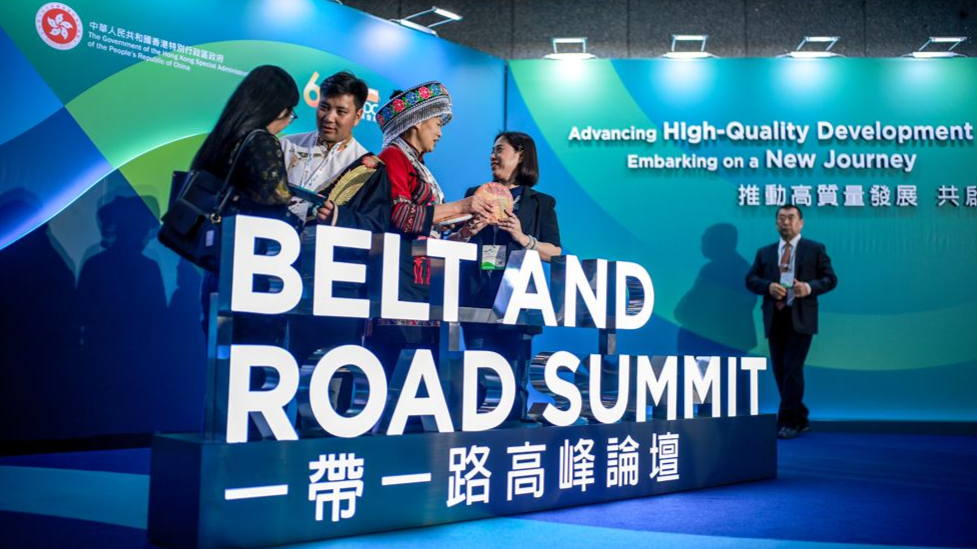
Co-organized by the HKSAR government and the HKTDC, the summit has brought together more than 6,000 government leaders, business executives and professionals from over 70 countries and regions.
Held under the theme “Advancing High-Quality Development, Embarking on a New Journey”, this year’s event introduced several new thematic chapters, including sessions on mainland enterprises’ global expansion, Central Asia and the Middle East.
Contact the writer at irisli@chinadailyhk.com
