

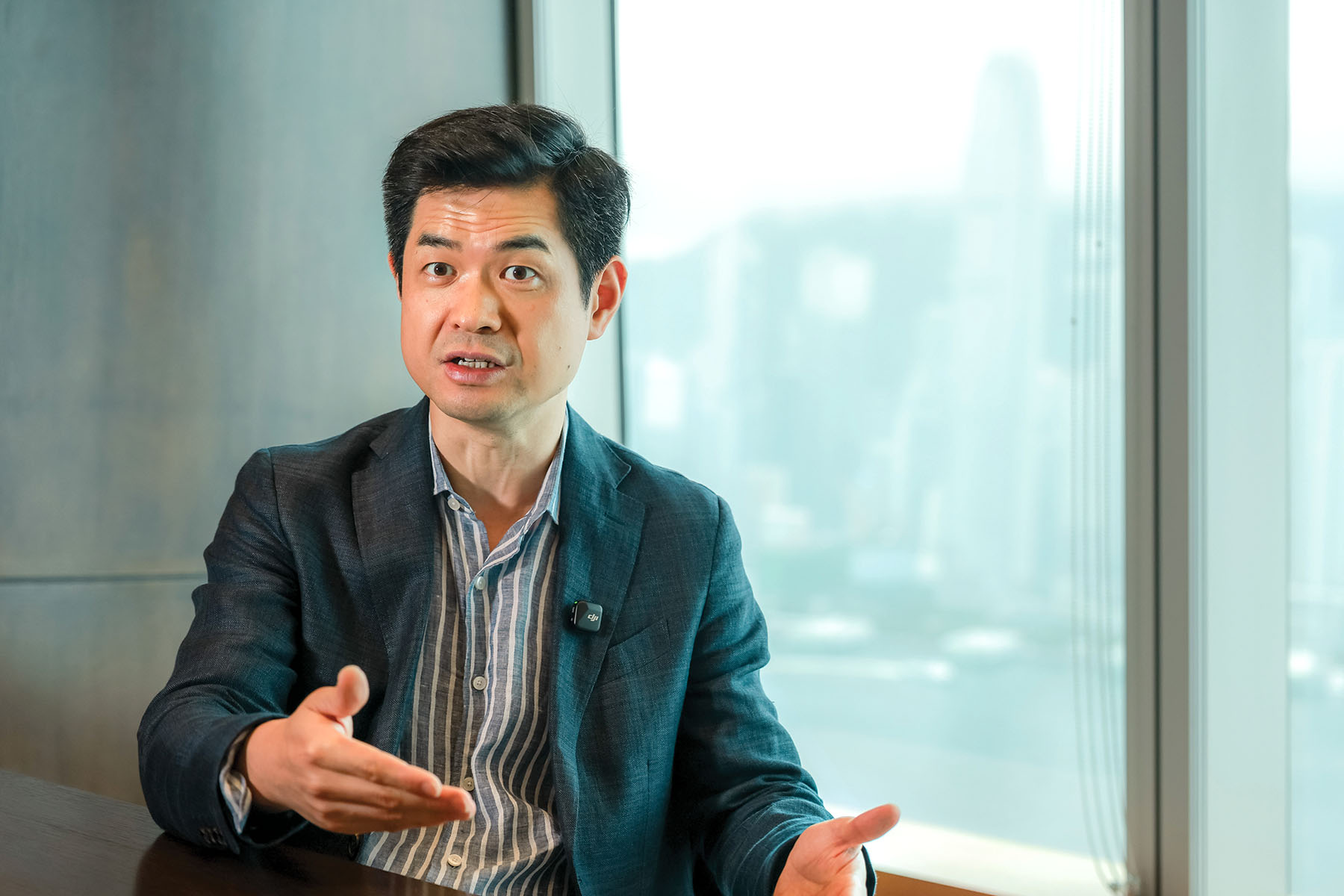
Hong Kong’s economy is expected to maintain solid momentum in the second half, with exports and property — its two main growth engines so far this year — proving resilient despite a second-quarter slowdown amid a tougher external environment, according to Morgan Stanley Chief China Economist Robin Xing.
In an exclusive interview with China Daily, Xing said the special administrative region’s export sector has been lifted by the global artificial intelligence investment boom, as Hong Kong’s role as one of Asia’s largest entrepots has made it a key conduit for equipment and components moving through the AI supply chain.
“AI-related re-exports could remain a strong source of growth in the second half of this year and even into next year,” he added.
READ MORE: 'Exports&Property': What Makes HK Stay Strong?
Xing said US tech giants are projected to pour more than $800 billion into AI capital expenditure this year, rising to over $1.3 trillion next year. Much of the hardware, infrastructure and supporting equipment are manufactured in Asia before being shipped to global markets, allowing many economies in the region to benefit from this “AI investment supercycle”.
“If AI investment suddenly hits a wall and slows sharply, it would of course affect the global economy, including Asian exports,” he said.
But that point does not appear to have arrived yet, even as debate intensifies over whether the sector is in a bubble. “Looking back to previous industrial and technological revolutions, none of them happened overnight. They all went through periods of adjustments,” Xing said. “The AI revolution has been underway for less than three years. You can’t expect everything to be achieved in one stroke.”
He added that advances in AI over the past few years have been concentrated in specific fields, such as coding, and further development is needed before the technology can be widely used in corporate operations to boost productivity or generate meaningful revenues.
Xing’s comments came after Hong Kong’s real GDP grew 5.1 percent year-on-year in the first half, its strongest half-year performance in nearly five years, according to the Census and Statistics Department. The value of total goods exports jumped 39.1 percent from a year earlier over the same period.
The economy expanded 4.3 percent on a yearly basis in the second quarter, slowing from 5.9 percent in the first three months.
The moderation came against a challenging global backdrop. After tensions involving the US, Israel and Iran began to surface in February, global energy prices rose and concerns over oil supply intensified, weighing on the growth of a wide range of economies in the second quarter. “This is part of the broader external environment, so there is no need to be overly worried,” Xing said.
Property outlook
In addition to exports, the economist said Hong Kong’s property market has also shown resilience, adding that Morgan Stanley’s real estate team has turned more positive on the sector since last year. He said this is supported by two factors — stronger rental demand from talent inflows and a more favorable interest rate environment.
Morgan Stanley in May raised its forecast for Hong Kong’s home price growth in 2026 to 12 percent from 10 percent, and said it expected the residential market to enter a new upcycle with a further 5 percent gain in 2027.
ALSO READ: Profitability takes center stage as AI stocks swing in Hong Kong
The investment bank sees little chance of an interest rate hike by the US Federal Reserve this year. Xing said that while the Middle East conflicts and oil price volatility have fueled inflation concerns, AI’s potential to displace jobs could create deflationary pressure over the medium to long term.
“I’m not particularly worried about sharp interest rate increases or a severe liquidity squeeze that would affect Hong Kong’s liquidity,” he added.
Even so, Xing said Hong Kong should be alert to structural divergence in the economy. Although high-tech and AI-related exports are impressive, the industries behind them are capital- and technology-intensive, limiting their spillover effects into broad-based employment and household income, he said.
A Morgan Stanley report on AI’s impact on employment found that about 30 percent of jobs in the US are exposed to the technology, with professional and white-collar services among the most vulnerable to AI-related disruption. Hong Kong, with a services-led economy, could face similar pressures over time as AI adoption widens, Xing said.
“Policymakers must plan ahead to ensure the benefits from high technology are shared by the public,” Xing said. He urged Hong Kong to continue developing an inclusive capital market capable of supporting listings from a wider range of sectors including entertainment and consumer businesses, rather than focusing solely on hard technology.
The city should also consider policies that encourage companies listing in Hong Kong to use part of their IPO proceeds to establish international headquarters or other key business functions in the city, thereby creating more local jobs, he added.
Contact the writers at irisli@chinadailyhk.com
