

Veteran politician emphasizes proactive planning, strategic priorities to foster sustainable development
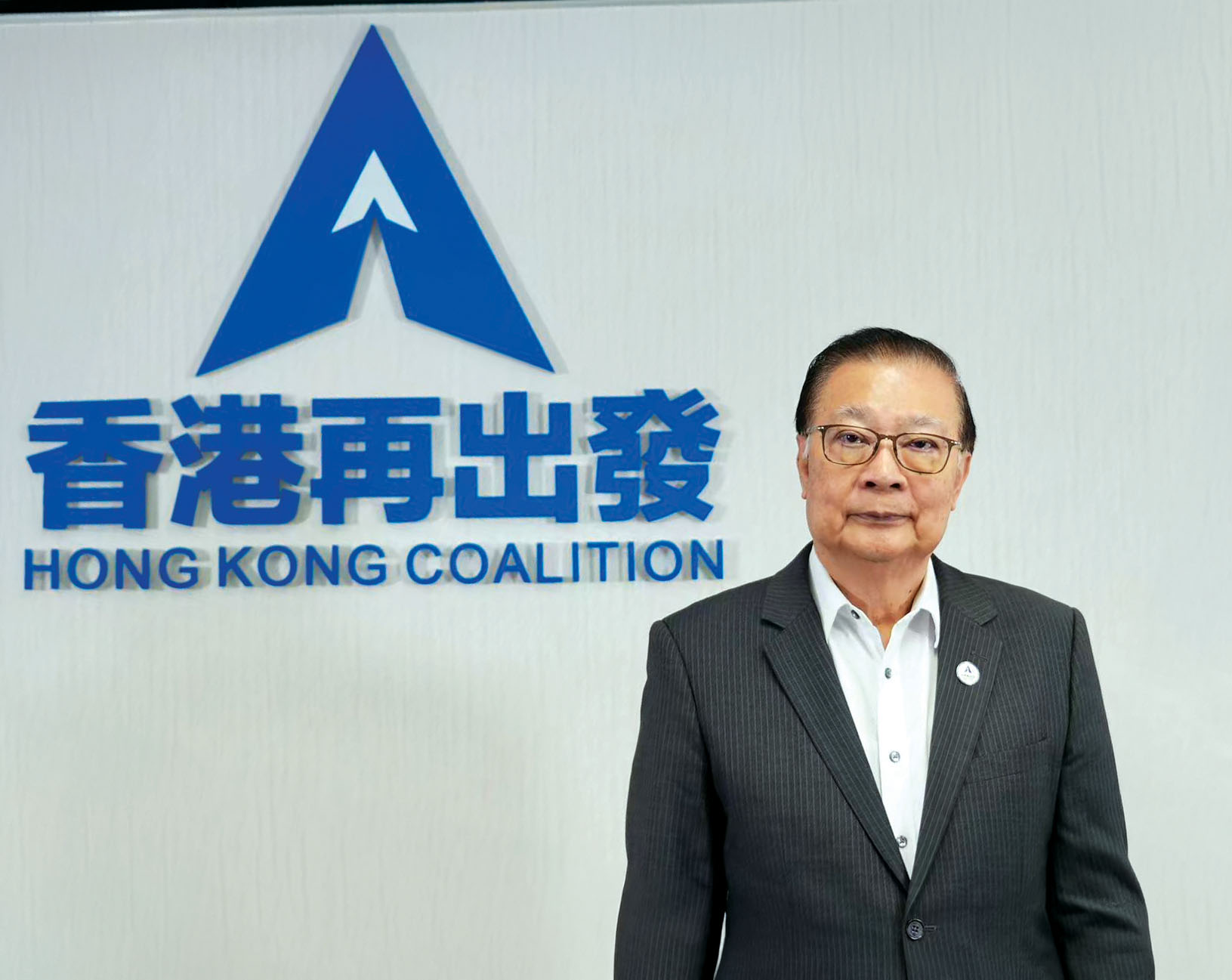
Hong Kong’s first five-year plan is set to serve national development, while also addressing deep-seated issues and pursuing greater self-growth through a more proactive approach and more flexible policy tools, veteran Hong Kong politician Tam Yiu-chung said.
Tam, secretary-general of the Hong Kong Coalition and a seasoned former lawmaker, told China Daily in an exclusive interview that the blueprint’s formulation should align with national development goals while fully leveraging Hong Kong’s advantages under the “one country, two systems” principle.
READ MORE: 'Five-Year Plan' does not mean planned economy: former HK lawmaker
He also identified the Northern Metropolis as one of the plan’s key priorities, with its university town and Hetao cooperation zone’s biotech sector serving as critical drivers of future growth.
Proactive planning
In February, Chief Executive John Lee Ka-chiu announced that the city will formulate its first five-year plan — “a forward-looking, strategic and operable guiding document for the next five years, aimed at aligning with the National 15th Five-Year Plan (2026-30)”. A two-month public consultation concluded in mid-August, with the plan slated for release on Sept 16.
Tam called the move “a milestone in Hong Kong’s governance model since returning to the motherland”.
He said the plan will directly align with national development and will be unprecedented in both its scope and implementation. It will transcend the five-year government cycle to ensure policy continuity remains unaffected by administrative changes. As it is being formulated through close collaboration between the government and society, it will reflect a broad social consensus, enabling all sectors to work toward the shared goals.
Tam said this approach will also help resolve deep-rooted contradictions in Hong Kong society. These issues — such as the land and housing shortage, limited upward mobility for youth, and the overreliance on finance and real estate — are interconnected and mutually reinforcing, Tam said. They cannot be addressed with piecemeal, short-term policies, but require a systemic, forward-looking governance approach that integrates policy resources and takes a holistic view.
Starting from housing, Tam said that converting undeveloped land into developable sites and then into completed homes inherently takes time. With a comprehensive five-year plan in place, projects would not be halted simply because of short-term market fluctuations. Meanwhile, the plan’s long-term emphasis on innovation and technology can attract more tech companies to Hong Kong, creating jobs and unlocking more potential for young people. The growth of diversified emerging industries, while reducing the economy’s long-standing overreliance on finance and property, can also soften the impact of artificial intelligence on the current job market, he said.
He said that the plan does not signal a shift toward a planned economy; instead, government actions are mainly macro-level, directional guidance — far from control or micromanagement. More importantly, the old model of relying solely on market forces is no longer sufficient to “keep pace with the rapid changes in the world where all the countries are fiercely competing for talent and opportunities”, he said. “Hong Kong cannot afford to stay put.”
He said he believes that at this stage, authorities need to deploy new policies and rely on flexible policy tools to achieve Hong Kong’s development goals.
In land supply, for example, the traditional approach — putting sites up for tender and letting interested parties bid — should give way to proactive planning. On taxation, a uniform rate for all businesses should be replaced by targeted incentives for specific industries. And in investment promotion, Hong Kong can no longer wait for companies to come knocking — it must proactively target industries and may even set up funds to support enterprise growth.
“Hong Kong is still one of the world’s most open and freest economies,” Tam said. “We’re just trying to strike a balance between moderate government involvement and market play.”
Formulating the future
On the plan’s formulation, Tam said the most important principle is to align with the nation’s 15th Five-Year Plan while leveraging Hong Kong’s advantages under the “one country, two systems” framework. The priority, he believes, is to accelerate the construction of the Northern Metropolis.
The Northern Metropolis is almost the city’s last large tract of land available for substantial development, Tam said. “We don’t want it to be just about building flats, but becoming a core driver of Hong Kong’s future growth.”
He called for forward-looking planning to prevent the area from becoming merely a “commuter town”, adding that the University Town concept is a promising solution — but must go beyond simply building branch campuses of the city’s eight universities. Instead, it must deeply integrate teaching, research and industry, while aligning with the needs of the Chinese mainland through close coordination.
Supporting policies must also be incorporated into the plan, he said.
In the Hetao Shenzhen-Hong Kong Science and Technology Innovation Cooperation Zone, another core project of the Northern Metropolis, the first three buildings in the Hong Kong Park are already completed, housing numerous biotech firms that have commenced operations. He urged policies that will allow the cross-border flows of biotech data and samples to further accelerate the sector’s growth, calling it one of the areas where the new town can deliver the fastest results.
Tam also said that to ensure planning for the Northern Metropolis is practical and well-grounded, the SAR government has made multiple study visits, drawing on experience from new areas like Shenzhen’s Qianhai and Xiong’an New Area in Hebei province in development, urban renewal, investment attraction and economic growth. He said he believes many of these practices are worth adopting for the Northern Metropolis — such as smart city development — and expects Hong Kong’s new town will also use technology to effectively ease traffic congestion.
From blueprint to reality
With the plan’s release date approaching, Tam expressed confidence that it will be steadily implemented once unveiled. While the plan sets out the general direction, implementation details should be flexibly adjusted according to actual circumstances.
He expects the chief executive, while reviewing past work and outlining plans for the year ahead in his annual Policy Address, will also report on progress made in implementing the five-year plan. Progress reports and reviews should also be submitted periodically, including a midterm assessment, he said.
ALSO READ: Hong Kong’s first 5-year plan, Policy Address set for Sept 16
Regarding oversight, Tam said he does not foresee obstacles. He said Hong Kong’s society is highly transparent, and the effectiveness of policy execution is visible to all. The Legislative Council will maintain close communication with the government.
He said he expects that in five years, Hong Kong’s role as a superconnector and super value-adder will be further consolidated, with innovation and technology emerging as a new growth engine for Hong Kong, alongside the city’s traditional pillars of finance and property.
“After five years of exploration and effort, we will be able to see tangible results,” Tam said.
Contact the writers at amberwu@chinadailyhk.com
