

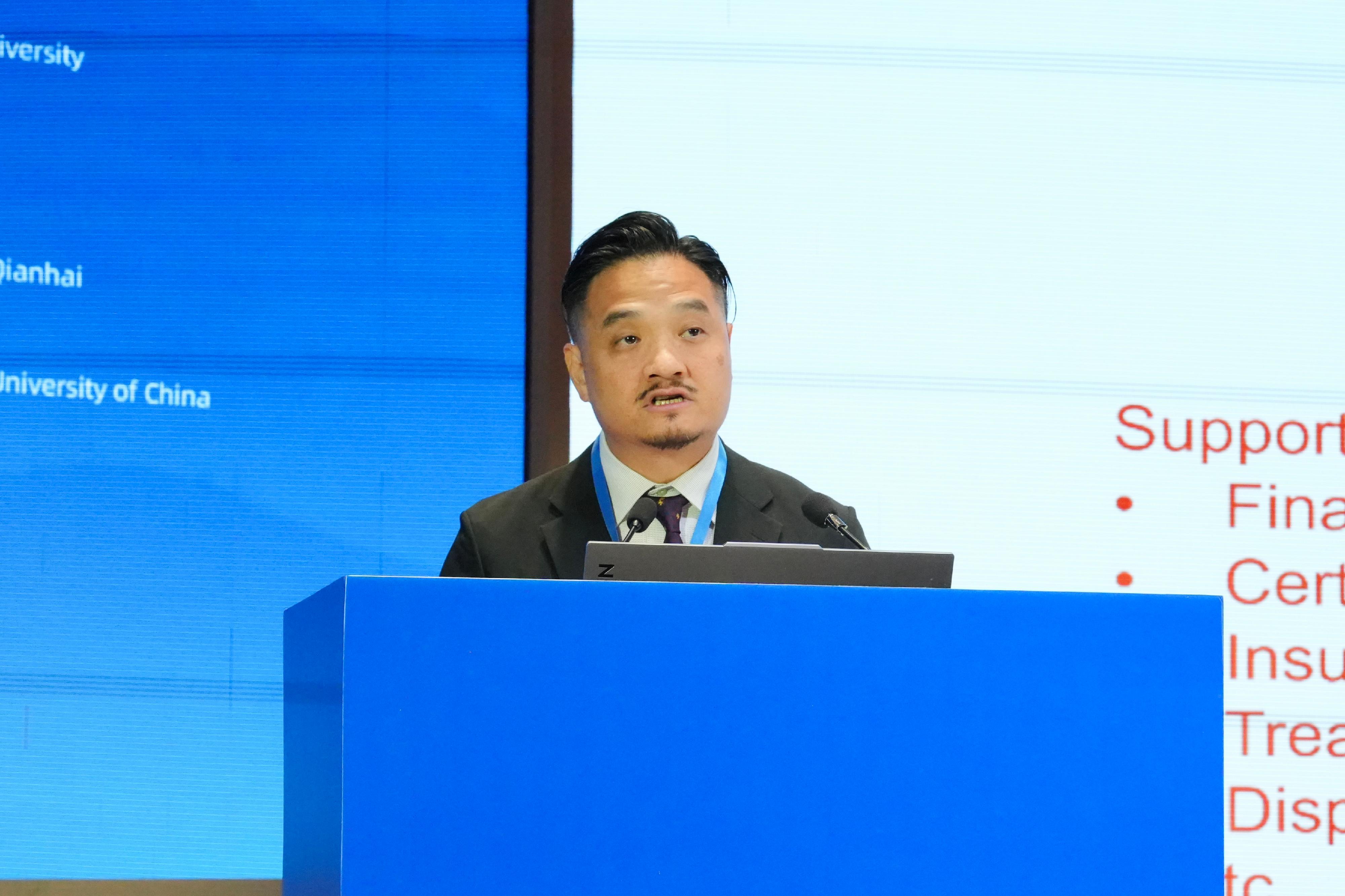
Hong Kong is recasting itself as the region's institutional "harbor" as trade routes bend away from traditional Western markets, the head of the city's Chief Executive's Policy Unit said Monday at the inaugural Asia-Pacific Think Tank Forum.
Stephen Wong told delegates in Shenzhen that Hong Kong's trading role has changed but "has not disappeared," as he laid out a vision in which the city supplies the rules, certifications and payment systems that cross-border commerce increasingly requires.
Wong cited striking figures: Chinese mainland goods re-exported through Hong Kong to the US, the EU and the UK fell from 17 percent of Hong Kong's re-exports in 2012 to just 6.5 percent in 2025. Yet total exports rose 15.4 percent year-on-year in 2025, sitting a quarter above their pre-pandemic peak — with new flows heading to ASEAN, the Middle East and India, plus advanced chips running inward to the mainland.
"Trade is like a river," he quoted the IMF managing director as saying at Davos. "You put an obstacle, it goes around it."
But a bent river still needs a navigable harbor "made of institutions," not concrete, he said.
ALSO READ: Wong: HKSAR’s alignment with nation needs ‘dynamic’, ‘comprehensive’ approaches
Wong framed Hong Kong's pitch around "soft connectivity": agreements that make licenses, certificates and data valid across borders.
Exports of business services such as transport, finance and insurance grew from about $480 billion in 2012 to $623 billion in 2024, nearly three-quarters of Hong Kong's total services exports.
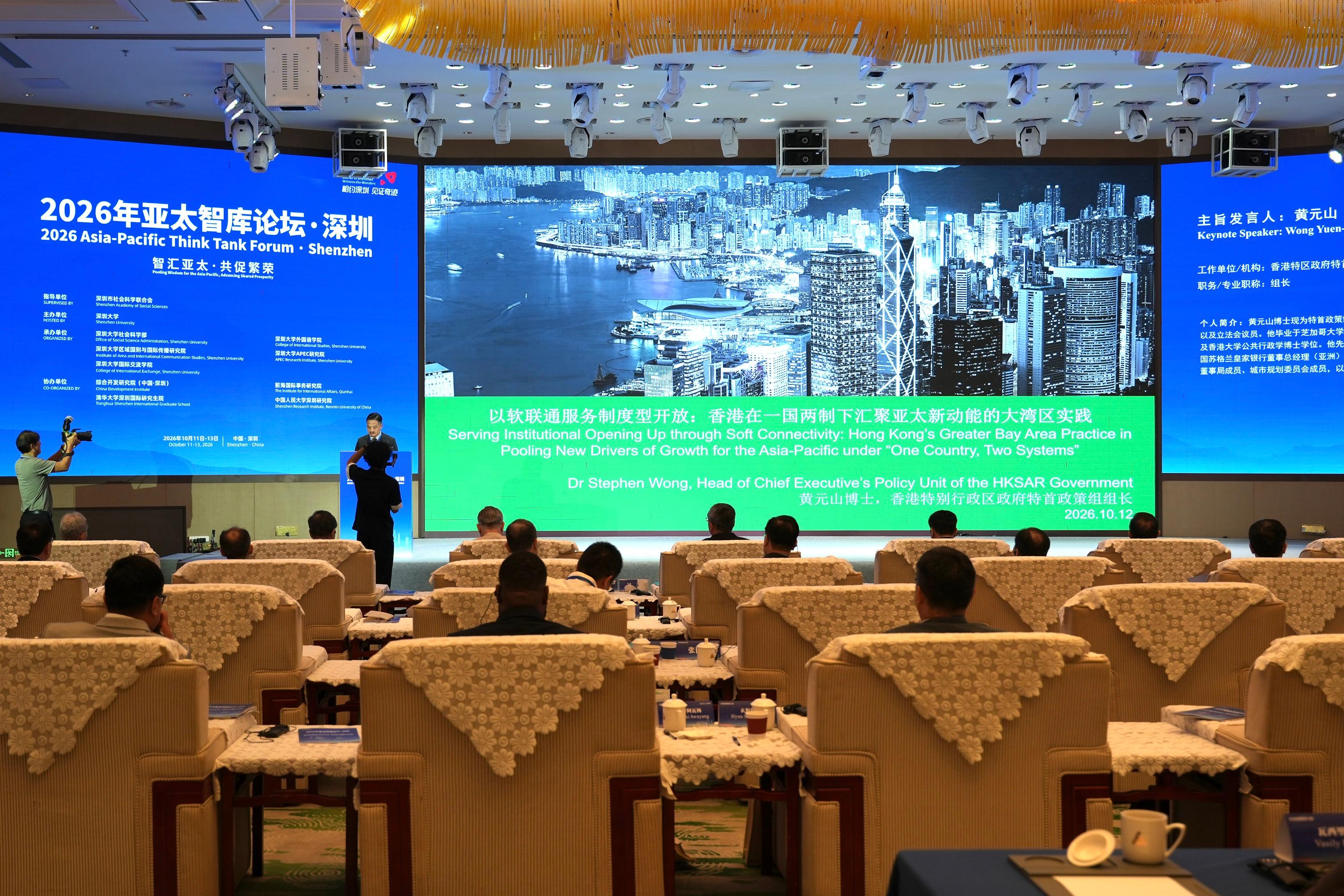
On carbon, Wong said green markets need prices "credible and readable across borders," citing Hong Kong's push into cross-boundary carbon trading.
On digital trade, he pointed to the city's Port Community System, with more than 8,000 enterprises registered, and pledged legislation giving electronic trade documents the same legal standing as paper.
"Hong Kong is not the largest economy in this room, and never will be," Wong said. "But when a river bends, size is not what is needed. What is needed is a harbor that every vessel can use."
Shenzhen is hosting the APEC Economic Leaders' Meeting next month.
