

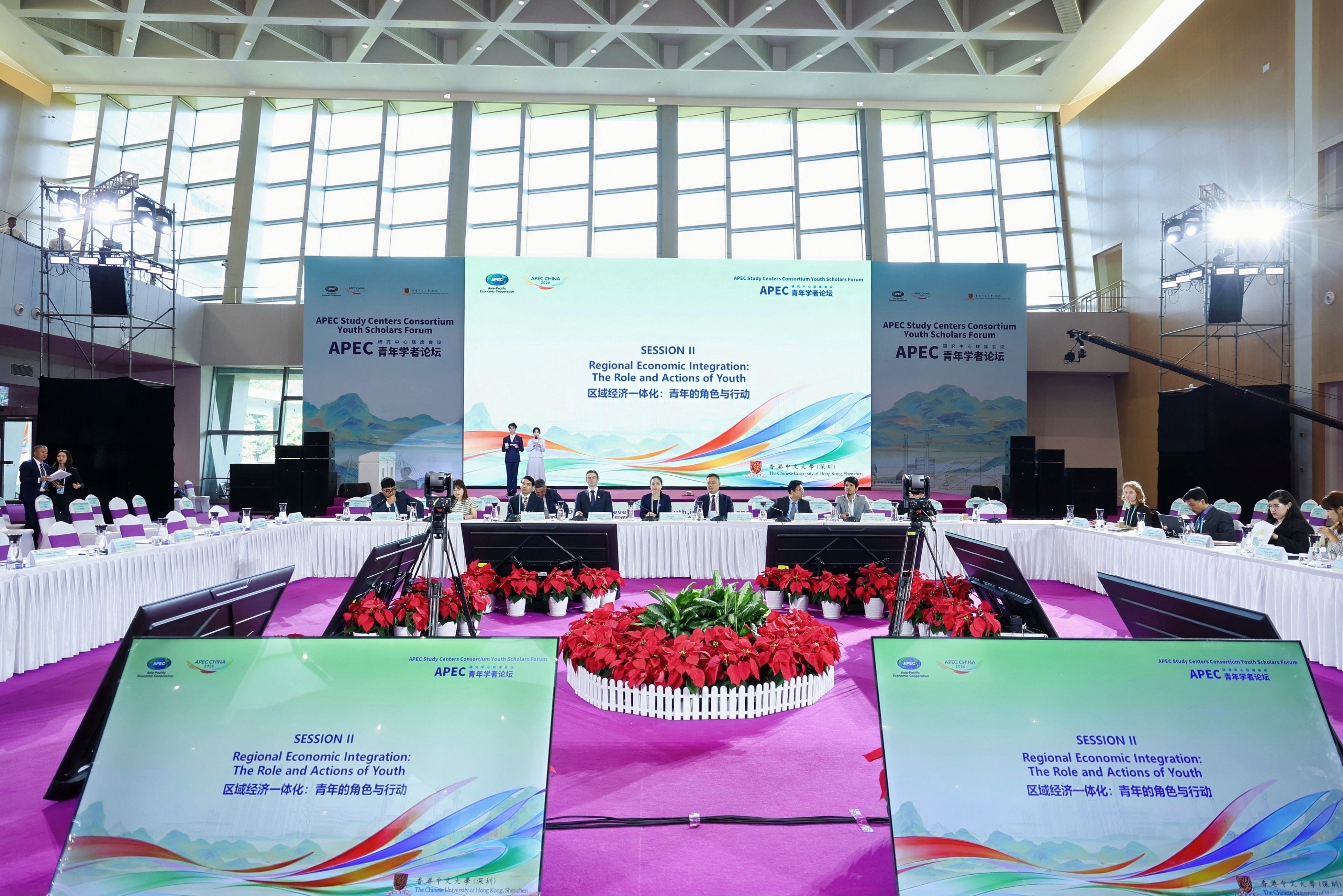
Youth scholars from Asia-Pacific Economic Cooperation (APEC) economies said that amid the turbulent international landscape, the younger generation has both the responsibility and the opportunities to contribute to regional economic integration through practical pathways.
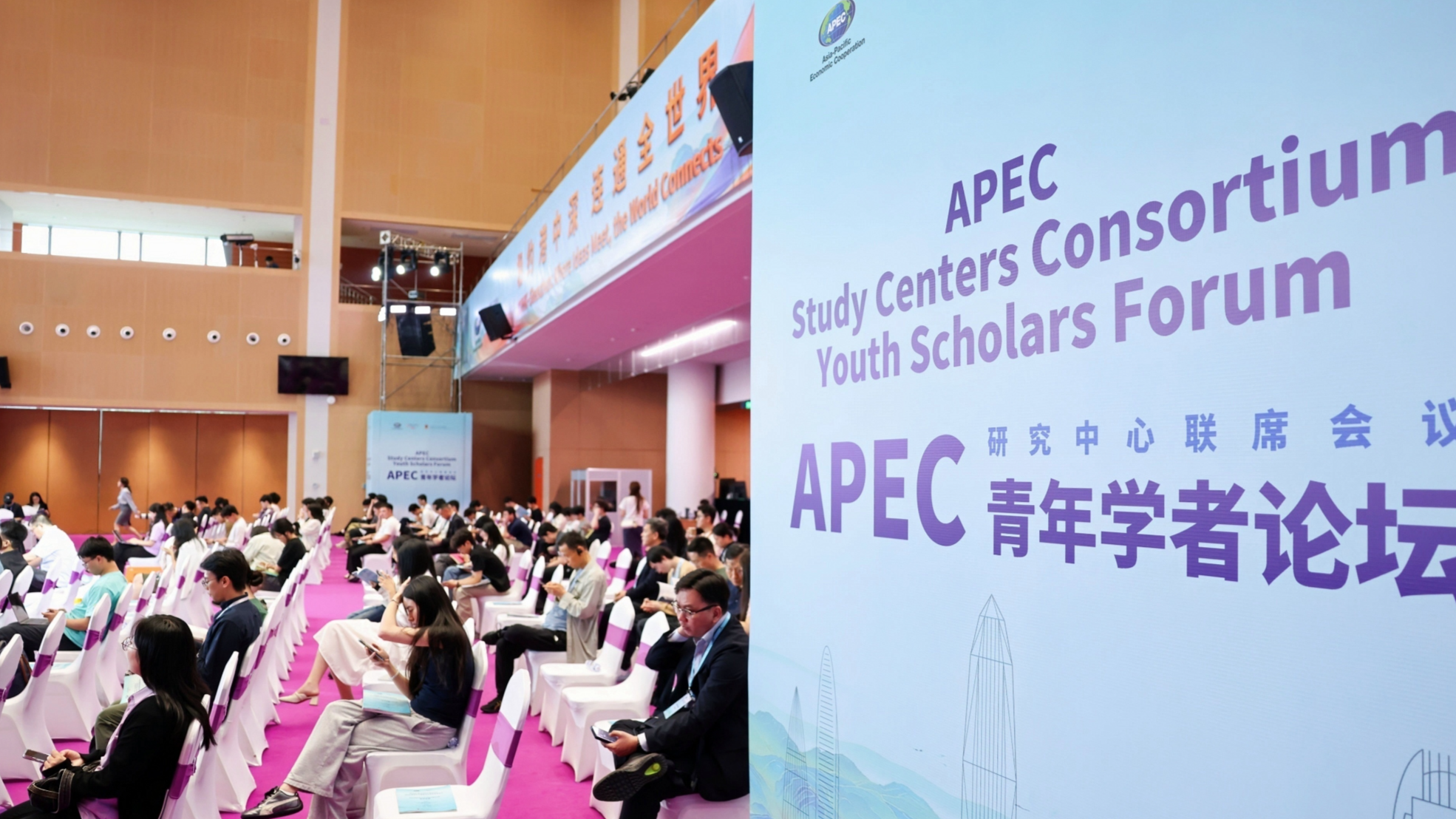
They made the call during the APEC Study Centers Consortium Youth Scholars Forum, held at the Chinese University of Hong Kong, Shenzhen, on Thursday. This year marks the third time that China is hosting the APEC meetings, including the summit scheduled for November in Shenzhen. The youth forum is one of a series of related activities taking place in the country.
Speaking at a session on the role and actions of young people in driving regional economic integration, Mohd Hariszuan Bin Jaharudin, a researcher from the Institute of Malaysian and International Studies at the Universiti Kebangsaan Malaysia, said that the world is standing at a crossroads, where digital connectivity is at an all-time high, yet political barriers continue to rise.
Amid the global shift toward anti-globalization and anti-multiculturalism, he believes that the cross-border mobility of young people seeking better development opportunities could be the key to reversing the trends.
“As digital natives, they do not view borders as barriers, and see regional cooperation as an ecosystem of opportunities,” he said.
He added that developing economies in the Asia-Pacific are home to over 580 million young people. According to a study by his team, 60 percent of youth in the Asia-Pacific region, particularly in Southeast Asia, are willing to move for a better future, skills training, and higher wages.
Jaharudin stressed that these young people place great importance on the quality of development opportunities, such as social protection in jobs, career advancement potential, and a sense of belonging to international and regional cross-border communities.
He suggested that APEC economies draw on a mutual recognition arrangement for tourism professionals among the Association of Southeast Asian Nations and establish a similar cooperative framework to certify young people’s skills, protect their rights, and provide them with a sense of security as they cross borders.
“Our regional future is not just about the movement of goods, but the dignified movement of people,” he said.
ALSO READ: Hong Kong should capitalize on the APEC meetings
During the same session, Lin Xiuxiu, a final-year PhD candidate in the Department of Economics at the University of Auckland in New Zealand, highlighted the younger generation’s role in boosting the service trade.
She noted that the service trade represents a growing part of global trade, especially in digitally deliverable service sectors, professional services, and services for individuals — such as education, healthcare, and some emerging creative industries.
With greater adaptability to new business models and stronger cross-cultural skills, young people are well positioned to lead services trade integration within the APEC framework, she said.
Lin added that many young people today are deeply involved in the region’s economic integration and are driving the digitalization of the service trade through their innovation. She said that she advises them to further upgrade their skills — such as legal and regulatory literacy, digital security, and project management — to enhance the value of their services; and to actively engage in policy discussions to help shape more youth-friendly initiatives.
READ MORE: China hosting APEC at a critical time, say experts
Jhon Louie Bequiso Sabal, an assistant professor of economics at Xavier University in the Philippines, called on APEC members to pay greater attention to the development of remote regions in the context of economic integration and encouraged young people to participate in these efforts.
He said that the Philippine economy has maintained rapid growth over the past decade; however, as a major population center, Mindanao remains plagued by high poverty rates, resulting in regional economic imbalances within the country.
He said he believes that APEC should also be mindful of such internal development imbalances as it promotes economic integration. “Economic integration is not merely about opening up trade or participating in global value chains; the real challenge is whether all regions within a country can truly benefit from this process. Effective integration requires that benefits be distributed more widely, particularly to marginalized regions,” he cautioned.
The event attracted representatives of youth scholars from 13 APEC economies, specially invited scholars from Macao, as well as leaders from the political, educational, and business sectors.
Contact the writer at bingcun@chinadailyhk.com
