

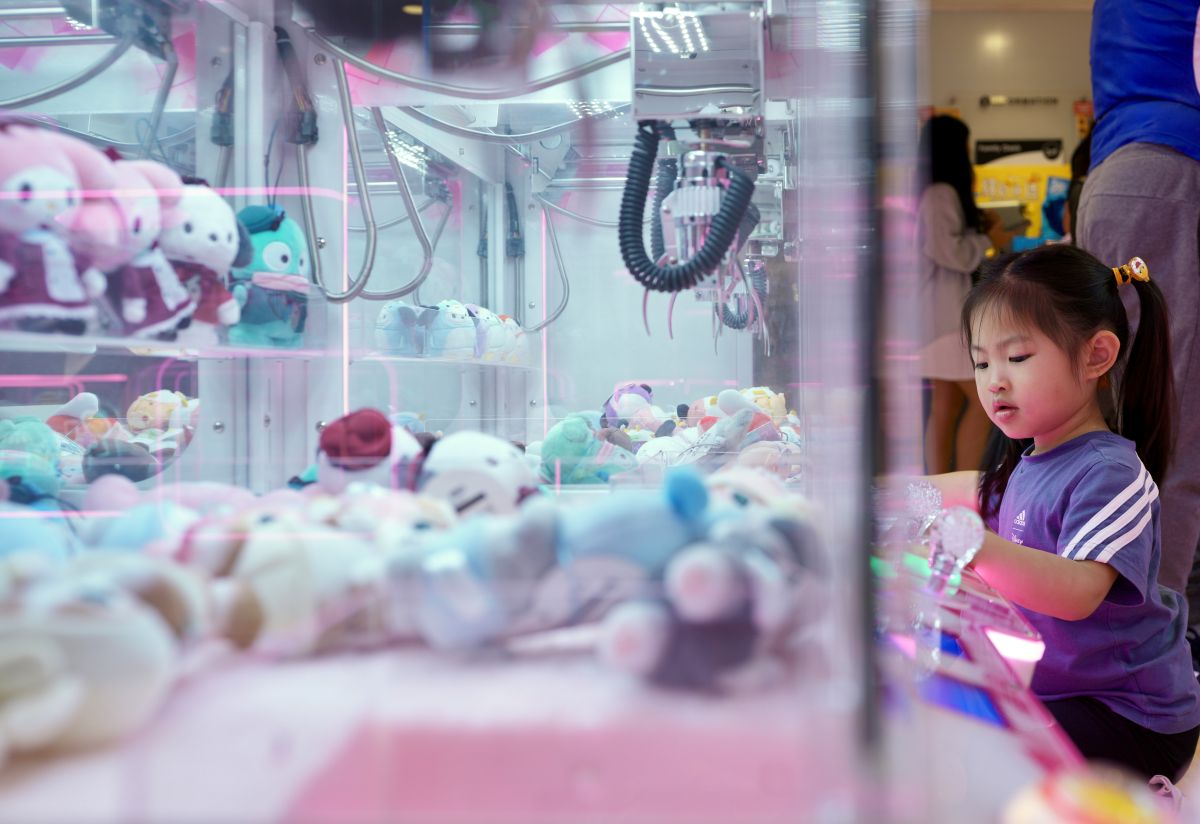
A plan to tighten regulations for toy claw machines and pinball games in Hong Kong is drawing widespread support. Advocates say the move is necessary to close regulatory gaps, especially as the rapid expansion of such gaming arcades across the city is fueling growing concerns over gambling addiction.
In a recent file submitted to the Legislative Council, the Hong Kong Special Administrative Region government said it is considering bringing toy claw machines and newly emerging games of amusement with prizes, such as pinball machines, under the Amusements with Prizes Licence (AWPL) regime, citing “elements of gaming or risks of addiction” and a need to protect players, especially young people, from financial harm.
Currently, venues operating such gaming machines don’t need to obtain a Places of Public Entertainment Licence (PPEL), a prerequisite of applying for an AWPL, as a 2022 High Court ruling stated that ordinary claw machines do not meet the definition of “entertainment” under the Places of Public Entertainment Ordinance.
The government’s proposal includes removing the prerequisite of a PPEL and requiring all venues with claw machines to apply for an AWPL and display it at the entrance, and possibly also mandating addiction warning signs. Games subject to AWPL’s regulation cannot cost more than HK$5($0.64) per play, and the maximum prize value is capped at HK$300. The current annual license fee stands at HK$3,200.
The industry’s explosive growth has also spurred the need for action. According to a report by real estate agency Midland IC&I, the number of claw machine shops in Hong Kong’s four core shopping districts — Central, Tsim Sha Tsui, Mong Kok and Causeway Bay — surged from nine in the first quarter of 2021 to 58 in the third quarter of 2025, with a net increase of 16 shops in just half a year, a record 38.1 percent growth rate.
RELATED ARTICLES
- Clawing back a living in an 'ice age' for retailers
- Hong Kong breathes new life into old heritage
- New curbs safeguard minors playing online games
Low operating costs — only basic renovations and a one-time investment in claw machines is required, while remote management minimizes labor expenses — and flexible short-term leases have also fueled the expansion, the report noted.
For players like33-year-old Frank Sham, who said he “cannot resist playing whenever passing by a shop”, the machines are less about fun than financial gain. He recalled spending around HK$1,000 per week on claw machines in Tin Hau and Causeway Bay, where a single street can host four or five venues.
“Before, I could spend just HK$50 to grab a plushie and easily sell it for HK$200. We get these toys at a very low cost and then sell them at a high markup — that's where the profit lies.”
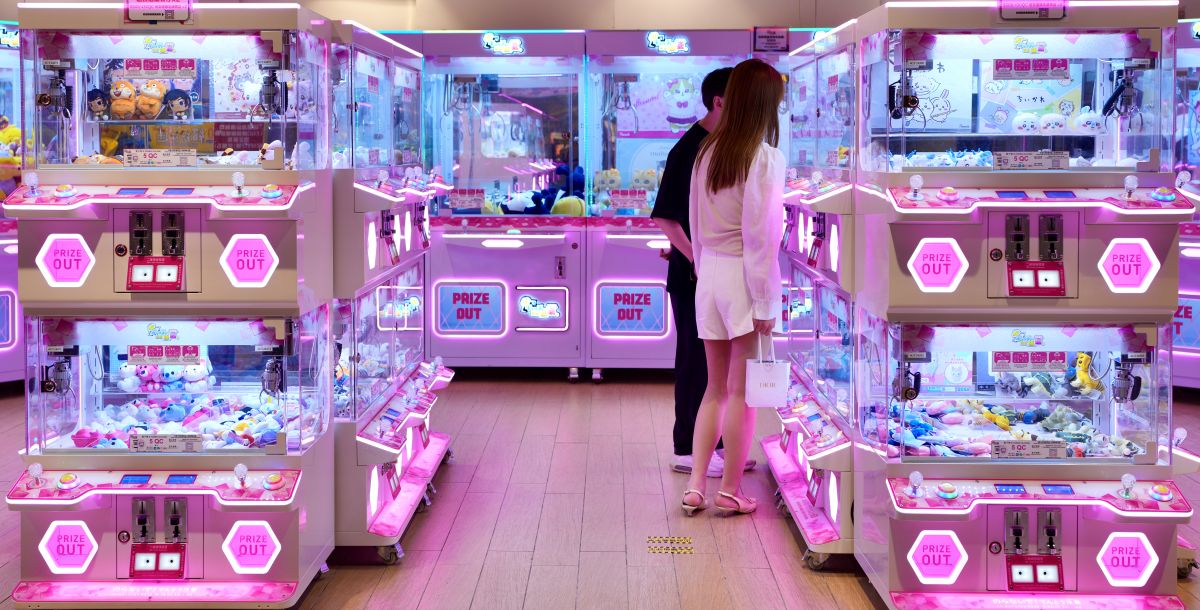
Sham said he once won seven plushies for an outlay of about HK$1,000. As some were retro or discontinued items, each sold for HK$300 to HK$400, and he made roughly HK$1,800 from that haul.
Even more popular now are anime blind box cards. Rare cards, he noted, can fetch tens of thousands of Hong Kong dollars.
“It's not purely entertainment, and this is also why claw machines can easily lead to gambling,” Sham explained, recalling that he once splurged over HK$1,000 in a single shop and won nothing.
Sham said he welcomed tighter regulations, noting that “many people in Hong Kong are becoming deeply addicted” as shops multiply.
“I know myself that I was essentially gambling, and it’s hard to pull out,” he said.
According to Billy Mak Sui-choi, associate professor at Hong Kong Baptist University’s Department of Accountancy, Economics and Finance, the key difference between claw machine games and gambling lies in whether prizes can be directly converted into cash.
“The government does not want public venues to facilitate betting; if a game is purely for fun, it remains acceptable,” he told China Daily.
Mak said existing regulations prohibit shops from redeeming prizes for cash or offering any indirect cash equivalent. Personal resale of prizes on second-hand platforms outside shops, however, falls outside direct regulation.
Capping the prize value can help lower that risk, Mak said, adding that the current HK$300 prize cap under AWPL should be adjusted over time for inflation.
However, Sham warned that abrupt changes, such as banning the practice of awarding bonus pinballs that allow players to keep playing, could drive some shops out of business, potentially leaving players with long-accumulated, unredeemed points or vouchers worth tens of thousands of dollars wasted.
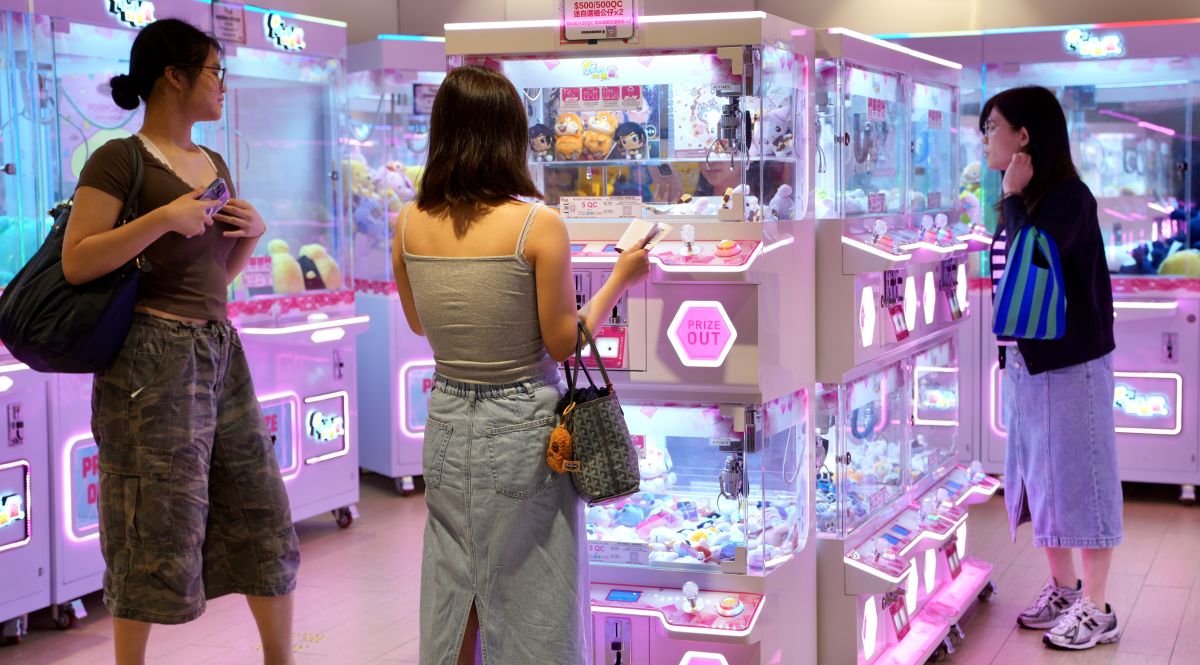
Another frequent player, Tiffany Tang, said she was drawn to the games’ addictive “can almost get one” feeling, even as she described it as “a bit of a scam”.
“The claws are difficult to control, and unless you spend a lot of money and practice every day, it's hard to get a prize,” Tang said.
However, Charlie Tse, 20, a university student who rarely plays claw machines, remains skeptical of the activity.
“There is a prize, but you never know how much you’ll have to pay to get it. Often, the doll isn't even worth the money you have spent.”
Regarding proposed legislative amendments, such as addiction warnings on machines, Tse said the intentions are good but she remained doubtful of their effectiveness.
She believes a key point is education. “Children need to understand that claw machines are basically a form of gambling ... at the very least, they are certainly not a good deal,” she said.
In Macao — a city renowned for its gaming sector — Billy Song Wai-kit, president of the Macau Responsible Gaming Association, said claw machines, which are less pervasive in the city, are regulated and defined as electronic game machines — and rely mainly on players’ skill rather than pure luck. Prizes cannot be cash or cash‑redeemable items, Song added.
While Macao law does not require disclosure of winning odds or a “catch guarantee” amount, Song said the territory may learn from Hong Kong’s experience to better balance industry development with youth protection.
Shadow Li, William Xu and Roys Zhang contributed to this story
Contact the writer at stacyshi@chinadailyhk.com
