

Against the backdrop of recent adversity, the successful and timely holding of Hong Kong’s Legislative Council election stands as a profound testament to the special administrative region’s resilience, unity, and unwavering commitment to its democratic processes and future stability. The election proceeded smoothly despite the challenges posed by a major fire incident, demonstrating the collective will of Hong Kong society to overcome difficulties and steadfastly advance on the path of order, prosperity, and good governance. This event was not merely an electoral exercise but a significant demonstration of Hong Kong’s character under the principle of “one country, two systems”.
 The significance of this election is multifaceted. Primarily, it underscored Hong Kong’s remarkable capacity to maintain social order and operational normalcy in the face of unforeseen crises. The fact that the election was conducted as scheduled, without disruption or delay, reflects the efficient crisis management and coordinated efforts of the Hong Kong Special Administrative Region government and various social sectors. This collective endeavor sent a powerful message to both local residents and the international community: Hong Kong possesses the institutional strength and social cohesion to navigate challenges while steadfastly upholding its legal and administrative duties. The smooth electoral process itself became a symbol of Hong Kong’s determination to accelerate high-quality development and governance, turning a moment of potential setback into one of demonstrated resolve and continuity.
The highlights of the electoral process were evident in the meticulous organization and widespread participation it inspired. The HKSAR government faithfully fulfilled its primary responsibility, orchestrating the election with remarkable detail and depth. The civil service executed its duties with professionalism and dedication, ensuring every procedural aspect was addressed to guarantee a fair, secure, and efficient voting environment. Leading by example, government officials and public servants cast their votes early, setting a positive tone for public participation. This was complemented by an extensive mobilization across all strata of society — from business associations and community organizations to grassroots networks — which encouraged broad-based electoral engagement.
 The campaign period was characterized by fair, sufficient, and constructive competition among candidates and their teams. Focused on policy platforms and the future of Hong Kong, the contest allowed voters to make informed choices based on substantive issues rather than divisive rhetoric. On election day, this culminated in a heartening display of civic responsibility, as a multitude of voters turned out enthusiastically to exercise their right to vote. This high level of engagement signifies a mature electorate keenly aware of its role in shaping Hong Kong’s trajectory. And actually, the voting rate was higher than it was in the previous election. This is something outstanding and commendable.
As a new term begins, the expectations placed upon the incoming Legislative Council members are substantial and clear. They carry the earnest hopes of all sectors of society. Foremost, it is expected that they will steadfastly uphold the stance of loving the country and loving Hong Kong. This fundamental principle entails a firm commitment to safeguarding national sovereignty, security, and development interests, which are the bedrock of Hong Kong’s own stability and prosperity. The new legislators must be unwavering in their support for the nation’s overarching goals while dedicated to promoting Hong Kong’s long-term prosperity and stability.
A key institutional expectation is their conscious maintenance of the executive-led system. The legislators should fully cooperate with the chief executive and the HKSAR government in law-based administration, ensuring a harmonious and effective relationship between the executive and legislative branches. This cooperation is vital for policy formulation and implementation that serves the public good. Furthermore, legislators must proactively steer Hong Kong toward deeper integration into and greater service for the national development agenda. By aligning Hong Kong’s unique strengths with national strategies like Guangdong-Hong Kong-Macao Greater Bay Area development, they can contribute significantly to the nation’s rejuvenation and the building of a modern socialist country.
Beyond these foundational roles, the legislature has a critical duty to monitor the implementation of government policies to tackle perennial, deep-seated issues affecting people’s livelihoods. Three areas demand urgent and sustained attention: Education, healthcare, and housing. The government must be held accountable for formulating and executing policies that enhance the quality and accessibility of education, ensure a robust and efficient healthcare system, and most pressingly, address the acute housing shortage. In this regard, the recent fire in Tai Po has tragically highlighted the vulnerability of many residents. The new Legislative Council has a moral and practical imperative to prioritize and monitor relief and resettlement efforts for the affected victims, ensuring they receive swift and adequate support to rebuild their lives. Solving their housing plight is an immediate test of the government’s and legislature’s commitment to the people.
Another complex, long-standing issue requiring rigorous legislative oversight is the maintenance and rehabilitation of old, dilapidated buildings. This challenge spans multiple dimensions. First, clear policies are needed regarding building age thresholds and mandatory inspection or renovation requirements. Second, the feasibility of such a large-scale undertaking must be assessed in light of Hong Kong’s overall economic capacity and the availability of skilled human resources in the construction and engineering sectors. Third, and crucially, the entire process — from building management and construction tender procedures to the safety standards of materials, the qualification of workers, on-site supervision, and subsequent law enforcement — must be subject to robust regulatory frameworks. The Legislative Council must work to strengthen relevant laws, ensure stringent enforcement, and allocate necessary resources to prevent tragedies, enhance urban safety, and improve the living conditions for thousands of residents in aging buildings.
In conclusion, the 2025 Legislative Council election has reaffirmed Hong Kong’s resilience and collective spirit. The smooth conduct of the poll under challenging circumstances showcases a society moving forward with unity and purpose. The newly elected members now bear the significant responsibility of translating this communal resolve into effective governance. By steadfastly upholding patriotic values, supporting the executive-led system, integrating Hong Kong into national development, and diligently addressing critical livelihood issues — from immediate disaster relief for Tai Po fire victims to the systemic reform of old building maintenance — they are expected to fulfill the high expectations placed upon them. Their work will be instrumental in fostering a more prosperous, stable, and harmonious Hong Kong, thereby making a greater contribution to the nation’s strength and rejuvenation. The path ahead requires diligence, cooperation, and an unwavering focus on serving the people of Hong Kong and the broader national interest.
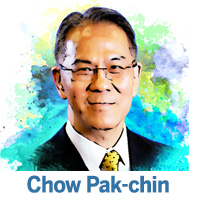
The author is a member of the Hong Kong Chief Executive Policy Unit and the Hong Kong Election Committee.
The views do not necessarily reflect those of China Daily.
