

The Leisure and Cultural Services Department (LCSD) plans to introduce a “market-driven operation” model for eight public venues, including the Hong Kong Cultural Centre Piazza and Kai Tak Station Square, which is a welcome step. By opening these spaces to private operators for events ranging from concerts to corporate functions, the policy aims to revitalize underused assets, enhance the public experience, and generate revenue.
 However, as the LCSD concludes its “expression of interest” exercise, the critical question emerges: How can we inject commercial vitality into these taxpayer-funded spaces while steadfastly safeguarding the public interest? The answer lies not in traditional tendering, but in a fundamental shift toward strategic, long-term partnerships.
Currently, the management of public venues often follows a transactional, landlord-tenant model, prioritizing rental income over holistic value creation. This approach risks selecting operators based on financial bids rather than creative vision or community commitment. To unlock the potential of a venue like the Hong Kong Museum of Art, with its Victoria Harbour backdrop, we need operators who see it not as mere square footage, but as a premier stage for cultural and commercial excellence.
The goal should be to cultivate destinations, not just venues. Imagine an international business forum at the Hong Kong Convention and Exhibition Centre in Wan Chai, with a welcome reception at the Museum of Art. The journey between these points aboard an iconic Aqua Luna junk ferry would offer attendees a uniquely “Instagrammable” experience, weaving the venue itself into the narrative of Hong Kong as “Asia’s event capital”.
The LCSD’s initiative is a test of Hong Kong’s capacity for innovative governance. By moving beyond transactional thinking and embracing true partnership, it can ensure that these venues become dynamic centers of commerce, culture, and community. The goal is not merely to fill calendars with events, but to create spaces that reflect the best of Hong Kong with a wide range of events that are profitable, prestigious, and profoundly public
For this vision to succeed, several principles must guide the implementation. First, commercial operations must genuinely incorporate community access. While many propose a “community quota”, this cannot be a token gesture. Operators should be required to actively engage with local arts groups and nongovernment organizations, dedicating time, space, and resources to support homegrown talent and grassroots initiatives. This ensures that economic revitalization goes hand-in-hand with cultural enrichment. This balanced approach has proved successful internationally. Singapore’s Gardens by the Bay, for instance, complements its premium event offerings with extensive community programming and educational tours, ensuring the space remains a public asset. Similarly, London’s Tate Modern mandates that its commercial partners actively support community workshops and local artist initiatives, embedding social value into its operational model.
Second, operational models must be tailored to the distinct character of each venue. A one-size-fits-all tender will not suffice. Prestigious, centrally located sites like the Museum of Art require partners with international networks and experience in premium-event curation. Meanwhile, community-focused spaces such as Sha Tin Park or Kwun Tong Promenade would benefit from operators deeply connected to their neighborhoods, perhaps social enterprises or local cultural organizations. Bundling venues with similar profiles could attract specialized operators better than a fragmented, site-by-site approach.
Third, the contract framework must incentivize long-term investment and cultivate quality. The proposed two-or three-year contract with a short renewal option currently under discussion is fundamentally misaligned with the scale of commitment required. True venue transformation is not a short-term project; it demands sustained relationship-building with local communities, strategic marketing to attract global event organizers, and often substantial capital investment to modify facilities to meet international standards. Operators cannot be expected to develop deep community partnerships, build a reputable global brand, or reconfigure physical spaces when facing the uncertainty of a brief contract cycle. These endeavors require planning horizons measured in years, not months. Five to seven-year agreements, structured with clear performance benchmarks, would finally align the operator’s commercial interests with the venue’s long-term success, attracting bidders who possess the vision and capability for genuine place-making rather than mere event-hosting.
Finally, transparency and fairness are nonnegotiable. Clear, publicly accessible guidelines on rental terms, fee structures, and approval criteria are essential. This is particularly important for attracting international event organizers, who require certainty and fairness when planning major occasions. A transparent system also builds public trust, demonstrating that these public assets are being managed responsibly for the benefit of all.
Looking ahead, the success of this pilot could pave the way for a more ambitious vision. Should these eight sites thrive under a strategic partnership model, the government could consider extending it to other major cultural facilities. A well-designed public-private partnership framework could unlock even greater potential, positioning Hong Kong not merely as a landlord, but as a co-creator of vibrant, multiuse public spaces.
The LCSD’s initiative is a test of Hong Kong’s capacity for innovative governance. By moving beyond transactional thinking and embracing true partnership, it can ensure that these venues become dynamic centers of commerce, culture, and community. The goal is not merely to fill calendars with events, but to create spaces that reflect the best of Hong Kong with a wide range of events that are profitable, prestigious, and profoundly public.
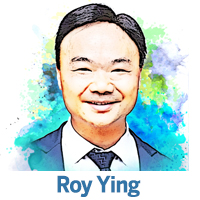
The author is a senior lecturer, Department of Marketing, the Hang Seng University of Hong Kong.
The views do not necessarily reflect those of China Daily.
