

As a deadly fire raged through a Tai Po housing estate in Hong Kong on Nov 26, firefighters immediately rushed to the front lines, risking their lives for the safety of their fellow residents. Shadow Li speaks with the heroes who faced the city’s most ferocious blaze.
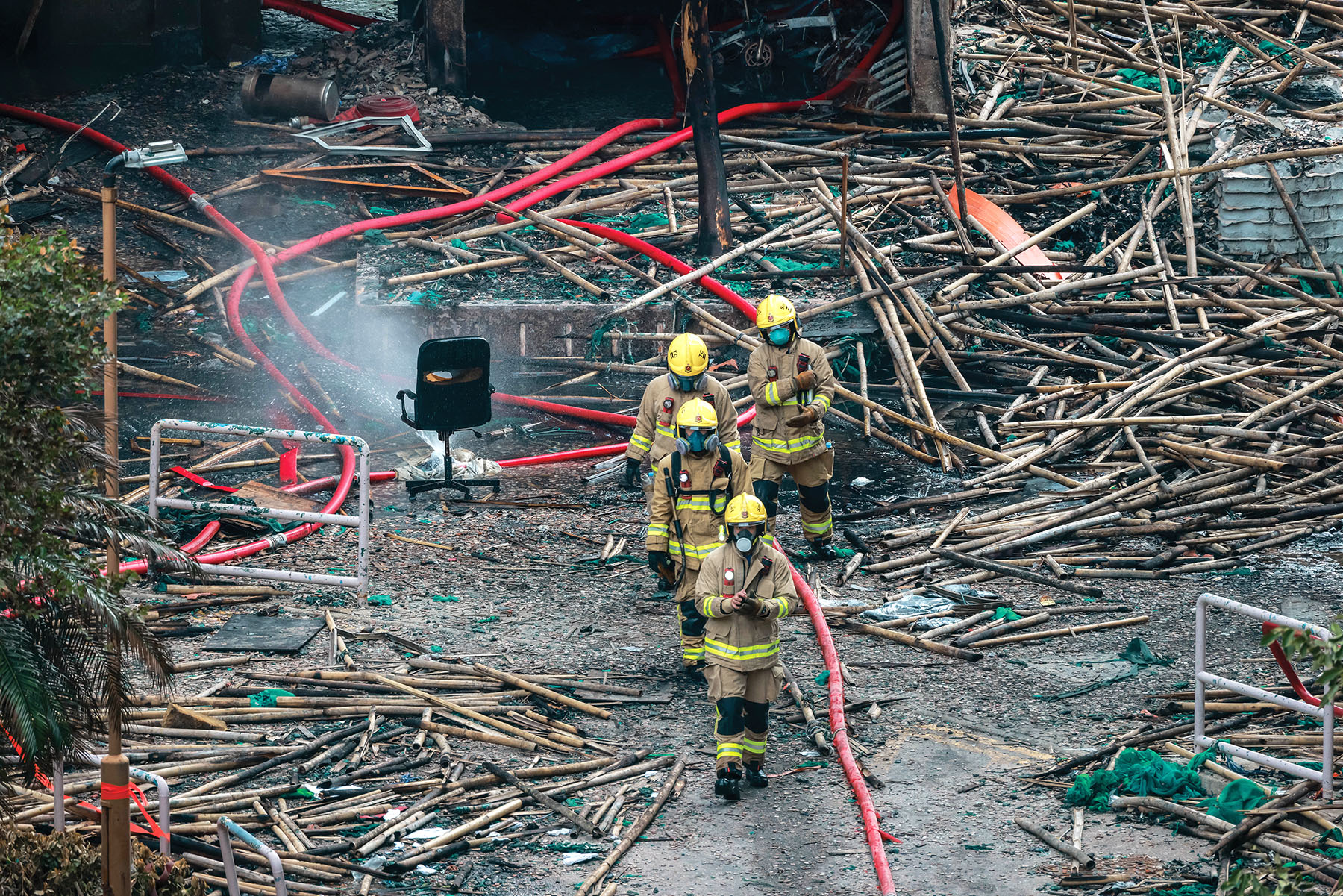
Firefighter Lee Ho-wah knew he had a decision to make.
He made it, took a deep breath, and charged into the sea of flames engulfing Wang Cheong House. It seemed an impossible mission, with burning bamboo and debris constantly falling from high above — a scene straight out of doomsday.
Carefully, Lee tried to drag an injured man who had collapsed while trying to escape the fire, shielding him from the shower of burning debris. Lee kept talking to the man, trying to prevent him from losing consciousness.
“Hang in there. They are coming for us,” Lee repeated, perhaps to himself as much as to the victim.
READ MORE: Nation rallies in grief, support after Hong Kong fire
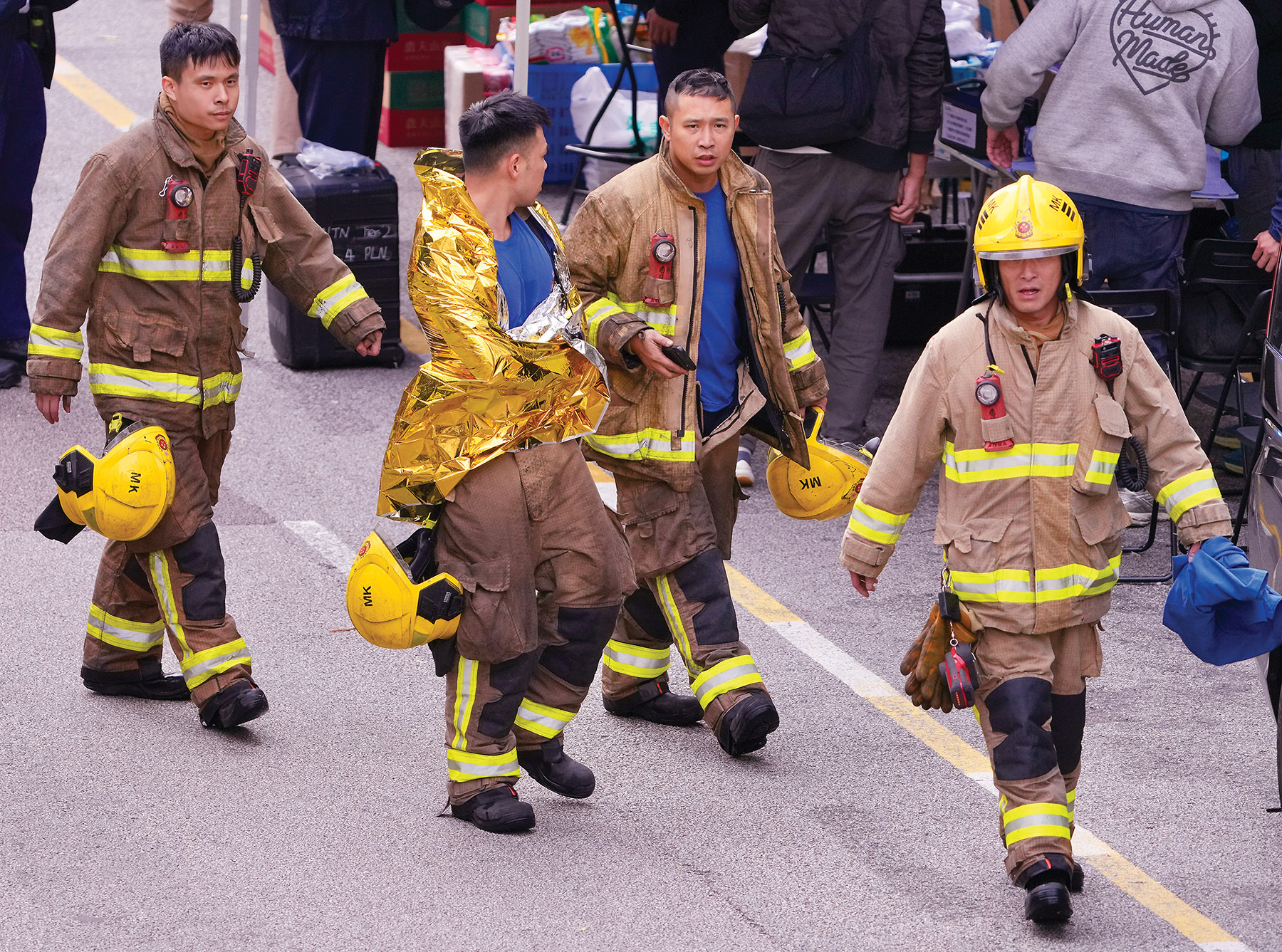
Eventually, help arrived and, with the aid of another firefighter, Lee was able to get the man out of the flames.
Stationed at Tai Po Fire Station, Lee was among the first on the scene when the fire broke out at Wang Cheong House. He was responsible for firefighting on the ground.
When he arrived at the epicenter, Lee immediately noticed that the entire block and its surroundings were engulfed in towering flames. Looking up, the sky was obscured by mounting plumes of smoke, while sharp, burning bamboo scaffolding and falling debris — concrete and stones — crumbled from high above.
The conditions posed severe threats to the firefighters and their rescue efforts. Lee found himself under great strain as the situation rapidly deteriorated.
United in saving lives
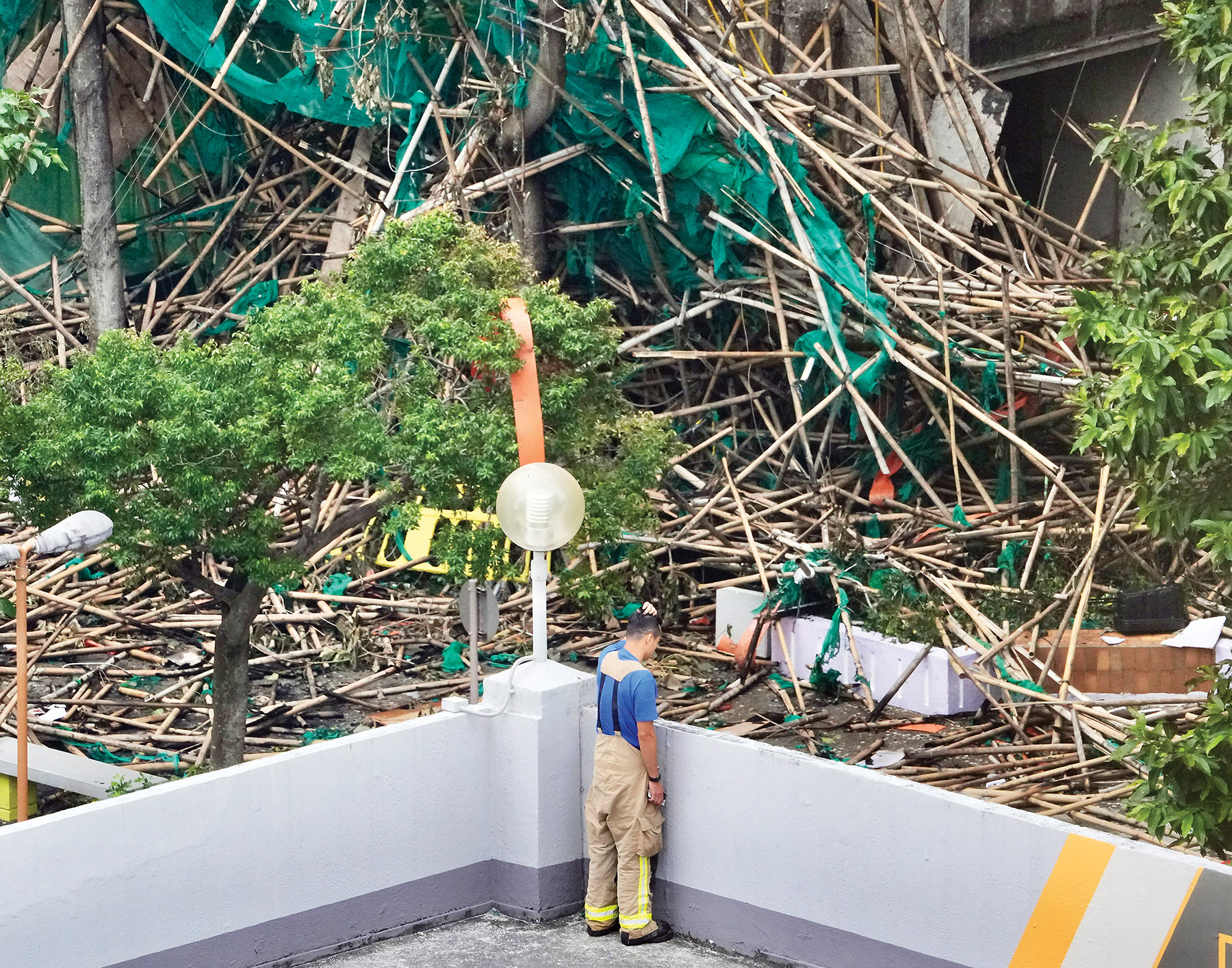
Lee, who also lives in Tai Po, was devastated by the sight before him. “But there was no time for sadness or mourning,” he said.
“I believe every firefighter at the scene shared a common belief: to save as many lives as possible.”
During the operation, Lee successfully rescued two men. One of the injured, who was still conscious when Lee found him, had almost all of his skin burned off when he was pulled out of the flames. Lee immediately went to his aid, shielding him from falling objects as he escorted him to safety.
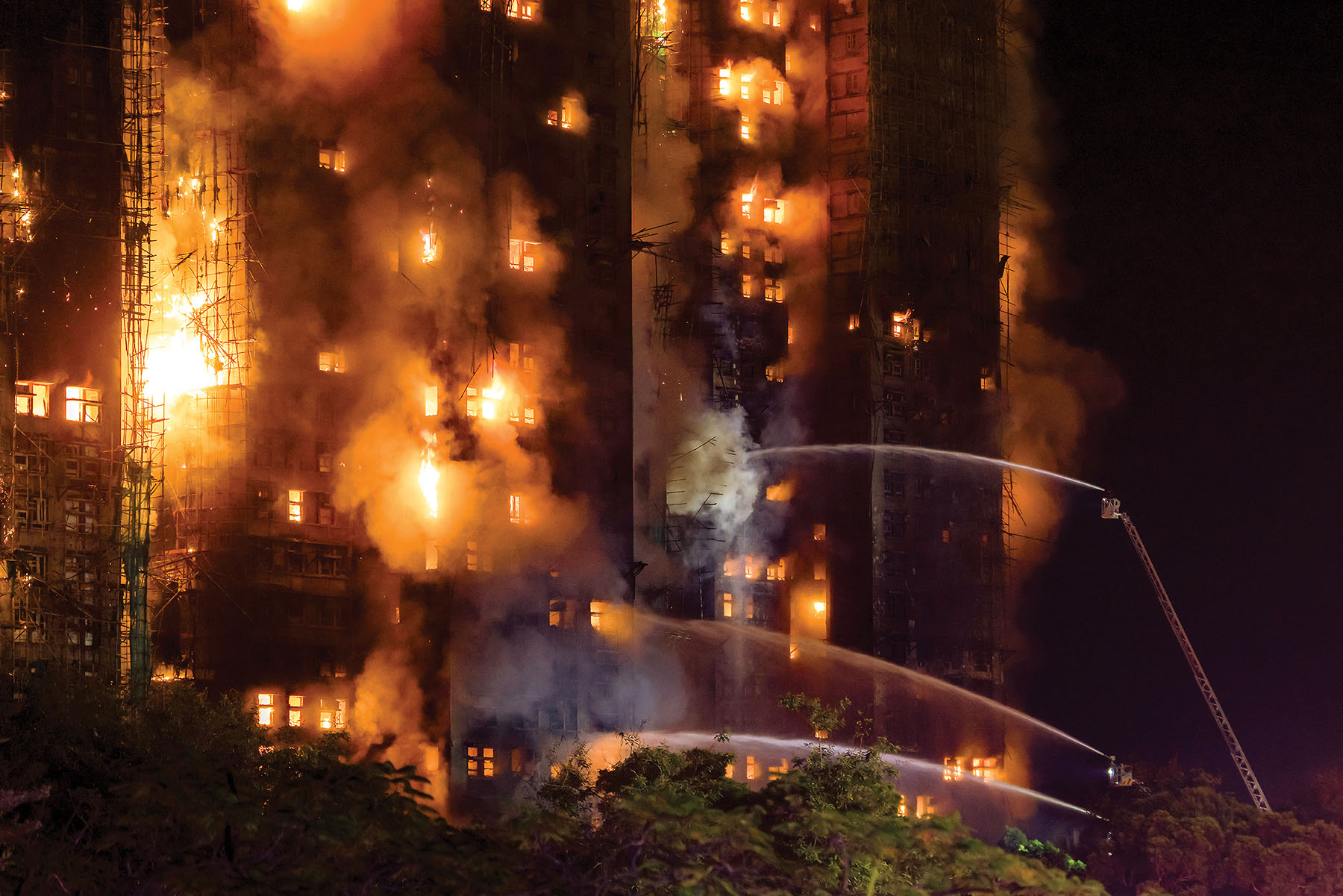
The fire, the deadliest Hong Kong has experienced in decades, broke out at around 2:50 pm on Nov 26 at Wang Fuk Court, an eight-towered residential estate under renovation. The blaze raged for 43 hours, and is believed to have started on mesh netting on Wang Cheong House’s first and second floors. It quickly spread to seven towers, leaving at least 159 dead, 79 injured, and about 2,000 families homeless.
Altogether, 2,311 firefighters and rescue workers, using 391 fire engines and 185 ambulances, responded to the emergency. An additional 1,000 police officers were also deployed.
Fire Services Director Andy Yeung Yan-kin said the fire was escalated to a No 3 alarm within six minutes of being reported. The department activated the Director’s Command Post within 18 minutes, which swiftly decided to send an extra 10 rescue teams with 20 fire trucks to the scene.
As distress calls mounted, the department used another 80 officers to maintain contact with those trapped through 18 hotlines, attempting to locate and assist them.
“Once we ascertained anyone trapped was in great peril, we swooped in right away to rescue them,” Yeung said.
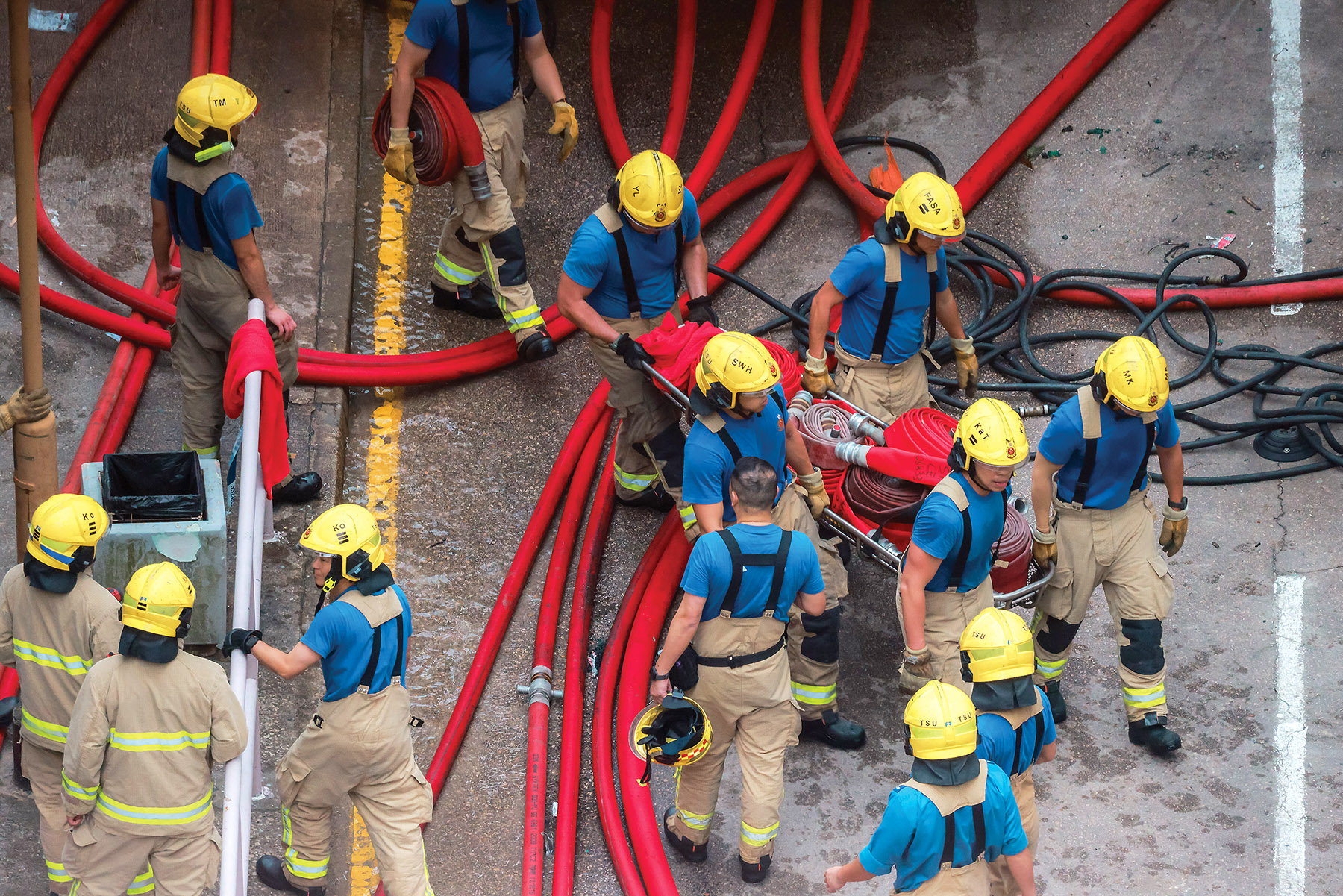
By the time the fire was raised to a No 5 alarm, about 600 firefighters were already scattered across the seven burning buildings, with about 70 to 80 officers assigned to each tower. This was the maximum capacity given limited stairway space and the need to keep escape routes open.
Hard choices
In the ever-changing chaos, with temperatures reaching as high as 700 C and the risk of flare-ups, the most challenging part was figuring out how to bring those trapped down in the over-30-floor buildings safe and sound, Yeung said.
Additional support was called in from neighboring areas, including fire trucks and other resources.
Lee Kwok-chun, a senior officer at Fanling Fire Station, was among many firefighters from nearby regions summoned to assist as the fire intensified. Arriving at 3:10 pm, Lee Kwok-chun was initially tasked with firefighting and rescue operations at Wang Cheong House.
As soon as he entered the building, visibility was almost zero due to the raging thick smoke. He and his team found injured residents lying on the ground, whom they carried outside and handed over to paramedics.
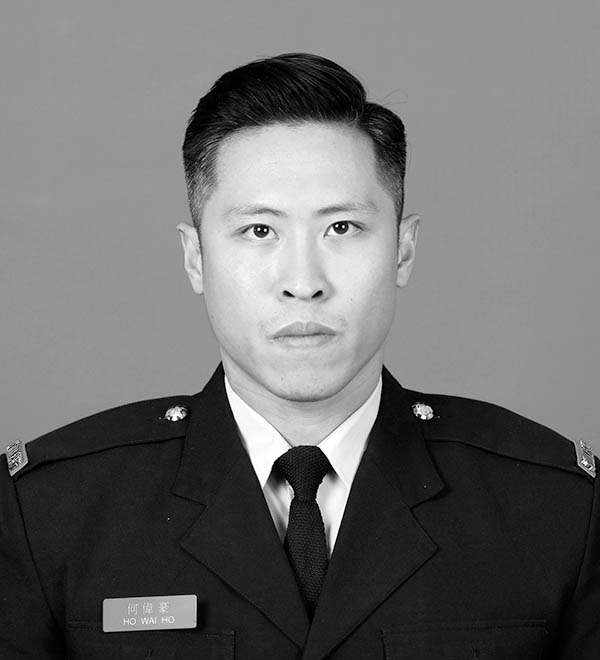
Before launching a second attempt to enter the inferno, Lee Kwok-chun was informed that his colleague, Ho Wai-ho, had been injured while fighting the fire at Wang Tai House. Despite rushing to assist him, it was too late to save Ho, who died from his injuries.
The firefighters handed Ho over to other rescue workers before reentering Wang Tai House.
Lee Kwok-chun admits he had no time to mourn, or dwell on his feelings.
“Many difficult decisions were made,” Yeung said.
One such decision involved a distress call from two survivors stranded on the rooftop of Wang Tai House.
When the call was received, Lee Kwok-chun had just learned of Ho’s death.
“As the onsite commander of the breathing apparatus team, I had to make many decisions. All tough ones,” he said.
He faced a difficult choice: ensuring the safety of his team, or continuing rescue efforts.
Then, a follow-up call to the trapped residents confirmed that smoke was rising to the rooftop, and the heat was encroaching.
Breathing-apparatus teams were sent up, and drones were flown close to assess the conditions. The rescue teams managed to ascend the building, but with fire raging on multiple floors, they had to stop periodically to evaluate, and found there was no time to put out the fire floor by floor.
With time running out for the stranded residents on the roof, the teams decided to brave the flames and reach the rooftop as quickly as possible.
When they finally reached the trapped residents, the situation had worsened, with smoke already blocking vision, and flare-ups surrounding them. Retracing their steps down was dangerous, so they alternated between the front and back stairs to maximize their chances of survival.
Throughout the operation, Lee Kwok-chun used a walkie-talkie, phone, and other means to stay in contact with the trapped residents and their rescuers. It took four breathing-apparatus teams to safely bring the two residents from the rooftop to the ground.
Mainland solidarity
Hong Kong firefighters said that technological support from the Chinese mainland was crucial to their rescue operation. For example, thermal imaging drones from the mainland were used to locate residents on the roof.
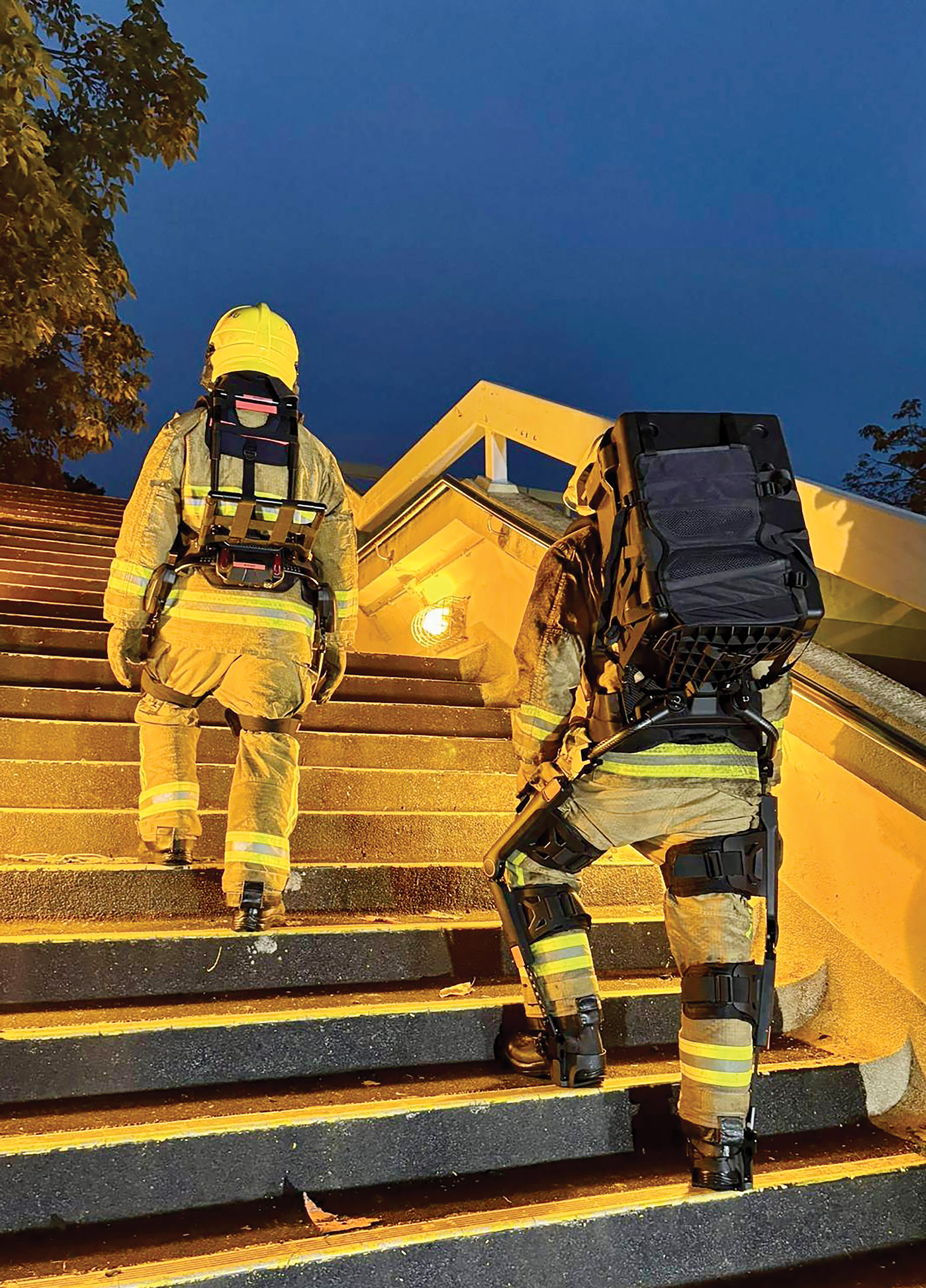
Ten drones and 20 exoskeleton assistive robots were provided by the Fire and Rescue Corps of Guangdong province a day after the fire broke out. The drones were deployed onsite to monitor the fire in real-time and quickly locate survivors.
Yeung thanked the central government, the Chinese Ministry of Emergency Management, and the Fire and Rescue Corps of Guangdong province for their substantial support. The timely aid from them has greatly enhanced the efficiency of the front-line firefighting and rescue efforts, he added.
The exoskeleton robots played a key role in transporting heavy firefighting equipment and rescue tools to high floors, reducing the physical burden on firefighters.
“The exoskeletons could save up to 60 percent of the energy firefighters would otherwise expend moving equipment,” Yeung said.
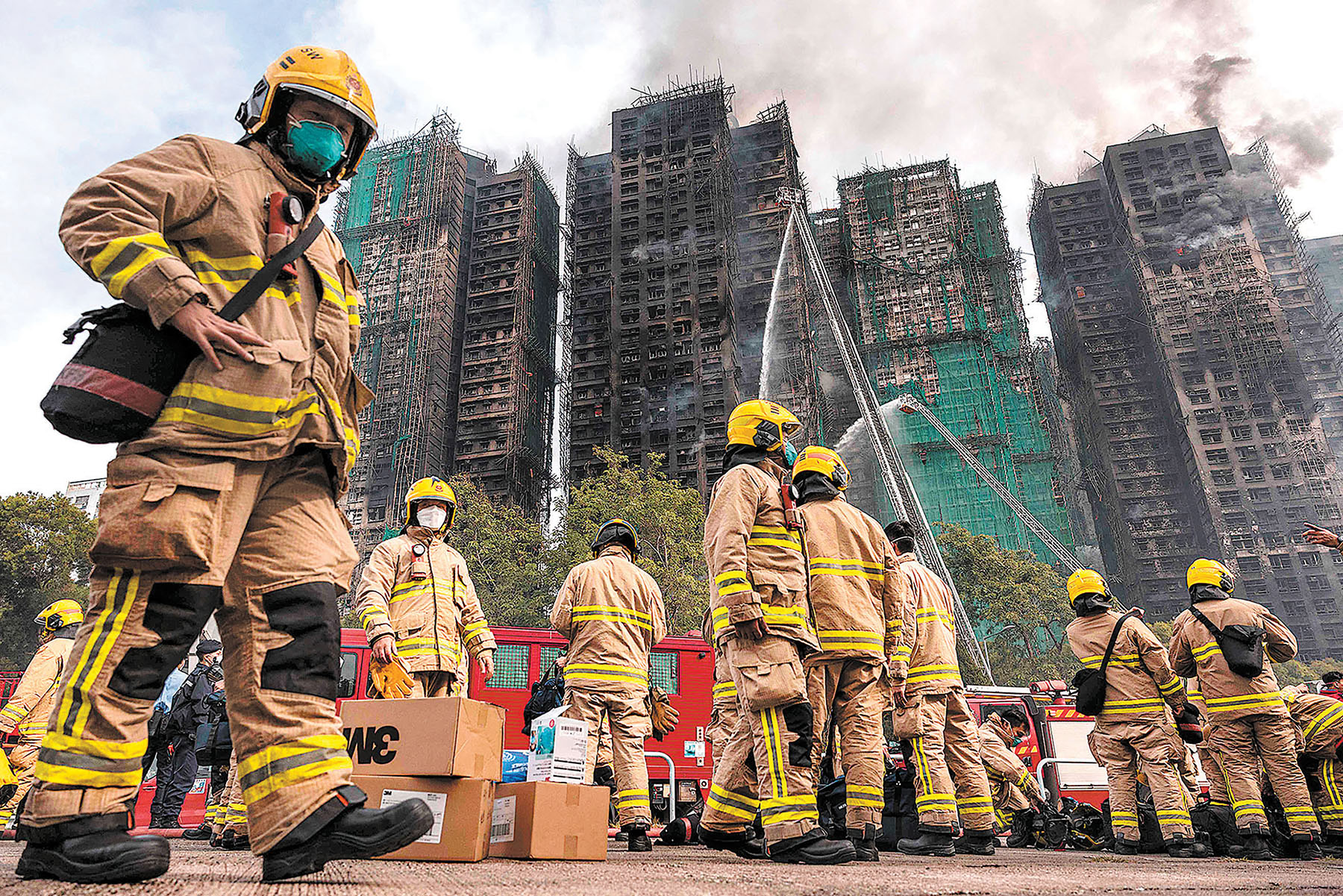
He praised the mammoth efforts of all fire department employees, including front-line firefighters and rescue teams, and those in control and call centers.
“During this operation, our firefighters faced a very challenging and difficult situation,” Yeung said. “With a formidable belief in rescuing those in distress, we strive to save every life. During this process, we have often risked our lives.”
The long battle also took a toll physically: 12 firefighters were injured, with one being knocked unconscious by bamboo scaffolding falling on his head.
READ MORE: Judge-led independent panel to probe Wang Fuk Court fire
“It was beyond my imagination — as a firefighter for almost 20 years — to see an inferno that had engulfed an entire housing estate,” Lee Kwok-chun said.
He recalls how flames tore through thousands of flats, far beyond the usual scope of a typical fire.
Keenly aware of the urgency, he knew they had to act more quickly than they ever had if they were to locate those in peril and save as many lives as possible.
Long road to recovery
Yeung said that as investigations into the fire’s cause begin, the department is developing a computer simulation to probe the incident. The plan involves creating a 1-to-1 scale model for testing under real conditions and in a virtual environment.
In response to public concern, the department has also requested inspections of fire safety systems in residential buildings — particularly the fire alarms — after alarms in seven towers of Wang Fuk Court failed to function during the blaze.
Yeung said annual testing and reporting of fire safety systems are mandatory by law.
Counseling support has been arranged for those involved in the rescue, with psychiatrists seconded from other departments.
When he took a brief break from the life-and-death operation, Lee Ho-wah called his family. He described the city as feeling blanketed by a sense of helplessness and grief, but encouraged Hong Kong residents to persevere.
“After all, life must go on,” he said.

Lee Kwok-chun also expressed gratitude for the outpouring of support from many residents who rushed to aid the disaster relief efforts and sent sympathy messages to firefighters.
He used to pass Wang Fuk Court on his way to work, and never imagined the decimation of what was once considered a safe haven for families. Yet as a firefighter, he knew his duty when he joined the force.
During the battle at Wang Fuk Court, with the skyline shrouded by smoke, he called his family, told them he was safe, promised to contact them again when his shift ended the next day, and returned to work.
November’s fire not only claimed lives and tore apart homes but also left scars on firefighters like Lee Kwok-chun, who remembers the scene as simply “devastating”.
Yet the senior firefighter, left hurt by the devastation, found solace in the sight of rescued survivors being reunited with their families on the ground.
The memory of the many firefighters who gave their boots to those fleeing the fire barefoot or took off their breathing apparatuses for injured residents will help him mend in the time ahead.
Contact the writers at stushadow@chinadailyhk.com
