

Researchers, peace activists work to preserve history of poison gas use, urge Tokyo to acknowledge role as aggressor
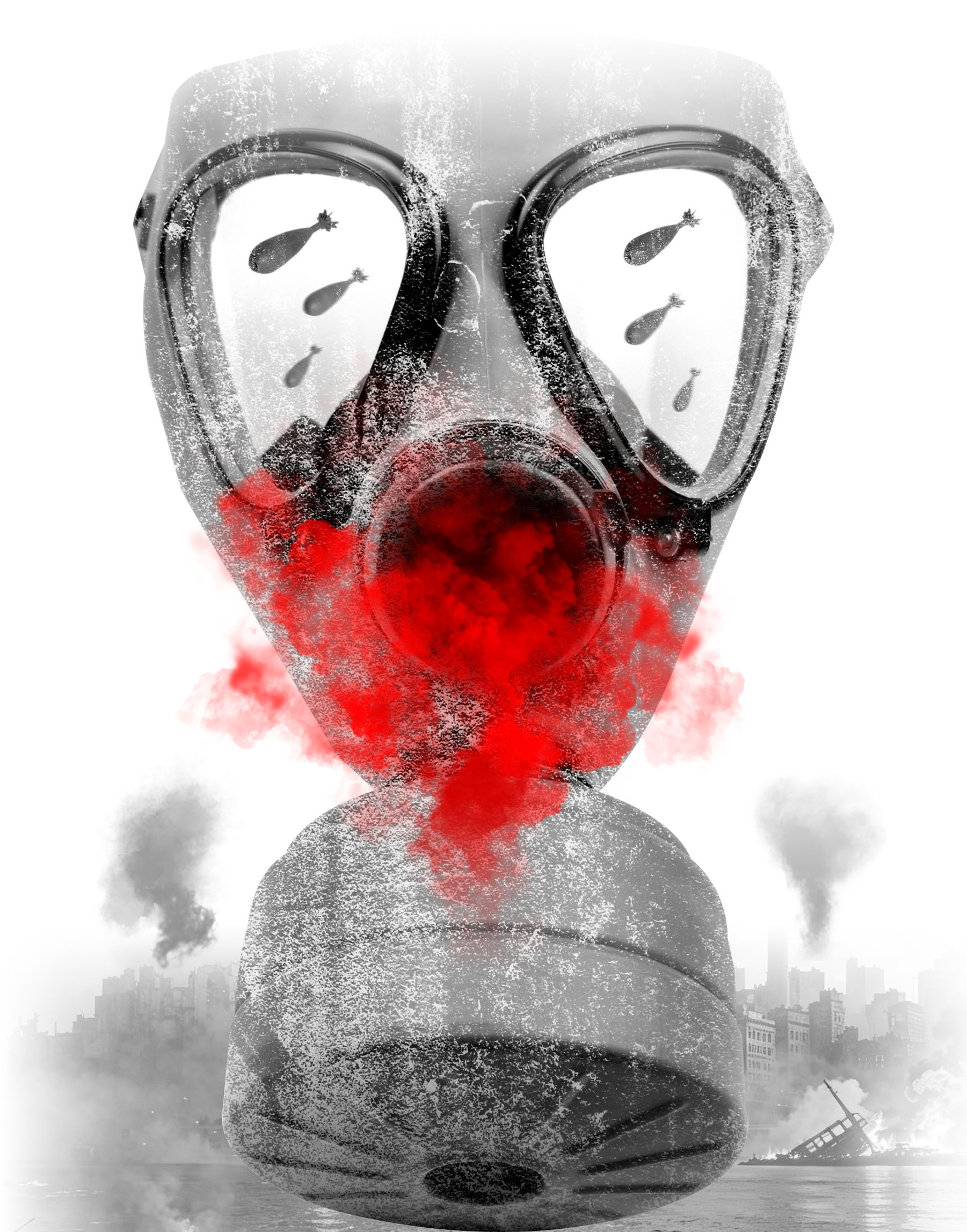
A short distance from Hiroshima, in Japan's Seto Inland Sea, lies Okunoshima, a small island where the Imperial Japanese Army once produced poison gas.
More than 80 years ago, during the Chinese People's War of Resistance Against Japanese Aggression (1931-45), the poison gas was sent to China for use as chemical weapons, causing heavy casualties.
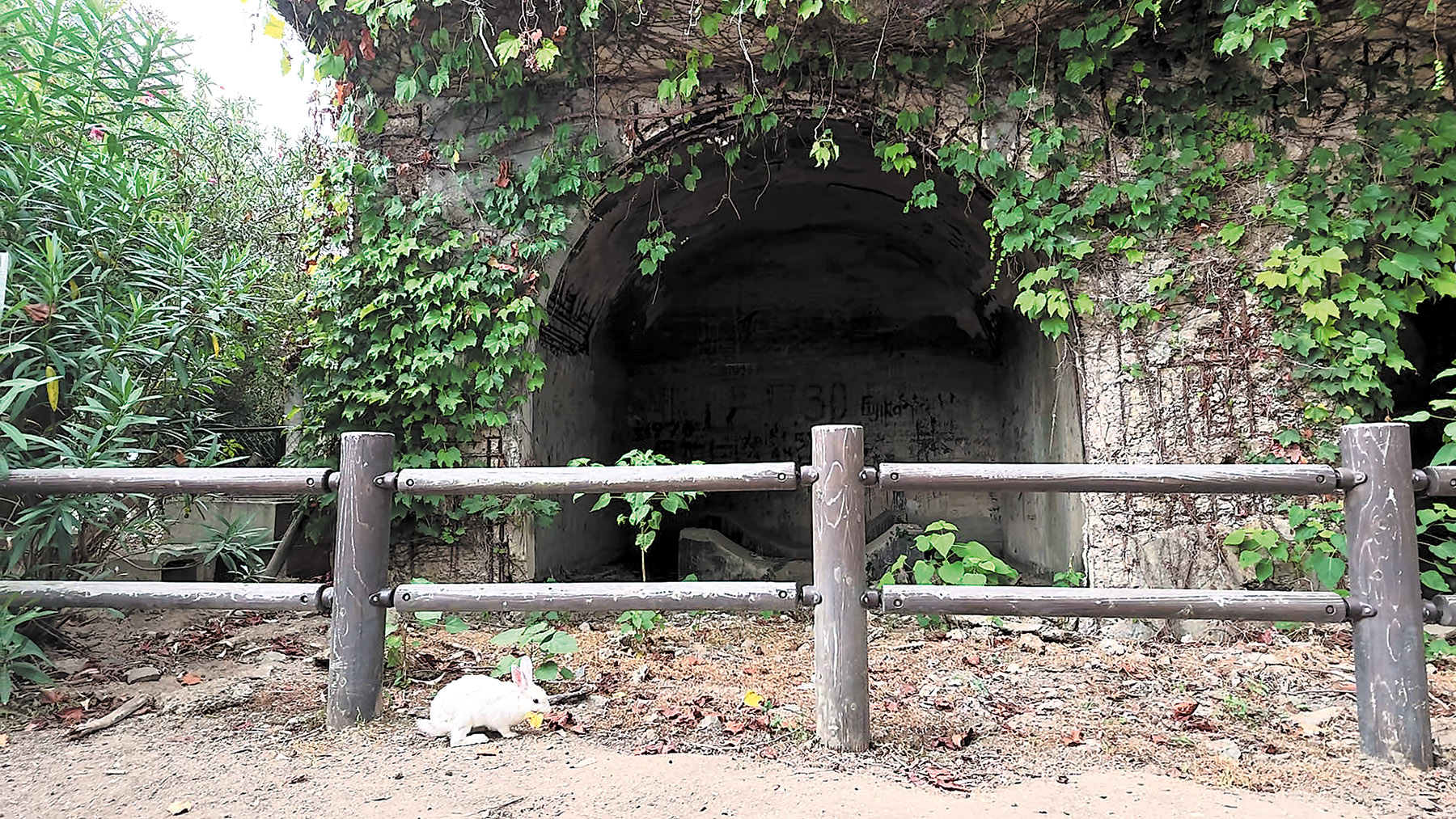
Rabbits, the original inhabitants of this island, were also harmed. About 200 were used for poison gas testing and killed after Japan's defeat. Those roaming the island today were introduced later to attract tourists.
The island is now a popular tourist destination known as a "rabbit paradise", and home to roughly 1,000 of the furry mammals.
In stark contrast to the global awareness of the atrocities inflicted by the atomic bombing of Hiroshima on Aug 6, 1945, Okunoshima's dark past remains little known.
READ MORE: New evidence reaffirms Japan's germ warfare crimes in China
Japanese researchers and peace activists have called on Japan to move beyond a narrative centered on its own wartime suffering, and confront its history as an aggressor and the pain it inflicted on people in China and other Asian countries.
They have also warned that the memory of Japan's wartime aggression risks fading as researchers and volunteer guides grow older.
Strict secrecy
Okunoshima, located in Takehara, Hiroshima prefecture, covers just 0.7 square kilometers.
Records show that the Imperial Japanese Army began building a poison gas factory on Okunoshima in 1927. From the start of production in 1929 until Japan's defeat in 1945, more than 6,000 people worked there.
Shizuyo Yamauchi, head of the Poison Gas Island Historical Research Institute, said former workers recalled toxic substances settling near the ground during production.
"It looked like a blanket of white fog around their feet," she said.
Production was kept under strict secrecy. Okunoshima was guarded around the clock, while trains running along the opposite coast were required to cover windows facing the island. Okunoshima was even removed from maps.
Yamauchi said poison gas produced on the island was later used on the battlefield and took many lives.
"Starting a war is an act of aggression, and aggression itself means inflicting harm on others," she said.
After Japan's defeat, large quantities of related documents were burned, although remnants of wartime facilities, including poison gas storage sites, can still be found across the island today.
With much of the wartime records destroyed, efforts to preserve this history have relied largely on island residents. It was not until 1988 that local peace activists established the Okunoshima Poison Gas Museum, collecting historical materials and raising funds themselves.
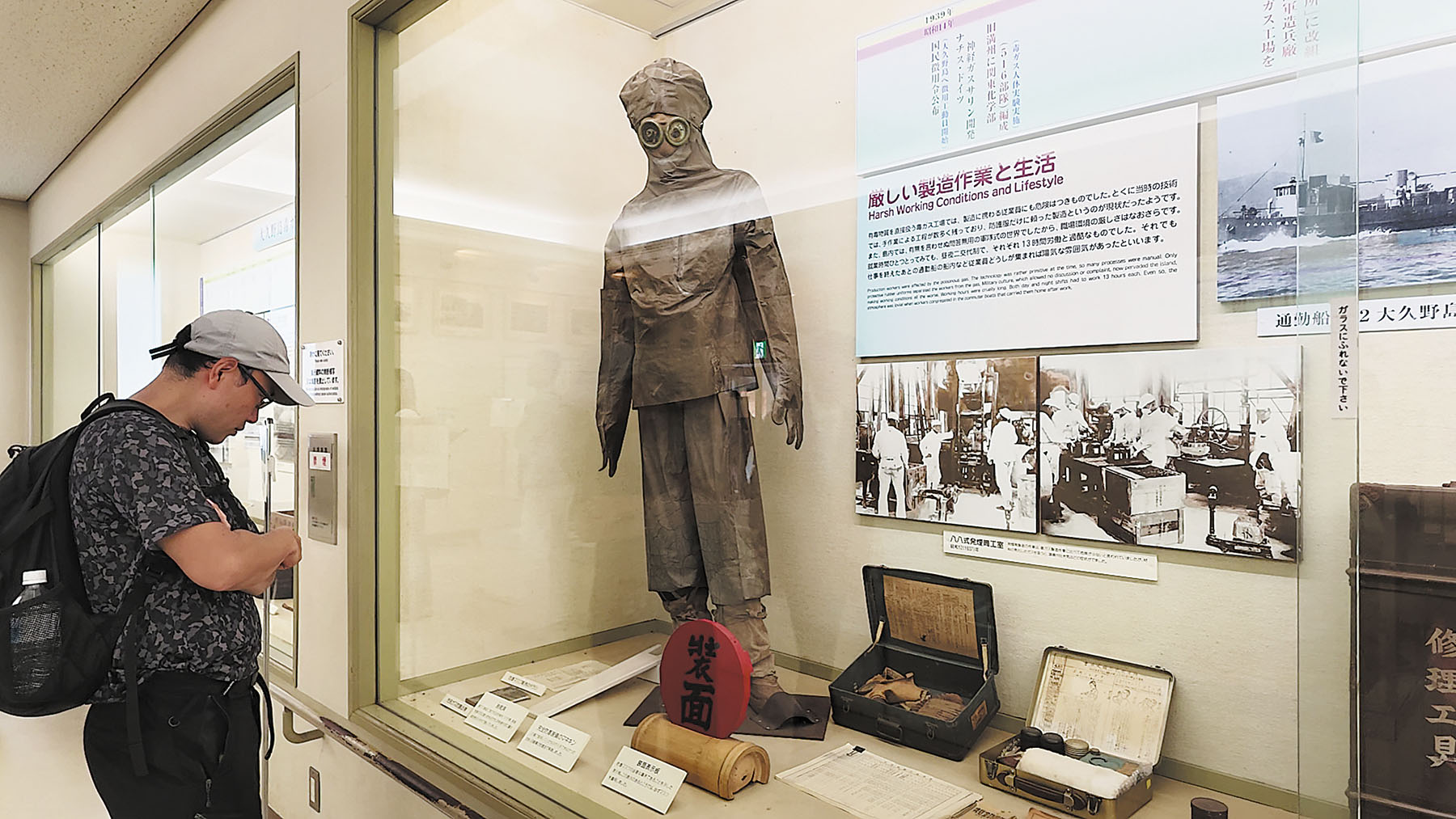
Its exhibits now include equipment used to produce chemical agents, remnants of chemical weapons, protective clothing and gas masks, as well as documents related to orders by the Imperial Japanese Army to use poison gas in China.
The museum also has a section on chemical weapons abandoned in China, documenting cases in which munitions left behind by the Imperial Japanese Army were unearthed during construction and other activities decades after the war, causing injuries.
The exhibit calls on Japan to properly dispose of these weapons and compensate the victims.
Masayuki Yamauchi, director of the Poison Gas Island Historical Research Institute and a former high school teacher in Hiroshima prefecture, has long researched Japan's chemical warfare. He said the issue of chemical weapons abandoned in China was not added to the museum's exhibits until 2011, after local citizens urged the authorities to include it.
He also expressed concern about the museum's future, warning that changes in the political climate could eventually put it at risk of closure.
Need for awareness
Taichi Koseki, a student from Kansai Gaidai University, knew about the atomic bombing of Hiroshima before visiting Okunoshima, but not about the island's history of poison gas production.
Hiroshima's Atomic Bomb Dome is a UNESCO World Heritage site, yet the history of poison gas production on Okunoshima in the same prefecture remains far less widely known.
For Tetsuo Kaneko, a representative of the Hiroshima Council against A — and H-Bombs and a former Diet member who has long been involved in Japan's peace movement, Okunoshima is a symbol of Japan's history as a wartime aggressor.
"Those who inflict harm tend to forget the history, but for the victims, the suffering remains to this day," he said.
In Kaneko's view, Hiroshima's wartime memory should not begin only with the atomic bombing in 1945, but should also confront the suffering Japanese militarism inflicted on people across Asia before then.
His concern comes amid broader questions over how Japan confronts its wartime past as the country strengthens its military capabilities.
At atomic bombing memorial ceremonies in Hiroshima and Nagasaki in August, Prime Minister Sanae Takaichi said Japan remained firmly committed to the Three Non-Nuclear Principles — non-possession, non-production and non-introduction of nuclear weapons — but stopped short of explicitly pledging to uphold them in the future.
On Aug 15, the 81st anniversary of Japan's surrender in World War II, she pledged not to repeat the devastation of war, but made no reference to Japan's responsibility for the war.
Kaneko is concerned that awareness of Japan's wartime aggression is fading amid these changes.
Beyond Okunoshima
Okunoshima was only one part of Japan's wartime chemical warfare system.
During the war, Japan developed a network covering the production of chemical agents, personnel training and battlefield use. Okunoshima produced the chemical agents, while the Sone production facility in Kitakyushu, Fukuoka prefecture, placed them in munitions. The Imperial Japanese Army's Narashino School in Chiba prefecture trained personnel in chemical warfare.
Wartime production reports from the Sone facility have in recent years been uncovered at the National Archives of Japan by Seiya Matsuno, a Japanese historian and researcher at the International Peace Research Institute of Meiji Gakuin University. The documents detail the production of chemical munitions, as well as accidents and injuries during the process.
Matsuno's research shows that the Sone facility produced about 1.48 million poison gas munitions. Chemical filling there took place from 1938 to 1944.
By the time the chemical warfare system took shape, the use of poison gas in war had already been prohibited under international law. The 1925 Geneva Protocol prohibited the use in war of asphyxiating, poisonous or other gases.
Yet from 1929 until 1945, Japan continued producing large quantities of chemical agents for use in chemical weapons.
According to China's Ministry of Foreign Affairs, invading Japanese troops used chemical weapons on a large scale in China, causing more than 200,000 Chinese military and civilian casualties.
Japan's defeat did not bring an end to the harm caused by its chemical weapons.
Large quantities of chemical weapons were abandoned in China after Japan's defeat. According to China's Ministry of Foreign Affairs, about 400,000 such weapons have been discovered at more than 120 sites across 18 provincial-level regions in China. Since the end of the war against Japanese aggression, abandoned Japanese chemical weapons have caused more than 2,000 Chinese casualties.
Maiko Sugamoto, director of the Japan-China Cooperative Fund for Victims of Chemical Weapons, has long been involved in lawsuits on behalf of victims of chemical weapons abandoned by the Imperial Japanese Army in China.
She said these weapons can still resurface decades after the war during construction and excavation.
"Decades after the war ended, it is still ordinary people who suffer from the harm left behind," she said.
Speaking at an event on Okunoshima in early September, Fang Wei, vice-consul-general of the Chinese Consulate General in Osaka, said the Japanese government should face up to its historical responsibility and current obligations, take concrete and effective measures to accelerate the disposal of chemical weapons, and "restore safe and clean land to the Chinese people at an early date".
Under the Chemical Weapons Convention, which entered into force in 1997, Japan is responsible for destroying the chemical weapons it abandoned in China. In 1999, the Chinese and Japanese governments signed a memorandum setting out arrangements for their destruction.
The destruction process was originally due to be completed by 2007, but the plan has since missed its deadline four times amid insufficient attention and input from the Japanese side.
Remembering history
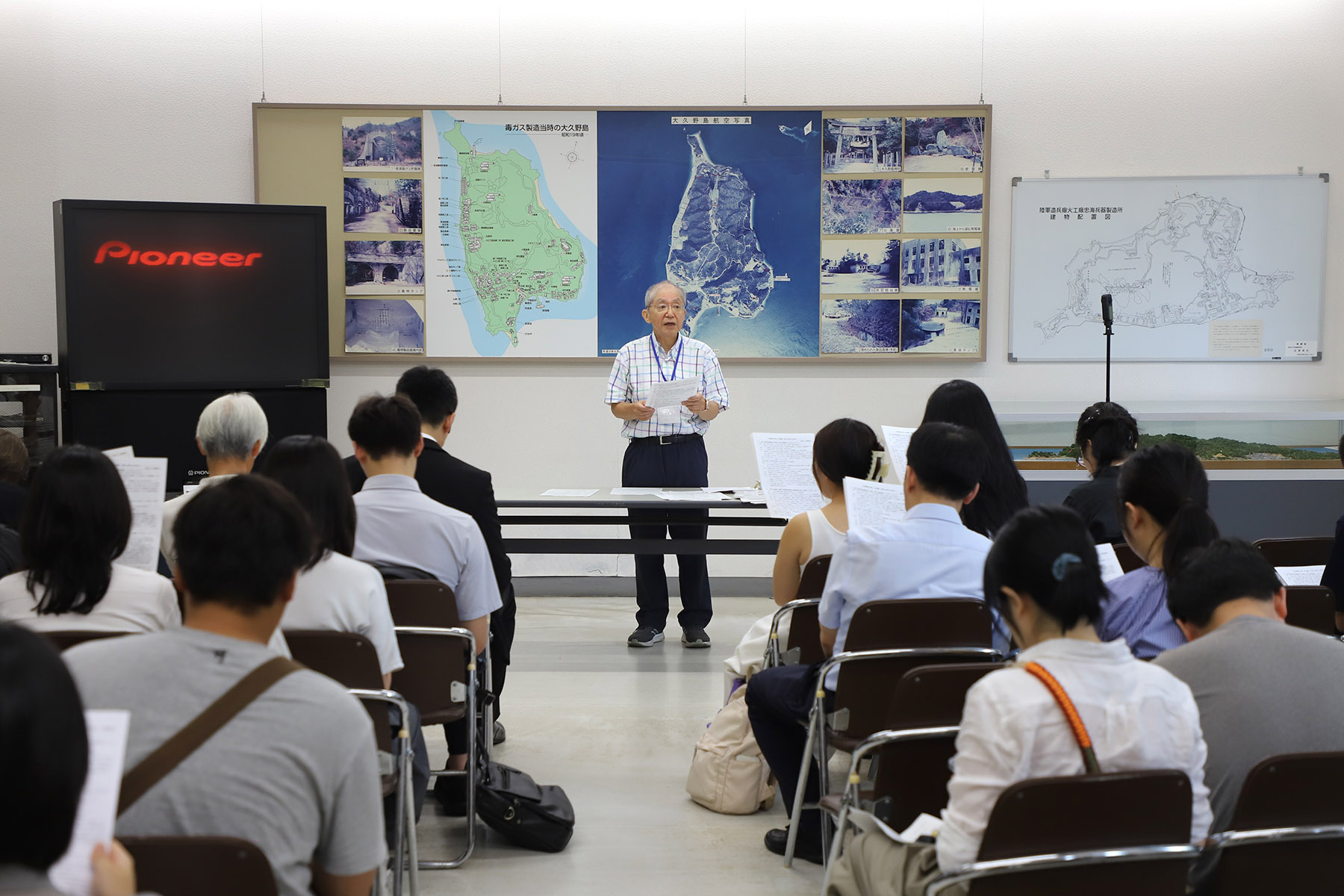
In late August, a series of events in Yokohama revisited the Imperial Japanese Army's chemical warfare through exhibitions of photographs and historical materials, as well as talks by Japanese researchers, photojournalists and others who have studied its history.
Among the works on display were photographs documenting Okunoshima's poison gas history by Japanese photojournalist Kenji Higuchi, who has covered the island's wartime history since 1970.
"They did something terrible, and it was a disgrace to the country, so they wanted to erase it from history," Higuchi said. "This history must be told clearly. What was wrong was wrong, and what was right was right. We need to be able to distinguish between the two."
Masao Sawazono, a visitor from Yokosuka, knew little about Japan's wartime poison gas and chemical warfare before listening to Higuchi speak at the event.
Nobuharu Goi, one of the organizers and a representative of the 731 Network, a Japanese civic group studying Japan's wartime biological warfare, noted that many of the materials on display had been collected and preserved by Japanese civic groups since the 1990s. Nearly 200 people attended the events on the opening day.
ALSO READ: Wartime horrors that never really ended
Having helped organize more than 10 such events over the years, Goi sees the exhibitions and lectures as a way to preserve the historical record and keep this history in the public consciousness.
Yet, passing this history on to a new generation is becoming increasingly difficult.
Sugamoto, who gave a talk as part of the Yokohama event series, said younger generations have begun taking over the task of telling stories of Japan's wartime suffering, including those of atomic bomb survivors.
"But when it comes to the history of the harm Japan inflicted during the war, we have yet to see a younger generation take over and continue telling these stories," she said.
With longtime volunteer guides on Okunoshima growing older, Sugamoto hopes more young Japanese will learn about the country's wartime aggression.
"Our generation and those younger than us must continue telling these stories and pass this history on," she said.
