

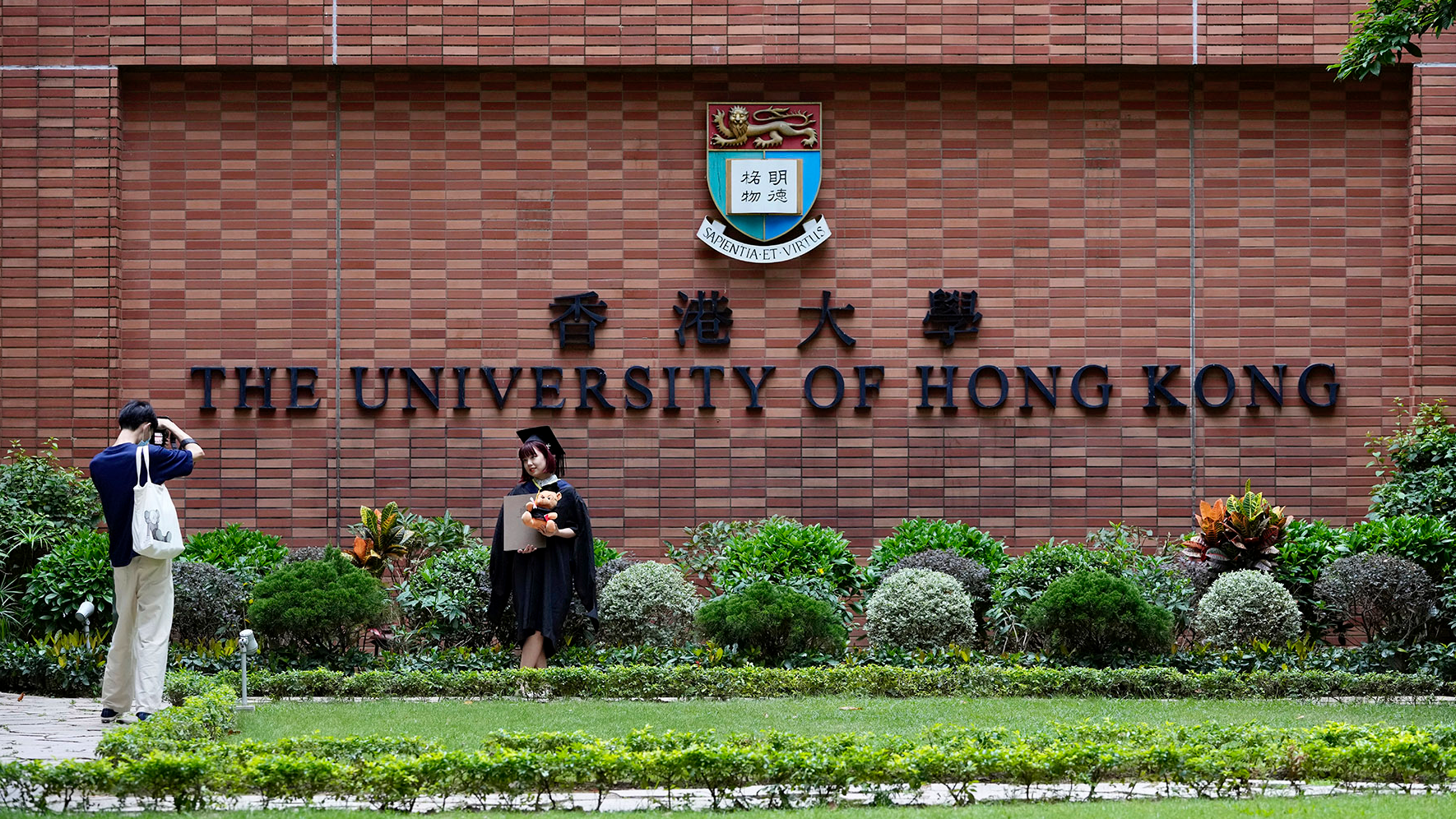
Universities in the Chinese mainland and the Hong Kong Special Administrative Region continue to lead in Asia, according to world rankings released on Wednesday.
More than 1,000 Asian universities entered the THE World University Rankings 2027, with Tsinghua University in Beijing, Asia’s highest-ranked institution, beating all universities on the European continent. The results are a testament to an ongoing global shift in the focus of higher education, said UK-based Times Higher Education (THE), the ranking body, in a written statement.
Tsinghua rose to 11th from 12th place in the rankings, marking a “symbolic landmark” first, THE said, while Hong Kong boasts “a consistently strong presence (in the rankings)”, with five universities listed among the world’s top 100.
The United Kingdom’s University of Oxford, and the United States’ Massachusetts Institute of Technology and Princeton University took the top three places, broadly in line with last year’s rankings.
For the first time, three Asian universities made the global top 15: Peking University ranked 13th,Tsinghua University 11th and the National University of Singapore came 15th.
RELATED ARTICLES
- Historic double for HK: HKU, CUHK in QS world top 20 for 1st time
- Global ranking: 5 HK universities make top 100, all 8 hit new highs
- HK universities lead Asia’s Top 10 rankings
- HK's student destination status on rise
- What makes Hong Kong universities shine on global stage
The University of Hong Kong remained the SAR’s top-ranked institution in 33rd place, as last year, while Lingnan University was Hong Kong’s biggest climber, jumping from the 301-350 band in its debut last year to joint 257th this year.
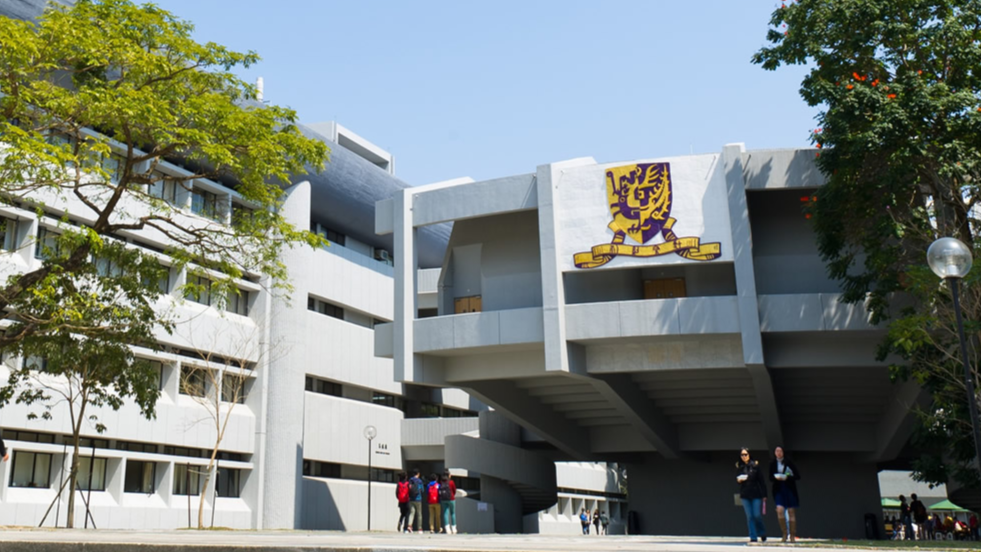
The Chinese University of Hong Kong ranked 42nd, compared with joint 41st last year. The Hong Kong University of Science and Technology stayed at 58th. City University of Hong Kong rose three places to a record 70th, and the Hong Kong Polytechnic University edged up one place to 79th.
Hong Kong Baptist University was joint 205th while the Education University of Hong Kong was joint 212th.
More Asian universities appeared on the list than ever: 1,003 in total, up from 929 last year. India had the most ranked universities in the region for the second consecutive year.
The number of American universities in the global top 200, meanwhile, fell to a record low, said Phil Baty, THE’s chief global affairs officer.
“It’s now clear that the tectonic plates of global higher education are shifting permanently,” Baty said. “The latest World University Rankings suggest that we are witnessing a historic realignment of academic power from West to East.
“We are entering a new era that will remake the geography of academic excellence,” he added.
Welcoming the results, CityU Acting President Lee Chun-sing pledged CityU would continue to embrace its pioneering mindset, expand international academic cooperation and work more closely with industry to address major global challenges.
The university will train globally competitive and socially responsible leaders while helping Hong Kong become a global higher education and innovation hub and a center for high-caliber talent, Lee said.
Teng Jin-guang, president of PolyU, said the university was deeply encouraged by its progress in the rankings, which fully affirm PolyU’s robust strength and international impact in scientific research, teaching, and knowledge transfer.
The results also highlight PolyU’s commitment to building an internationalized academic environment and nurturing innovative talent with a global vision, said Teng.
Lingnan University President Joe Qin Sizhao said he was pleased with the result, adding that the university’s strong debut last year and further rise this year reflected “substantive progress in teaching, research and knowledge transfer”.
Lingnan’s research strength and ability to turn innovation into practical applications are continuing to improve,” he said. “We will keep developing ‘liberal arts plus technology’ and ‘AI plus’ initiatives to bolster the university’s influence on the international academic stage, Qin said.
THE scores universities out of 100 across five areas: “teaching”, which covers the educational setting; “research environment”, which is gauged by scale, funding and reputation; “research quality”, based on citation impact, output strength, excellence and influence; the “international outlook” of staff, students and research; and “industry”, which is measured on funding and patents.
Responding to THE World University Rankings 2027, the SAR government said on Wednesday that the rankings of Hong Kong's universities fully demonstrate the robust strength of Hong Kong's higher education system and its world-class levels in teaching, research, and international outlook.
The rankings also bear witness to the SAR government's “proactive leadership in guiding the post-secondary education sector to achieve outstanding results through policy measures such as seeking innovation and change, and expanding capacity while enhancing quality”, a government spokesman said in a statement.
Hong Kong’s first five-year plan and the Chief Executive's 2026 Policy Address further strengthen the city’s development momentum and build it into an international hub for high-caliber talent, the spokesman said, referring to measures which include driving the development of the Northern Metropolis University Town (NMUT) under "One Town, Five Elements" to promote capacity expansion and quality enhancement of post-secondary education.
“We will continue to promote all-round connectivity in areas such as talent training, frontier scientific research, and industry-academia-research collaboration, optimize resource allocation, support various institutions in consolidating their existing advantages while pioneering innovation, and nurture more outstanding talent equipped with both international perspective and exceptional capabilities, thereby making greater contributions to the long-term prosperity and stability of Hong Kong and the country.”
Contact the writer at wanqing@chinadailyhk.com
