

BEIJING – China's gross domestic product (GDP) grew 4.7 percent year-on-year in the first half of 2026, data from the National Bureau of Statistics showed Wednesday.
The world's second-largest economy generated around 69.57 trillion yuan ($10.25 trillion) in output during the period, the data showed. In the second quarter, the country's economy expanded 4.3 percent year-on-year.
The Chinese economy has "operated within an appropriate range against pressure", continuing to demonstrate strong resilience, the bureau said in a statement, pointing to bright spots such as robust growth in production and supply, stable employment and rapid expansion in new growth drivers.
China's GDP grew 5 percent year-on-year in the first quarter. The country has targeted 2026 growth at 4.5 to 5 percent and will strive for better in practice.
"The growth pace is in line with the annual target," Mao Shengyong, deputy head of the bureau, told a press conference, stressing that although growth moderated in the second quarter, the economy has remained on a stable footing, with its underlying trend toward innovation-driven and high-quality development unchanged.
Noting that the external environment has become more complex and uncertain, Mao said China's economic resilience has helped the country effectively navigate risks and challenges, citing adequate energy supply, mild inflation and solid foreign trade performance in the first half.
Mao also highlighted improvements in China's growth quality. The official data showed that new growth drivers, represented by high-end manufacturing, the digital economy and modern services, contributed over 40 percent to economic expansion in the first half, while energy consumption per unit of GDP declined 1.9 percent year-on-year.
Industrial output
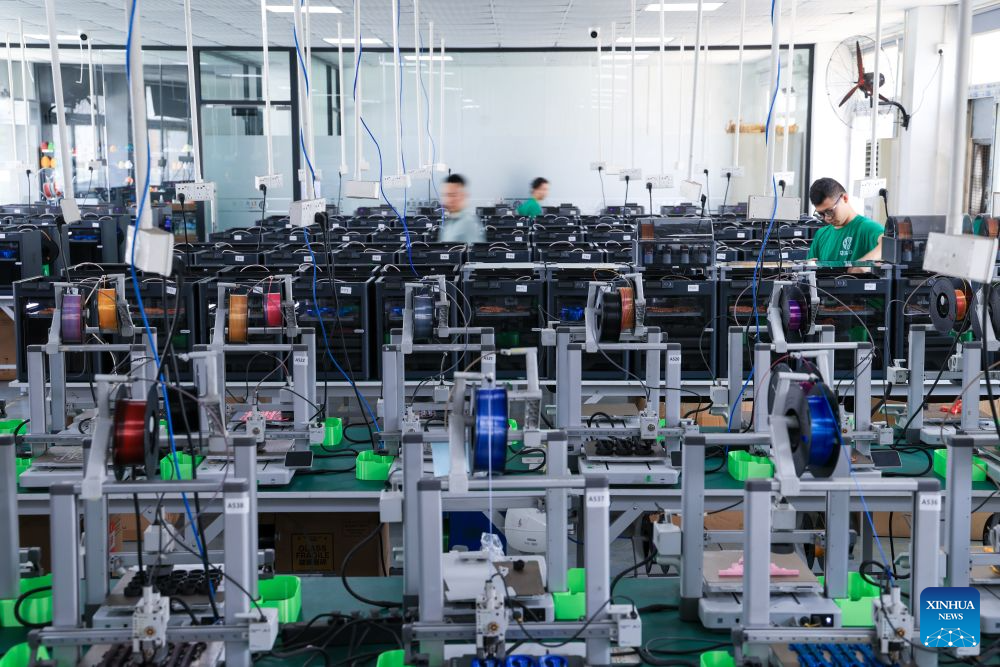
China's value-added industrial output expanded at a solid pace in the first half of 2026, with equipment manufacturing and high-tech manufacturing posting strong growth, according to the data released by the National Bureau of Statistics.
The country's value-added industrial output rose 5.4 percent year-on-year during the period, the bureau said.
The industrial output is used to measure the activity of large enterprises each with an annual main business revenue of at least 20 million yuan.
In terms of sectors, the value-added output of the mining sector increased by 3.6 percent, while that of the manufacturing sector grew by 5.6 percent. The value-added output of the electricity, heat, gas and water production and supply sectors went up by 5.5 percent, the data showed.
In June alone, industrial output grew 5.3 percent year-on-year, 0.8 percentage points higher than in May, the official data showed.
Commenting on the industrial performance, the bureau's spokesperson Wang Guanhua said the steady growth of industrial production was underpinned in part by technology-intensive and resilient emerging industries.
Retail sales
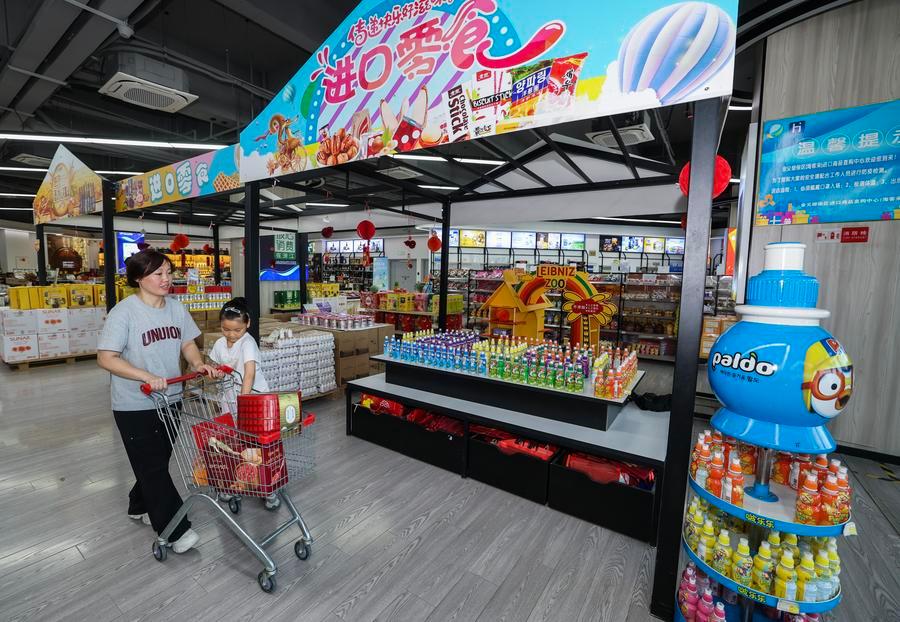
On China's consumption strength, the total retail sales of goods and services increased by 2.7 percent year-on-year in the first half of 2026, according to the data released by the bureau.
The retail sales of services increased by 5.3 percent in the period from a year ago, and that of goods increased by 1.1 percent, the data showed.
"As living standards improve, service consumption has increasingly become a key area for unlocking consumption potential," Mao told reporters.
In terms of services consumption, the categories of communication and information services, tourism consulting and leasing services, and cultural, sports and leisure services saw fast growth, according to the official data.
In the first half of this year, the total retail sales of consumer goods, which include the sales of physical consumer goods plus the income generated from the catering services, reached 24.87 trillion yuan, up by 1.3 percent year-on-year, the data showed.
Retail sales of consumer goods in urban areas rose 1.2 percent while that in rural areas increased 2.5 percent, the data showed.
Highlighting an upgrade in consumption, Mao said in the first half of the year, digital consumption and green consumption accelerated as people turned to smart and green products. In June, the retail penetration rate of new energy vehicles reached 62.8 percent, remaining above 60 percent for the third consecutive month.
ALSO READ: Retail moves seen boosting China's economy
Inbound tourism contributed to consumption due to optimized visa-free transit policies and measures to improve departure tax refund and payment services for overseas visitors, Mao noted. In the first half of the year, approximately 17.82 million foreigners entered China under visa-free arrangements, up 30.6 percent year-on-year.
"In the next stage, conditions are favorable for expanding and upgrading consumption," the official said, pointing to a vast consumer market home to 1.4 billion people, people's rising demand for high-quality goods and services such as leisure, culture and entertainment, and pro-consumption policies.
Fixed-asset investment
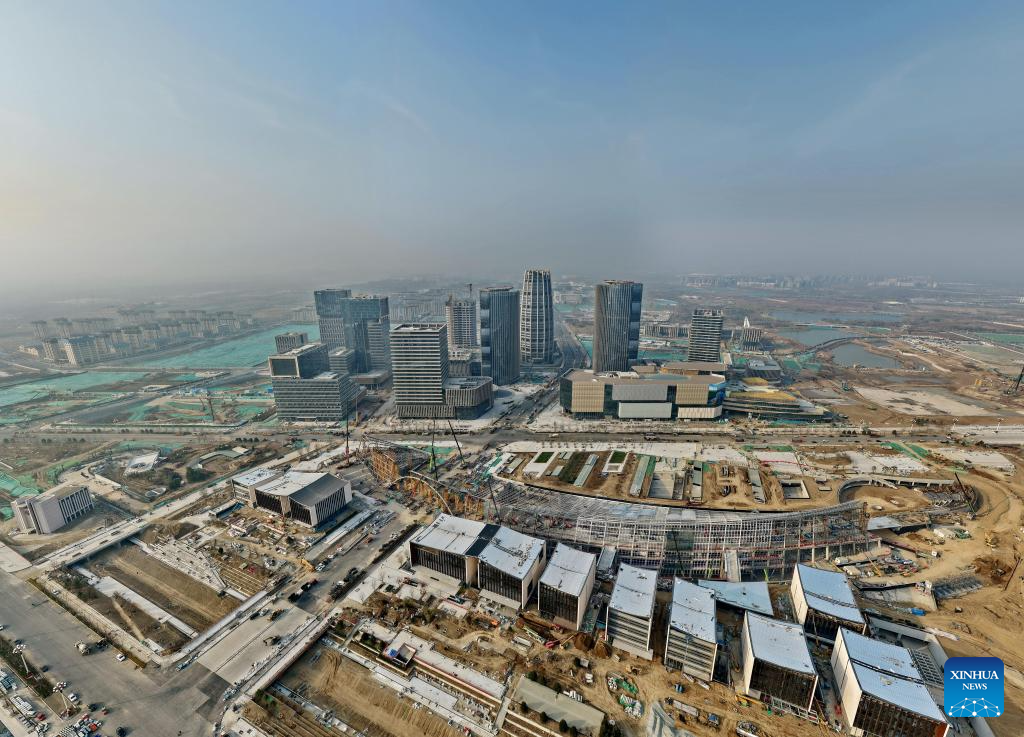
Wednesday's data also indicated that China's fixed-asset investment dropped 5.7 percent year-on-year in the first six months.
The investment totaled nearly 22.64 trillion yuan during the period, the bureau said.
Excluding the property sector, the country's fixed-asset investment went down 2.7 percent in the first six months.
By sector, investment in intellectual property products grew 9.4 percent year-on-year, 1.5 percentage points faster than in the first quarter of this year.
Infrastructure investment declined 2.4 percent from a year earlier, while manufacturing investment slipped 1.2 percent, according to the bureau.
In the first half of the year, investment in high-tech industries rose 4.6 percent year-on-year. A sector-by-sector breakdown showed that investment in the manufacture of aircraft, spacecraft and related equipment surged 23.3 percent, while investment in computer and office equipment manufacturing increased 8.1 percent. Investment in the information services sector climbed 15.5 percent.
In June alone, China's fixed-asset investment edged down 0.37 percent from the previous month, the data showed.
The bureau's deputy head said investment in the first half of 2026 played a key role in fostering new quality productive forces, boosting technological innovation, speeding up industrial upgrading, and improving people's livelihoods.
Disposable income
In the same period, China's per capita disposable income went up 5.2 percent year-on-year in nominal terms, the official data showed.
The country's per capita disposable income stood at 22,981 yuan, the bureau said, representing a growth of 4.2 percent in real terms after deducting price factors.
The income growth of rural residents outpaced that of urban residents. In H1, the per capita disposable income of urban residents reached 30,126 yuan, marking a nominal year-on-year increase of 4.4 percent and an increase of 3.4 percent in real terms. Rural residents' per capita disposable income was 12,699 yuan, marking a nominal year-on-year growth of 6.4 percent and an increase of 5.5 percent in real terms.
READ MORE: IMF reports China's economy promising
During the same period, China's per capita wage income, net operating income, net property income and net transfer income logged nominal increases of 5.3 percent, 6.5 percent, 1.1 percent and 5.8 percent, respectively.
Urban unemployment
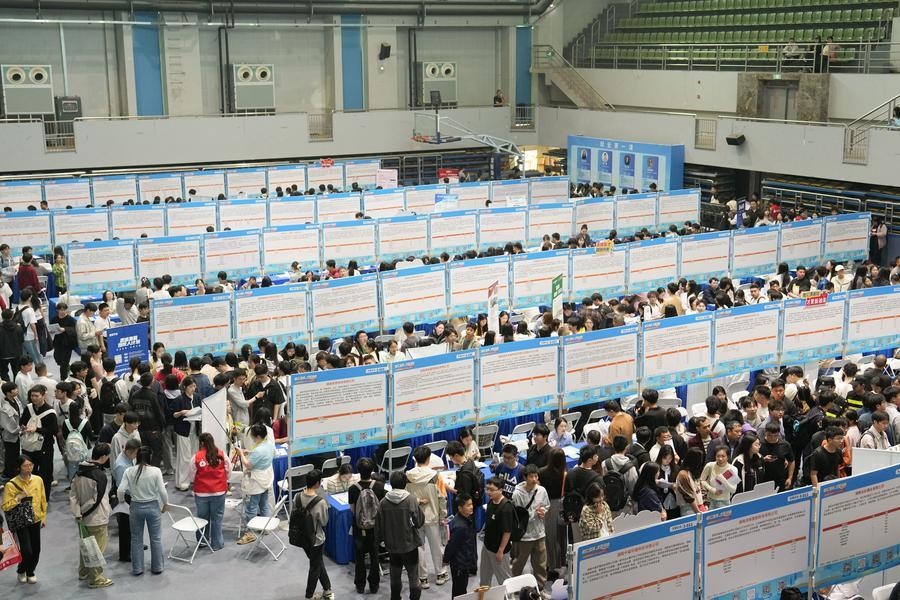
Meanwhile, China's job market has remained generally stable, with the surveyed urban unemployment rate in China at 5 percent in June, down from 5.1 percent in the previous month, according to the official data.
For the first half of the year, the surveyed urban unemployment rate was 5.2 percent on average, the bureau said.
In June, the jobless rate among locally-registered urban workers was 5 percent, while the rate for migrant workers was lower at 4.9 percent.
In China's 31 major cities, the surveyed urban unemployment rate stood at 5 percent last month, down from 5.1 percent in May.
China's economy operated within a proper range in the first half of the year, Mao, the bureau's deputy head, said, adding that efforts will be stepped up to secure the steady development of employment, businesses and markets, and to meet expectations.
