

Nation's energy transition a 'blue ocean' of vast global opportunities
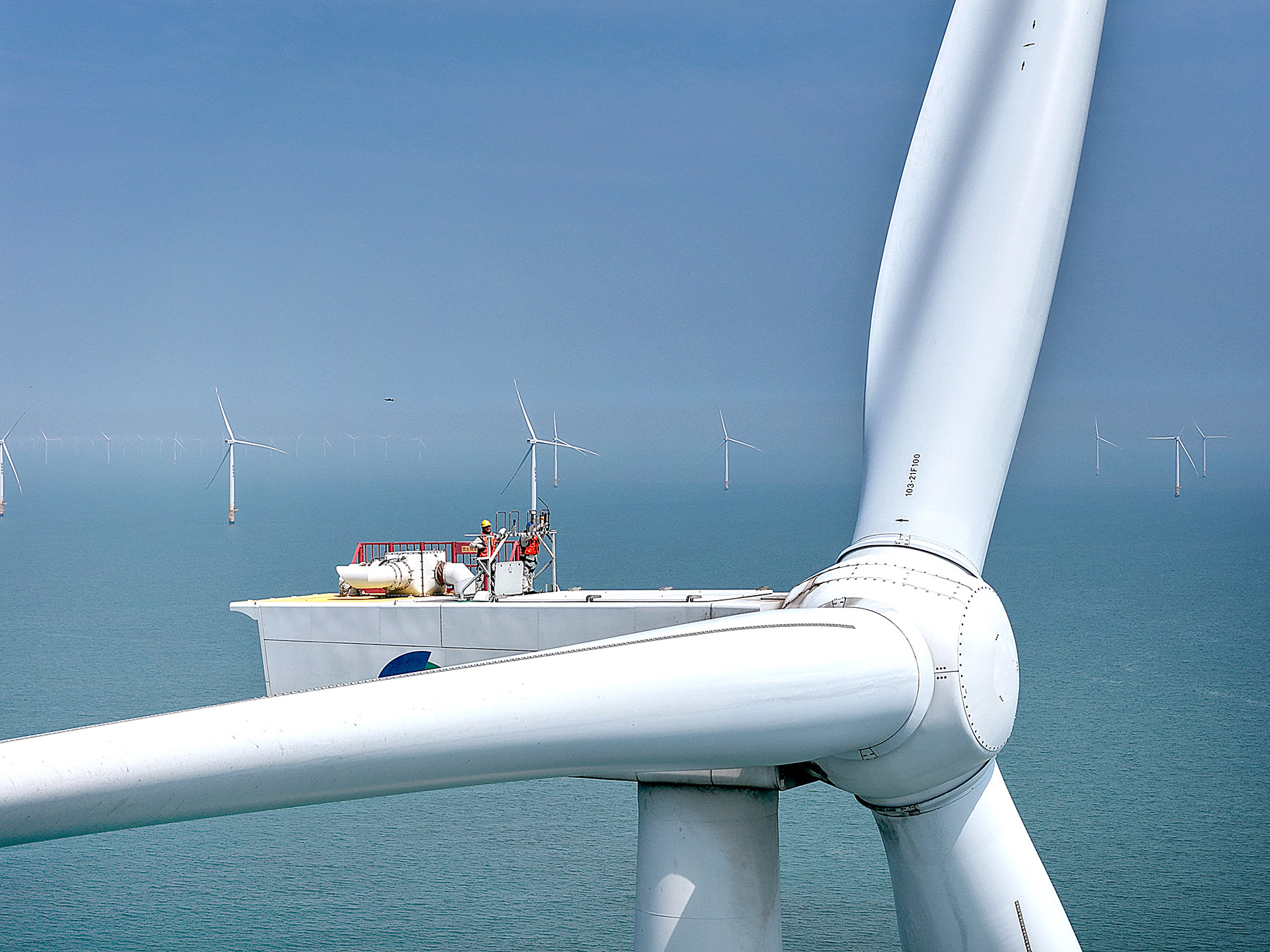
China's strong push toward an energy transition and green, low-carbon development is not just reshaping its domestic economy — it is creating massively scaled, entirely new collaborative opportunities for the global market.
For executives at top multinational corporations and heads of international organizations, the policy signals heading into the second half of 2026 are unmistakable, as the 15th Five-Year Plan (2026–30) explicitly proposes accelerating the comprehensive green transformation of economic and social development.
Industry leaders say China is acting as a powerful locomotive, using this mandate to open a "green cooperation door" for global businesses.
READ MORE: China to generate 50% of electricity from non-fossil sources by 2030
By striving to build a clean, low-carbon, safe, and efficient new energy system, the national blueprint provides a sturdy, predictable foundation for multinational companies to further deepen their roots in the Chinese market, they say.
"The policy blueprint laid out for the 15th Five-Year Plan has further bolstered our confidence in China's long-term market prospects," said Karen Yin, president of AkzoNobel China.
Yin noted that the market's steady high-level opening-up allows foreign enterprises to fully tap into these new ecological priorities. "For multinationals like AkzoNobel, our longstanding commitment to the Chinese market underscores a strategic evolution: transitioning from mere investors to dedicated innovation partners."
This transition is being felt across the entire advanced manufacturing spectrum. Xia Fuliang, president of Evonik China, pointed out that the sheer scale of this green mandate is fundamentally altering how foreign capital interacts with the local economy.
"From my perspective, the most compelling evidence is that China is no longer only a large end-market or manufacturing base," Xia said. "It has become an integrated platform where innovation, infrastructure, talent, and industrial ecosystems come together to create opportunities for global companies."
In corporate boardrooms from Europe to Asia, a powerful new paradigm is taking hold. As global economic uncertainties linger, a rising wave of multinational corporations including Evonik, AkzoNobel, BASF, Syensqo, and Everllence, are aggressively doubling down on green investments in China.
By strategically targeting low-carbon technologies, the circular economy, and industrial energy efficiency, they are pushing back against the pessimistic "China Shock 2.0" narrative.
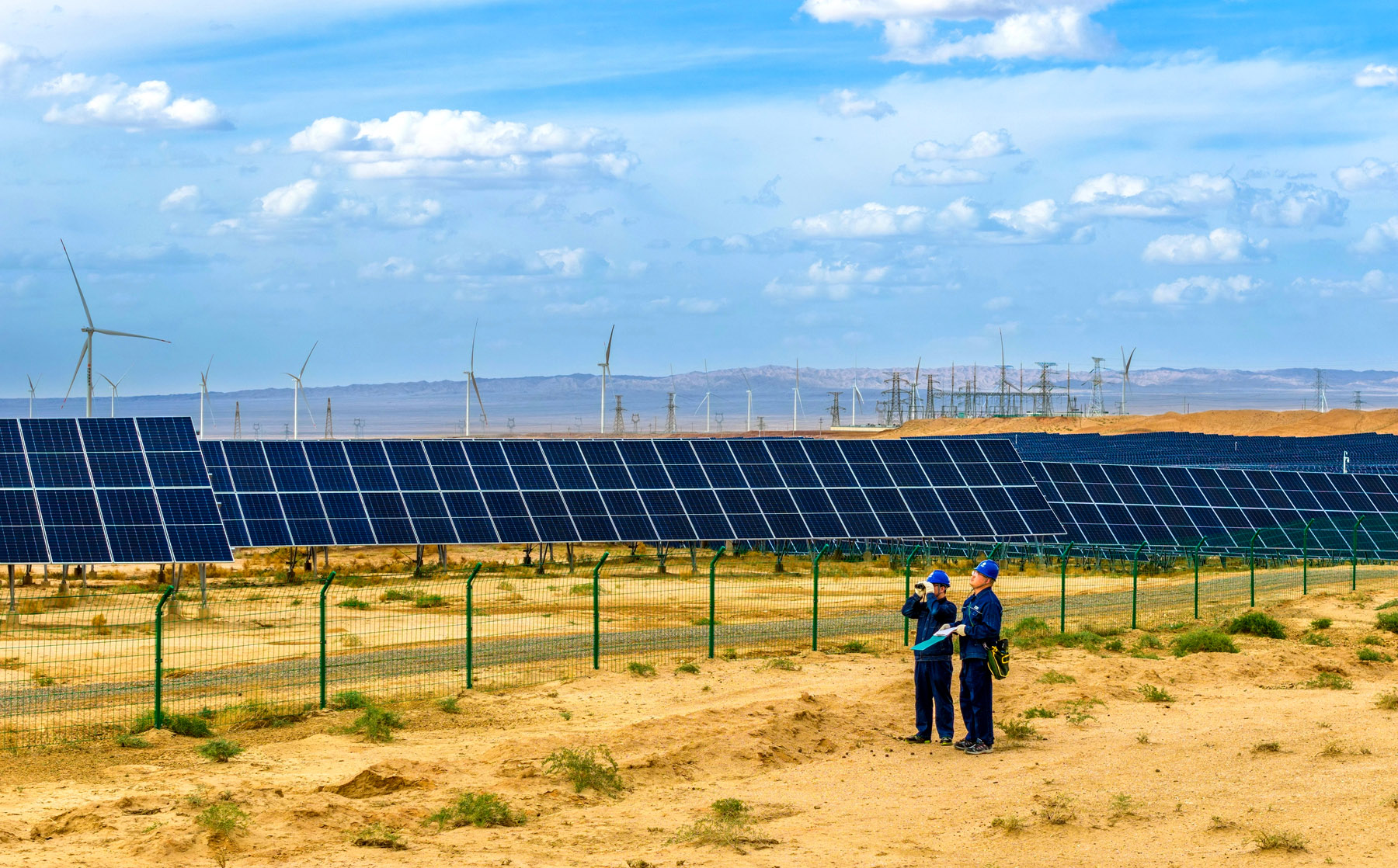
Instead, they are embracing what they call "China Opportunity 2.0". The consensus among these global executives is clear: China's colossal domestic demand for green solutions, coupled with its hyper-efficient industrial ecosystems, provides the perfect crucible to commercialize low-carbon technologies and accelerate technical iterations.
This green transition perfectly embodies the core of this new era — China's development is generating a "blue ocean" of incremental growth, forging a pathway for mutual, cross-border industrial prosperity.
From urban transit and commercial real estate to heavy chemical manufacturing and maritime shipping, the application scenarios for China's green transition are expanding at a breakneck pace. For multinational companies, this translates not only to clearer policy expectations but also to vastly broader commercial horizons.
The physical manifestations of this shift are already visible across the country.
While BASF is aggressively driving the low-carbon operation of its massive Zhanjiang Verbund site through the large-scale procurement of renewable energy, Schneider Electric continues to blanket Chinese enterprises with sophisticated energy management, automation, and digitalization solutions.
Meanwhile, industrial behemoths like Siemens are rapidly expanding their footprint in the Chinese market with advanced solutions in smart electrical systems, green manufacturing, and systemic energy optimization.
Armed with a super-sized domestic market, a complete industrial chain, and endlessly diverse application scenarios, China has quietly transformed into the world's premier proving ground for green technology.
For Evonik, the German specialty chemicals company, this structural shift is highly tangible.
Xia views China as an incubator that forces companies to become faster, more innovative, and inherently more sustainable.
In the first half of 2026 alone, Evonik brought several milestone projects online in China, including a new hydrogen peroxide plant in Leshan, Sichuan province, an expanded specialty amine production facility in Nanjing, and its first AEM technology center dedicated to green hydrogen.
"These projects reflect not only our confidence in China's market potential, but also our belief that China will remain an important source of innovation and transformation for global businesses," Xia said.
This sentiment is echoed throughout the advanced materials sector.
Chen Pu, chief Asia officer of the Belgian specialty chemicals giant Syensqo, noted that the company views the "China opportunity" through highly practical lenses: the sheer size of the market, the velocity of industrial upgrading, and the depth of the local talent pool.
"Demand is shifting toward advanced, more sustainable, and higher-performance solutions," Chen said, highlighting Syensqo's four-decade presence in the country, which now includes five industrial sites and its third-largest global Research and Innovation center in Shanghai.
"We want to capture opportunities in fast-growing trends such as electrification, light-weighting, advanced connectivity, and more sustainable sourcing by innovating locally and working closely with customers."
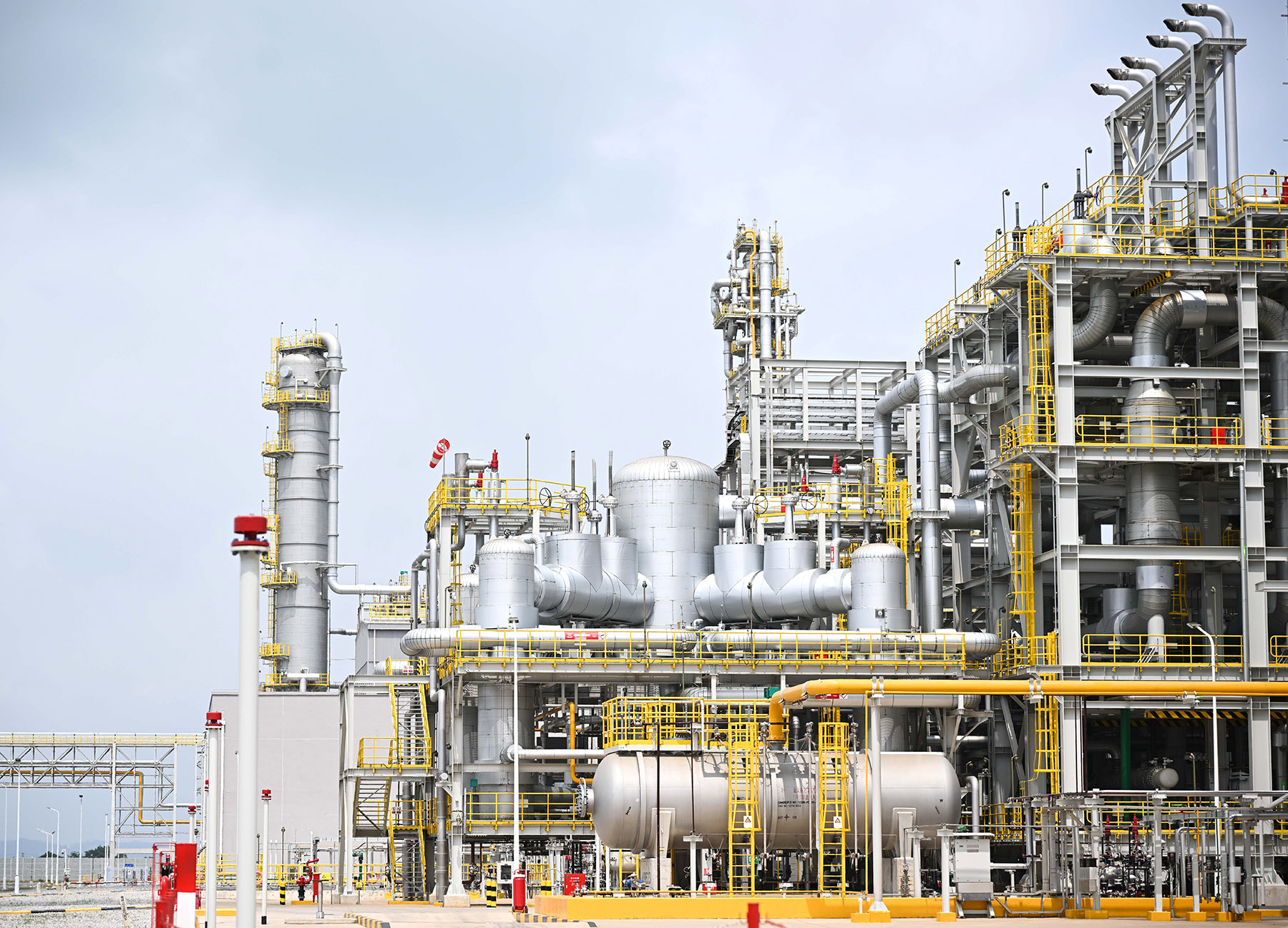
As China places greater emphasis on expanding domestic demand while pursuing high-standard opening-up, multinational leaders see a mutually reinforcing dynamic.
A more sophisticated domestic market demands safer, greener, and more efficient solutions, while institutional opening-up delivers the predictability and transparency required for long-term capital deployment.
Yin from AkzoNobel China, believes this dynamic elevates the market beyond a mere sales destination.
"With a full spectrum of application scenarios, China's vast market serves as a natural testbed and incubator for technological innovation," Yin explained.
Operating under the guiding tenet of "Innovate in China, for China, share globally," the Dutch paints and coatings giant continues to expand its local R&D footprint. Yin noted that the policy blueprints laid out for the 15th Five-Year Plan have bolstered the company's long-term confidence.
"Our longstanding commitment to the Chinese market underscores a strategic evolution: transitioning from mere investors to dedicated innovation partners," Yin added.
She expects the second half of 2026 to be driven by "new quality productive forces" — advanced manufacturing, green tech, and digitalization — alongside a consumer base demanding premium, eco-friendly residential and commercial spaces.
This green transformation is equally profound in heavy industry and global logistics. For Everllence, a leader in maritime and energy solutions, China is the absolute nexus for green innovation and the global delivery of net-zero solutions.
"In the first quarter of 2026, China led global shipbuilding new orders by dead-weight tonnage, with green vessels accounting for 80.2 percent of new contracts," said Sarath Prasannan, senior vice-president and head of Asia-Pacific region of Everllence.
Despite global headwinds, such as the delayed International Maritime Organization (IMO) Net-Zero Framework review, China's 15th Five-Year Plan offers rare, bankable policy certainty, he said.
The company's deep-rooted partnerships with local titans like CSSC and COSCO Shipping Lines continue to yield breakthroughs.
In June 2026, Everllence delivered a milestone methanol dual-fuel retrofit for the Seaspan Yangtze at Shanghai COSCO Heavy Industry. Completed in just three months to minimize shipowner downtime, the retrofit slashes the vessel's emissions index by 55 percent below international baselines.
Crucially, the hardware of the green transition is being supercharged by the software of the digital age. Artificial intelligence and frontier technologies are no longer theoretical concepts; they are actively reshaping China's industrial growth and productivity.
At Syensqo's Shanghai center, artificial intelligence is fully integrated into the R&D process. "AI is helping teams with analysis, testing, and product solution optimization," Chen explained. "It is not a replacement for researchers, but a tool that helps them solve more complex problems and identify new ideas faster."
ALSO READ: AI rewiring how China's energy is managed
As the second half of 2026 commences, foreign executives are closely monitoring the commercialization speed of these cutting-edge technologies, the delivery pace of green industry orders, and the evolution of domestic consumer confidence.
Industry experts believe China's green transition is cultivating a far more complete and globally integrated industrial ecosystem.
As high-standard opening-up accelerates, the nation is actively championing the participation of multinational companies in key fields ranging from advanced manufacturing to climate technology, said Lin Boqiang, director of the China Center for Energy Economics Research at Xiamen University.
"Multinational companies can bring advanced technologies to China, and also push China's innovation achievements in new energy and other fields to the global stage," said Liu Linna, deputy director-general and secretary-general of the Council for International Investment Promotion. "Through this reciprocal exchange, multinational companies will share in the abundant developmental dividends generated by new quality productive forces during China's green transition."
In an era defined by global economic fragmentation, China's steady macroeconomic expansion and unyielding commitment to carbon neutrality offer a vital anchor. For the global corporate vanguard, the Chinese market is no longer a peripheral strategy — it is the very heart of the global green industrial revolution.
Contact the writers at zhengxin@chinadaily.com.cn
