

Former artistic gymnast Shang becomes parkour's golden girl
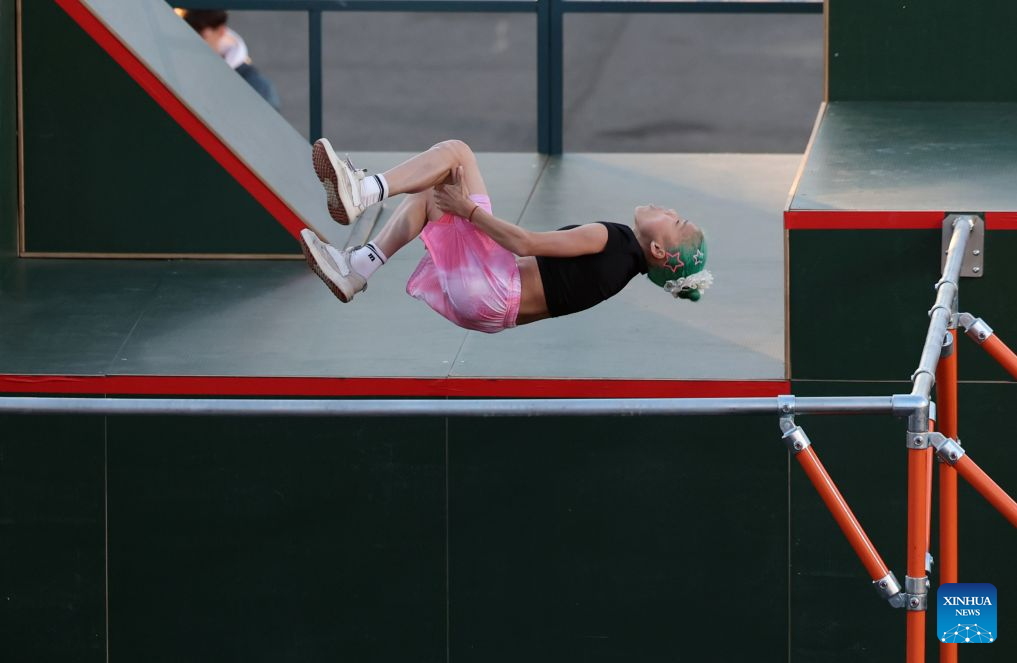
Amid the finalists lined up for the women's freestyle final of the 2026 Beijing Parkour World Cup, one flash of neon green stood out.
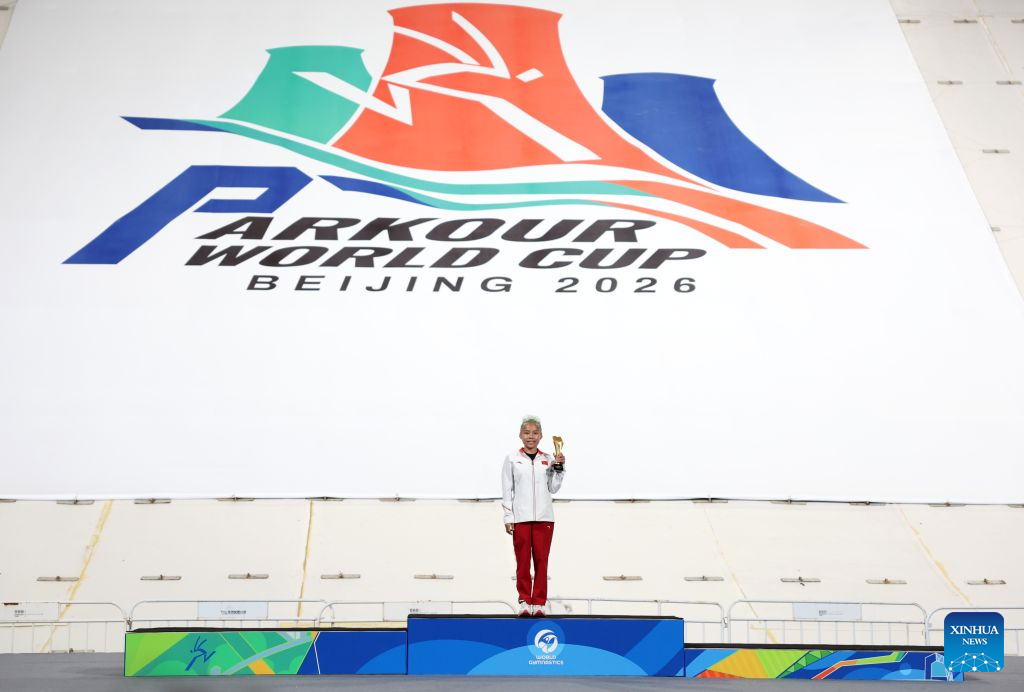
It belonged to Shang Chunsong, the slightest figure among them, who would soon climb to the very top of the podium and clinch the overall World Cup title at the season-ending event.
She dyed her hair bright green a week before the Beijing stop not because parkour's street culture pulled her toward bold aesthetics, but for a simpler reason.
"I've always liked bright colors, the kind that make you spot me instantly in a crowd," she said. "I want my life to be that bright, too."
On Sunday, in front of her home crowd at Big Air Shougang, the 30-year-old former artistic gymnast won gold with a score of 26.8 points, followed by Japan's Nene Nagai (22.3) and Dutch bronze medalist Isa Smits (21.1).
It marked the first international parkour event held in Beijing, and China's first high-level international parkour competition since the 2019 Chengdu World Cup."The win means a lot. Today, the stands were packed," said Shang. "I saw so many kids from parkour clubs come to watch me compete. Chinese parkour has been developing so quickly over the past two years, and I hope more kids will join the parkour family."
ALSO READ: World Games: China's Shang wins women's freestyle parkour gold
Born in a mountainous village in Yongshun county, Hunan province, Shang began gymnastics training at age seven, driven by prize money that could give her family a better life.
She pushed through the daily grind, and at the 2013 National Games she broke through, winning three golds: all-around, uneven bars, and floor.
Yet a world title always stayed just out of reach.
Parkour changed that.
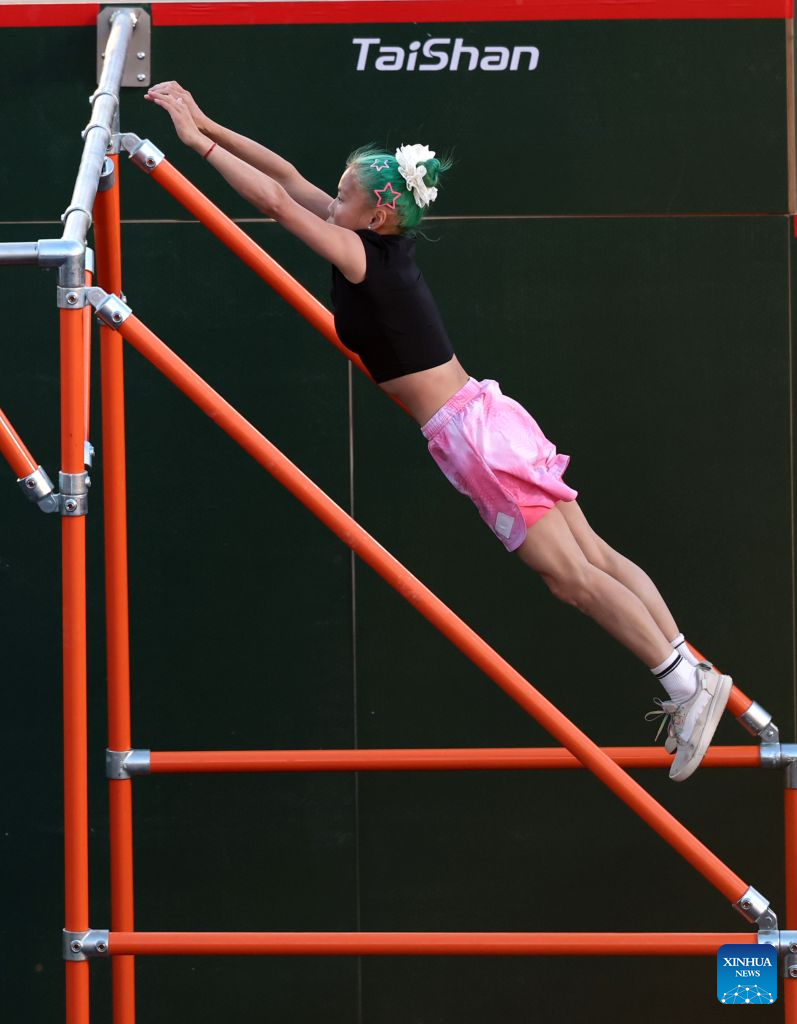
She took up the urban discipline in 2022. The captain of China's bronze medal-winning team at the Rio 2016 Olympics was drawn to its free, spontaneous nature, and soon completed a "Grand Slam," winning freestyle gold at the 2024 World Championships in Kitakyushu, Japan, the 2024 World Cup stop in Montpellier, France, and the 2025 World Games in Chengdu.
Parkour grew out of France's 1990s street scene, rooted in free movement rather than judged competition. It joined the competitive framework of World Gymnastics in 2017 and made its World Games debut in Birmingham, England, in 2022.
Competitive parkour is split into timed speed races on fixed routes and freestyle, where athletes design their own runs, between 20 and 45 seconds, that are scored on difficulty and execution.
Even under competition rules, athletes can still express themselves, said Spanish coach Pablo Perez.
"Each athlete can show their strong points, and they can do freestyle moves they really like to do," he said in Beijing.
In speed events, he added: "Some of the fastest go different routes because that's the way they express themselves."
ALSO READ: Leaps of faith
Lu Yuchen, a Xinhua reporter who has long followed gymnastics, observed that Shang used to seem quiet and reserved in the mixed zone. Now she is expressive and talkative.
Shang argued it wasn't the sport that changed her — the open, free essence of parkour simply clicked with her outgoing personality.
“Finding your passion is what makes you shine,” she said. “I just want to show people the best side of me, and I hope to bring them joy.”
For compatriot Zhou Jie, who shares Shang's gymnastics background and finished fourth in the freestyle final, parkour taught her to "have fun".
"Parkour isn't confined to one venue; you can do it anytime, bringing to life whatever imagination you have," she said. "Our coach bases training on our own abilities, and we set our own tasks. It doesn't have gymnastics requirements — that you have to train to a certain level, that you have to complete certain things."
On Sunday afternoon, before the men's speed events concluded and the women's freestyle final began, parkour athletes from around the world, displaying their bold individual style, chatted together, played coordination games with coaches, lay on the ground basking in the sun, or kicked a football around.
When an athlete who injured a ligament in the morning qualifiers returned to the venue, most of the competitors she passed stopped to check on her.
"That atmosphere is just fantastic," said a lively Zhou, with a big smile.
Now a gymnastics coach at a youth sports school in Changzhou, Jiangsu province, Zhou brings the parkour attitude into her teaching.
"I hope my students can train happily, without overdoing it, and still improve quickly."
Having once crossed over to skateboarding and climbing, she hopes they will try different sports, too. "(The key is to) just be happy," she said.
