

Grassroots league boosts economy, tourism and sense of community
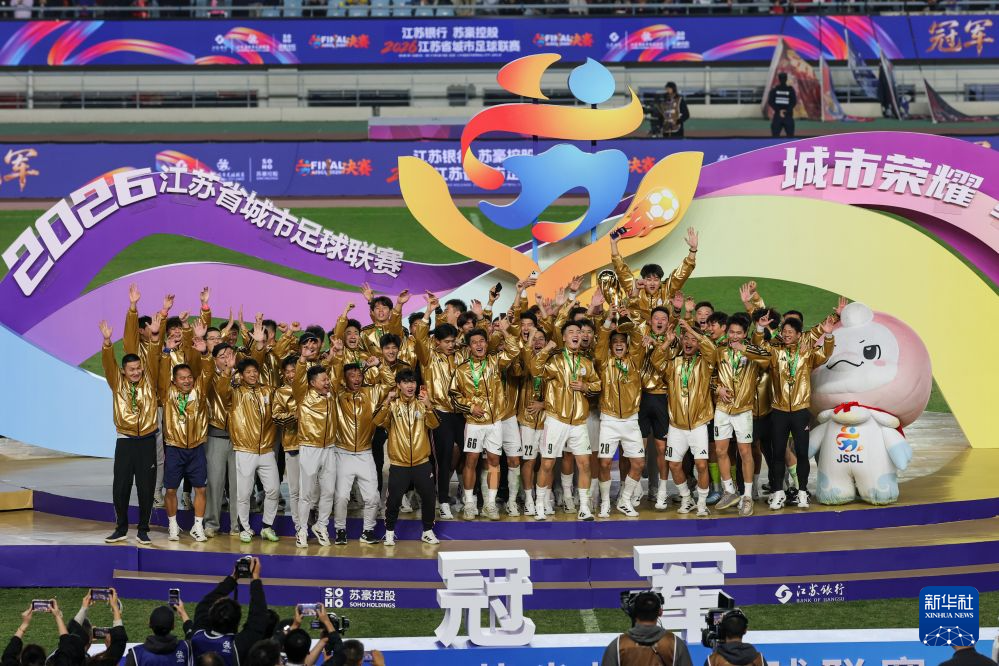
For Liu Jinding, a sanitation worker who helps maintain the grounds around Nanjing's Xuanwu Lake, cheering for the Jiangsu Football City League, better known as suchao, began with fallen cherry blossoms.
This spring, he used petals scattered on the ground to spell out messages such as "Go Nanjing!" and "Go suchao!"
On the evening of Oct 31, he joined Olympic swimming champion Zhang Yufei and other performers onstage at Nanjing Olympic Sports Center to sing together. That night, Wuxi beat Changzhou 2-1 in the suchao final before a crowd of 62,356.
"Singing alongside champions, going from the stands to the stage — I was really excited and happy," Liu said. "The league has made it possible for ordinary people to be seen."
The league's emphasis on public participation helped drive its remarkable popularity from its inaugural season in 2025.
According to figures released after the inaugural season, related topics on social media recorded more than 81.8 billion views, online livestreams registered 2.22 billion views, and matches drew a combined total of more than 2.4 million spectators. Local rivalries, dialects, food and city identities all helped turn the competition into a nationwide talking point.
The second season took that momentum further. Staged over 204 days and 91 matches, it drew more than three million spectators, with average attendance reaching about 33,400 per game.
Yet suchao's significance goes beyond packed stadiums and online attention. By bringing football into neighborhoods, schools and public spaces, the league has become a platform for public participation, creating opportunities for local businesses and young players while strengthening residents' connection with their hometowns. Its growing influence shows how a sporting event can contribute to local consumption, community life and grassroots football development.
ALSO READ: World Cup sparks expats' 'Suchao' interest
For 69-year-old Wang Zhihe from Taizhou, watching suchao has become a regular outing. One rainy day, he went to a public viewing venue but found almost nobody there. He stayed to watch the entire match. Later, he was invited to watch a game at the stadium itself.
Such experiences reflect how the league has drawn people into football in different ways.
Broader data from travel platform Ctrip showed that cross-city, football-related travelers stayed at their destinations an average of 1.34 days, with about one-third choosing to extend their trips by an extra day.
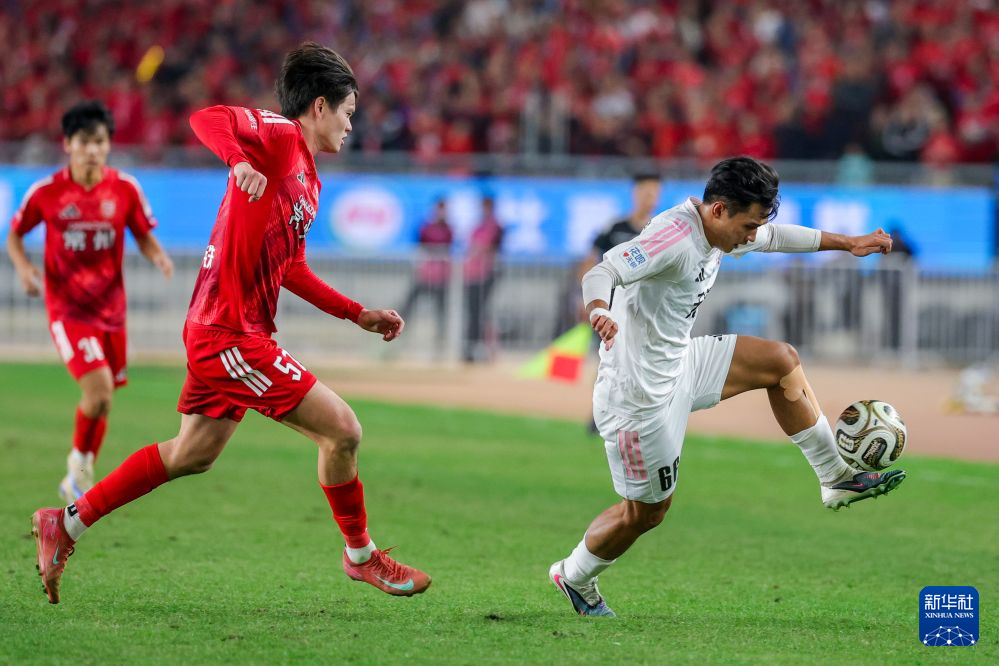
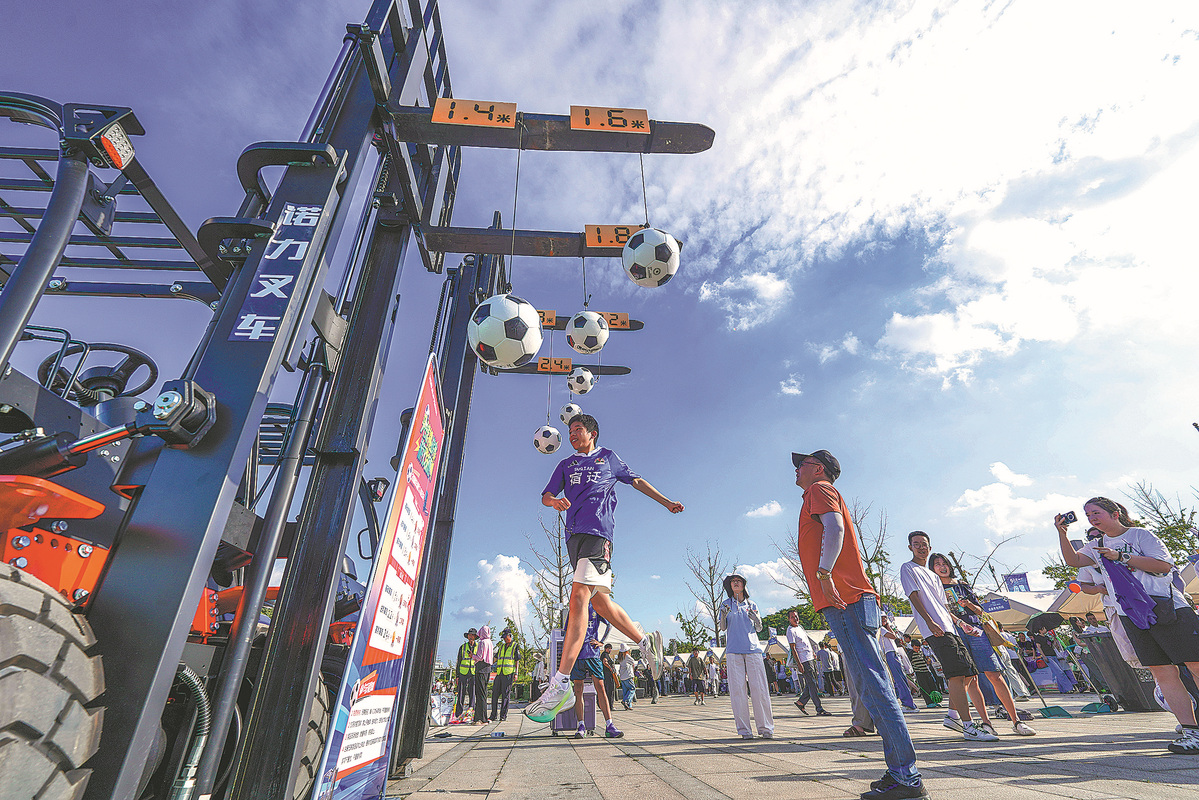
The activity has spread beyond stadiums.
During the May Day holiday, 501 public viewing venues across Jiangsu attracted more than 743,000 visits. Local governments and businesses have linked match days with dining, shopping and tourism, giving visitors more reasons to explore host cities.
The league has also opened doors for smaller businesses. In a program supporting local enterprises, 32 businesses were selected from 3,582 applicants for sponsorship opportunities, with packages priced at 50,000 yuan ($7,492). In Wuxi, 42 businesses were selected from 638 applicants for a lower-cost package.
Zhou Wei, founder of a crayfish restaurant business in Yangzhou, said she was grateful for the benefits brought to her business by the suchao exposure.
Opportunities for everyone
The league's grassroots character is also reflected on the pitch. Of the 647 eligible registered players this season, the average age was 22, and players under that age accounted for more than 66 percent.
Each team was required to have at least six U22 players on the field at any time.
In the final, Wuxi's opening goal came from Lu Zeling, a student at Nanjing University of Aeronautics and Astronautics who traveled between Nanjing and Wuxi to play. Liu Yuhao scored the second goal and finished the season with 12 in total, winning both the Golden Boot and Best Player awards.
"We put in a lot of effort and endured considerable pressure. In particular, the younger players have grown significantly," Liu Yuhao said. "I hope Jiangsu football and Chinese football continue to improve."
The competition has also opened up new opportunities for players. Changzhou forward Wu Haomin joined Jiangsu Changjin Football Club in August after impressing in suchao. He then began competing in the Chinese Football Association Member Association Champions League while continuing to represent Changzhou in suchao, pursuing his ambition to play professionally.
For Wuxi coach Tang Jing, however, the value of the competition goes beyond individual progress. "The chance to bring honor to our hometown is what matters most," he said. "The most valuable thing about this competition is that it makes ordinary people fall in love with football."
That connection with grassroots football is also being built in schools. Xu Suzhong, a Chinese-language teacher in Suqian, has been coaching students for more than a decade, working with over 300 young players. Two of his former pupils, Chen Lixing and Luo Lingjie, have since become players for the city's suchao team.
Jiangsu plans to complete the construction of municipal youth training centers in all 13 of its prefecture-level cities by the end of 2027, while strengthening links between the league, school competitions and grassroots football programs.
Suchao's impact has also been evident in moments that had little to do with the score. During a quarterfinal between Changzhou and Suzhou on Oct 11, two Changzhou players collided and fell to the ground. Wu Xiaofei, the Suzhou team's doctor, immediately ran onto the pitch to help.
ALSO READ: Jiangsu's city soccer league sparks tourism boom, boost economy
"They needed help, and we should step forward without hesitation," Wu said. "Under any circumstances, life always comes first."
During a match between Zhenjiang and Lianyungang on Sept 19, a spectator collapsed. Lu Yuan, a nurse who also led chants for Zhenjiang supporters, immediately began administering first aid. Fellow fans cleared a path for rescuers. The man survived.
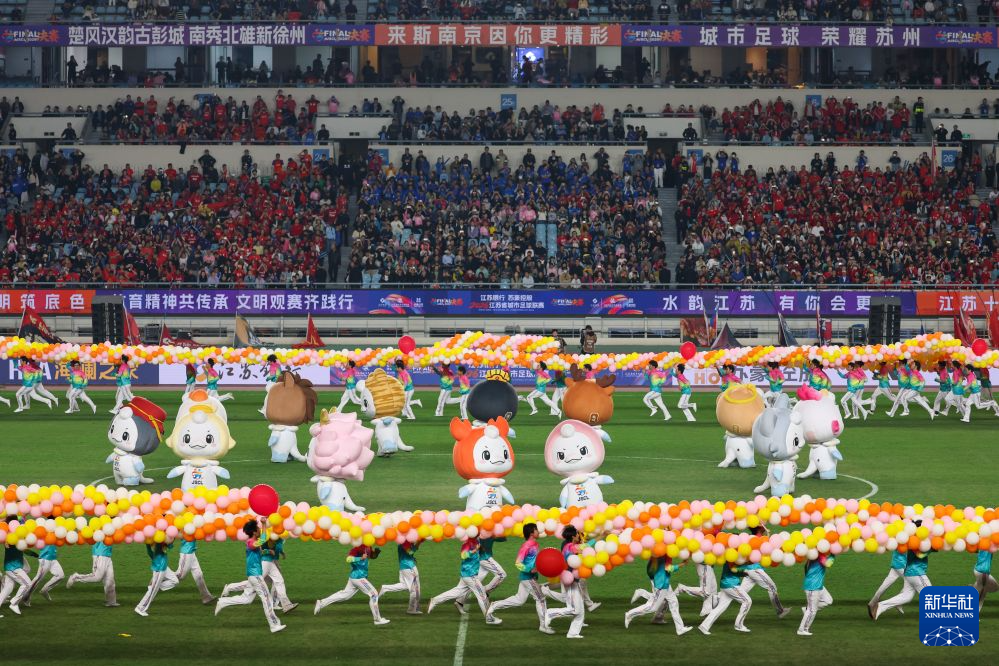
Yan Shizhan, an associate researcher at the Jiangsu Institute of Sports Science, sees the league developing into a longer-term public sports undertaking.
With a longer season and deeper participation from cities and communities, he said, the competition has created opportunities to connect sporting events with youth training, consumption and public services.
"Jiangsu is trying to turn a sporting phenomenon into a public sports program that can operate over the long term," Yan said.
He added that maintaining the league's grassroots character, strengthening the integration of sports with culture, tourism and commerce, and upholding sporting conduct would be important to its future development.
Across Jiangsu, the next season will bring another round of matches, while young players continue training and local businesses prepare for the next match day.
For Liu Jinding, the sanitation worker who once used fallen petals to cheer for his city, the league has already delivered something meaningful: a chance for ordinary people to become part of the story.
