

The fall of the Western Jin sent people southward, reshaping the course of Chinese civilization, reports Wang Kaihao in Nanjing.
Many may regard this dynasty as having endured one of the darkest periods in ancient Chinese history. Yet civilization also reveals its resilience in times of upheaval.
In 311, Luoyang, in today's Henan province and then the capital city of the Jin Dynasty (265-420), fell in war. By then, princes' rebellions and nomads' turmoil had raged for about 20 years, tearing northern China apart. It had been only 30-some years since the Jin had reunified a fragmented China, and unity was breaking apart again.
Jin loyalists had to look beyond the Yangtze River, which was then less developed than their Central Plains homelands. Gentry, nobles and civilians from North China, along with their documents, rituals, techniques, and hope, began a massive southward migration. Historians estimate that the exodus involved at least 900,000 people.
After the teenage Jin emperor surrendered the besieged Chang'an (today's Xi'an, Shaanxi province) in 316, marking the end of the Western Jin Dynasty (265-316), the displaced northerners soon established a new court in Jiankang, present-day Nanjing, the capital of Jiangsu province. Thus began the Eastern Jin Dynasty (317-420), which ruled the southern half of China.
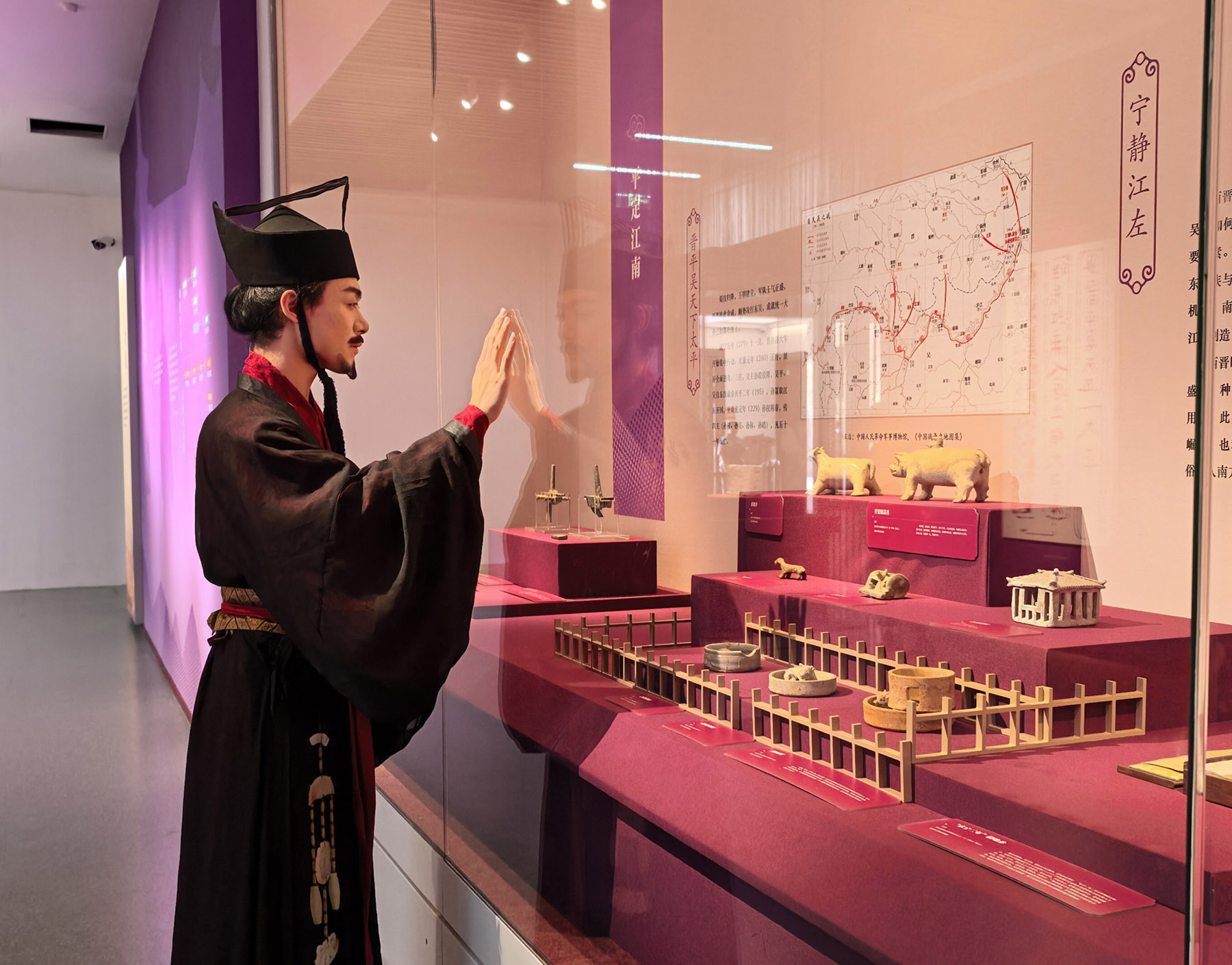
At Nanjing Municipal Museum, an ongoing exhibition, The Great Southern Migration: From the Western Jin to the Eastern Jin, invites visitors to look at the era from fresh perspectives — a turbulent period, perhaps, but also a crucial chapter in north-south exchange.
Bringing over 200 exhibits from 13 museums nationwide and running through Jan 4, the exhibition is the largest thematic exhibition in China to date devoted to the Jin Dynasty.
"This migration greatly contributed to the development of regions along the Yangtze River," says Zhu Yifei, the exhibition curator from Nanjing Municipal Museum. "It carried forward a lineage of Chinese civilization and contributed to the formation of a unified nation with multiple ethnic groups."
The exhibition features representative cultural relics, including ceramics, gold artifacts, figurines and stone rubbings of inscriptions. Many come from major archaeological discoveries, offering a panoramic view of Jin society, economic development and everyday life.
Short-lived unity
The Jin Dynasty finally reunited China in 280 by bringing the regions south of the Yangtze River under its rule and ending the divided Three Kingdoms (220-280) period.
Whatever history would bring, people at the time hoped reunification would usher in lasting prosperity.
The first object visitors may encounter is an ordinary brick made in Nanjing during that period. Unearthed locally, it bears an inscription that captures the era's optimism: "The land under Heaven is now at peace."
The Western Jin emperors presided over a vast realm spanning more than 5.4 million square kilometers. A group of wooden slips from the Suxianqiao site in Chenzhou, Hunan province, offers a glimpse into how this enormous system operated at the grassroots level. Before paper became widespread, wooden and bamboo slips, collectively known as jiandu, were the main media for documentation in China.
These detailed local government records provide valuable information about population censuses, taxation, transportation, local products and other aspects of life.
" Paper began to be widely used during this period," Zhu says.
"So we are also seeing the final peak of jiandu before it gradually faded from history."
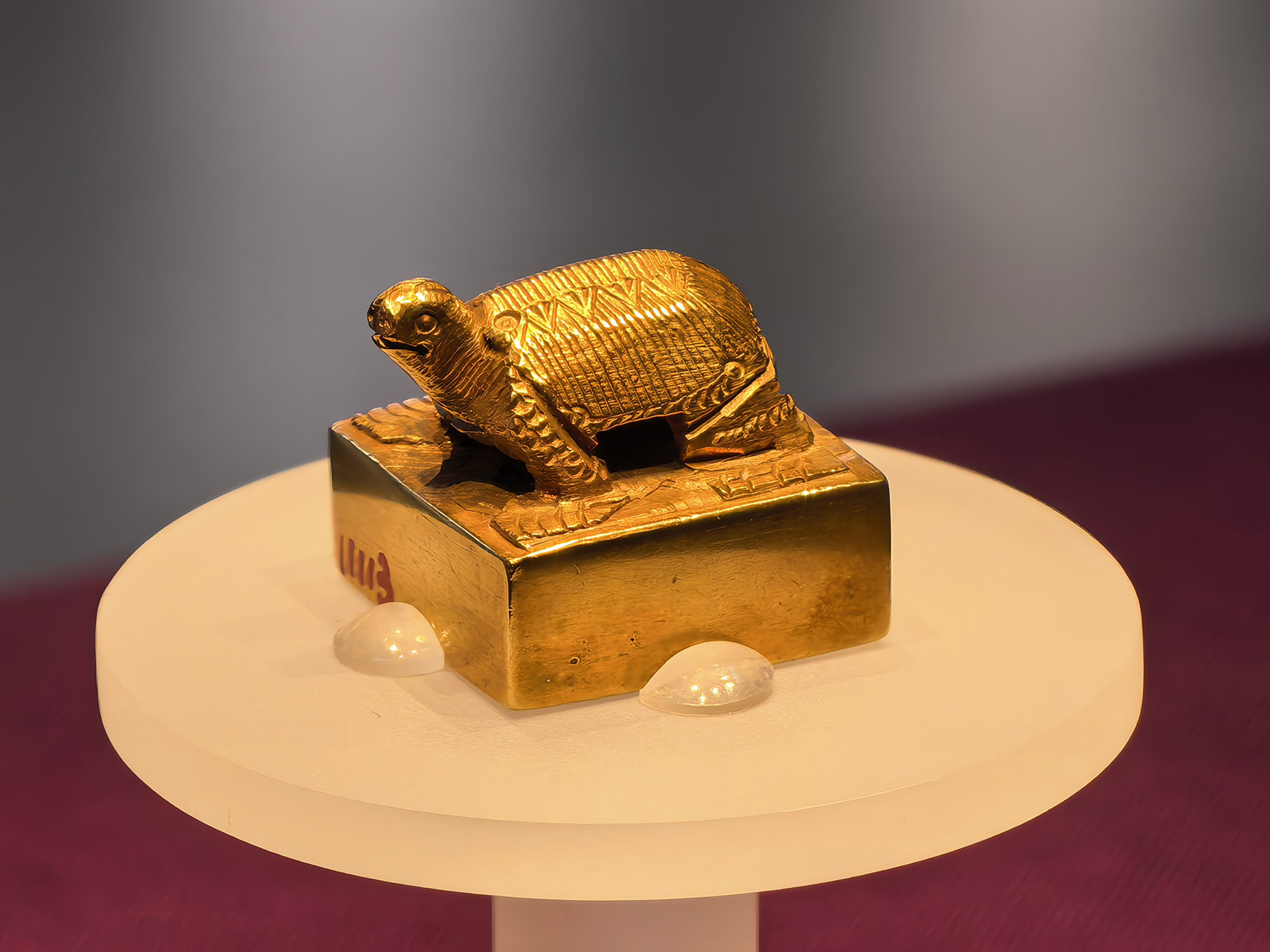
Another highlight is a gold seal decorated with a tortoise, a symbol of longevity and prosperity in Chinese culture. Unearthed in Hunan province, it belonged to Liu Hong, a military general whose prominence is reflected in historical records.
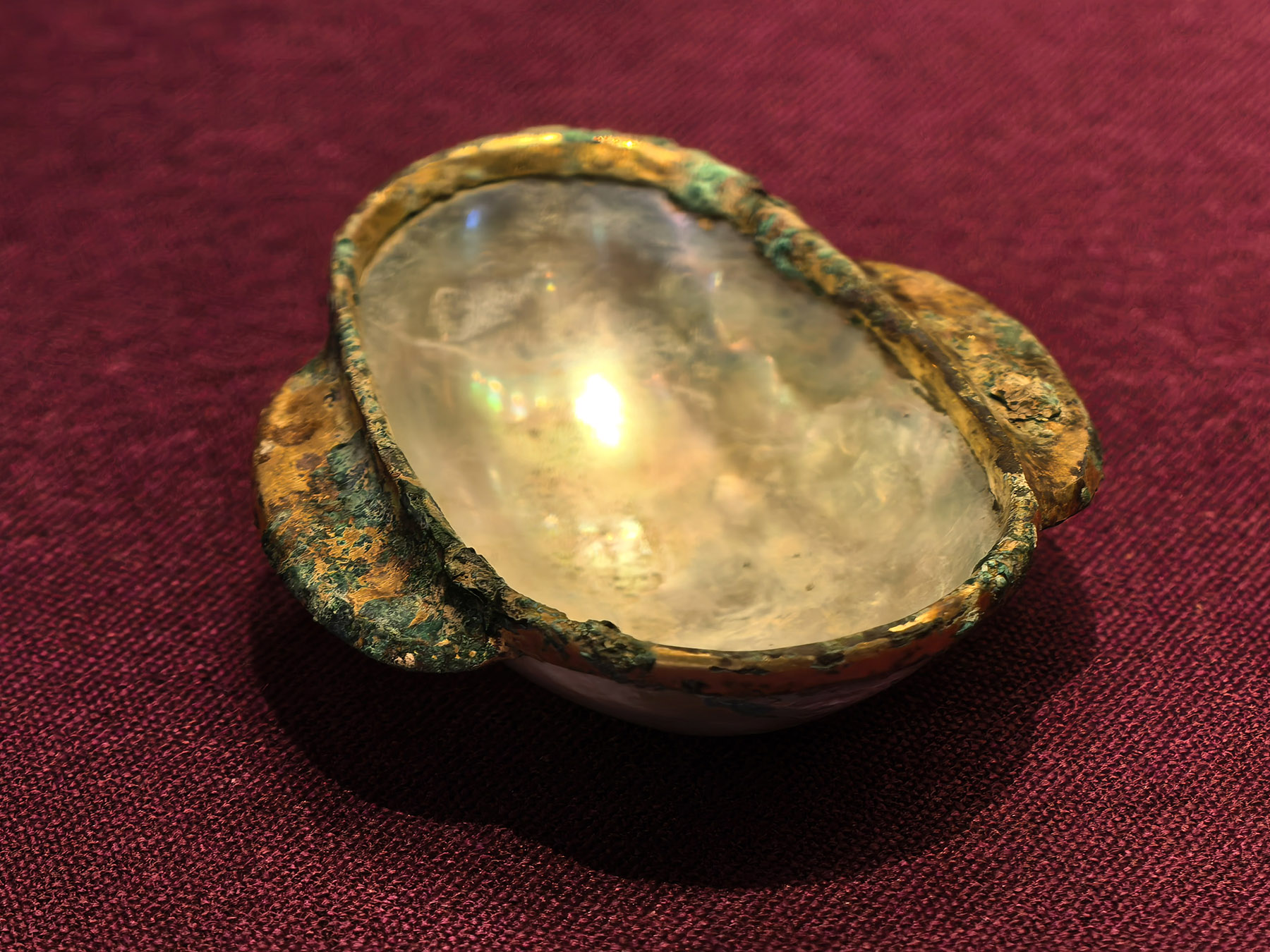
An exquisite copper cup inlaid with nacre, unearthed in Pizhou, northern Jiangsu, offers another glimpse into the era. Its sophisticated craftsmanship and precious materials suggest the owner's high social status.
The nacre is believed to have been imported from overseas. Archaeologists also discovered a glass bowl and a nautilus cup in the same tomb, offering clues to the wider network of the Maritime Silk Road.
History offered a harsh lesson when Jin rulers neglected people's livelihoods and indulged in luxury. Endless wars followed, and peace became a luxury that no one could afford.
After the Jin court moved to Nanjing, it maintained a fragile balance between the imperial court and several powerful aristocratic families. Meanwhile, northern China endured another century of chaos. States rose and fell in rapid succession, while ambitious figures repeatedly dreamed of reunifying the country, only to see their efforts collapse after defeat.
Zhang Xuefeng, a history professor at Nanjing University, says northern immigrants retained a strong nostalgia for their devastated homeland. They brought rituals and clothing traditions with them and gave southern settlements the names of their former home counties, many of which are still in use. They also highlighted their places of origin on epitaphs, preserving memories of their birthplace for later generations.
"However, reality also urged them to cooperate with local people in Jiangnan and consolidate the rule of the Eastern Jin," he says.
New page for Jiangnan
Jiangnan, or "south of the river", refers to the region along the southern bank of the lower Yangtze River. Local nobles and gentry were receptive to their northern counterparts, and together they shaped an era celebrated for its refined arts and intellectual culture.
Wang Xizhi, for example, came from an eminent family in today's Shandong province and moved south to present-day Zhejiang as a child. His uncles wielded considerable influence in court politics, while he left an enduring legacy in art. His masterpiece, Lanting Xu, or Preface to the Orchid Pavilion, remains a landmark in the history of Chinese calligraphy and literature.
Cultural relics unearthed at the Xiyanchi site in Shandong, his birthplace, are also on display. They offer tangible reminders of the emotional ties northern migrants maintained with the homes they had left behind.
Meanwhile, Gu Kaizhi, a master of painting from a prominent Jiangnan family, helped usher in a celebrated era of figure painting, leaving works revered today, including The Admonitions Scroll, housed at the British Museum.
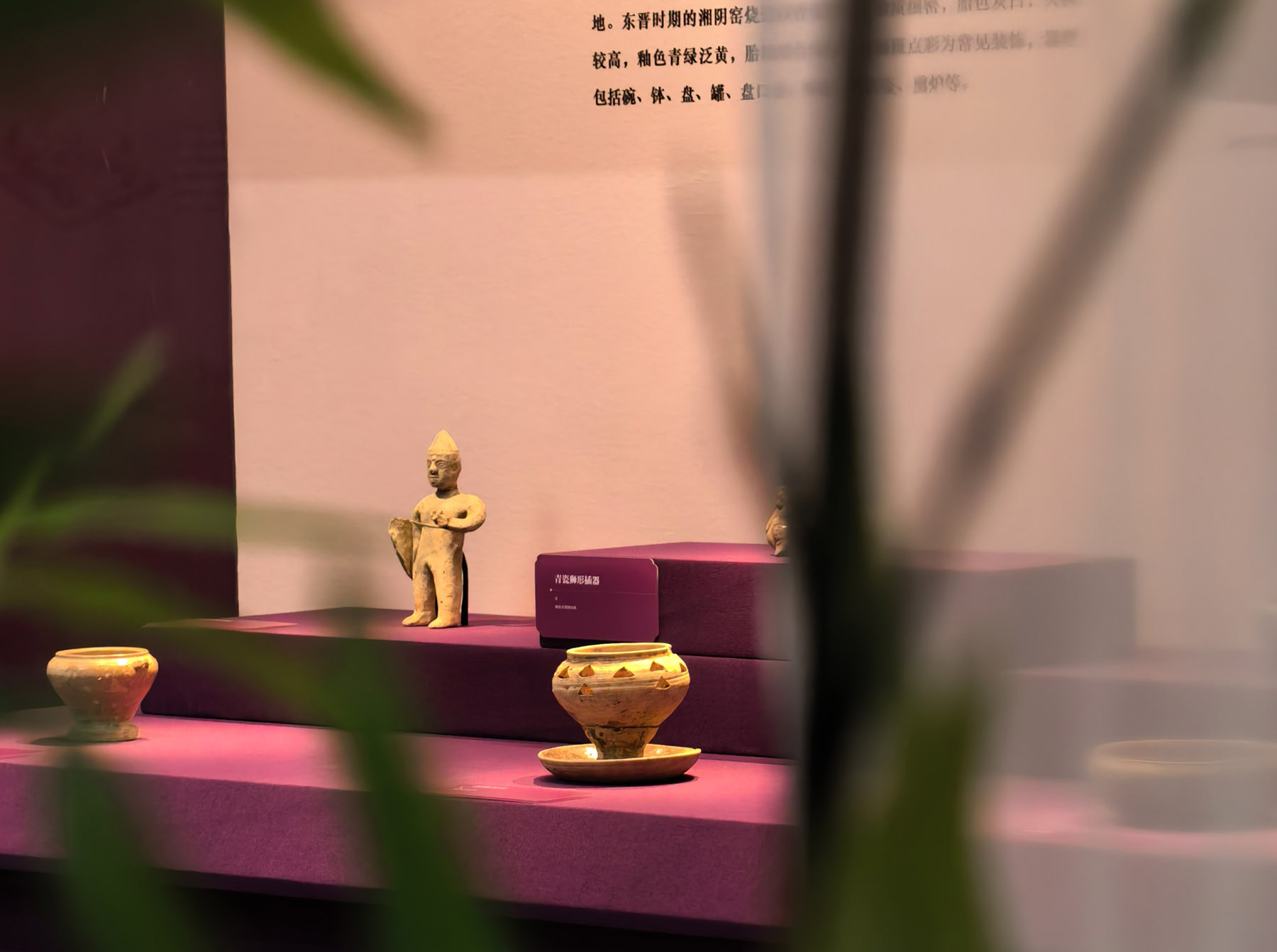
Artifacts on display help visitors trace an age marked by literati refinement and introspection: celadon vessels, bricks decorated with auspicious animals, a bronze beast-shaped water dropper for an inkstone and other objects that eschew flamboyance.
Together, they convey the understated elegance of the Eastern Jin, an aesthetic echoed by bamboo decorations swaying through the gallery.
"When we look back at people's lives during that period, we can see that many were at a loss," Zhu says. "But they emerged from that confusion with open arms and a determination to rebuild. The exhibition allows visitors to view their history and way of life through a modern lens."
Perhaps some people even lived lives ahead of their time.
Wang Danhu, a woman from the same generation as Wang Xizhi's family, died at 58. Her epitaph makes no mention of a husband, suggesting she may never have married. Yet her burial beside her father indicates that she held high status within the clan, according to studies of burial customs. Gilt gold jewelry and elixirs found in her tomb, now on display, may also hint at a life of considerable privilege.
"We cannot excessively romanticize that dynasty as if it consisted only of nobles living poetic lives," Zhang says.
"Politics was often brutal, and many ordinary migrants endured great hardship.
"However, thanks to the northern immigrants, production methods in the South were greatly improved," Zhang adds. "China's economic center also began shifting southward. That trend continued for centuries and laid the foundation for the strong economic power of Jiangnan today."
As the late historian Tian Yuqing wrote in the concluding chapter of his landmark book, The Politics of the Powerful Families During the Eastern Jin: "Winners of historical movements are by no means any powerful families. When the movement ended, they all disappeared into history.
"The truly valuable legacies were the development of Jiangnan and its refined culture ... These were the achievements of the people."
After the Eastern Jin ended, four successive dynasties, collectively known as the Southern Dynasty (420-589), continued to establish their capitals in Nanjing.
The standoff between North and South continued until the Sui Dynasty (581-618) finally crossed the Yangtze River and reunified China. This paved the way for the Tang Dynasty (618-907), one of the high points of ancient China's national strength and culture.
"During those years of division, people here united in the face of crisis and spared no effort to build Nanjing and Jiangnan," Zhang says. "That actually created an important foundation for national unity."
The professor adds: "Here, the culture of the Central Plains was preserved, developed, and transformed. Once China was reunified, the social systems of Jiangnan fed back into the Central Plains and contributed to national governance in many ways. Chinese civilization thus reached an even higher level."
Contact the writer at wangkaihao@chinadaily.com.cn
