

Hong Kong is at the forefront, reaping the fruits of the technology that simulates human intelligence. Global trade and services are among the biggest beneficiaries as the demand for artificial intelligence-related products reaches a crescendo. Gaby Lin reports from Hong Kong.

Editor’s note: AI is no longer just an algorithm — it is a traded product reshaping Hong Kong’s economy. This second article follows the energy-computing nexus into trade and technology, and asks whether the boom can last.'
No longer is artificial intelligence confined to algorithms and digital codes. It has swiftly become a powerhouse driving global trade and services.
Hong Kong — an international financial center and the world’s fifth-largest merchandise trading economy — is at the epicenter of this boom. From supply chains and merchandise trade to finance and professional services, the wave is creating new opportunities and fueling economic growth.
This dynamic also highlights an upgrading of the “going global” model of Chinese mainland companies. What was once largely a story of simply loading containers with manufactured items is evolving into higher-value technological product solutions and a deeper global strategy encompassing investment, research and development, as well as international business operations.
Strong global demand for AI-related electronics has significantly lifted the Hong Kong Special Administrative Region’s merchandise trade. According to the Census and Statistics Department, the value of the city’s total exports of goods rose 42.5 percent in the first eight months of 2026, compared with the same period a year earlier.
READ MORE: AI-driven electronics boom seen to keep powering HK trade
In August alone, exports jumped 53 percent year-on-year to nearly HK$668 billion ($85.11 billion), while imports rose 60 percent to HK$739 billion.
The bulk of the expansion was driven by technology-related shipments. The total value of exports in electrical machinery, apparatus and appliances, and electrical parts surged more than 62 percent in August, while exports of office machines and automatic data processing machines soared 131 percent.
Buoyant external trade is fueling Hong Kong’s broader economic growth. The city’s GDP hit a record high in the first half of 2026, expanding 5.1 percent year-on-year — its strongest semi-annual performance in nearly five years.
HKSAR government economist Irina Fan Yuen-yee says AI-related products account for about 70 percent of Hong Kong’s current total merchandise exports. “As a major trading hub for technology-related products, we’ve clearly benefited from the world boom in AI investment.”
Electronics has dominated Hong Kong’s merchandise trade structure for decades. Yet, the products’ driving growth have continuously evolved alongside global technological trends that have become increasingly centered on AI, says Bruce Pang Ming, director of research at the Hong Kong Trade Development Council.
“Looking at specific product segments, chips and memory have shown the most significant growth in recent years, driven by the development of AI, big data and cloud computing. The products with the most notable growth are all related to these sectors,” he says.
Other major contributors include products like computer parts and enterprise-grade routers widely used by corporations and data centers. Most of them are re-exported through Hong Kong. Some are shipped from overseas markets to the mainland, while products from the mainland are re-exported to destinations around the world.
Pang says the electronics supply chain is highly integrated globally. “It isn’t just the mainland that has demand (for electric products). Other markets also need mainland (capacity and products).”
Hong Kong’s unique role as a “superconnector” allows it to benefit from the surge by linking the mainland with the world.

Going global hub
The economic spillover arising from AI’s advance extends well beyond merchandise trade. As Chinese enterprises race to capture a share of the exponentially growing global AI market, many have turned to Hong Kong as a base for international expansion and increased investment, fueling demand from the city, ranging from financing and research and development, to talent recruitment and professional services.
Joining the ranks of mainland businesses forging overseas growth is iFLYTEK — a leading AI company specializing in intelligent speech technologies and large language models. The company, based in Hefei, Anhui province, plans to invest HK$400 million in Hong Kong in the coming years as it expands its international presence.
On its “going global” journey, iFLYTEK’s connections with Hong Kong had been largely transactional, moving products through the city’s trading and logistics networks. With the setting up of its international headquarters in the SAR, the company has branched out into business operations and global market promotion.
“The year 2025 marked the dawn of ‘AI for All’ and ‘AI Across Industries’. At this juncture, choosing Hong Kong as our bridgehead for globalization and international headquarters is a move with the right timing and at the right place,” says Yan Qingxi — the company’s chief director for Hong Kong and Macao.
Hong Kong is the venue for product demonstration and real-world applications, enabling iFLYTEK to test the products before promoting the technologies beyond the home market, she says. “It’s a cosmopolitan city with an internationally recognized regulatory framework, data security compliance standards, intellectual property protection mechanisms, as well as a convenient global trade services ecosystem.”
iFLYTEK’s growing footprint in Hong Kong is reflected in research and development activities. The company and its Hong Kong-listed subsidiary Xunfei Healthcare have built a global research institute at Cyberport — the city’s flagship digital technology hub and a major startup incubator. The facility focuses on cutting-edge research in healthcare and AI, including algorithms for medical large language models, and AI-powered diagnosis, treatment and health management.
Yan says Xunfei Healthcare will leverage the city’s advantages to develop a digital health governance framework aligned with international standards and adopt a scalable model for global health management.
ALSO READ: iFlytek to empower Hong Kong through AI
Last year, iFLYTEK’s overseas business generated more than one billion yuan ($150 million) in revenue — up 275 percent from the previous year. Growth has been particularly strong in consumer-facing AI hardware, with overseas sales of its AI-powered E-Ink digital tablet surging over 120 percent in the first half of 2026.
The impetus is also apparent in the country’s overall trade performance. According to China’s General Administration of Customs, imports and exports of computing-related hardware, such as electronic components and computer parts, rose 56.6 percent to 5.13 trillion yuan in the first half of this year.
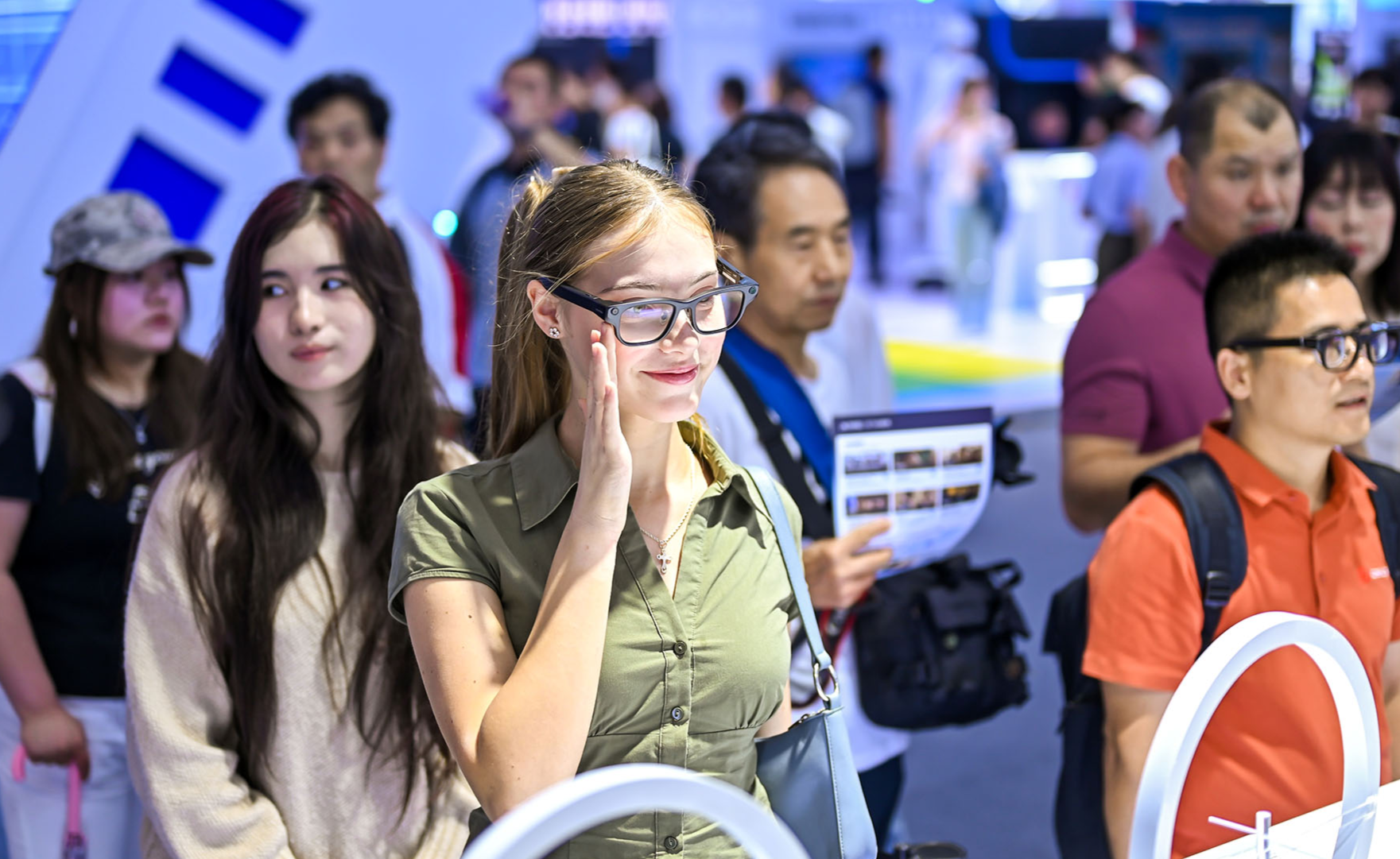
More high-tech products are reaching global markets. AI glasses, AI-powered translators, mechanical exoskeletons and other smart devices are rapidly gaining traction overseas, while exports of industrial and surgical robots continue to log robust growth.
Listing momentum
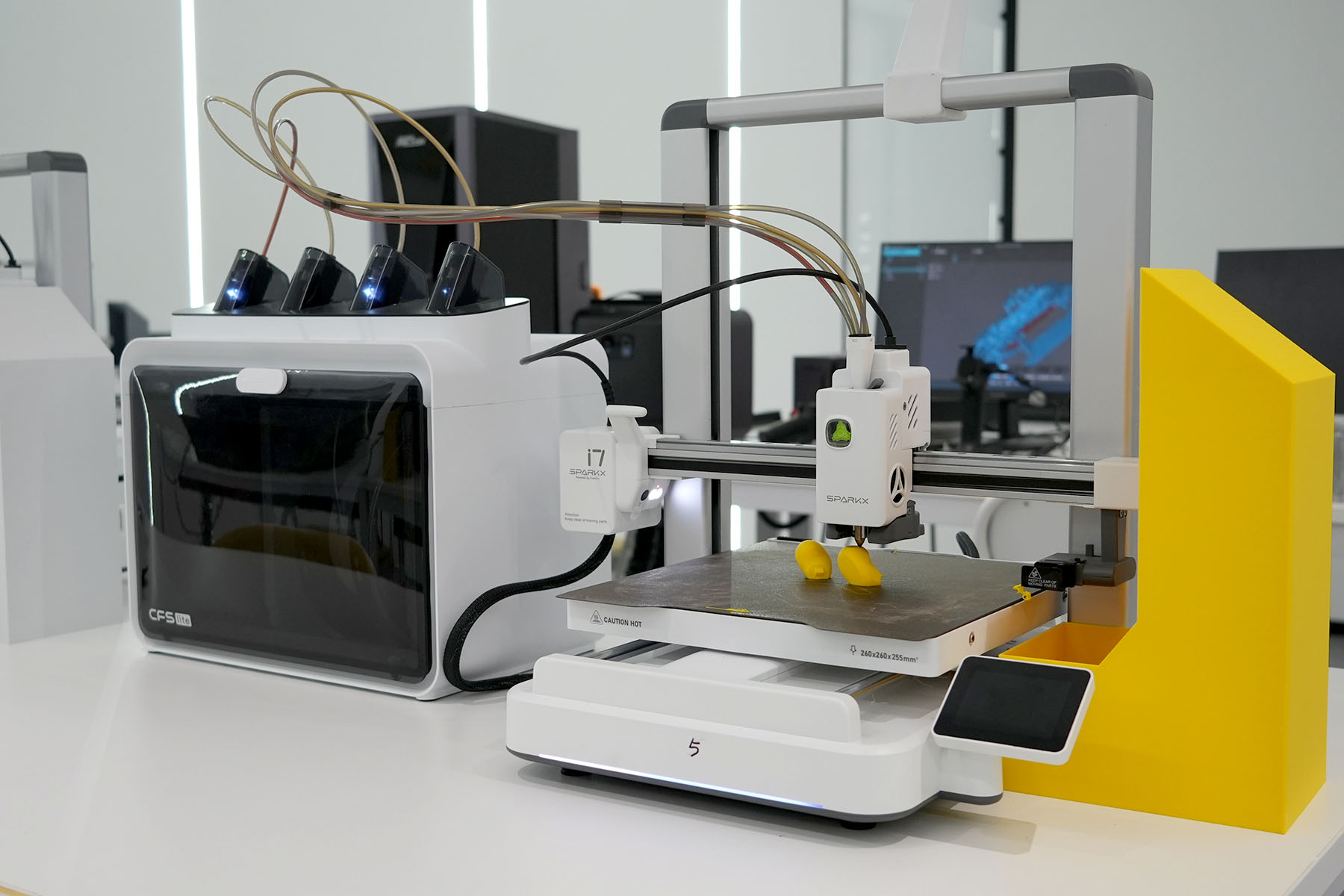
The influx of AI-related businesses has also injected fresh momentum into Hong Kong’s financial sector. One example is Shenzhen Creality 3D Technology Co Ltd — a global leader in 3D printer technology that’s ramping up investment in AI as it seeks to capitalize on the global trend.
Debuting on the Stock Exchange of Hong Kong in May, Creality was the first consumer-grade 3D printing company to go public in the city. It raised HK$1.38 billion through a global offering by issuing 73.42 million shares. Part of the proceeds will be used to expand Creality’s research and development team and accelerate the integration of AI into its product ecosystem, including enhancing tools that enable users to generate 3D models more efficiently from text or images.
“I believe that by improving AI-powered production, we’re helping users better complete their creative process — and that’s how this market can continue to grow,” says Chen Chun, CEO and co-founder of Creality.
Given that most of the company’s products are sold overseas, with Hong Kong as a globally open market and a significant financial hub, listing in the SAR is a natural choice for Creality. “Going public in Hong Kong offers certain advantages in terms of international influence and integration with the global community,” says Chen, adding it could increase the company’s global awareness, making it more familiar and accessible to both investors and consumers.
Hong Kong’s established professional services and substantial international capital pool may aid Creality’s growth by providing convenience and flexibility in long-term global strategy planning and capital allocation. “I think it’ll be much better for our business,” Chen says.
According to Hong Kong Exchanges and Clearing, which runs the city’s bourse, 106 companies went public in the city in the first eight months of this year, raising a total of HK$342.4 billion — a 153-percent increase year-on-year.
Market estimates put the funds raised through AI-related listings at over HK$235 billion, accounting for at least 65 percent of all funds collected through Hong Kong’s initial public offerings during the same period.
Can it last?
Can the AI dividend last? While businesses across different sectors are benefiting from the broad-based gains generated by the boom, concerns have grown that a cooling-off trend could eventually slow parts of Hong Kong’s economy, particularly the trade-dependent sectors.
Legislator Tommy Chung Ki-fung, who represents the import and export sector, says he believes the positive ripple effects are unlikely to fade any time soon. “Over the next two to three years, at least, we can still expect strong demand for AI and related products and services.”
However, he says Hong Kong must do more to transform the boom into a long-term, sustainable growth engine.
The HKSAR’s first Five-Year Plan for Economic and Social Development (2026-30) pledges to promote the deep integration of AI across sectors under the twin strategies of “industries for AI” and “AI for industries”.
Hong Kong Park at the Hetao Shenzhen‑Hong Kong Science and Technology Innovation Co‑operation Zone — one of the heartlands of the mega Northern Metropolis project — is expected to drive research and commercialization in frontier technologies, such as AI and data science, according to this year’s Policy Address.
ALSO READ: Hong Kong to target breakthroughs in core tech
The Northern Metropolis will also reserve land for high-value-added industries and advanced manufacturing.
Chung says these initiatives are aimed at converting Hong Kong’s current role in the AI supply chain from that of a product re-export hub into a more sustainable growth model. The city has the potential to develop an integrated ecosystem covering upstream research and development, midstream assembly of high-tech products, and downstream services, including trade financing and shipping insurance.
“We hope Hong Kong will evolve from being purely a transshipment port into a city equipped with a high-value-added supply chain management system,” says Chung.
“Ultimately, (the aim is) to become a hub not only for Asia, but also the world.”
Contact the writer at gabylin@chinadailyhk.com
