

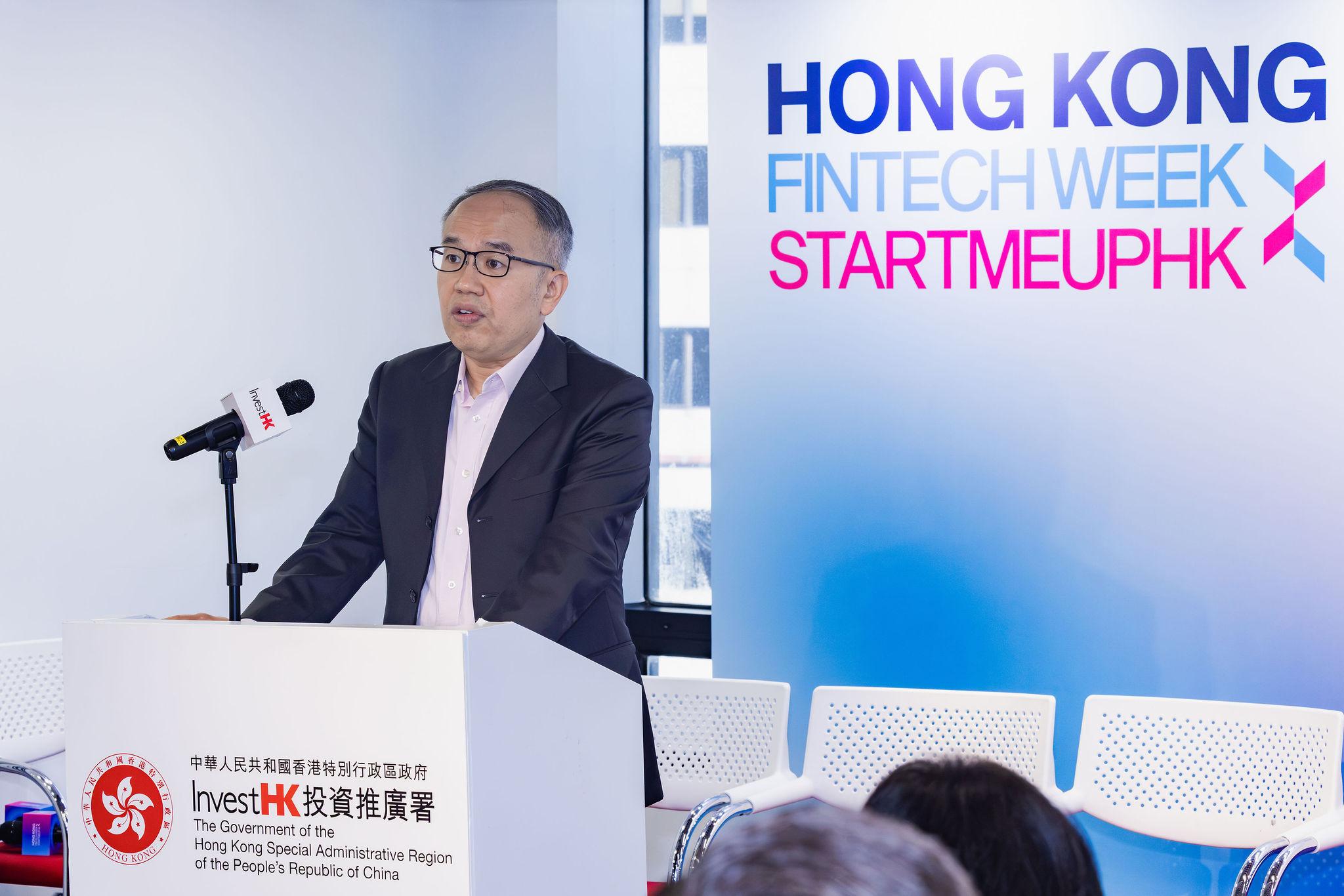
Besides connecting capital with green projects, Hong Kong adds value by providing trusted standards and infrastructure to make the ventures bankable and investable and ensure sustainable development, the special administrative region’s treasury chief said on Tuesday.
Delivering a speech at the Green and Sustainable Finance Forum, Secretary for Financial Services and the Treasury Christopher Hui Ching-yu said that the nation’s 15th Five-Year Plan (2026-30) supports the HKSAR in building a commodity trading ecosystem, enabling the city to contribute its professional expertise and international connectivity to national development and the global green transition.
As a key "superconnector" linking the Chinese mainland with international markets, the SAR brings together mainland industrial capabilities and green technologies with global capital and expertise, Hui noted.
“Our green finance market clearly demonstrates Hong Kong's connecting role. Last year, green and sustainable debt issued in Hong Kong exceeded $76 billion,” Hui said, adding that green and sustainable bonds arranged in the city amounted to around $38 billion, representing approximately 40 percent of the Asian market.
“Hong Kong has ranked first in Asia in this business for eight consecutive years,” he said.
ALSO READ: Lee: HK actively enhancing role in GBA's green value chain
Hui said that Hong Kong is broadening its green finance market, with green commodity trading playing an important part, while the city’s first Five-Year Plan for Economic and Social Development (2026-30) proposes developing a commodity trading ecosystem with gold as an entry point.
“On gold, we are taking forward the development of clearing system, storage, supply and infrastructure related to gold trading to fully leverage the role of gold as a strategic asset, with a view to benchmarking other major international gold trading centers in the long run while developing hardware and software simultaneously,” he added.
Measures are already taking shape, including expanding gold storage targeting a capacity of over 2,000 tonnes by 2028 and refining capability, said Hui, adding that a gold central clearing and settlement system will be launched in the first quarter of 2027.
Hong Kong is also strengthening its green finance ecosystem and broadening a range of market tools, with the Hong Kong Taxonomy for Sustainable Finance now incorporating transition elements, the treasury chief said.
“Just this month, HKEX (Hong Kong Exchanges and Clearing Ltd) completed cross-boundary pilots involving Green Electricity Certificates and the settlement of Shenzhen Emission Allowance transactions, building practical experience in regional green-market connectivity,” Hui said.
He added that HKEX Green Equity – a voluntary designation program launched on Oct 20 – helps investors identify companies with significant green business activities through a transparent framework and independent assessment.
READ MORE: CE: HK well-placed to link Belt and Road firms with green opportunities
As economies involved in the Belt and Road Initiative seek financing, technology and expertise to build cleaner infrastructure and strengthen climate resilience, Hong Kong is positioned to connect these needs with investment, supporting green enterprises in reaching international markets, Hui said.
Hong Kong’s task is to connect policy with markets, innovation with investment, and ambition with credible action, to build trusted commodity markets, deepen green finance and advance a more sustainable Belt and Road, he added.
