

The legend of the White Snake has remained one of China’s most enduring folk tales. While the plot has seen many variations since its earliest extant written form, a story by Gu Shenzi set in 807, the version most widely used for film, television and stage adaptations — there are literally hundreds — is the standard Chinese-opera plot that has stuck for almost a century.
The story follows the White Snake, who is able to assume human form after going through a millennium-long process of spiritual cultivation, eventually falling in love with a human — scholar Xu Xian.
READ MORE: Legend in modern time
Staged at the Hong Kong Cultural Centre on June 12 and 13, the Shanghai Grand Theatre-produced dance drama Lady White Snake reimagines the White Snake as Lady White — a contemporary woman with a past. The piece is framed as a journey in self-discovery, culminating in Lady White’s reconciliation with her true identity.
“The production aims to resonate with audience members by adding contemporary twists to a Chinese classic,” says Artistic Director Tan Yuanyuan.
ALSO READ: Reimagining a legend
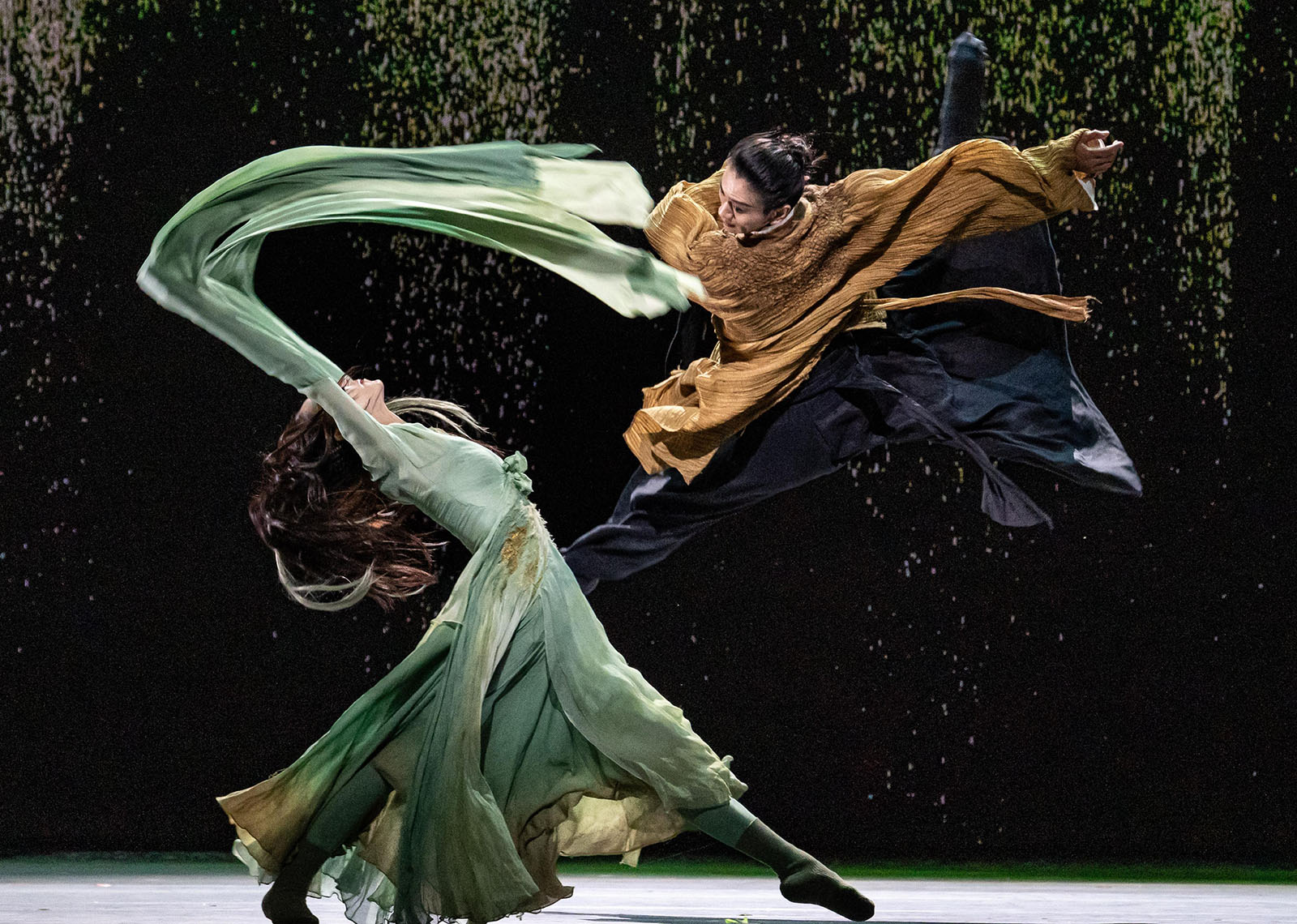
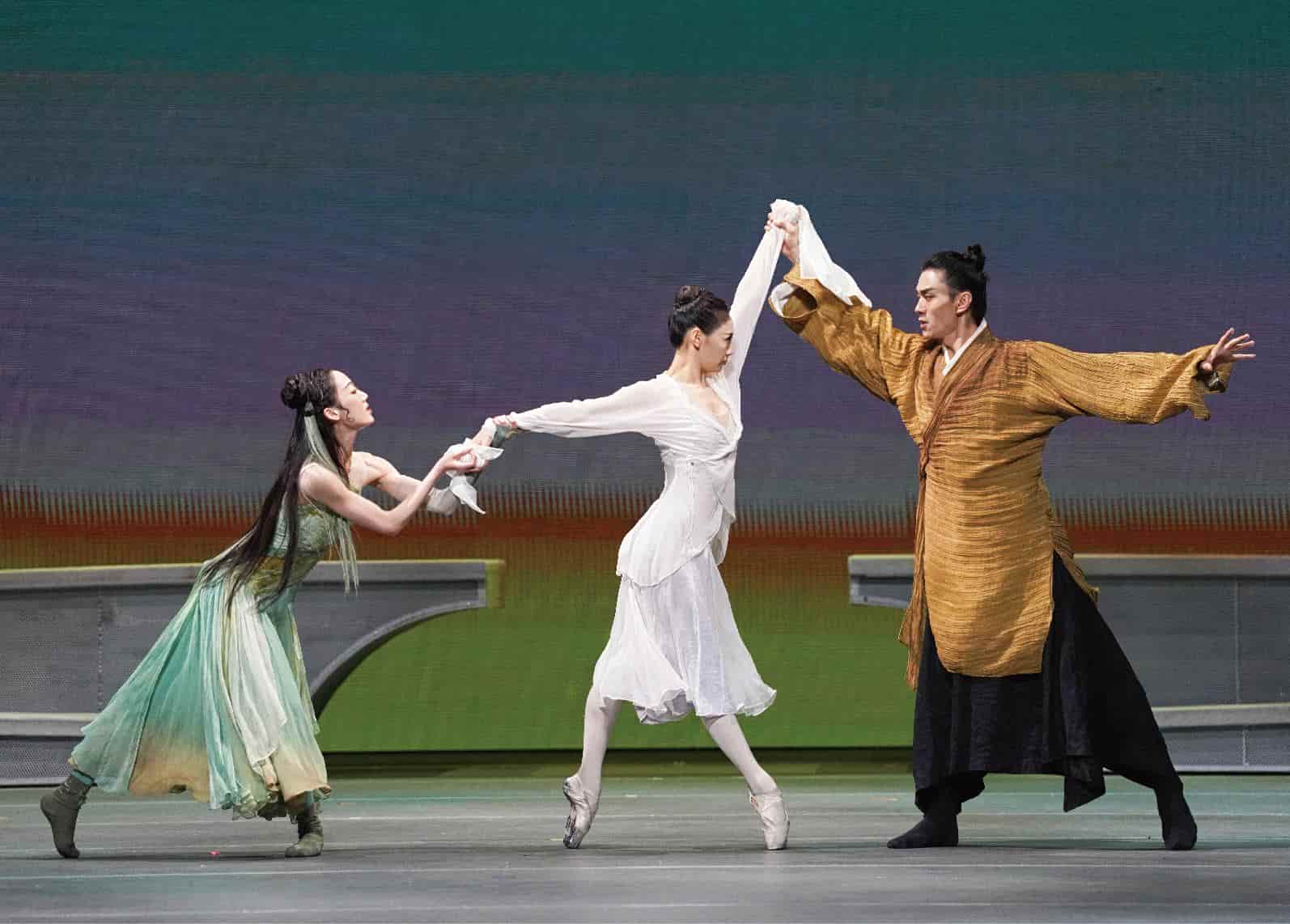
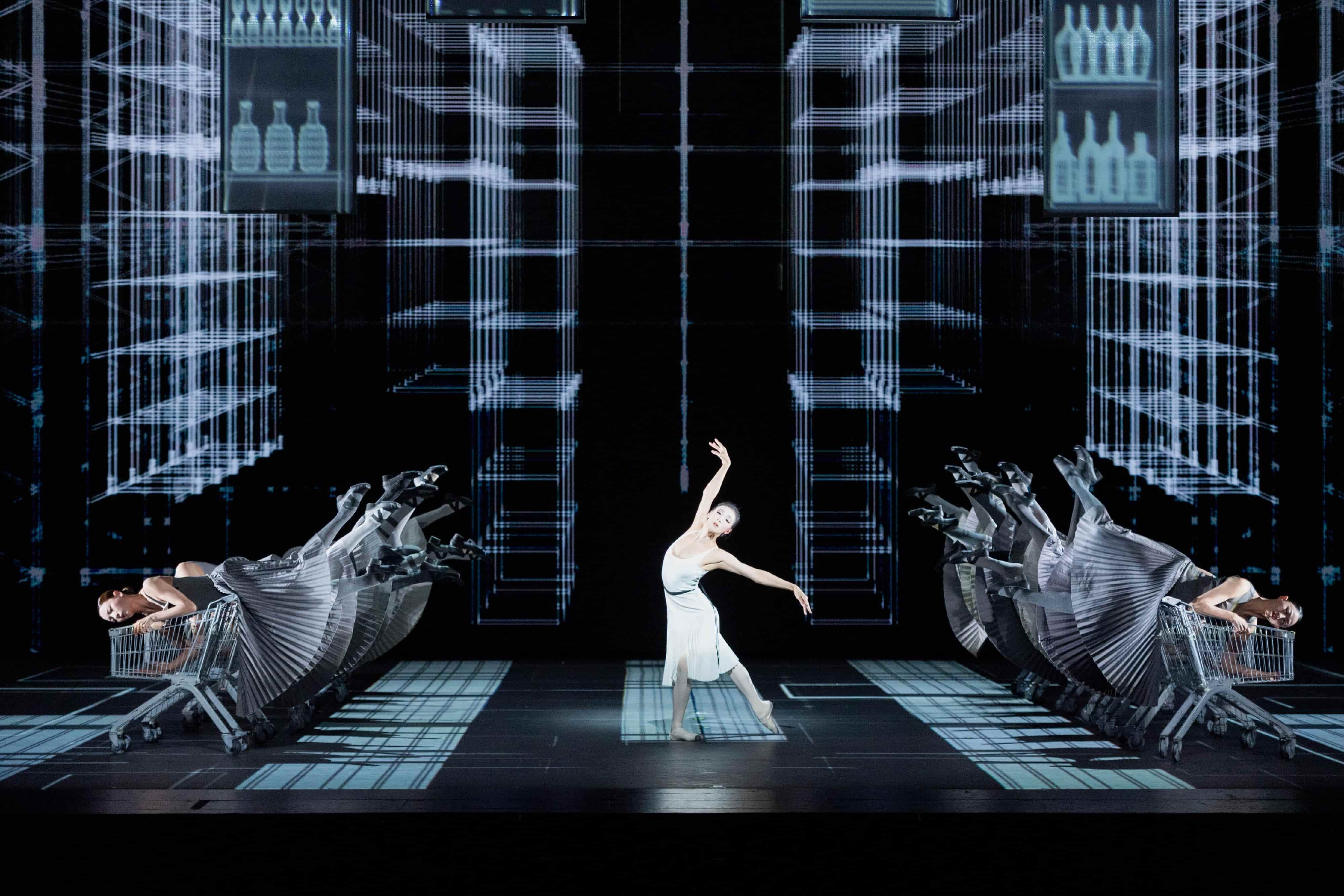
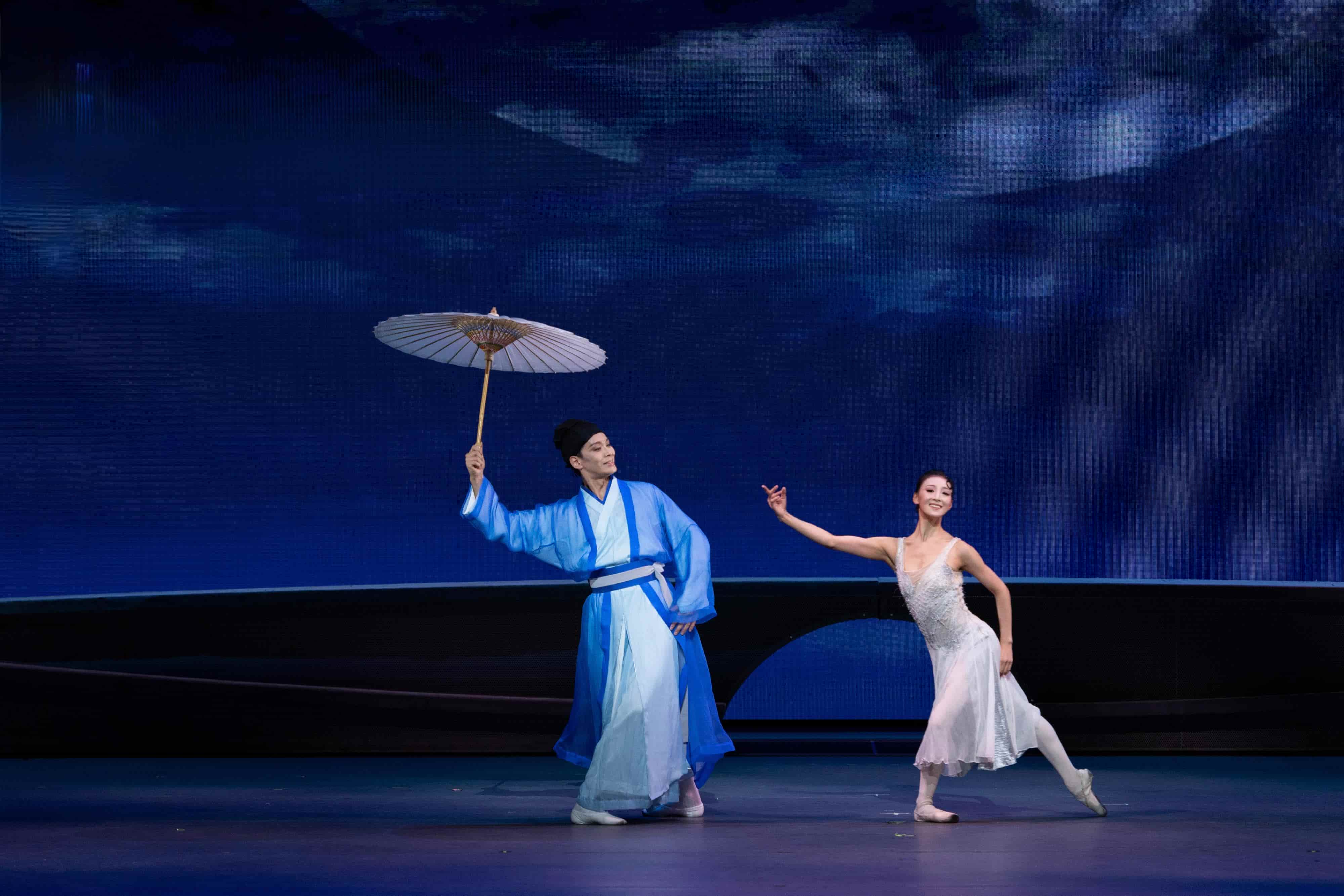
The story is told via two parallel tracks. In one of them, set in the present, Lady White is the Wife, seen pushing a trolley down a supermarket aisle. The other takes place inside her mind, when she has visions of her life as a snake, living in a mystical, forested realm. In this imaginary and fantastical world, the character of Xu Xian is a gentle and romantic scholar whom Lady White meets at West Lake, falls in love with, and is eventually married to; whereas in the contemporary-setting version, he is the Husband — a well-placed, slightly pompous, corporate executive-type. Similarly, Fa Hai — the Zen master and abbot of Jinshan temple — becomes the Psychologist, treating the Wife for experiencing hallucinations in the realistic track. Xiao Qing, the Green Snake who appears in the Wife’s visions, represents her jealous alter ego. On one hand, she is trying to wreck Lady White’s marriage to a human. On the other, she is the one who helps Lady White to resist the controlling influence of Fa Hai/Psychologist.
The dance styles are a mix of Chinese classical dance, ballet, ballroom dance, and martial arts. However, as choreographer Wang Peixian says, for the lead dancers the emphasis was more on developing distinct styles for each of the dual identities they were required to portray, rather than giving a technically flawless performance.
Not that any of them was wanting in the latter department. On the night this reviewer watched the show, the technical elegance demonstrated by Liu Sirui as Wife/White Snake, Sun Jiayong as Husband/Xu Xian, and especially Su Hailu, who danced the roles of Psychologist/Fa Hai on both nights, was of a very high standard.
The production design contributes hugely to the visual storytelling — within seconds, the scene shifts from familiar supermarket aisles to evocative underwater environments. Wang Nianci as Green Snake/Xiao Qing made intelligent use of traditional Chinese opera water sleeves, their swirling motions suggesting the movement of sea creatures.
Both Su and Wang Nianci seemed to draw on their Chinese classical dance training. Su wove martial-arts-style moves, such as butterfly twists, into the combat sequences, as he, together with his army of mask-wearing monks, fought Wang’s Green Snake.
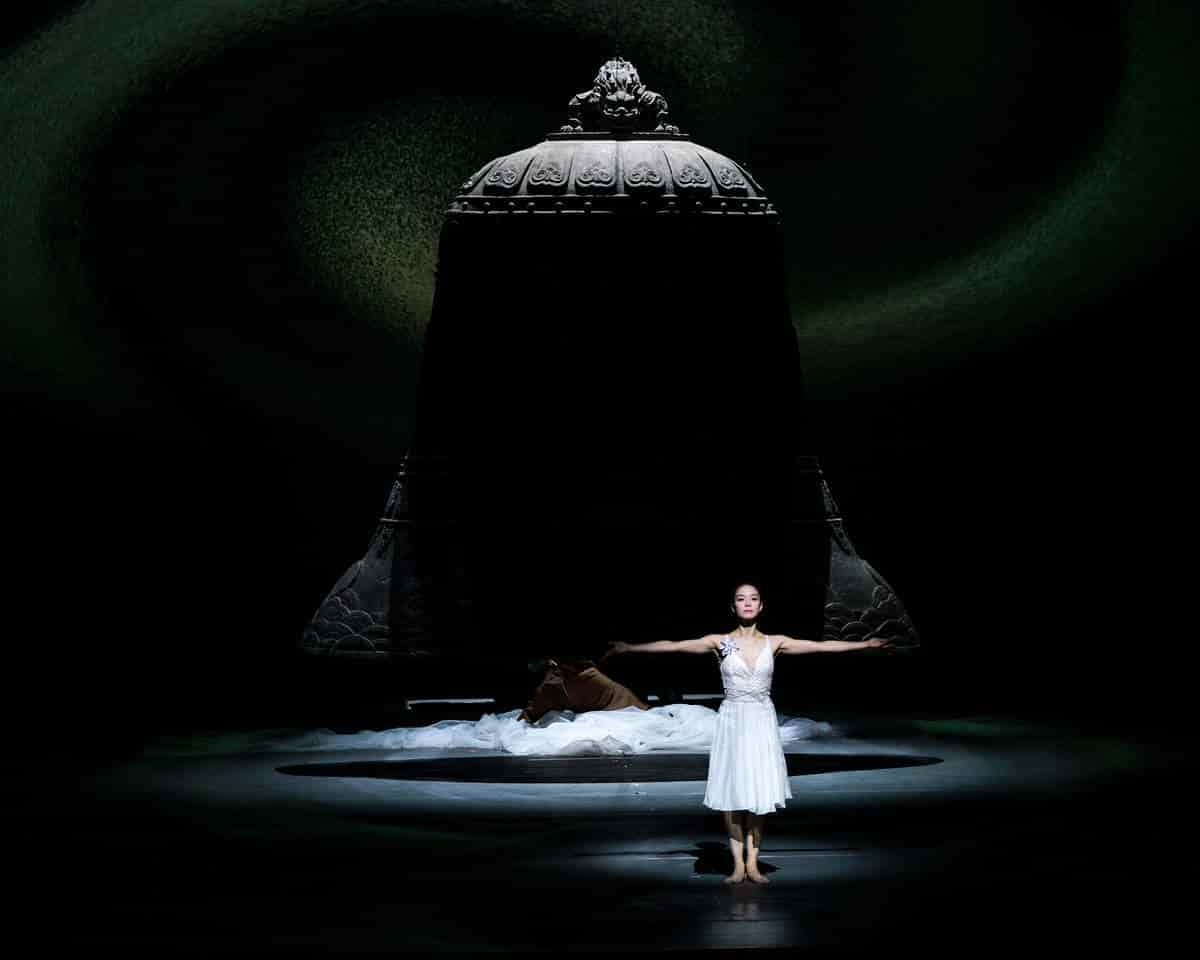
The production makes a dramatic departure from the Chinese-opera tradition in its epilogue. Instead of ending with Lady White living incarcerated inside the Leifeng Pagoda, we see her captor, Fa Hai, trapped beneath a massive bell in the pagoda, while Lady White is freed and reunited with Green Snake.
Director Zhou Ke says that the final scene in which Lady White and Green Snake appear fused into a single entity underscores the production’s theme of finding and reconciling with the idea of one’s true self.
According to Sugeng Utomo, vice-president of the Hong Kong History and Culture Society, Shanghai Grand Theatre has turned a tale of resisting oppression into a journey in self-discovery and finding authenticity.
Contact the writer at irismuk@chinadailyhk.com
