The Chinese character for “freshness” (xian) combines two components: “fish” on one side and “goat” on the other.
This travel route stretches northward along Zhejiang’s southeast coastline. Starting from Wenzhou at the Ou River Estuary, a two hour journey brings you to Taizhou; another two and a half hour ride leads further north to Ningbo. These three cities form an about 400-kilometer stretch of the East China Sea coastline. The Ou, Ling and Yong Rivers empty into the sea respectively at each city, where river mouths meet the ocean and fishing ports interconnect.
Zhejiang boasts a sea area of 260,000 square kilometres, two and a half times its land territory, with a 6,400 kilometre coastline — the longest among all Chinese provinces. The Zhoushan Fishing Ground is China’s largest fishery. Here, cold and warm ocean currents converge, bringing abundant bait and dense fish stocks. From Wenzhou to Taizhou and Ningbo, each city serves up its own take on ocean fresh flavours.
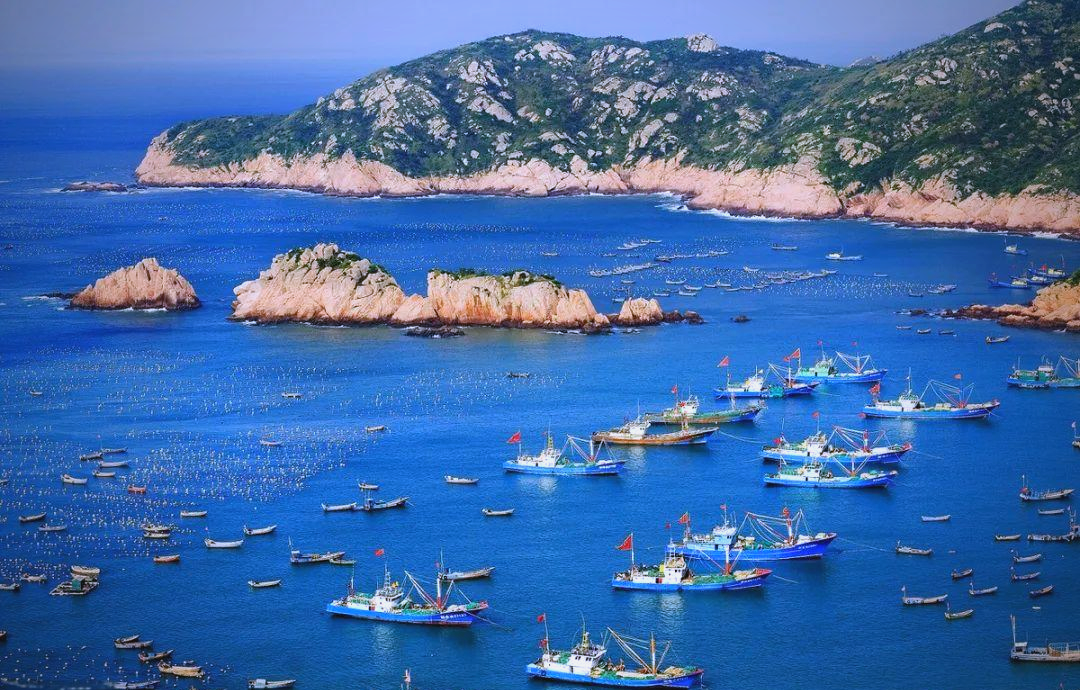
Wenzhou’s freshness originates right where the Ou River meets the sea.
Wuma Street embodies Wenzhou’s commercial heritage. When Guo Pu of the Eastern Jin Dynasty founded the Yongjia Prefectural City, legend tells of a white deer passing by holding blossoms in its mouth, earning Wenzhou the nickname “Deer City”. Wuma Street derives its name from Wang Xizhi of the Eastern Jin Dynasty. As Prefect of Yongjia, he travelled in a carriage drawn by five horses; locals named the street in his memory. Today, Wuma Street links with Park Road and Chan Street. Its arcaded buildings blend Chinese and Western styles, with grey sculptures decorating colonnades, where time honoured brands sit side by side with trendy shops.
Shuomen Street sits beside the Ou River, once the northern gateway of ancient Wenzhou. Buildings dating from the Ming, Qing and Republican eras remain well preserved, featuring grey bricks, tiled roofs, wooden doors and carved lattice windows. Across the street, beneath the Ou River, lies the ancient Shuomen Port Site. Archaeologists have unearthed wharves, shipwrecks and porcelain wares from the Song Yuan dynasties, proving Wenzhou was a vital port on the Maritime Silk Road during the Southern Song Dynasty. Sea tinged gusts drift from Shuomen, carrying the briny scent of the ocean, with the silhouette of Ouyue Bridge visible in the distance.
Wenzhou cuisine, known as Ou Cuisine, features abundant seafood, celebrated for its clean, fresh taste with delicate, well rounded seasoning. Shredded Fish Tossed with Starch is a signature local dish. Boned croaker fillets are coated with starch, pounded paper thin with wooden mallets, cut into shreds, then simmered together with ham, shiitake mushroom and chicken shreds. The soup is clear and exquisitely savoury. The pounding technique is key: repeated mallet blows loosen fish fibres, blending starch seamlessly into fish meat for a silky, tender bite.
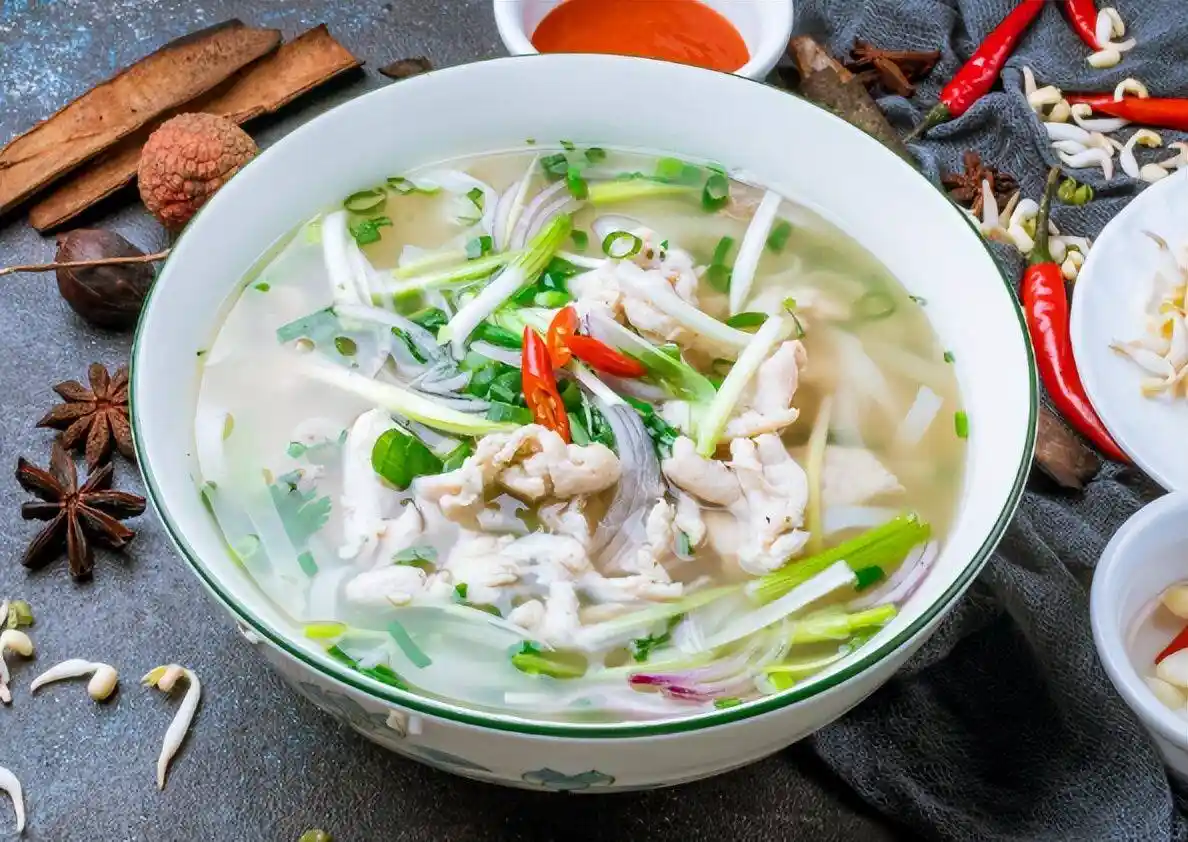
Glutinous rice forms the backbone of a classic Wenzhou breakfast. Steamed glutinous rice is ladled into bowls, topped with crushed fried dough sticks, minced pork gravy, dried shrimp and chopped green onion. Sweet topped versions add sugar, while savoury ones come with meat broth, tailored to individual tastes. Fish ball soup is another must order. Wenzhou style fish “balls” are not spherical at all: fish paste is scraped directly into boiling water to form irregular strips. Served in soup seasoned with vinegar and pepper, they deliver a bright blend of sour, spicy and umami notes.
Taizhou’s freshness is epitomised by New Rongji’s culinary craft.
On Linhai’s Ziyang Old Street, Wang Tianshun’s Egg White Stuffed Pastry whips egg whites into foam, wraps them around red bean paste and deep fries the parcels for crispy exteriors and chewy, glutinous centres. Freshly baked sea weed pastries flake apart at the touch, releasing savoury seaweed aroma. Ma Xia are dough drop noodles named for their shrimp like shape, simmered with seafood and radish. Yet Taizhou’s most celebrated flavours are served at New Rongji.
Founded in 1995 in Linhai by local restaurateur Zhang Yong, New Rongji began as a humble seafood food stall. Zhang holds near obsessive standards for ingredients: hairtail must be caught in specific East China Sea waters during designated seasons; swimming crabs must be live; large yellow croakers should be wild. Expanding from Linhai to Hangzhou, Shanghai, Beijing and Hong Kong, New Rongji has earned Michelin stars across its restaurant portfolio, boasting nearly twenty stars at its peak and cementing its status as a legend in Chinese cuisine.
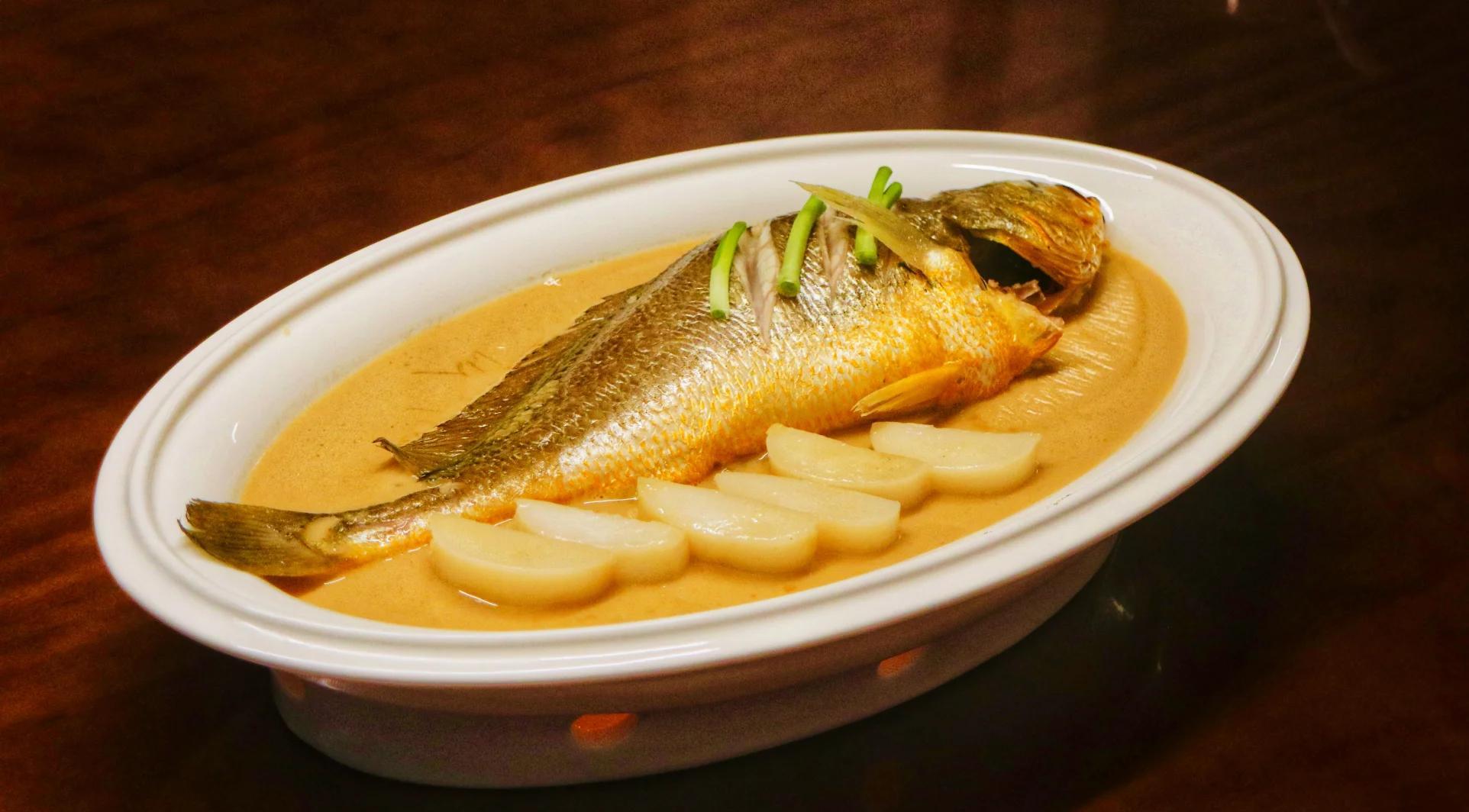
Braised Wild Large Yellow Croaker is New Rongji’s iconic dish. Wild East China Sea large yellow croaker with flaky, garlic clove textured flesh is pan seared with garlic, ginger and spring onion, then braised in soy sauce infused stock until the sauce turns rich and glossy and the fish stays tender. A premium wild large yellow croaker can cost thousands of yuan, yet Taizhou locals insist it is well worth the price.
Taizhou diners pursue the so called “direct from hold freshness”: seafood freshly unloaded from fishing boats is cooked right at waterfront stalls. Simply blanched in plain water or steamed, then dipped in soy vinegar sauce, it highlights pure, natural sweetness. Sanmen blue crabs boast thin shells and rich roe; fish balls from Shitang in Wenling offer springy texture; Jiaojiang steamed glutinous rice dumplings carry subtle ocean savour.
Shitang Peninsula lies in southeast Wenling, where mainland China greeted the first rays of sunlight of the new millennium. Xiao Ruo Village, a fishing hamlet on the peninsula, clings to hillsides. Its houses are painted in pastel macaron shades of pink, blue, yellow and green, cascading down slopes like an overturned paint box. The village overlooks the sea, with fishing boats anchored in the harbour and fishing nets spread across tidal flats, where sea breezes carry salty marine fragrance.
Luqiao Ten Li Long Street dates back to the Eastern Han Dynasty and flourished in the Southern Song. Stretching three kilometres along the Nanguan River, it stands as one of Zhejiang’s best preserved historic water town commercial blocks. Jiazhi Old Street traces its origins to the Tang Dynasty and hosts the national intangible cultural heritage Grand Summer Heat Boat Festival. Every Major Heat solar term, a grand ritual unfolds: fifty four bearers parade a paper crafted “Great Summer Heat Boat” through streets, before burning it riverside to send it out to sea, praying for safety and well being. Deep inside the old street, Hidden Great Bookstore features soaring floor to ceiling bookwalls, with sunlight filtering through skylights onto the pages.
Ningbo’s freshness is the signature of Yong Cuisine — a savoury flavour steeped in literary heritage.
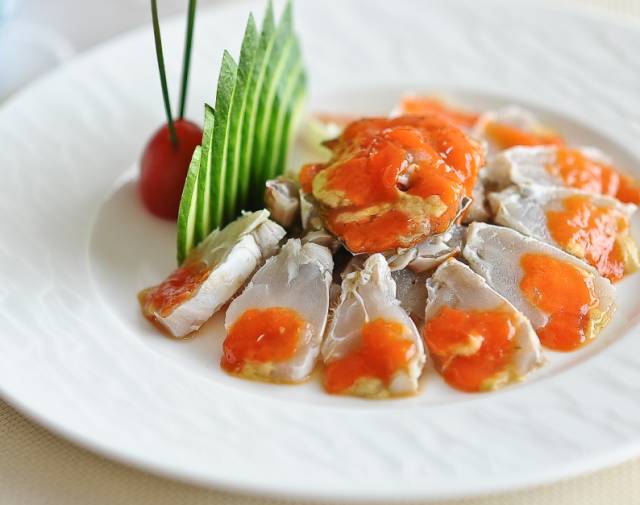
Ningbo style Yong Cuisine is famed for its salty fresh profile, excelling at pickling, fermenting in rice wine sediment and marinating in rice wine. Red Roe Marinated Swimming Crab graces festive Ningbo dinner tables. Caught around the Winter Solstice, plump roe rich swimming crabs are cured in brine. Their crimson roe glows like agate against translucent, sweet savoury crab meat. Wine marinated mud snails deliver crisp meat infused with mellow rice wine aroma. Ningbo glutinous rice dumplings are filled with lard infused black sesame paste. Made from water milled glutinous rice wrappers, they have thin skins, silky filling and balanced sweetness.
Ningbo Drum Tower is the city’s sole surviving ancient city gate ruin, first built in 821 AD. Its base hosts a snack market redolent of fried dough twists, rice cake rolls and golden dragon and phoenix rice cakes. The Old Bund sits at the Sanjiangkou river confluence. Opened in 1844, it predates Shanghai’s Bund by twenty years. European style buildings line the riverbank, with lights from bars and cafés shimmering across the Yong River. South Pond Old Street marks the former site of the historic “South Gate Market”. Time honoured eateries cluster here, serving Gang Ya Gou’s famous glutinous rice dumplings, Zhao Dayou’s dragon and phoenix rice cakes and South Pond fried dough twists.
Dongqian Lake has a surface area three times that of West Lake in Hangzhou. Guo Moruo once praised it: “Grace like West Lake, grandeur of Lake Tai”. Cycling along its lakeshore, you will reach Hanling Old Street, a waterside settlement built along mountain streams. Hanling Art Museum features undulating tile roofs evoking rolling waves. The lake yields another layer of Ningbo freshness: lake fish, river prawns and river snails are simply steamed or brine boiled to preserve their authentic taste.
Tianyi Pavilion sits on the west bank of Moon Lake. Founded in 1561 by Fan Qin, Vice Minister of War of the Ming Dynasty, it is Asia’s oldest surviving private library. This two storey wooden building features an open upper floor lined with book cabinets, and six ground floor rooms, designed following the ancient philosophy “Heaven generates water; Earth completes six” — using water as fire prevention symbolism. Fan Qin established a family rule: “Books shall not be divided among heirs, nor removed from the pavilion”. For thirteen generations across four hundred years, its collection remained intact. Tianyi Pond in the courtyard connects to Moon Lake, serving both as landscape feature and fire reservoir. The garden features rockeries, ponds, pavilions and covered corridors. The Mah Jong Exhibition Hall is housed in the Qin Clan Ancestral Hall. Mah Jong’s origins tie closely to Ningbo’s maritime culture: “cylinders” represent ship buckets, “bamboos” stand for ship cables, “characters” denote currency units, and wind tiles reference sailing directions.
From the Ou River to the Ling River and the Yong River, from Wenzhou’s glutinous rice breakfast to New Rongji’s braised yellow croaker and Ningbo’s red roe marinated crab, Zhejiang’s coastline forms a thread woven with fresh seafood flavours. Every city boasts its distinct taste; every street offers its signature bites; every harbour receives freshly landed seafood catches.
Freshness is an art of time: the shorter the interval between fish landing and cooking, the better. Freshness is also shaped by geography: water temperature, salinity and ocean currents of the East China Sea endow local seafood with uniquely sweet flavour.
Featured Itinerary: Taste of Coastal Cities — 6 Day Tour of Wenzhou, Taizhou & Ningbo
- Day 1: Arrive at Wenzhou Longwan Airport → Wuma Street, Park Road, Chan Street, Shuomen Old Street
- Day 2: Wenzhou → Linhai (approx. 2 hour drive) → Taizhou Prefectural City Wall, Ziyang Old Street
- Day 3: Xiao Ruo Colourful Fishing Village (Shitang), Luqiao Ten Li Long Street, Jiazhi Old Street (Hidden Great Bookstore)
- Day 4: Taizhou → Ningbo (approx. 2.5 hour drive) → Drum Tower Pedestrian Street, Old Bund, South Pond Old Street
- Day 5: Dongqian Lake (lakeshore cycling & Hanling Old Street), Tianyi Pavilion Museum, Tianyi Square
- Day 6: Depart from Ningbo Lishe International Airport