

Author Ma Ka-fai's latest novel, which concludes his trilogy, captures the essence of the city's past through the lens of secrets, martial arts and personal reflection, Yang Yang reports.
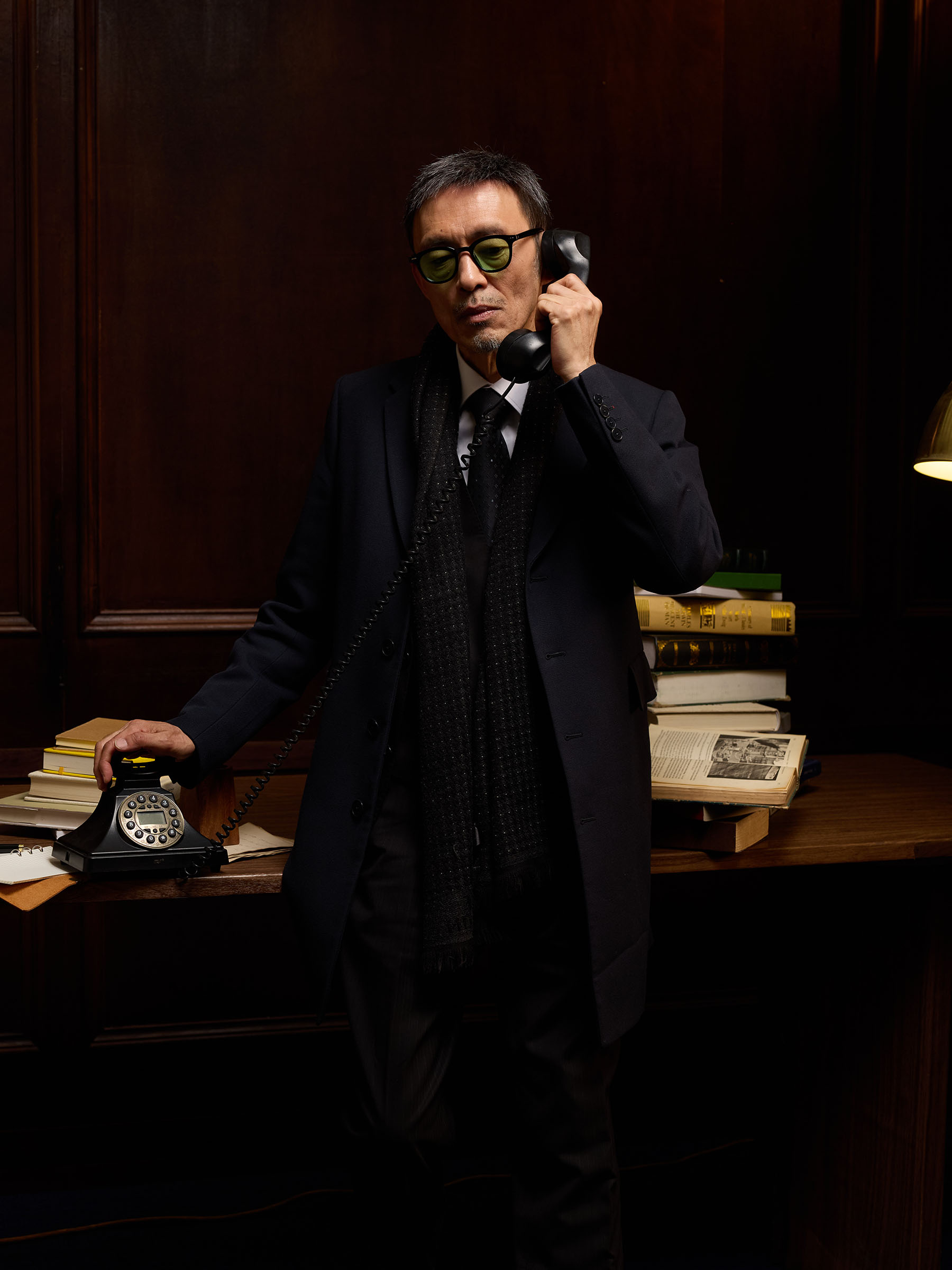
In July 2021, Hong Kong writer Ma Ka-fai had to stay in a suite of a resort hotel in Macao for a full 14 days without being able to go outside due to COVID-19 quarantine rules, so he took the chance to conceive his new novel, the last of a trilogy.
After seven days, and still struggling to come up with an idea for the book, Ma was feeling anxious. One night, he finally managed to fall asleep. In a dream, he heard a man asking him, "When will you start writing? I've been waiting for so long."
In a daze, Ma saw a thin man standing by the bed, dressed in a short martial arts outfit and looking like a kung fu master. Ma asked, "Who are you?"
The man cupped his hands and smiled: "I'm a ghost! I love Longtou Fengwei (Once Upon a Time in Hong Kong I) and Yuanyang Liu Qi Si (Once Upon a Time in Hong Kong II)," the first and second books of Ma's trilogy.
Ma paused for a moment, and then let out a joyful "Ha!" As his laughter echoed, the ghost vanished without a trace, and Ma woke up.
That ghost became the protagonist, Hon Tin-yan, in the third novel Shuangtian Zhizun (Once Upon a Time in Hong Kong III), published in May by New Star Press. In the introduction of the book, he recounts the ghost story.
A decade has passed since he published his debut novel Longtou Fengwei in 2016.
The book earned more than 20 literary awards, including being named on the top 10 novels list of Yazhou Zhoukan magazine and topping the fiction category in Southern Weekly's annual best original books list.
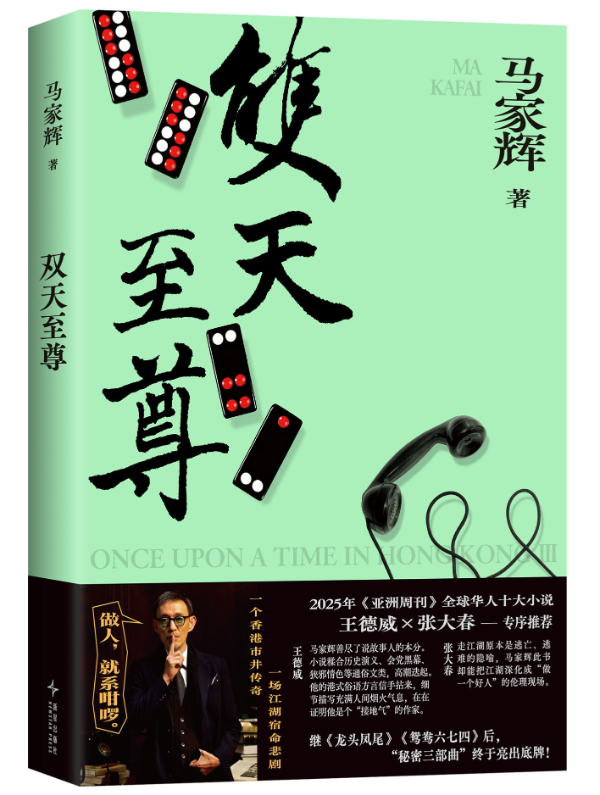
At the launch party for Shuangtian Zhizun in Beijing at the end of May, Ma, now 63 years old, said Longtou Fengwei was conceived when he was between 50 and 53 years old, when he "wrote in a free and uninhibited style, with words and plotlines that flowed effortlessly, full of vibrant energy".
The second book, Yuanyang Liu Qi Si, was written when he was between 54 and 57 years old. It moves away from the exuberance of youth and focuses on a deeper exploration, centering on the theme of "keeping secrets".
The final book in the trilogy was written between the ages of 57 and 62. His mindset and life experiences had undergone significant changes, prompting him to reflect on profound issues such as life and death and the true meaning of gains and losses, he says.
The first book follows the life of the protagonist Luk Nam-choi. Luk, a nobody from the countryside of Guangdong province, arrives in Hong Kong in 1936 and rises to be a gang leader in the city.
Against the backdrop of instability due to the War of Resistance Against Japanese Aggression (1931-45) and the capture of Hong Kong by Japanese forces in 1941, Luk has a forbidden love affair with a British officer.
Film director Johnnie To praises Ma's perspective in examining and portraying this tumultuous period in Hong Kong's history, as "very special and quite spectacular".
The story of Yuanyang Liu Qi Si takes place from the late 1930s to 1967, and focuses on a subordinate of Luk from the first novel, named Shaoyabing. After Luk dies, Shaoyabing reluctantly takes his place as boss and must adapt to his new role and overcome the challenges it presents. By the end of the novel, though, he disappears in mysterious circumstances after a string of bad luck.
Commenting on the novel, a winner of China's top literary award, the 2015 Mao Dun Literary Prize, Jin Yucheng says, "This is a novel I truly love. Its Cantonese undertone is strange yet brilliant, and the tragic emotions of the martial world swell like a vast ocean."
The trilogy's final book, Shuangtian Zhizun, begins in 1956 and ends in 1986 after the signing of the Sino-British Joint Declaration. During the 30 years of the novel, Hong Kong's economy soars and the old-style underworld is transformed. But the protagonist Hon Tin-yan still clings to tradition and former values and dreams of training in martial arts.
Ma says the common theme throughout the three novels is secrets.
"The first novel is about keeping one's own secret, the second about keeping another's secret, and as for the third, it turns out that there are many secrets in life that even we ourselves may not be aware of — and if we don't know them, they might as well not exist," Ma explains.
Ma's obsession with secrets began at the age of 10 after being caught stealing money. Scolded by his mother, he felt extremely ashamed. From then on, he often experienced a kind of "secret anxiety", constantly worrying that his various secrets would be exposed. This made him particularly sensitive to other people's secrets, he told the media. He says that he often observes and imagines how secrets are kept and shared, and the consequences of their revelation.
"The secret Ma Ka-fai explores is the unpredictable nature of life and human nature," David Der-wei Wang, professor of Chinese literature at Harvard University, writes in the foreword of Shuangtian Zhizun.
While the novels are about individuals' secrets, they are also the secrets of Hong Kong, a city that itself is a legend, Wang writes.
Liu Yang, a popular stand-up comedian and writer, says reading Ma's novels is like watching an old Hong Kong movie, full of vivid details. Between the lines, one can sense the bygone underworld and the rich essence of Hong Kong's unique charm, he adds.
For one thing, the three books' titles are very "Hong Kong-esque" and are named after three traditional hands in the gambling game pai gow, which is often shown in Hong Kong films.
Moreover, the trilogy, especially the third novel, contains a lot of Cantonese dialogue, dialect and even entire paragraphs of Cantonese, which can be challenging for non-Cantonese readers.
Ma says he used Cantonese dialects to achieve linguistic precision in writing. "Dialects aren't obstacles to reading; they enrich regional culture and bring characters to life," he says.
"Language is fundamental in literary creation. To bring characters to life, it's crucial to capture their tone, identity and environment accurately. Many characters in the book are from Hong Kong's underworld, and they naturally speak Cantonese. Translating everything into Mandarin would diminish their authenticity," he adds.
In the third novel, Ma included much more information about Hong Kong's cultural geography than in the previous two books. This includes elements such as the scriptures recited by Taoists during the "hell breaking" funeral ritual, lyrics from popular songs, rain-praying chants, the design and movement of the Southern Lion Dance, slogans from funeral homes, and the origins of famous Hong Kong place names like Yau Ma Tei and So Uk Estate.
Ma says that Hon, the protagonist of the novel, was born in 1957 and that Ma himself was born in 1963.
"I am familiar with and have a personal connection to that period, so it naturally led me to write more about it," he says.
His main goal in including a wealth of information about the city is to recreate the characters' authentic lives.
Dialogue and inner emotions alone can't sustain a complete story; it's crucial to build a tangible world: the characters' clothes, what food they eat, what the gambling dens look like, the popular hairstyles, and the significant events in society, including the severe drought in Hong Kong during the 1960s and the rain-praying ceremonies held by different religions, he explains.
"I aimed to create a complete picture of the era, allowing readers to truly immerse themselves in the time and place where the characters live."
In the third book, martial arts also take a central role.
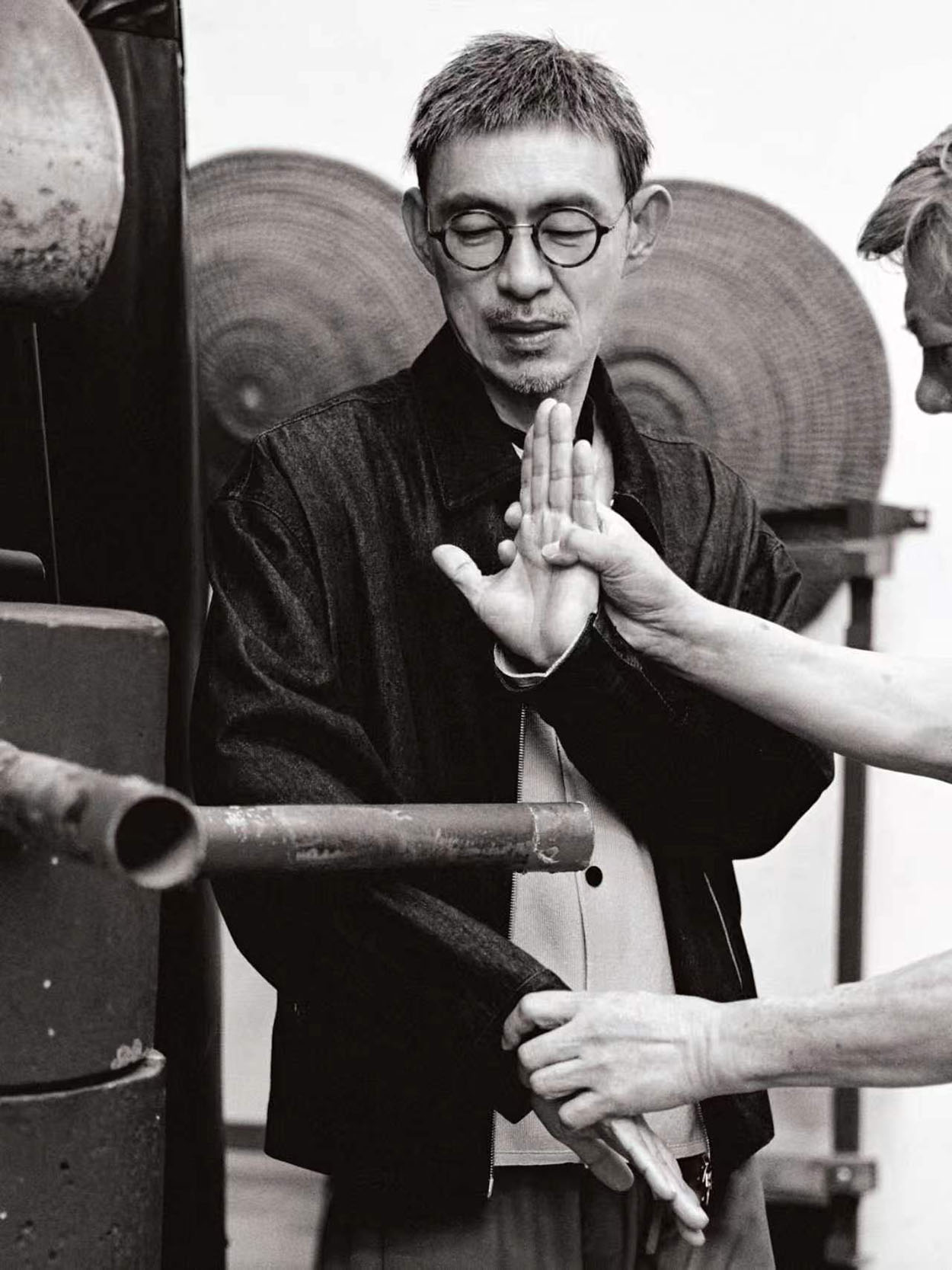
Like the character Hon, Ma was deeply influenced by the Bruce Lee kung fu craze of the early 1970s. At that time, nearly every teenager in Hong Kong wanted to learn martial arts, making it a collective memory for an entire generation.
In the novel, practicing martial arts shapes the lifelong ambition of the protagonist — to become a martial arts master. Yet, he knows deep down that the traditional martial arts world has long disappeared. By the late 1970s, street fights in Hong Kong no longer relied on fists but on knives and even guns. His ideal was at odds with reality from the start, Ma says.
Another important aspect of martial arts is morality. Martial artists have principles and integrity, and these ideals influence the story's conclusion, which sees Hon refusing to follow the gang leader's orders in a bid to uphold the ethics of martial arts, ultimately leading to tragedy.
Ma notes that even today, in Hong Kong's older districts like Wan Chai, Mong Kok, Yau Ma Tei, and Prince Edward, you can still see remnants of martial arts school signs, such as those for Wing Chun and Hung Kuen. In the past, martial arts schools often doubled as clinics, reflecting how deeply kung fu is embedded in Hong Kong's culture.
"The characters in the book live between the 1960s and 1980s, and their lives are naturally intertwined with martial arts schools and kung fu," he says.
In his foreword to Shuangtian Zhizun, Wang describes the trilogy as "Hong Kong's unofficial history", but Ma says that "writing an unofficial history" was never the driving force of his creation.
"I didn't deliberately use characters to reflect or metaphorically represent that era of Hong Kong," he says; rather, the characters were rooted in that time, each carrying a fragment of Hong Kong's history.
The underground gambling depicted in the books is inspired by Ma's mother's frequent visits to gambling dens and her stories of them. Hon's obsession with martial arts reflects a common experience among men of that era. The Taoist and folk rituals are drawn from Hong Kong's diverse and inclusive cultural beliefs, he says.
In the three novels, many characters die unexpectedly. For Ma, although life is often expected to be a grand drama, it frequently comes to an abrupt halt.
He says this narrative choice has two underlying reasons.
The deeper reason is rooted in Ma's childhood, as several of his uncles were addicted to drugs, constantly causing trouble, and would show up at his family's door in the middle of the night asking for money. Growing up, he lived in constant, inexplicable fear, with a subconscious belief that good things do not last and that disaster inevitably follows contentment.
This sense of unease and pessimism about life's unpredictability stems from the long-standing threats he felt in his youth, forming the underlying tone of how he views the world, and leaving him always expecting sudden changes, he says.
Another more surface-level reason is John Woo's A Better Tomorrow, which Ma studied for his master's thesis at the University of Chicago. In the film, a conversation between Chow Yun-fat and Ti Lung is abruptly ended by a sudden gunshot that takes a life, a scene that left a lasting impact on Ma. From a narrative perspective, such sudden death scenes carry significant dramatic power, he says.
These internal and external influences led him to arrange for characters to have sudden exits. As the character Luk often says, "That's just how it is."
Beyond the pessimism about life's unpredictability, Ma intersperses a great deal of Hong Kong-style humor through his writing. He says that humor is a tried-and-true buffer, much like how people from Guangdong drink herbal tea when they feel unwell — it's something that, once found effective, becomes a lasting habit.
"Throughout my life, I've faced many setbacks in my career, finances, and relationships. I've tried approaching these challenges with a lighthearted, teasing mindset, applying the same attitude toward myself, and it truly helps alleviate heavy emotions," he says.
"Over time, this approach became a habit. If you face life in the same way for 10 consecutive days, it becomes ingrained in your daily routine. For me, humor is no longer a deliberate writing technique but an instinctive attitude toward life," he says.
Contact the writer at yangyangs@chinadaily.com.cn
