

Increasingly wanted for short dramas, youngsters need to balance acting with personal development, experts say

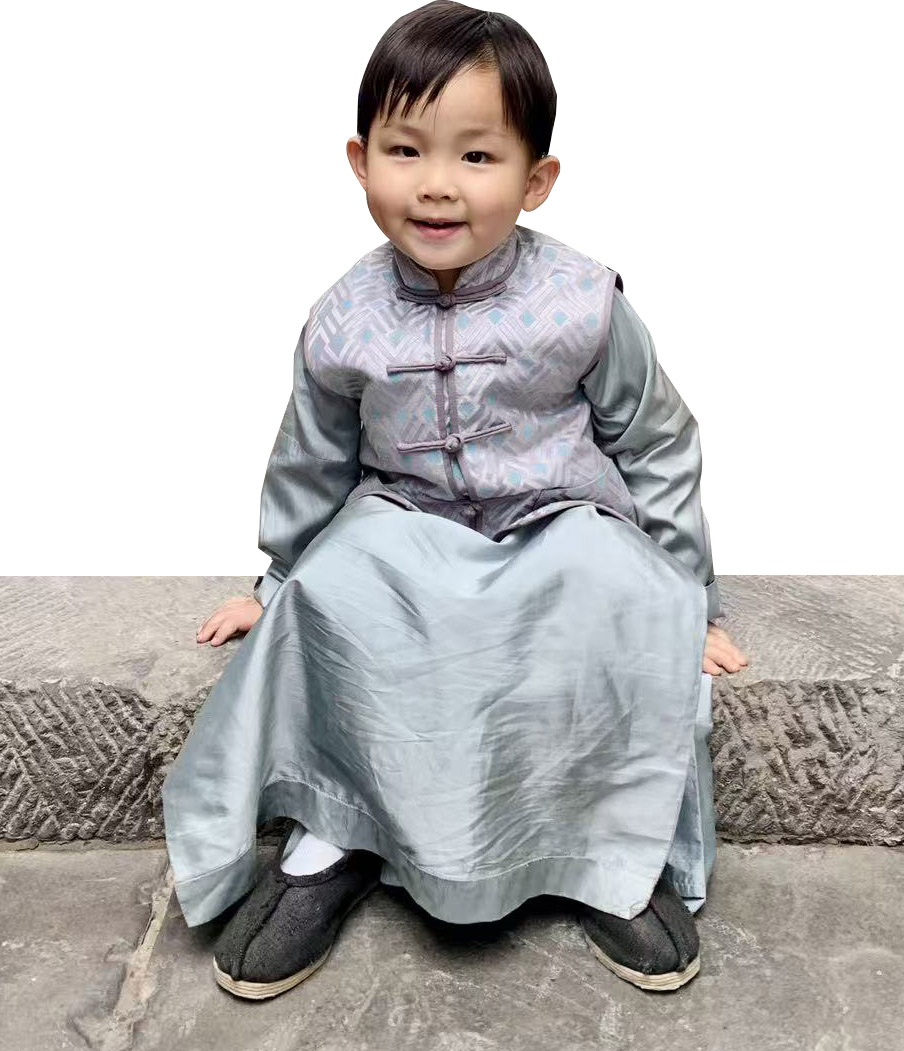
Mi Ya (top), Chen Jinyuan (center) and Ni Yuehang (bottom) are among the talented child actors contributing to the rapidly expanding short drama industry in China. CHINA DAILY
At 5:30 am on the set of a horror video, 9-year-old Ni Yuehang lay asleep beside a coffin prop, his legs numb from hours of waiting. By the time his mother Lin Qiwei found him, he could barely stand.
"It's okay, I just need a little rest," he said.
Incidents like this are becoming increasingly common as China's booming micro-short drama industry fuels growing demand for child actors, drawing more children onto sets, livestream productions and online video shoots at ever younger ages.
For some families, these opportunities offer children a chance to build their confidence, gain life experiences and explore a talent for performance. For others, the long hours, late-night shoots and fierce competition have raised concerns.
According to the National Radio and Television Administration, 33,000 micro-short dramas were released in 2025, with nearly 700 million viewers. The market exceeded 100 billion yuan ($14.81 billion), doubling from 2024.
Short dramas featuring "adorable" child characters recorded a popularity index ranking in the tens of billions in 2025, surpassing traditional genres such as historical power struggles, wealthy family dramas and period pieces in popularity, industry analysis from DataEye showed.
Against this backdrop, young actors like Yuehang are finding themselves in growing demand. Despite the exhausting schedule, Yuehang, who has appeared in more than 100 productions and played leading roles in over 20 short dramas, has never talked about quitting. His mother said he enjoys memorizing lines.
Lin said short dramas provide a rare opportunity for ordinary families without industry connections or financial backing.
"For families like ours, short dramas are not about using children but giving talented children a chance to prove themselves through hard work, without relying on connections or money," she said.
By early 2022, Yuehang had appeared in dozens of minor roles in larger productions, often without lines. His break came later that year, when he landed an important part in the short drama SSS Zhanshenling, playing the son of the male lead. He had substantial lines and earned a salary and travel reimbursement.
Today, Yuehang's workload is intense. In 2025 alone, he filmed seven lead roles over the summer.
On some shoots, he starts getting his makeup done before 7 am and does not finish until midnight.
As his experience has grown, so have his earnings, from a few hundred yuan a day to several thousand yuan for leading roles, enough to cover tutoring and travel costs.
"Directors value his experience, focus and willingness to cooperate while the family makes every effort to arrive on time and avoid disrupting production schedules," said Lin.
Yuehang takes school lessons whenever possible, often using breaks on set to finish homework, memorize English words or attend online tutoring sessions. Overall, he maintains above-average grades and remains popular with classmates.
Lin said acting has made him more independent, disciplined and mature. "He has also become more confident and is often willing to take the lead when working with classmates."
She said she understands public concerns about child actors and supports stronger protections for minors in the entertainment industry. However, she hopes people will not automatically equate child acting with exploitation.
Intense competition
As the short drama industry expands, more families are bringing their children into the field to explore performing while building discipline, confidence and life experiences.
In the first half of 2025, short dramas featuring child characters accounted for 5.56 percent of total favorites across all short-drama genres, ranking seventh among major content categories, data from Detawen Technology showed.
For Zhang Jieyu from Taiyuan, Shanxi province, acting has become less about chasing fame and more about helping her 8-year-old son Chen Jinyuan grow up.
He entered the entertainment world at age 3 in 2021, when renowned film director Zhang Yimou was filming Full River Red in Taiyuan. His family brought him to the set as a child extra to let him experience something new.
His first real production came around age 5. "At that time, he was still very young and could not sit still. He was playful in the waiting area and even talked back when a director reminded him to behave," said Zhang.
Afterward, she gave him a serious talk about rules, discipline and teamwork on set. "That was probably the first time he truly understood the importance of respect and cooperation," she said.
Jinyuan now works on two or three productions a month. Some shoots last only a day, while others can continue for a week.
Zhang said competition among child actors is intense.
"Some roles are clearly suitable for your child, but in the end, they may still go for children connected to investors or producers. Ordinary families are often at a disadvantage, but we still believe hard work will eventually be noticed," said Zhang.
To improve Jinyuan's chances, Zhang is in charge of his photos, video clips and audition materials and updates his portfolio regularly.
Although she understands public concerns about child actors, she hopes people will not assume every family is pushing their child too hard.
"There are families who treat children like tools to make money. But for us, acting is part of his education. We care about his studies, his character and his happiness far more than whether he becomes famous one day," said Zhang.

Little trouper
Wang Lu from Qingdao, Shandong province, sees acting mainly as a way for her 9-year-old daughter Mi Ya to enjoy new experiences and build her confidence.
She said the biggest challenges are not only competition for roles, but also long hours, difficult filming conditions and limited rest. A typical day starts with arriving on set early, waiting for the call sheet, makeup, rehearsals and then filming.
Ya's first television role was in the drama Ordinary Greatness, where she performed alongside female actress Bai Lu.
Since then, she has appeared in more than 100 productions, including short dramas, advertisements and tourism videos.
During her kindergarten years, Ya spent long stretches on short-drama sets, with some shoots lasting more than two weeks. Wang said during the COVID-19 pandemic, she and her daughter once stayed with a production crew for over half a month.
"There were times when she had to stay up very late. Once, while the director was explaining the next scene, she fell asleep standing up beside me," she said.
Directors often value child actors who are cooperative, comfortable in front of the camera and not afraid to perform.
To balance acting with school, Ya usually attends classes in the morning and films in the afternoon. If a production requires her to stay on set longer, Wang brings homework and textbooks so she can study during breaks and arranges tutoring when needed.
"Acting has made my daughter more confident, independent and willing to express herself. At school, she is eager to raise her hand and answer questions in class," said Wang.
At the same time, Ya has become more sensitive to her own performance and other people's opinions. Wang reminds her not to put too much pressure on herself and stresses that the family has never treated acting as a way to make money or become famous.
"We are just an ordinary family. We only want her to be happy and healthy. Acting is part of her childhood, not something that defines her future," said Wang.
Staying 'age-appropriate'
As the industry becomes more competitive and more tightly regulated, experts say the biggest question is no longer whether children should act, but how to ensure they do so in a healthy and age-appropriate way.
Su Yanjie, a professor at the Peking University School of Psychological and Cognitive Sciences, said the effects of acting on children should be understood through developmental psychology.
"Children at different ages have different developmental tasks. The key principle is that children should do things appropriate for their age," said Su.
In her view, acting and other performance activities can help children improve communication skills, emotional understanding and social adaptability.
"Every child has different strengths. If a child's interests and talents can be developed into a strength, it may also help support development in other areas," she said.
Su warned that filming should not interfere with the developmental tasks children need to complete at their current age.
Sleep deprivation remains a widespread issue among Chinese children and adolescents. National health guidelines recommend 10 to 13 hours of sleep per day for preschool children and 8 to 10 hours for primary and middle school students.
"Sleep has a disproportionately large impact on children's mental health and development. If regular schedules are disrupted for a long period of time, it may lead to emotional problems, lower learning efficiency and having other negative effects," said Su.
Child actors may also face pressure from public attention and online comments, she said. "Even adults often struggle with public feedback on social media. Children may find it even harder to cope," she said.
As concerns over children's wellbeing grow, regulatory efforts have been strengthened in recent years.
In 2019, the National Radio and Television Administration issued regulations requiring that minors' appearance and behavior in programs align with their age and developmental characteristics, and prohibiting content that encourages minors to discuss fame, wealth or romantic relationships.
On Jan 8, the administration's online audio-visual department released new guidelines on child-related micro-short dramas, calling for age-appropriate portrayals of minors, banning content that promotes inappropriate values or excessive commercialization, and strengthening protection of minors' rights during production.
Cautious approach
Changsha Xingche Media in Hunan province focuses on actor management and short-drama productions and has worked with nearly 100 child actors across dozens of projects.
Company founder Tang Kaijun said demand for child actors surged during the boom in live-action short dramas between 2024 and 2025. Children under 10 generally have more acting opportunities because they fit the "cute child" roles in short dramas.
"For many productions, children under 1.35 meters in height are often preferred for certain roles. Once children are older than 10, school becomes a bigger issue, and they no longer fit the 'adorable child' image many productions want," said Tang.
At the same time, the industry has become more cautious. After several child-focused short dramas drew criticism, some producers reduced child roles or adjusted storylines to avoid controversy or regulatory breaches.
"In the first half of 2026, demand for child actors has remained relatively weak, as projects involving minors face stricter review procedures and longer approval times. Now, productions involving child actors often need additional reporting and review, which increases both time and uncertainty," he said.
Agencies recruit young actors through online casting, training institutions and parents, while directors value cooperation and emotional stability.
"When a child first joins a production crew, cooperation matters more than prior experience. Some newcomers are attracted by high pay, but they soon face long hours, unstable opportunities, and intense competition," said Tang.
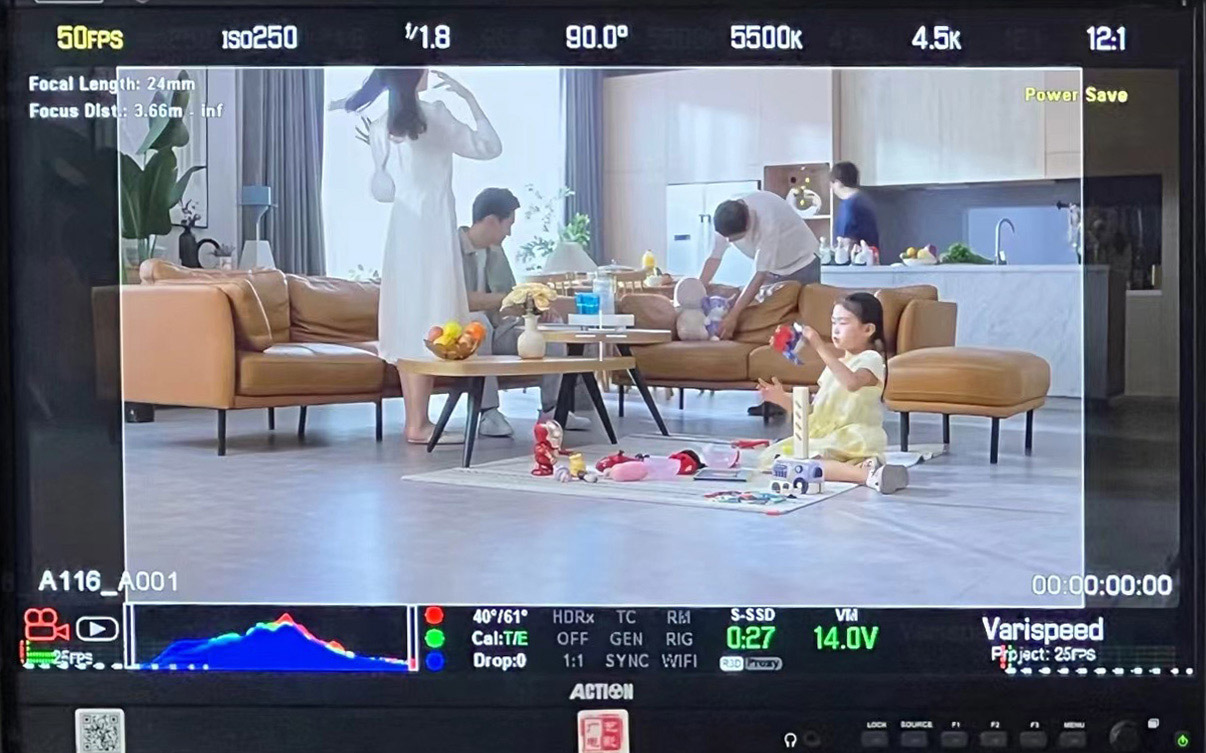
The fast pace of short drama production can be challenging. A 10-episode series may take a week to 10 days to shoot, with schedules stretching close to 20 hours a day.
"Some children are given little time to understand their characters before filming begins. There are crying scenes where children may need eye drops because the filming pace is so fast," he said.
Parents with industry experience are often more cautious, reading scripts carefully and rejecting projects with violent or overly adult themes.
"There is still a real market demand for child roles. But the key is to make sure the content is healthy and appropriate," said Tang, who does not fully agree that child actors are being "consumed" by the industry.
He believes the industry will become even more regulated, leaving fewer opportunities for children without clear strengths.
"Many child actors are cute, but they do not leave a lasting impression. There is still real market demand for child roles, but future opportunities are more likely to go to children with strong acting skills, memorable personalities and distinctive qualities," said Tang.
Contact the writer at sunnyu923@163.com
