

With highest thermal conductivity of any naturally occurring material, carbon gem is ultimate cooling solution for chips
In an age being reshaped by artificial intelligence, few figures command the spotlight like Jensen Huang, Nvidia's founder, whose speeches, trips and even the fortunes of his suppliers are closely watched by the world.
During the AI exhibition Computex 2026 held in Taipei in June, MSI — an electronics company that has worked with Nvidia for over two decades — unveiled a new thermal solution for Nvidia's next-generation consumer graphics processing units, featuring a diamond-copper composite baseplate and diamond-composite thermal pads.
At the Consumer Electronics Show held in Las Vegas at the beginning of the year, Nvidia announced that its next-gen Vera Rubin architecture GPUs will fully adopt a solution combining diamond-copper composite thermal management and 45 C direct-to-chip liquid cooling.
READ MORE: 5G, AI transforming manufacturing
At almost the same time, a picture went viral on Chinese social media: Huang met with Zhu Yanhui, founder of Chaoying Diamond Technology.
Yes, a key word has surfaced: diamond. This does not mean that the industry guru known for his taste of fashion, epitomized by his love of leather jackets, is venturing into another sector. But that diamond, or more precisely, lab-grown diamond, plays a crucial role in the AI race to cool down chips.
According to Lu Pei, chief machinery industry analyst at the research institute of China Galaxy Securities, diamond is no longer an option, but a necessity for cooling in scenarios where single-chip power consumption exceeds 1,400 watts.
Nvidia's Vera Rubin AI chip is reported to consume a staggering 2,300 W — equivalent to a household induction cooker running at full power, all packed into a chip the size of a fingernail.
In that situation, the chip's core temperature hits 110 C within minutes and forces it to slow down, crippling AI training performance.
Traditional copper and aluminum heat spreaders cannot pull heat away fast enough, while liquid cooling alone is no longer sufficient.
Diamond has become the ultimate thermal solution. With the highest thermal conductivity of any naturally occurring material, the diamond's room-temperature thermal conductivity is 5.5 times that of copper and 11 times that of aluminum.
Capable of instant heat removal, it also offers excellent electrical insulation and a coefficient of thermal expansion closely matched to that of silicon wafers, which can prevent chips cracking from sudden temperature changes, said Lu.
According to Pan Helin, a member of the expert committee on information and communication economy of the Ministry of Industry and Information Technology, diamond-based chip thermal management is primarily suited for high-end chips, while the most critical application field for high-end chips is the AI computing power sector.
Nvidia is not the only industry giant diverting to diamond as a solution. In March, an undisclosed US buyer placed a $300 million order for AMD Instinct MI350X GPUs cooled with lab-grown diamond, signaling a breakthrough approach to tackling AI data centers' massive energy consumption.
Another vibrant story is being told in the Chinese stock market. The A-share lab-grown diamond sector surged over 71.4 percent during the first half of this year, while the benchmark Shanghai Composite Index only climbed 3.16 percent during the same period.
The logic behind the market rally is simple. At the material side, China accounts for 95 percent of global synthetic diamond production, according to the superhard materials branch of the China Machine Tool & Tool Builders' Association.
Product-wise, China produced 63 percent of the world's 40-million-carat lab-grown diamonds last year, overtaking all the other countries, according to an industry report released by Zhongyuan Jewelry Innovation Research Institute in December.
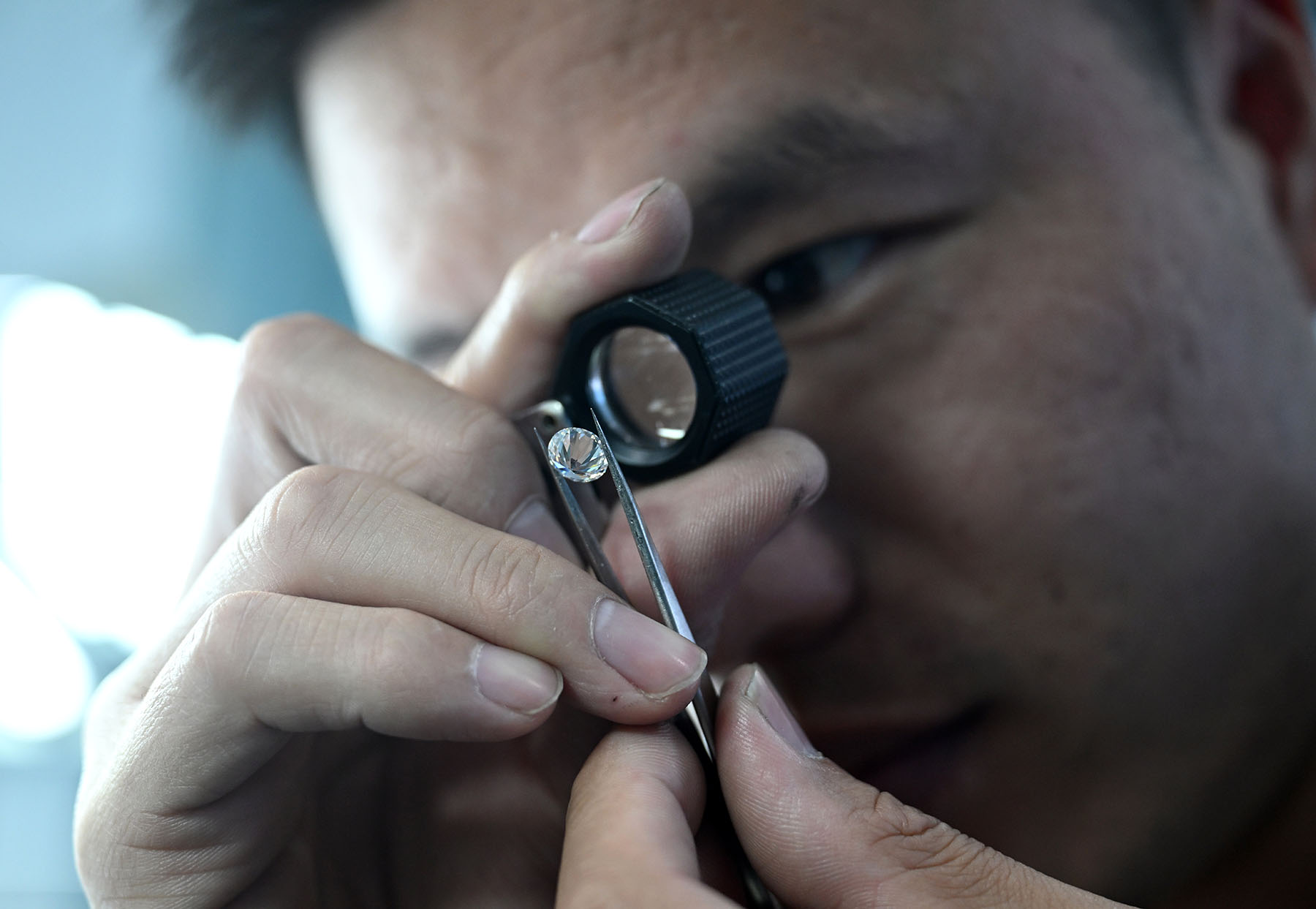
China's first synthetic diamond was successfully created in Zhengzhou of Henan province in 1963. According to the Shanghai Gold Jade Trade Association, the industry went through rapid development between 2010 and 2022 thanks to the maturity of key technologies.
However, overcapacity led to a sharp price collapse after 2023, with rough lab-grown diamond prices plunging to $15 per carat in 2024, from $100 per carat in 2022.
However, a silver lining has emerged for the Chinese retailing sector over the past few years.
In the first half of 2023, CHJ Jewellery teamed up with Henan Liliang Diamond to launch the lab-grown diamond retailing brand Cevol. Li Mengjiao, a salesperson in a Cevol store in downtown Shanghai, said that younger people in their 20s or 30s make up the majority of their clients as they attach more importance to value for money.
"People can get the same emotional value by paying one-tenth of the money for a real diamond. It can be said that we can achieve diamond freedom effortlessly now," she said.
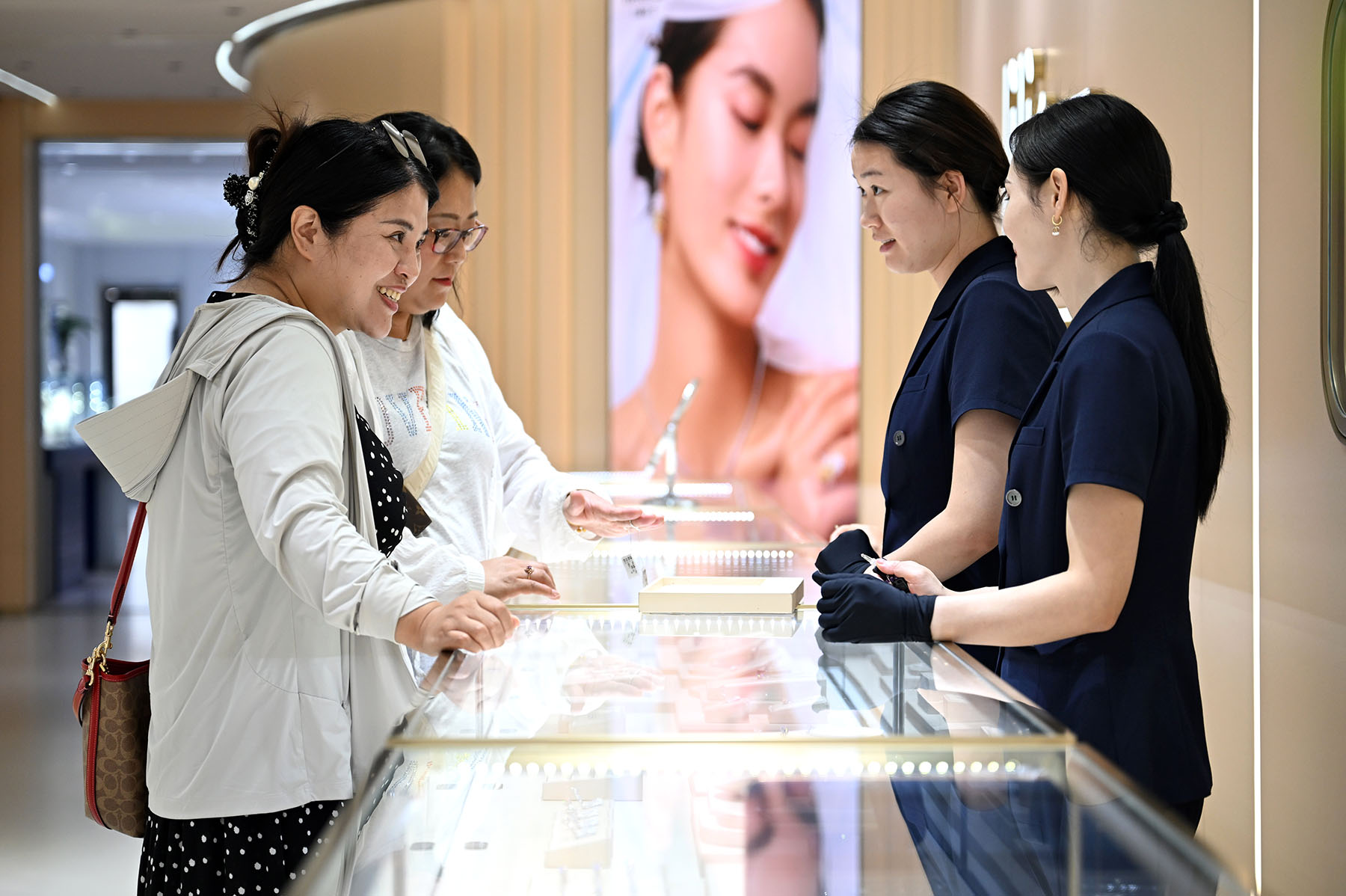
Lab-grown diamond brands started to open offline stores in the Shanghai Diamond Exchange building in late 2021. Tang Nina, 31 and a wife-to-be, learned of this development from social media and became a customer of one of the brands in early July.
"The physical nature of a natural diamond and lab-grown diamond is the same. But the prices vary greatly. A one-carat diamond ring is usually priced over 100,000 yuan ($14,770), but a lab-grown loose diamond costs less than 2,000 yuan. By adding the ring setting or other exquisite decorations, the total cost will be no more than 10,000 yuan. We could use the rest of the budget for overseas travel, or invest in gold — the price of which has gone down lately," she said.
Tang's down-to-earth attitude toward such luxuries echoes the findings from Nicolas Willemot, global head of consumer products practice at consulting firm Bain & Co, who said that Chinese consumers are more rational and selective in the real benefits of products, either in emotional or functional ways.
The Chinese consumer market has become more fragmented, meaning brands have either to provide more added value or become more price-competitive.
But it is the AI boom that is really giving the Chinese lab-grown diamond industry a second growth curve.
According to Sui Dong, a researcher from private market tracker Simuwang, the growth logic for the industry has changed from the consumption side to the hardcore materials sector, with the core growth driver becoming the revaluation of AI computing power.
As Chinese synthetic diamond companies are now being more deeply integrated into the AI chip supply chain, global demand for China's synthetic diamond industry will rise accordingly.
Data from General Administration of Customs show that China's lab-grown diamond exports spiked 135.87 percent year-on-year in May thanks to the continued rising demand from overseas.
Therefore, leading Chinese lab-grown companies are adjusting their business portfolio to ride the AI tide.
In early June, Liliang Diamond announced a plan to reallocate the 1.028 billion yuan of its previously raised funds — originally intended for expanding its lab-grown diamond factory — to a new synthetic diamond functional materials production and research and development project.
Through renovations to its existing facilities, the company aims to accelerate its entry into high-end sectors including AI chip thermal management, optical materials and acoustic diaphragms. The new project has a three-year construction cycle, according to the company's announcement.
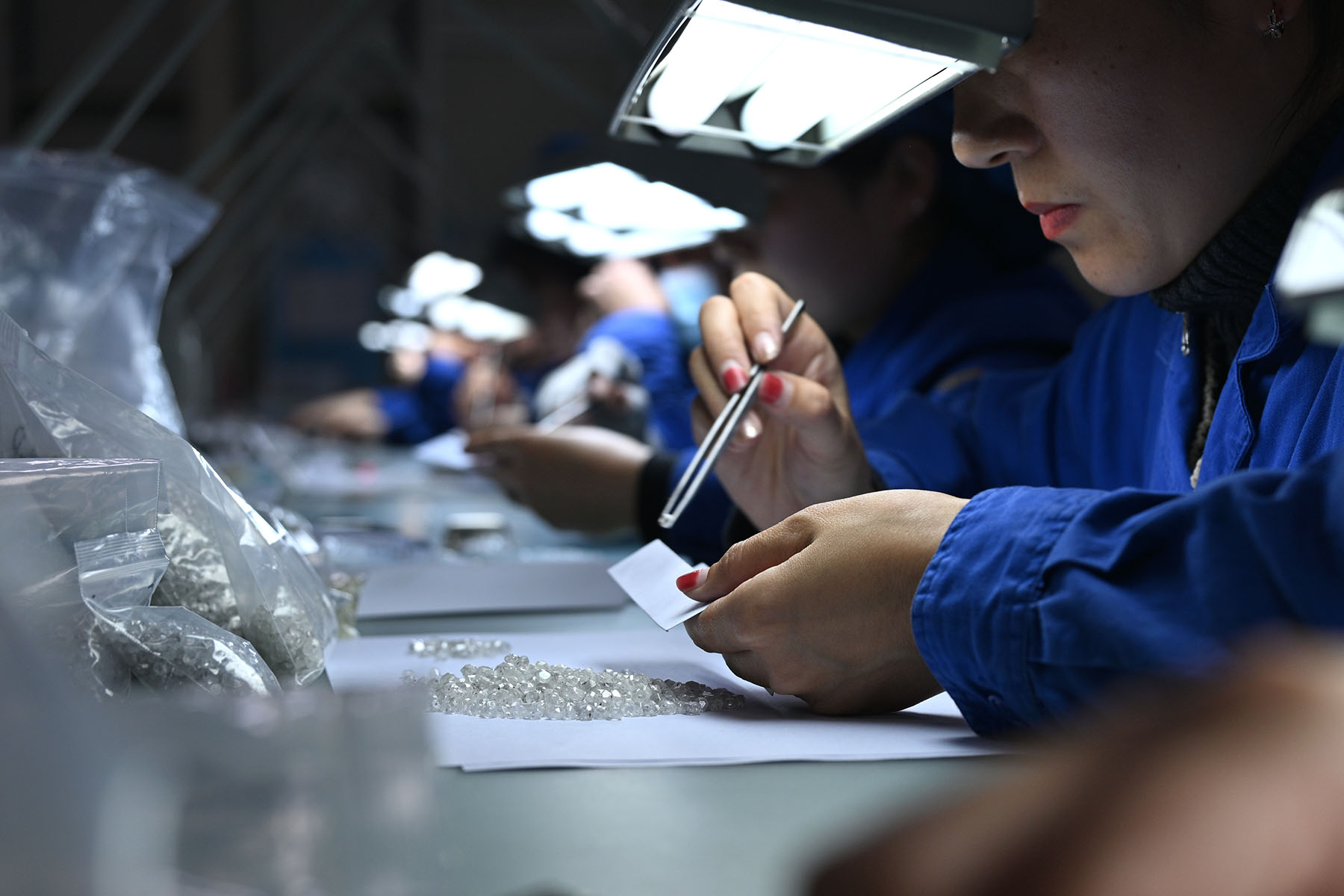
The company already has heat dissipation-related products in place and has achieved small-volume production. Through a partnership with a Taiwanese company, Liliang Diamond handles technology and production, while its partner is responsible for off-take sales.
Despite three consecutive years of revenue decline as of 2025, the company's share price doubled within two months in the second quarter of this year, pushing its market capitalization to a peak of over 23 billion yuan.
Henan-based Huifeng Diamond started to tap into the diamond thermal management sector in 2022, according to the company's Rotating General Manager Bao Siwei.
Last year, the company initiated a new strategy to further develop the two core technologies of high pressure high temperature and chemical vapor deposition, which are two key technologies in diamond thermal management.
In December, Huifeng announced plans to invest 1 billion yuan to build a CVD diamond project in Baotou of the Inner Mongolia autonomous region. While construction broke ground on May 28, the project quickly commenced production on July 1.
In late November, Huifeng invested 30.62 million yuan in a private equity fund, through which it acquired a stake in xFusion International, directly entering the thermal management application scenario for AI computing chips.
"This round of investment and application of diamond in the thermal management sector should be carried out in a measured and targeted manner, focusing on high-end and mission-critical needs, so as to narrow the gap between China and leading markets," said Bao.
Experts from China Securities said that commercial orders for diamond-based thermal management solutions are expected to materialize in the second half, with widespread adoption in AI servers and high-end consumer electronics.
Investment confidence across the industry chain will be boosted, they said.
According to a research report by Zhongtai Securities, the global market for diamond heat spreaders used in high-end AI chips is projected to reach 8.7 billion yuan this year and surge to 59.2 billion by 2030, representing a compound annual growth rate of over 50 percent.
The government has already noticed the industry's growth potential.
In April, the Ministry of Industry and Information Technology officially included functional diamonds in the key catalog of strategic new materials for the 15th Five-Year Plan (2026-30) period, incorporating the high-end and functional development of lab-grown diamond into the national-level industrial support system.
Likewise, the municipal government of Zhengzhou expressed strong support for the construction of high-end diamond industrial parks for the 15th Five-Year Plan period, aiming to build the city into the heartland for lab-grown diamond in the country.
But of course, the path to growth is never without challenges, especially as the Chinese lab-grown industry has already encountered the problem of overcapacity once.
Ye Zhibin, president of the Gems and Jewelry Trade Association of China, said the country's lab-grown diamond industry is large but not strong enough.
ALSO READ: County more than diamond in the rough
Companies' production covers a wide range of sub-sectors, yet the skills are not refined. This has led to Chinese lab-grown companies capturing only 15 percent of the profits in the finished product segment globally, while China accounts for the majority of the world's rough lab-diamond production.
The industry must strengthen itself across the technology chain, the value chain and the brand chain so that China can evolve from a "world factory" into a "value hub" for lab-grown diamond, he said.
Ge Shaobo, an associate professor of the institute for interdisciplinary and innovation research at Xi'an Technological University, said that China's production capacity and cost advantages in synthetic diamond provide a solid foundation for entering the AI thermal management supply chain.
However, the key to the next phase of development is no longer about concentrating on a large output, but rather applying in high-end scenarios, passing customer validation, securing stable orders and competing in the global AI hardware supply chain.
"If Chinese companies can translate their scale advantages into technological edge, application knowhow and supply chain synergy, they will have the opportunity to evolve from traditional synthetic diamond manufacturers into key players in the high-end thermal management materials market of the AI era," he said.
Contact the writers at shijing@chinadaily.com.cn
