

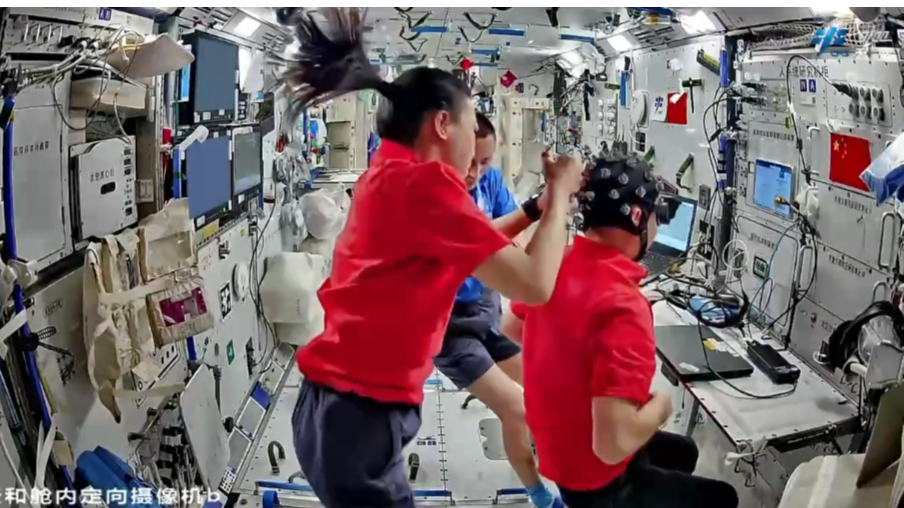
Lai Ka-ying, Hong Kong’s first astronaut, and her crewmates on the Shenzhou XXIII manned space mission will soon mark two months in orbit after they conducted various tasks and experiments onboard the nation's space station from July 12 to 18, a video released by the China Manned Space Agency (CMSA) on Sunday showed.
The astronauts conducted space science experiments, took care of the Tiangong space station assembly platform, and monitored their own health as they continued living in orbit, according to the video, which is part of the CMSA's Tiangong TV series.
The crew completed aerospace medicine experiments, with Lai wearing a cap measuring her brain's electrical activity and helping her teammates collect the experimental data. Ground-based researchers will use the data for further research.
ALSO READ: Lai, crewmates complete installation of HK-made ‘eye in space’
Last week, the crew members conducted experiments for a deeper understanding of immunometabolism in space, including collecting saliva samples containing surface microorganisms, which were then frozen for analysis by researchers on the ground.
Lai and her colleagues also used structured light 3D cameras to get more insights on the kinematics of astronauts who have been in orbit for a long time. The footage showed Lai using her right index finger to alternately touch her nose and a blue handrail, conducting a proprioceptive mechanical force perception test to obtain relevant data.
The astronauts also performed psychological and behavioral tests, assessing their emergency decision-making abilities and in-orbit emotional state.
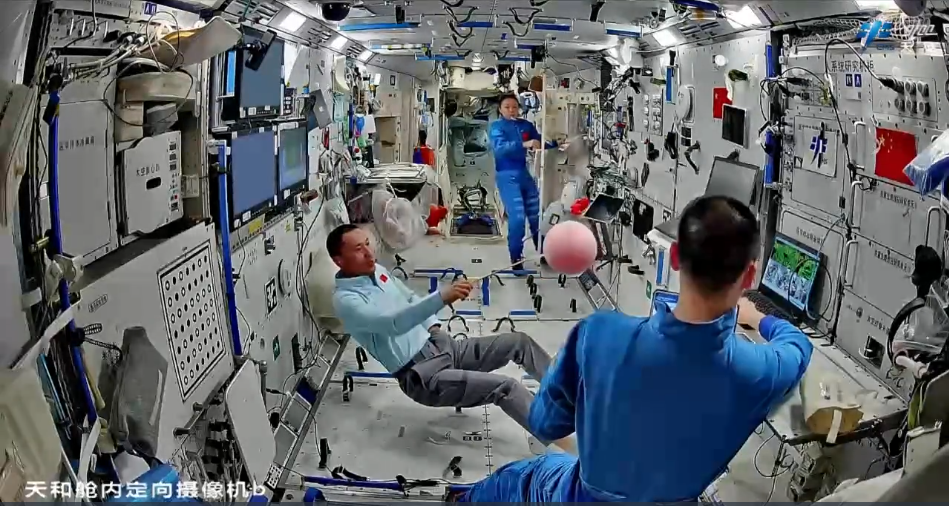
Taking care of the space station assembly platform, the crew replaced the fluid physics experimental cabinet, and performed online maintenance and adjustment of the experimental samples inside the control cabinet. They also completed tasks such as cleaning samples in the containerless experimental chamber and cleaning and replacing the viewing window cover lens.
The Shenzhou XXIII crew also carried out planned inspection and maintenance of the regenerative life support system equipment and replaced some components. They conducted air cleanliness tests, and collected microbial samples from the water dispenser outlet to safeguard their home in space.
To keep healthy, the three astronauts also continued to exercise in orbit and fought bone loss using relevant equipment.
China launched the Shenzhou XXIII mission into space on May 24. It includes a one-year in-orbit stay experiment, which will provide crucial data for future long-duration space exploration.
