

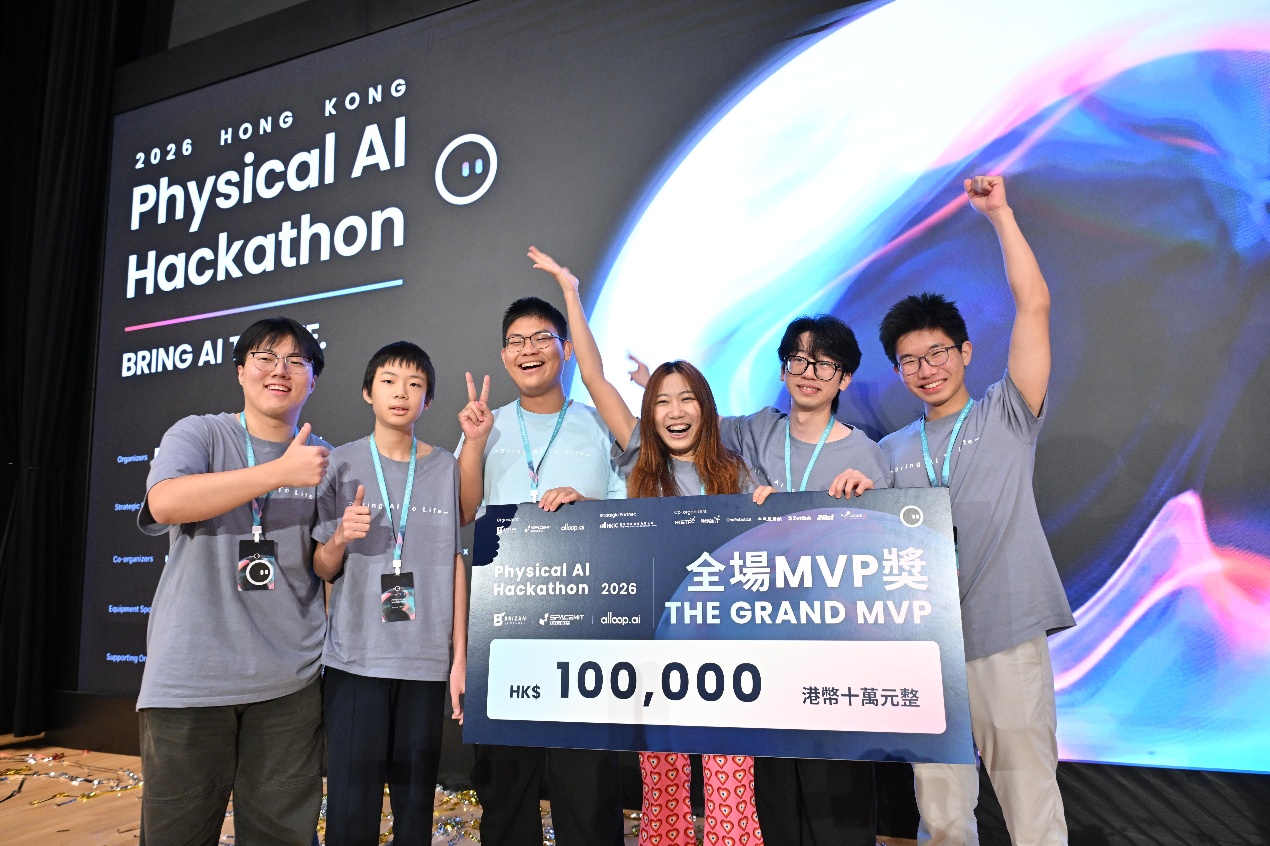
HONG KONG — More than 160 young developers from around the world converged on Hong Kong Science Park last week for the city’s inaugural Physical AI Hackathon 2026, transforming ideas into intelligent systems that bridge software and hardware over a 48-hour build.
The event, which concluded on August 5 at the Charles K. Kao Auditorium, was co-initiated by Brizan Ventures, SpacemiT, and alloop.ai, and co-organized by the Hong Kong Science and Technology Parks Corporation (HKSTP) and several technology firms.
It also received strong backing from innovation and entrepreneurship organizations at five leading Hong Kong universities: The University of Hong Kong, City University of Hong Kong, The Hong Kong University of Science and Technology, The Chinese University of Hong Kong, and The Hong Kong Polytechnic University.
ALSO READ: HK’s young ecopreneurs take center stage with 46 green projects unveiled
The Hong Kong Investment Corp Ltd (HKIC) supported the event as a strategic partner, working with Brizan Ventures to identify early-stage innovation. The hackathon aimed to move Physical AI from concept into tangible, real-world applications.
The global call for applications opened in June 2026, drawing more than 1,000 entries from the Chinese mainland, the Hong Kong Special Administrative Region, North America, Europe, other parts of Asia, and Oceania.
Nearly four-fifths of the finalists were students — ranging from secondary-school students to PhD candidates — alongside industry technologists and entrepreneurs, specializing in fields such as artificial intelligence, robotics, and biomedical engineering.
Professor Ping-Keung Ko described the hackathon as “a dream come true,” noting that the rise of open-source models like DeepSeek had filled a missing piece in the evolution of Physical AI. “In the future, hardware will come with its own assistant or expert,” he said. “That is Physical AI — a whole new world.”
Clara Chan Ka-chai, chief executive officer of HKIC, emphasized that breakthroughs in Physical AI require moving concepts beyond the screen into real-world settings.
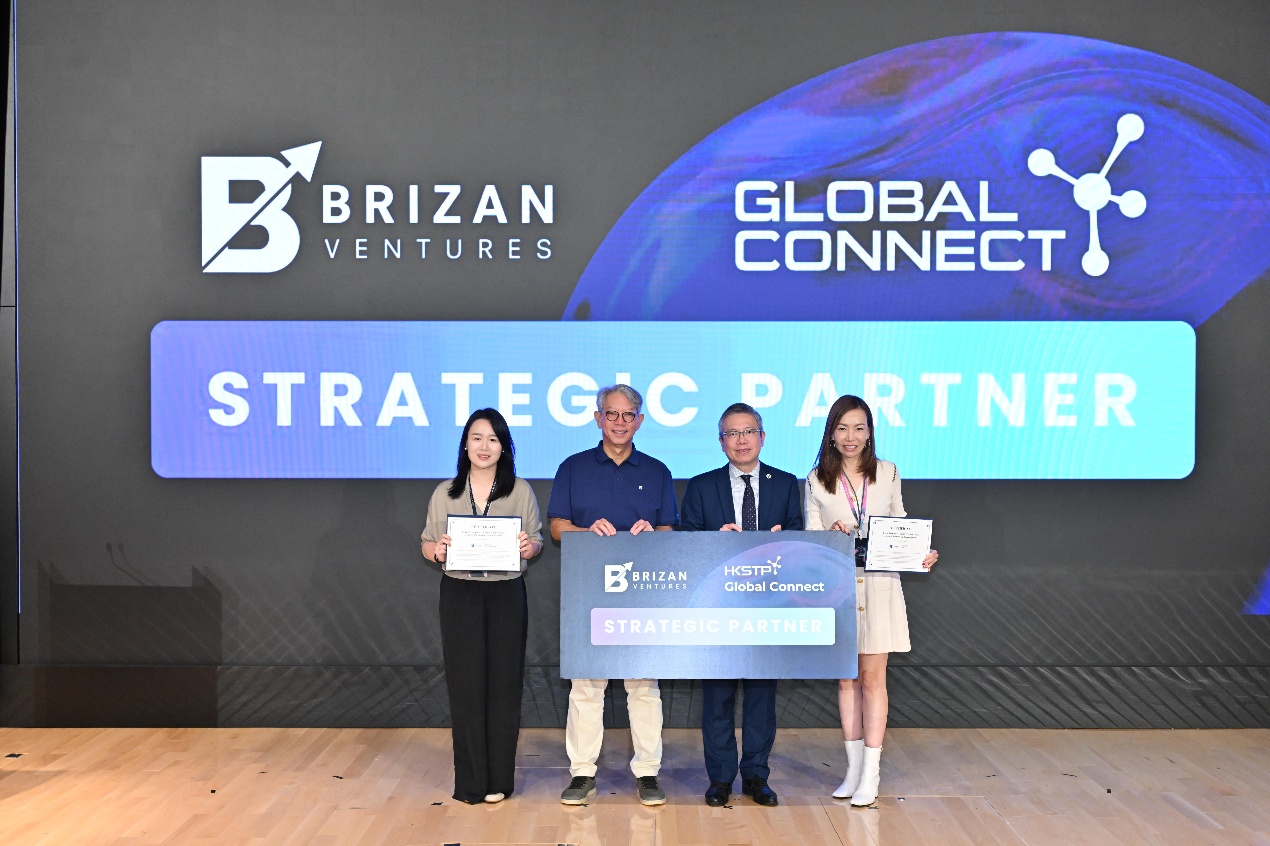
The event also featured an industry forum and the Physical AI Innovation Carnival, showcasing robotics, smart hardware, and AI agents from companies like SpacemiT and OBSBOT. A Global Connect strategic partnership between HKSTP and Brizan Ventures was announced at the finals.
Team 23 won the Grand MVP award, with a total prize pool exceeding HK$300,000 ($38,200). The team of six included a business analyst, a robotics master’s student, a secondary-school maker, and three first-year undergraduates — reflecting the cross-disciplinary collaboration the hackathon sought to foster.
