

Sustainable aviation fuel has come a long way, transformed from kitchen waste to jet fuel as part of an effort to reinforce Hong Kong’s status as a global aviation hub and to fulfill the nation’s green development goals. William Xu reports from Hong Kong.
How could one have imagined that used cooking oil — the sizzling, oily byproduct of Hong Kong’s ubiquitous cha chaan teng (traditional Chinese-style tea restaurants) and household kitchens that typically ends up in trash cans — has found a second life up in the clear blue sky?
Thanks to modern alchemy, the greasy stuff is being turned into sustainable aviation fuel (SAF) — an alternative for powering jet engines that would slash their lifecycle carbon dioxide emissions by up to 80 percent.
READ MORE: HK, Dongguan forge HK$10b partnership in sustainable aviation fuel
SAF is part of the answer to the Hong Kong Special Administrative Region’s quest to become a world aviation hub as the city joins forces with the Chinese mainland to help realize this ambition. The SAR and Dongguan — one of the nine mainland cities of the Guangdong-Hong Kong-Macao Greater Bay Area — have agreed to build a dedicated SAF production plant in the mainland city’s Machong town. The goal is to get an industrial chain going — from feedstock collection to mass production — in the 11-city cluster with a population of 87 million.
Building a chain
“Hong Kong brings global finance, professional services and research capabilities,” Hong Kong Chief Executive John Lee Ka-chiu said at the accord’s signing ceremony in May. “Dongguan brings mature chemical industry parks, logistics and a steady supply of used cooking oil. Together, we form a powerful combination.”
The project further showcases Hong Kong’s tangible steps to align with the nation’s 15th Five-Year Plan (2026-30) and advance its green development strategy, he said.
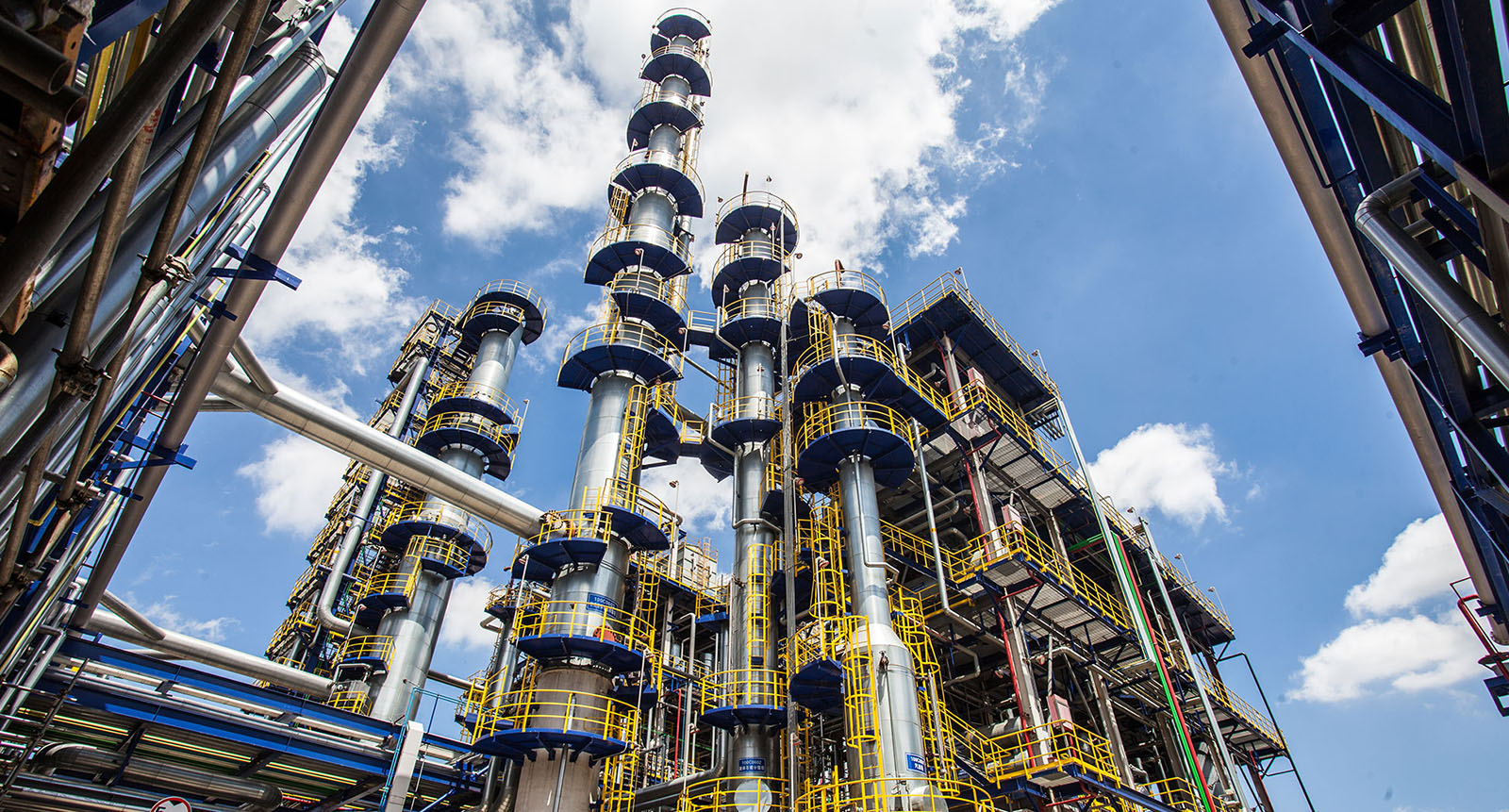
At the center of the agreement is EcoCeres — a Hong Kong-based climate-technology enterprise incubated by the city’s sole gas provider Towngas. With the company’s facilities in Jiangsu province’s port and industrial city of Zhangjiagang and the southern Malaysian state of Johor, EcoCeres, which is the world’s second-largest SAF supplier, offers 770,000 metric tons of renewable fuels, including SAF, hydrotreated vegetable oil and bio-naphtha, to clients worldwide.
Most of the fuel is produced via hydroprocessed esters and fatty acids (HEFA) — a technology that strips oxygen from organic fats extracted from used cooking oil and other feedstock — and restructures their carbon molecules to make them chemically similar to fossil fuels.
EcoCeres says its HEFA-based technology can cut up to 94.4 percent of lifecycle greenhouse gas emissions — far above SAF industry’s average of 80 percent.
“There are various categories of used cooking oil. Some are very pure, but some are of really bad quality,” says EcoCeres CEO Matti Lievonen. “We have the technology to clean out impurities, like a metal phosphor and other things, to produce high-quality sustainable aviation fuel.”
EcoCeres will fund the Dongguan base’s operations itself, while local authorities will facilitate feedstock collection and provide land for the facility. When fully operational, the project will add 450,000 tons to EcoCeres’ annual production capacity.
Aviation accounts for about 2.5 percent of the global energy-related carbon dioxide emissions in 2023, but the sector had no viable battery or hydrogen solutions that could lift large aircraft into the stratosphere.
As a biofuel, SAF can be blended with conventional aviation fuels and fed directly into engines and pipelines without requiring costly infrastructure modifications. But the high costs involved — at least three times that of fossil-based jet fuels, due to insufficient production capacity — has made it a “green luxury” for years.
The world produced 1.9 million tons of SAF last year, representing just 0.6 percent of total jet fuel consumption, according to the International Air Transport Association (IATA).
Despite the extremely low penetration rate, the European Union calls for SAF usage to reach 70 percent by 2050, while the United Kingdom — the world’s third-largest aviation market by passenger volume — is seeking a minimum 10 percent mix of SAF by 2030 and 22 percent by 2040. Japan says it will replace 10 percent of its airlines’ aviation fuels with SAF by 2030.
China is calling for greater production capacity of green fuels under its 15th Five-Year Plan, while the HKSAR hopes to see an SAF consumption ratio of 1 to 2 percent for outbound flights by 2030.
The road ahead for SAF
A tightening web of global SAF mandates has triggered a fierce international scramble to secure both the alternative fuel and its feedstock.
SAF production using HEFA relies heavily on used cooking oil, with the aviation sector locked in a fierce battle with vehicles on the ground. Vehicles consumed up to 85 percent of biofuel on the roads last year. The IATA says that only 11 percent of biofuel the world produced in 2024 was SAF, and expects it to go up to 25 to 30 percent to support jets’ net-zero emissions.
Meanwhile, buyers from regions with strict green mandates are aggressively scooping up raw materials from areas with more relaxed standards, driving up prices of used cooking oil in nonmandatory nations.
China collected and processed roughly 5.4 million tons of used cooking oil in 2024. More than half of the volume was shipped abroad, primarily to the United States, Singapore, the Netherlands and Spain. The intensive overseas demand has pushed up prices of used cooking oil in the domestic market from 4,500 yuan ($664) per ton in late 2024 to 6,000 yuan per ton early last year, according to a 2025 report by Ping An Securities.
The vulnerable supply chain has led to high SAF prices. The average production cost of SAF last year ranged from 1,630 euros ($1,860) to 8,625 euros per ton, while conventional jet fuels cost 640 euros per ton, a report by the European Union Aviation Safety Agency said.
EcoCeres is optimistic about China’s feedstock potential, with the Ping An report saying that the actual domestic production of used cooking oil could climb by at least 50 percent. The company has partnered with the local government of Suzhou, Jiangsu province, to secure feedstock for its Zhangjiagang factory.
Lievonen says he is upbeat about building a self-sustaining ecosystem in the Greater Bay Area, citing the region’s combination of abundant feedstocks, highly skilled talent, and robust logistical networks. “I think the demand is growing,” he said.
Green Oil Recycling Ltd, a local collector, gathers around 300 tons of used cooking oil annually through its network of some 2,000 restaurants across Hong Kong. This grease has been shipped overseas for producing biodiesel and SAF.
Daniel Tsang, the company’s general manager, says that if a mature SAF industrial chain is established in the Greater Bay Area, the company will absolutely prefer to keep raw materials local. It will immediately save substantial transportation costs and tariffs, he says.
China canceled export tax rebates for used cooking oil in 2024, and a surging domestic appetite for biofuel is expected to keep more of this resource at home.
IATA estimates the global production capacity of SAF will reach 27.8 million tons by 2032, thanks to the wider adoption of new technologies such as power-to-liquid, alcohol-to-jet, and the gasification Fischer-Tropsch process, thereby reducing reliance on used cooking oil.
Accelerating market adoption
As the supply chain matures, Hong Kong airlines are stepping up efforts to procure SAF. In 2024, the Business Environment Council launched a Hong Kong Sustainable Aviation Fuel Coalition with partners of airlines, banks, oil companies and EcoCeres to promote SAF among stakeholders.
Cathay Pacific Airways Ltd — the SAR’s flag carrier and a member of the coalition — has pledged to meet a 10 percent SAF target by 2030. It used 36,242 tons of SAF last year, a 4.3-time year-on-year increase, according to the airline’s sustainability report.
The carrier has entered into strategic purchase agreements with China Petroleum & Chemical Corp to utilize mainland-produced SAF at Hong Kong International Airport — the world’s busiest airport by cargo volume. Cathay has also joined with Airbus in a $70 million coinvestment to accelerate SAF production in Asia and globally.
“Given that around half of our fuel is uplifted in Hong Kong, we are delighted to witness the Hong Kong and Dongguan governments are working with EcoCeres to accelerate SAF development in the GBA region,” says Grace Cheung, head of Cathay’s sustainability team.
“We will continue to contribute operationally and commercially to support effective SAF adoption at HKIA,” she tells China Daily. “At the same time, we will support policymakers to develop supportive SAF policy that can address the challenges of affordability and availability.”
SAF is vital to maintaining Hong Kong’s status as a premier international aviation and cargo hub as airlines with strict global net-zero targets will increasingly favor hubs offering affordable and reliable SAF uplifting services, says Merlin Lao, the Business Environment Council’s head of policy and research.
He says forging a resilient SAF supply chain within the Greater Bay Area will enable stakeholders to steer clear of the deadlock that has crippled the wider industry.
As the cost of SAF remains stubbornly high, banks are deeply hesitant to support massive infrastructure projects without legally binding mandates to guarantee long-term demand. Yet, as the case in Europe illustrates, rushing into aggressive policy mandates before production capacity stabilizes risks igniting severe price spikes, ultimately forcing airlines and passengers to absorb crushing fuel surcharges, warns Lao.
He hails Hong Kong’s relatively modest SAF adoption target, calling it a “pragmatic steppingstone”. A cautious entry will allow the government to incrementally raise the threshold as the region’s supply ecosystem matures, ensuring that local refining capacity is scaled up in tandem with demand.
Lao suggests that Hong Kong prioritize “opt-in” pilot programs while strengthening public education on SAF. This approach would allow conscious travelers to voluntarily pay a premium to fund airlines’ SAF procurement, testing the waters and building social consensus before imposing hard regulations such as Singapore’s levy on flight tickets.
Lothair Lam Ming-fung, who represents the transportation sector in the city’s legislature, favors tax credits and accelerated depreciation allowances that would incentivize carriers to absorb SAF’s price difference, saying that smaller airlines need more government procurement aid to survive the transition.
Lam, who is a veteran seafarer, says SAF and marine biodiesel share a heavily intertwined supply chain — both relying on raw materials such as used cooking oil, and utilizing similar methods for initial treatment, refining and chemical synthesis.
By upgrading the processing technologies of SAF and green shipping fuels, Hong Kong can effectively lower technical barriers and drive a more rapid, widespread adoption across the two sectors simultaneously, he says.
In an article published in May, Stephen Wong Yuen-shan, head of the Chief Executive’s Policy Unit, said that if the Greater Bay Area could forge a self-reliant, end-to-end industry chain, it would significantly amplify the nation’s strategic leverage and right of speech in the energy sector. SAF then would no longer be viewed merely as a green commodity, but a critical strategic asset serving as a vital piece within the nation’s green energy blueprint.
ALSO READ: EU, HK committed to decarbonize their economies
EcoCeres launched an SAF program on the mainland earlier this year with partners, including the Second Research Institute of the Civil Aviation Administration of China, the China National Aviation Fuel Group and airlines. Codenamed “Project Spark”, the program steers China’s independent SAF sustainability certification system.
Darwin Choi, associate head and associate professor of the Department of Finance at the Hong Kong University of Science and Technology, says Hong Kong’s financial ecosystem is uniquely positioned to anchor the future of global SAF trading.
He says that to bolster international credibility, the SAR must set up rigorous benchmarks to seamlessly align the mainland’s SAF products with global regulatory demands, adding that to ward off market risks, the city must strictly regulate SAF consumption and the issuance of carbon credits.
While local universities have rolled out green finance programs, he urges Hong Kong to intensify cultivating hybrid professionals who are fluent in both finance and sustainability to underpin the sector’s long-term growth.
Contact the writer at williamxu@chinadailyhk.com
