

Survivors tell of 'rushing earth', rescuers explain delicate operations to extract people buried in soil
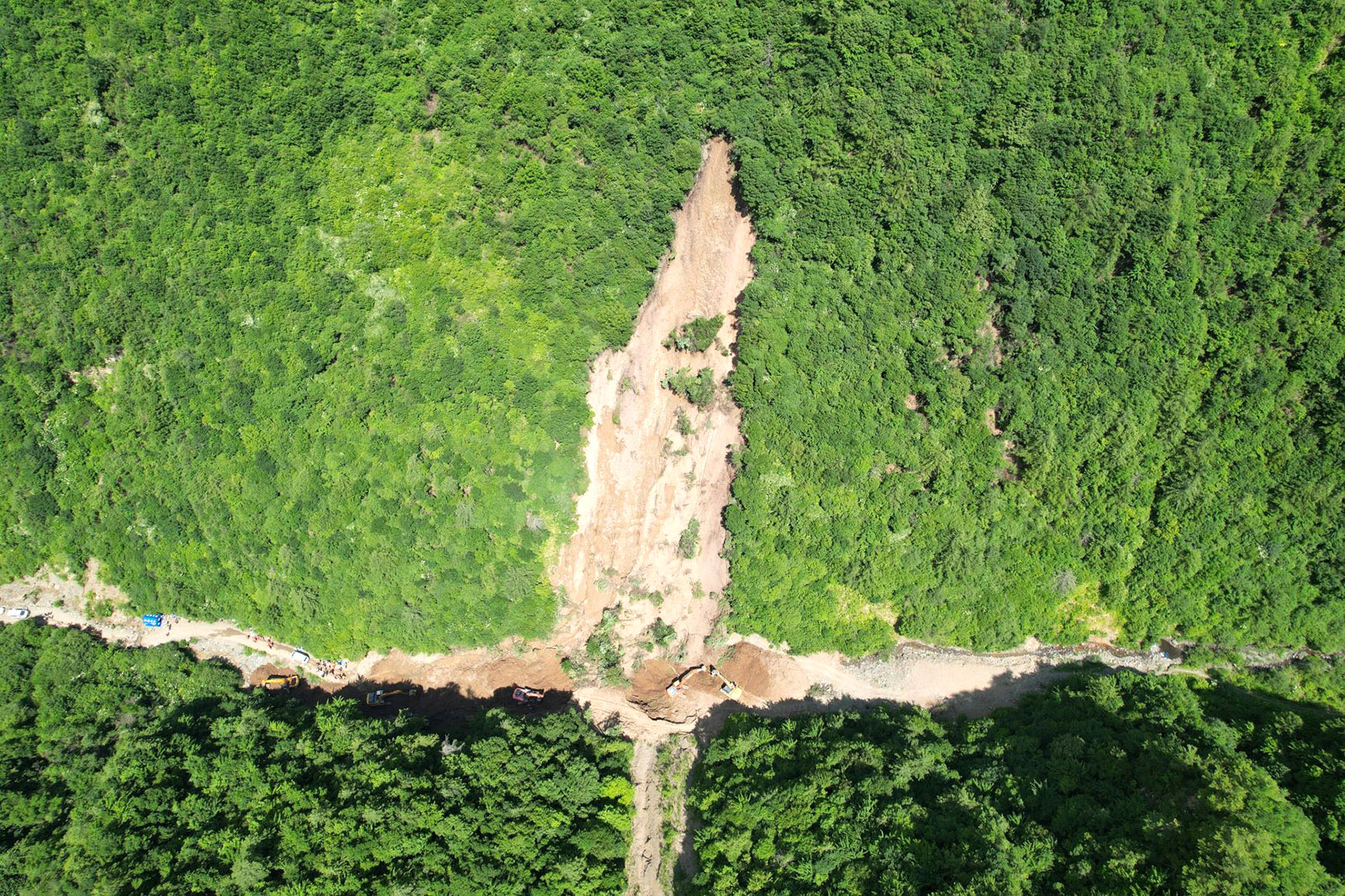
Gou Yingchun, 35, had been working in the forest for only four days when the mountainside collapsed.
Like dozens of other locals, the Rushu village resident had left home shortly after 6 am on Tuesday to prune branches in a forest in Tanchang county, Longnan, Gansu province. It was the first time she had done temporary forestry work.
When the workers arrived near the forest, they found that a small landslide had already blocked the road, preventing vehicles from going any farther.
"We thought it wasn't serious," Gou recalled. "We got out and started walking."
As the group made its way along the mountain road, Gou lingered at the back. Looking up the slope, she noticed trees swaying unnaturally. "I saw the trees moving," she told China Daily. "I knew something wasn't right."
She immediately shouted to the others to run. One young co-worker hesitated, so Gou grabbed them and pulled them forward. "I kept yelling, 'Run! Run!'"
Moments later, the mountainside gave way.
"It all came down at once," she said. "It was so fast."
READ MORE: Rescue ops over after landslide kills 21 in Gansu
As she fled, something struck her from behind, knocking her to the ground. She scrambled back to her feet and managed to run a few more steps before falling again.
"I don't even know what hit me," she said. "I just kept running."
When she finally looked back, the people who had been standing with her only moments earlier were gone.
"I thought they would all make it out," she said quietly. "I never imagined…"
Despite suffering injuries to her leg and arm, Gou's first instinct was to call for help. The surviving workers quickly contacted emergency services as they waited helplessly outside the disaster zone.
Even in the hospital, Gou struggled less with her own injuries than with the loss suffered by her village.
"We all left home happy that morning," she said. "None of us imagined that less than half an hour later, everything would change."
She said she had seen small landslides before, but nothing remotely like this.
"It happened in an instant," she said. "It was too sudden, too fast. People simply didn't have time to react."
Now recovering in hospital, Gou said she considers herself fortunate to have survived, but the grief is overwhelming.
"We were lucky," she said. "But so many people behind us never made it out."
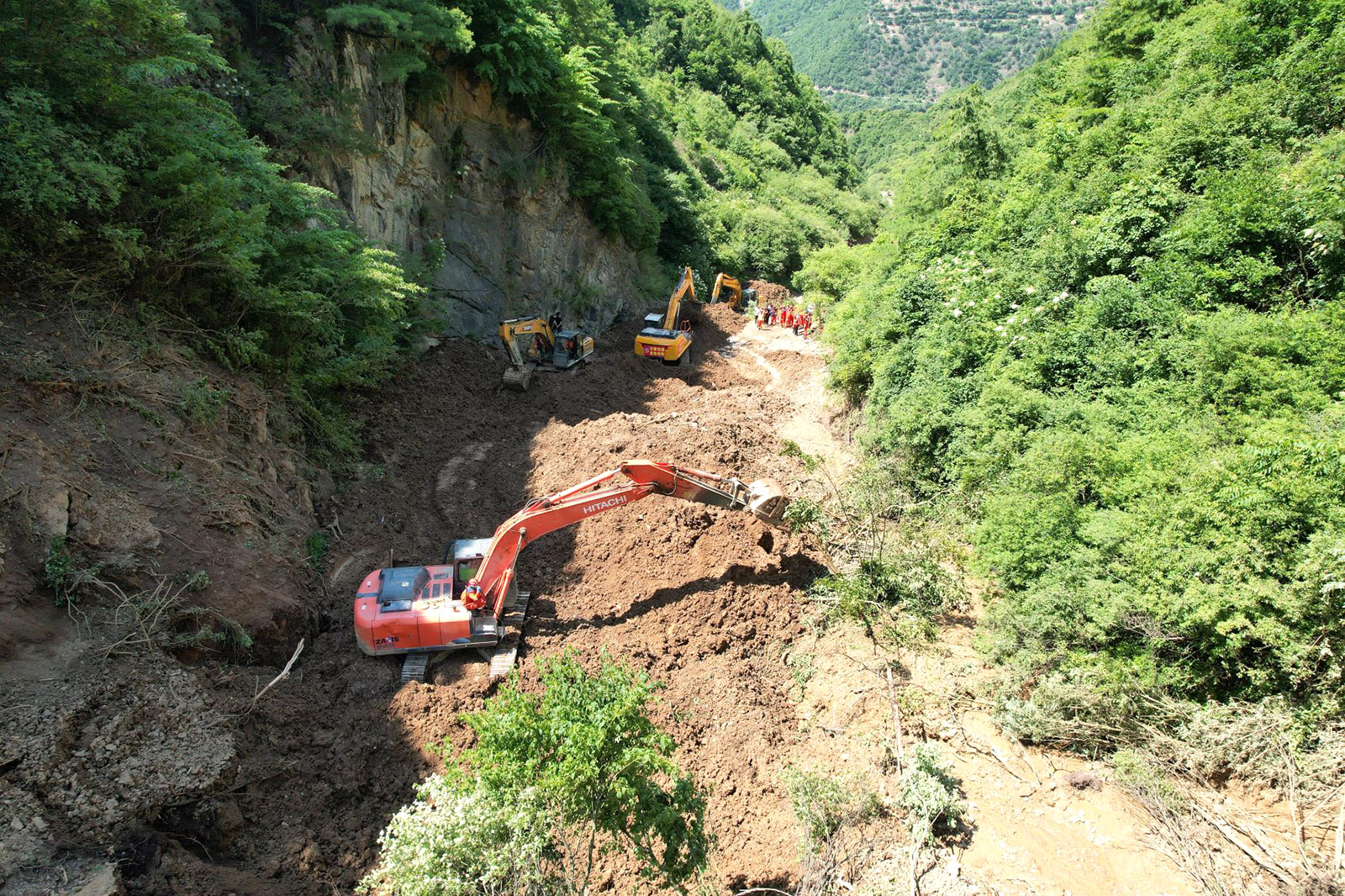
Survivors' stories
Twenty-one people were killed in the landslide, local authorities confirmed at a news conference on Wednesday, adding search and rescue operations have concluded.
The landslide occurred at about 6:56 am on Tuesday, trapping 33 people. Of the survivors, five escaped uninjured and seven sustained minor injuries, according to local authorities.
Tanchang county is located deep in the hinterland of Longnan, where steep mountains, deep valleys and rugged terrain characterize the area. The mountains are mainly composed of loess deposits and jagged rock formations.
Villagers who were swallowed up in the disaster recounted the terrifying moments when it struck.
Sun Penghua, 48, suffered a fractured sternum after the landslide struck Rencang village. Her husband, Yang Ping, 53, escaped with only minor injuries. The couple were running for their lives when the mountainside began to give way.
"My husband was in front of me," Sun recalled. "We started sliding down the slope as we ran. The ground was shaking, and everything was moving beneath our feet. I couldn't even tell where I was anymore."
As they struggled to escape, the collapsing hillside caught up with them. The rushing earth shoved Sun toward the roadside, partially burying her legs before a larger wave of mud and debris slammed into her.
"The landslide pushed me onto the road," she said. "Then the soil came over me and buried me."
An injured resident surnamed Wang said: "I was lucky. If I'd run even a little later, the second landslide would have buried me completely."
Another resident called Feng said he was the first to the initial landslide.
"The first landslide was relatively small, covering an area of about eight to 10 meters," said the man aged in his 40s.
"I started clearing the road while keeping an eye on the slope above. Then I realized something wasn't right, so I pulled out by myself. Just after I had cleared the road, the massive landslide came down. I was still running when I had just reached the side. A rock came down and struck my foot, and I fell."
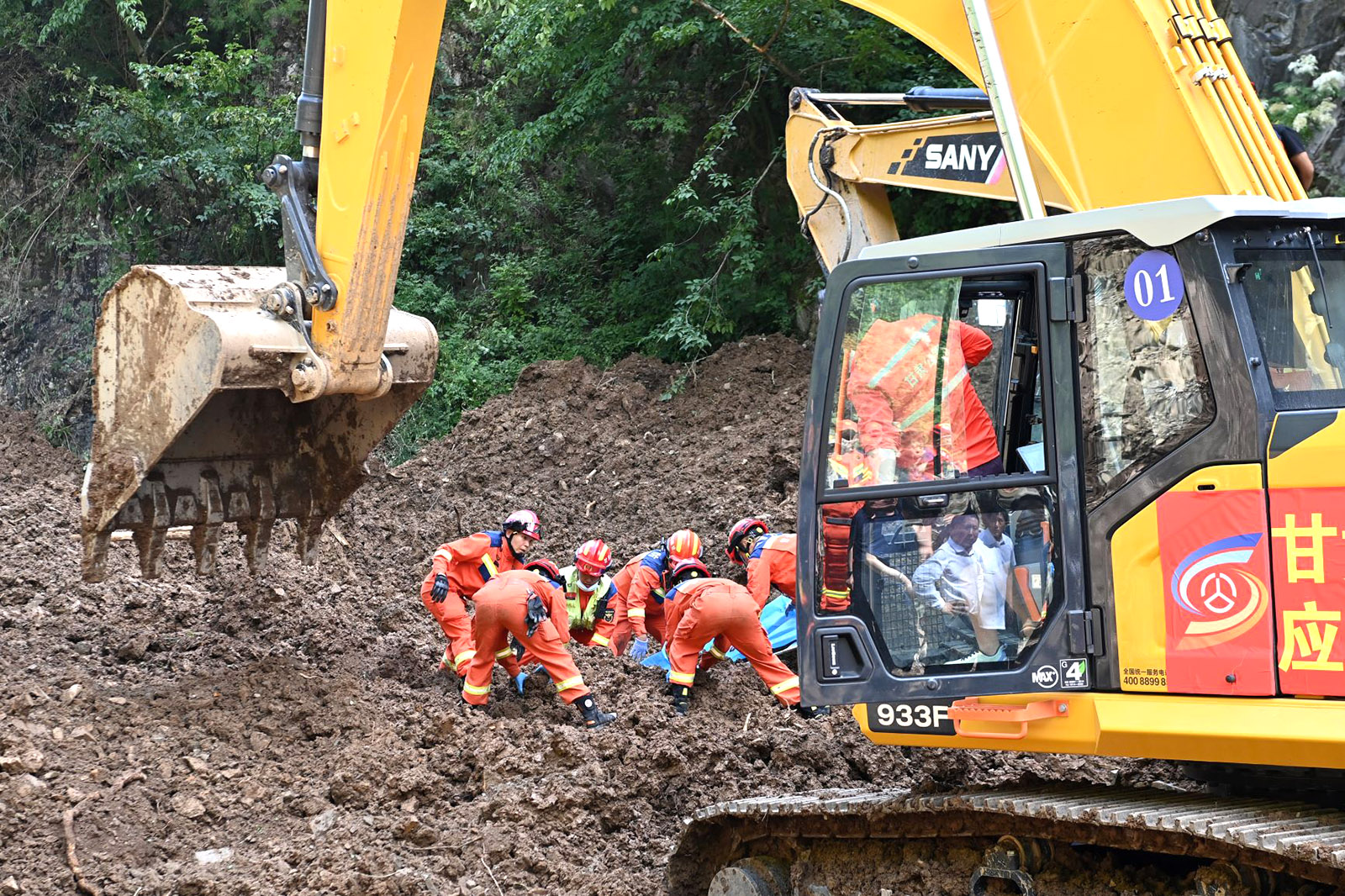
Chaotic scene
Luo Lingshan, chief of the Tanchang County Fire and Rescue Brigade, immediately knew the situation was serious when the emergency call came in.
The dispatch report mentioned only a landslide and people being trapped, but after 17 years in the fire service, Luo knew what those few words could mean.
"I immediately ordered all available personnel to assemble," he said.
Within a minute, 23 firefighters who had gathered for a training exercise boarded three rescue vehicles and headed toward the mountains. While en route, Luo reported the disaster to the county government and emergency management authorities, requesting additional engineering equipment, medical teams and other rescue forces.
When the convoy reached the valley, the firefighters could go no farther. The landslide had blocked access, forcing the team to leave their vehicles behind and continue on foot.
The scene that greeted them was chaotic.
Several villagers had managed to escape on their own. Some were crying, others were shouting that more people remained trapped higher up the slope.
"There were people calling for us to save those still buried," Luo recalled.
The first priority was those buried in shallow debris.
Working with shovels, chain saws and their bare hands, firefighters removed soil, rocks and fallen trees. Whenever they reached a victim's body, they stopped using tools to avoid causing further injury.
Within about 20 minutes, the team had pulled out five survivors. Most were buried only from the waist down, while others had their legs trapped beneath the debris. Although frightened and in tears, their overall physical condition was relatively stable and they were quickly transferred by stretchers to waiting medical teams, Luo said.
The danger, however, had not passed. Loose rocks and soil continued falling from the mountainside.
"We set up three observation posts," Luo said. "If there were any signs of another collapse, we could immediately sound the evacuation signal and protect the rescuers."
The unstable slope shaped every decision that followed.
As larger rescue teams arrived, the operation shifted from rescuing shallowly buried survivors to locating people trapped deep beneath the landslide. Firefighters used life-detection radar, manual searches and heavy machinery to narrow the search area before excavators began removing the enormous volume of debris.
The moment anything resembling a victim appeared, the machinery was stopped and firefighters took over by hand. "We couldn't risk causing additional injuries," Luo said.
Rain during the afternoon briefly forced rescuers to withdraw because of the increased risk of another landslide. After that, the rescue operation continued through the night under powerful mobile lighting units.
"The environment was extremely dangerous and physically demanding," said Luo, who remained at the scene throughout the nearly 20-hour operation.
"Some firefighters wore through their gloves. Others suffered cuts and bruises on their hands. But no one backed away. Everyone stayed on the front line."
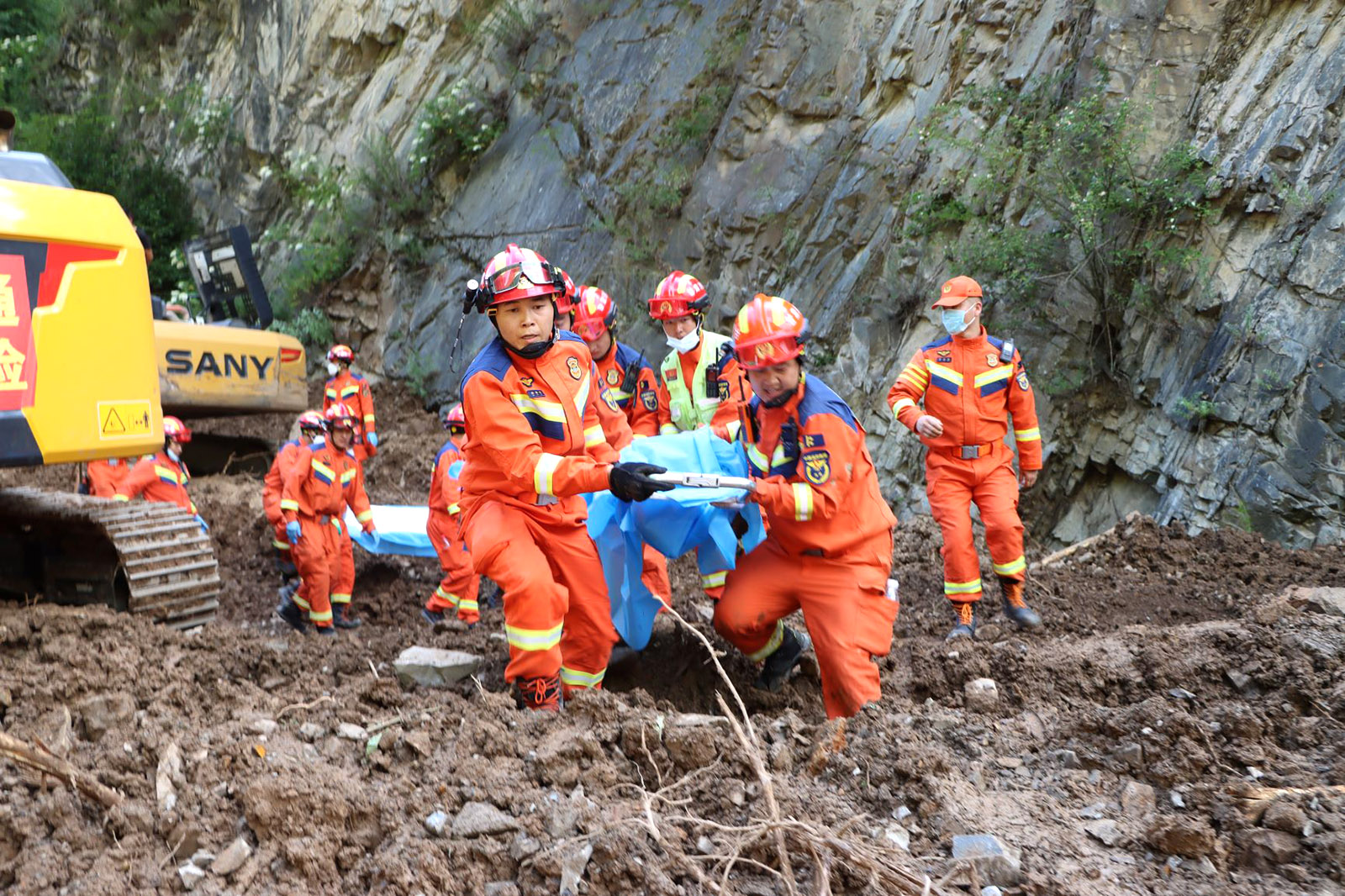
Second wave of rescuers
Lu Zhenghong, chief of the Longnan Fire and Rescue Detachment, said they immediately activated the emergency response plan after receiving an emergency call.
Provincial fire authorities mobilized rescue teams from Longnan and neighboring Tianshui, dispatching firefighters, sniffer dogs and rescue vehicles to the remote mountainside village.
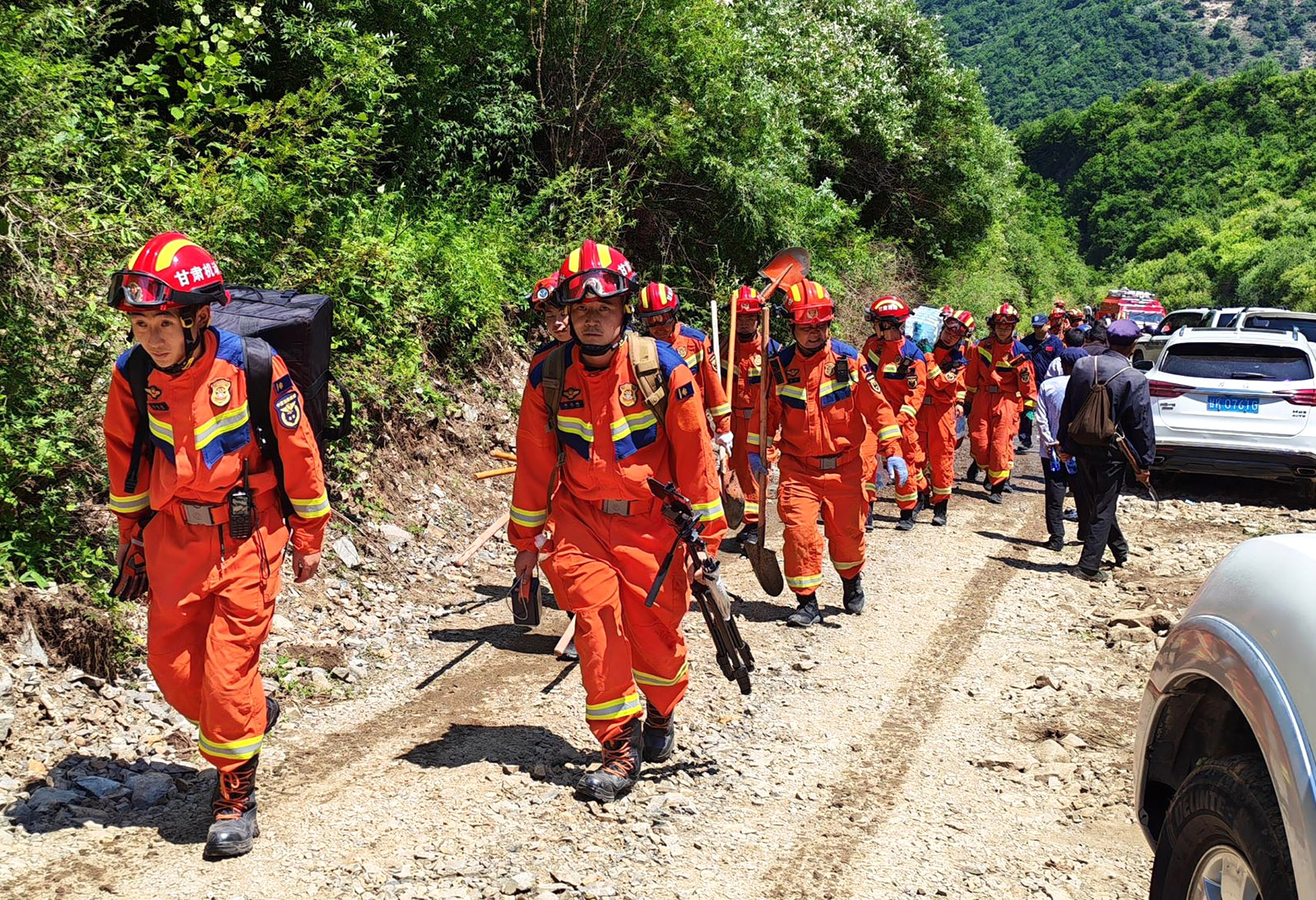
By the time the operation was fully underway, 375 rescuers, including firefighters, police officers and militia personnel, had joined the search.
When Zhang Shenzhou, captain of the special rescue squad at the Hanwang Fire and Rescue Station in Wudu district, Longnan, arrived at the foot of the landslide, the scale of the disaster was even larger than he had imagined.
Zhang had left with the second wave of rescuers shortly after receiving the deployment order. After driving more than 100 kilometers from Wudu, the firefighters found that their rescue vehicles could go no farther.
The mountain road into the valley was blocked.
Loaded with life-detection equipment, slope-monitoring radar and other rescue gear, the firefighters continued on foot, trekking more than a kilometer before reaching the devastated mountainside.
"We initially estimated the landslide at about 6,000 to 7,000 cubic meters," Zhang said. "When we got there, we realized it was much larger."
He said observation posts established overlooking the slope played a huge role. "During the rescue there were several secondary slides, and we had to withdraw more than once," Zhang said.
Working beneath an unstable slope required painstaking coordination. Each excavator was paired with a firefighter acting as a lookout, while several more rescuers stood nearby with stretchers and shovels, ready to take over the moment anything was uncovered.
"We couldn't dig quickly," Zhang said. "The exact locations of the victims were unknown. The excavator removed the soil little by little, and once we found someone, we switched to hand tools."
The search finally ended at about 3:40 am. By then, Zhang's team had recovered seven bodies.
Doctors' quick response
At Tanchang County People's Hospital, doctors rushed back to work as soon as they received word of the disaster at about 7:20 am, said Shen Jiangtao, director of the orthopedic department.
"Within 10 minutes of receiving the notification, everyone in our department was back on duty," Shen said.
The department's 25 doctors and nurses immediately split into two groups. Some joined ambulances heading toward the disaster site to provide pre-hospital emergency care, while others remained at the hospital, preparing operating rooms, wards and emergency treatment areas for the injured who would soon begin arriving.
Shen stayed behind to coordinate treatment.
The hospital opened a green channel for the victims. As ambulances returned from the mountains, each injured survivor was taken directly for an examination before being transferred to the orthopedic department.
"It happened very quickly," Shen said. "Everything was already in motion."
The department admitted five injured patients.
Most suffered relatively minor injuries, but one patient arrived in significantly worse condition. Initial examinations found two fractures. Follow-up scans later revealed a third fracture, along with a traumatic chest injury that caused fluid to accumulate around the lungs.
After expert assessment, one of the more seriously injured patients was transferred to a hospital in Longnan for further care.
But the injuries inflicted by large natural disasters are psychological as well.
Firefighter Zhang has responded to some of China's most devastating disasters, including the Wenchuan and Jiuzhaigou earthquakes, the Zhouqu mudslide and major floods in Longnan.
Yet, he said scenes like those in Tanchang still weigh heavily on him. "Human beings are very small in the face of nature," he said quietly. "All we can do is our very best to bring the victims home and give their families an answer."
The rescue left its mark not only on victims' families but also on some of the young firefighters.
Several had never participated in rescue work for a disaster of this scale. Faced with the realities of the recovery effort, some froze in place, overwhelmed by what they had seen, Zhang said.
"They had never experienced anything like this," he said. "Psychologically, it was very hard for them."
The Ministry of Finance and the Ministry of Emergency Management on Wednesday announced they had allocated 30 million yuan ($4.41 million) to Gansu for search and rescue, evacuation, emergency geological disaster response, and checks for potential secondary disaster risks.
Yang Mingze contributed to this story.
Contact the writers at majingna@chinadaily.com.cn
